

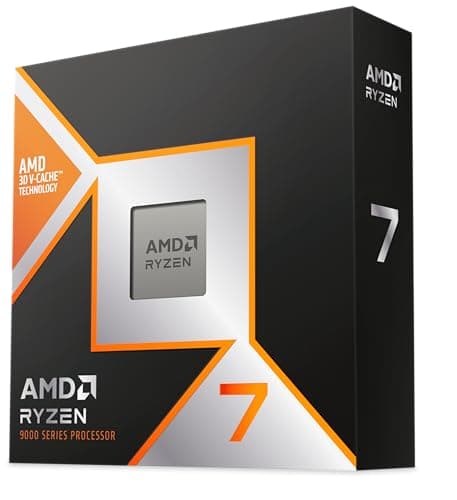
Ryzen 9800X3D vs Intel Core Ultra 9 285K (2026): Which Should You Actually Buy?
At a Glance
| Category | AMD RYZEN 7 9800X3D | Intel Core Ultra 9 285K |
|---|---|---|
| Cores / Threads | 8 / 16 | 24 / 24 |
| Max Boost | Up to 5.2GHz | Up to 5.7GHz |
| Cache | 96MB L3 | 40MB Cache |
| Platform | Socket AM5 | Intel 800 series chipset-based motherboards |
| Included Graphics | No | Yes |
| Current Price | 9% OFF — Was $479.00 ✓ Prime $433.99 | 37% OFF — Was $599.00 ✓ Prime $376.99 |
Design
Winner: Intel Core Ultra 9 285K
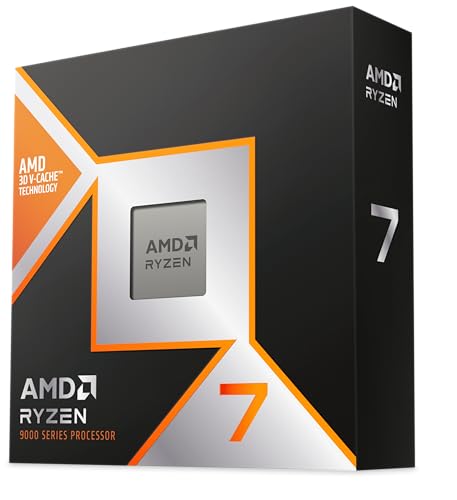


The design category here is really about platform practicality rather than aesthetics. The Intel chip has the edge because it includes integrated Intel graphics, which adds flexibility for troubleshooting, basic display output, and builds that may not start with a discrete GPU installed.
Related Reviews
The AMD chip is still attractive from a builder’s standpoint because it is drop-in ready for proven Socket AM5 infrastructure, but it lacks integrated graphics and is more narrowly focused on gaming-first systems.
Why Intel wins: more built-in flexibility for general PC use and easier fallback behavior during setup.
Performance
Winner: AMD Ryzen 7 9800X3D
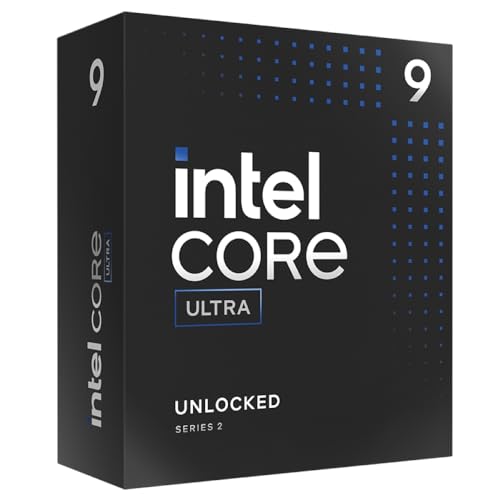


If your main concern is gaming, the AMD processor is the clear winner. Its Next Gen 3D V-Cache and 96MB L3 cache are exactly why it’s described as the world’s fastest gaming processor, and that advantage matters most in real-world game performance.
Intel has the stronger raw core count with 24 cores and 24 threads, plus a higher boost clock of up to 5.7GHz. That helps in heavily threaded workloads, but for gaming-first buyers, the cache-rich AMD part usually delivers the more compelling experience.
Why AMD wins: best-in-class gaming focus, lower-latency cache advantage, and excellent efficiency for a high-end desktop CPU.
Value
Winner: Intel Core Ultra 9 285K
On price alone, Intel comes out ahead. The Core Ultra 9 285K is listed at $376.99, while the Ryzen 7 9800X3D is $433.99. That’s a meaningful gap, especially if you’re building a full system and need to protect budget for a GPU, motherboard, and cooling.
Intel also offers more cores for the money, which can make it a better value for creators, multitaskers, and users who want one PC to handle gaming plus productivity. AMD’s premium is easier to justify if gaming is the priority, but pure dollar-to-spec value goes to Intel.
Why Intel wins: lower current price, more cores, and a stronger upfront bargain for mixed-use builds.
Battery/Durability
Winner: AMD Ryzen 7 9800X3D
For desktop CPUs, “battery” doesn’t apply, so the real comparison is durability, thermals, and platform longevity. AMD wins this round because its chip is built around great power efficiency and improved thermal performance versus the previous generation.
Just as important, AM5 is a proven platform with strong upgrade potential. If you want a CPU that should age well in a long-term gaming rig, AMD’s socket strategy is a major advantage. Intel’s 800-series motherboard compatibility is current and capable, but the AMD platform feels more future-friendly for a buyer planning upgrades over time.
Why AMD wins: better efficiency story, strong thermal behavior, and a more reassuring upgrade path.
Features and Platform
Winner: Intel Core Ultra 9 285K
Intel takes this category because it offers the broader feature set. The hybrid architecture with 8 P-cores + 16 E-cores is designed to prioritize and distribute workloads efficiently, and the integrated graphics add convenience that many builders will appreciate.
AMD keeps things simpler and more gaming-focused: fewer cores, no integrated graphics listed, and a design centered on cache-heavy performance. That simplicity is great for enthusiasts who know exactly what they want, but Intel is the more versatile processor on paper.
Why Intel wins: hybrid core design, integrated graphics, and a more flexible all-around feature set.
AMD Ryzen 7 9800X3D Is the Better Choice If…
- You want the best gaming performance possible from this matchup.
- You care more about frame rates than core count.
- You want the advantage of 96MB L3 cache and 3D V-Cache.
- You already have, or plan to use, a Socket AM5 motherboard.
- You prefer a CPU that prioritizes efficiency and gaming-first tuning.
Intel Core Ultra 9 285K Is the Better Choice If…
- You want the lower-priced option in this comparison.
- You do gaming plus heavy multitasking, streaming, or creator work.
- You want integrated graphics for convenience and backup display output.
- You prefer a 24-core hybrid chip with strong all-around versatility.
- You’re building a more balanced PC and want the better value pick.
Our Final Verdict
Overall winner: AMD Ryzen 7 9800X3D
If you’re asking Ryzen 9800X3D vs Intel Core Ultra 9 285K because you want the best chip for a high-end desktop build, the AMD processor is the one to buy. It wins where it matters most for commercial buyers in this category: gaming performance, cache advantage, efficiency, and long-term platform appeal.
Intel’s Core Ultra 9 285K is absolutely the smarter value for users who want more cores, a lower price, and integrated graphics. But if your priority is buying the best CPU for gaming and you want the most compelling enthusiast experience, the Ryzen 7 9800X3D is the safer and stronger recommendation.
Frequently Asked Questions
Is Ryzen 9800X3D better than Core Ultra 9 285K for gaming?
Yes. In this matchup, the Ryzen 7 9800X3D is the better gaming CPU because its 3D V-Cache and larger L3 cache are built to maximize frame rates.
Is Intel Core Ultra 9 285K better for productivity?
It can be. With 24 cores and 24 threads, the Core Ultra 9 285K is the more appealing option for heavy multitasking, content creation, and mixed workloads.
Which CPU is cheaper?
The Intel Core Ultra 9 285K is cheaper at the listed price, making it the better value pick for budget-conscious builders.
Does the Ryzen 7 9800X3D include integrated graphics?
No. Based on the provided product details, the Ryzen 7 9800X3D does not list integrated graphics, so you’ll want a discrete GPU.
Which processor is easier to upgrade around?
The Ryzen 7 9800X3D is easier to recommend for upgrade-minded buyers because it uses Socket AM5, which is a proven desktop platform with strong longevity.
Frequently asked questions
- Is Ryzen 9800X3D better than Core Ultra 9 285K for gaming?
- Yes. In this matchup, the Ryzen 7 9800X3D is the better gaming CPU because its 3D V-Cache and larger L3 cache are built to maximize frame rates. Is Intel Core Ultra 9 285K better for productivity?
- Is Intel Core Ultra 9 285K better for productivity?
- It can be. With 24 cores and 24 threads, the Core Ultra 9 285K is the more appealing option for heavy multitasking, content creation, and mixed workloads. Which CPU is cheaper?
- Which CPU is cheaper?
- The Intel Core Ultra 9 285K is cheaper at the listed price, making it the better value pick for budget-conscious builders. Does the Ryzen 7 9800X3D include integrated graphics?
- Does the Ryzen 7 9800X3D include integrated graphics?
- No. Based on the provided product details, the Ryzen 7 9800X3D does not list integrated graphics, so you’ll want a discrete GPU. Which processor is easier to upgrade around?
- Which processor is easier to upgrade around?
- The Ryzen 7 9800X3D is easier to recommend for upgrade-minded buyers because it uses Socket AM5, which is a proven desktop platform with strong longevity.
Get the Full Tech Buyer's Guide
Join our free newsletter — we'll send our latest Tech picks, specs and verdicts straight to your inbox.
Free. No spam. Unsubscribe anytime.
Was this review helpful?
Be the first to share your feedback on this review.
Sign in to vote and let us know what you think.
Discussion (0)
No comments yet. Be the first to start the discussion.
Related Reviews
8 Best Low Profile CPU Coolers in 2026 — Compact Cooling for Small PC Builds
If you’re building a Mini-ITX, HTPC, or cramped small-form-factor PC, the wrong cooler can block RAM, hit the side panel, or simply run too hot. This roundup of the best low profile cpu coolers 2026 focuses on compact models that prioritize clearance, compatibility, and practical cooling in tight ca
6 Best Prebuilt Gaming PCs in 2026 — Faster 1440p Performance Without the Build Hassle
If you want a gaming desktop that arrives ready to play, the best prebuilt gaming PCs in 2026 can save you hours of parts research, assembly stress, and troubleshooting. This list focuses on systems with strong CPU/GPU pairings, sensible memory and storage, and owner-friendly features like upgrade h
7 Best AIO Liquid Coolers in 2026 — Top 240mm and 360mm Picks for Cooler, Quieter PCs
If you’re trying to find the best AIO liquid coolers 2026 , the challenge is usually the same: too many lookalike coolers, confusing specs, and no clear answer on which one actually fits your CPU, case, and budget. This guide narrows the field to the strongest 240mm and 360mm options based on publis