


At a Glance
| Category | Ryzen 9800X3D | Ryzen 9950X3D |
|---|---|---|
| Cores / Threads | 8 / 16 | 16 / 32 |
| Max Boost Clock | Up to 5.2GHz | Up to 5.7GHz |
| Cache | 96MB L3 | X3D gaming-focused design |
| Best For | Pure gaming | Gaming + productivity |
Design


Both chips are boxed desktop processors built for the AM5 platform, so the “design” debate is really about practical platform fit rather than aesthetics. The Ryzen 9800X3D is the simpler buy for most builders because it is explicitly described as drop-in ready for proven Socket AM5 infrastructure. The Ryzen 9950X3D uses the same Zen 5 / Granite Ridge AM5 foundation, but its bigger selling point is capability rather than simplicity.
Related Reviews
Winner: Ryzen 9800X3D — easier, cleaner choice for a straightforward gaming PC build.
Performance


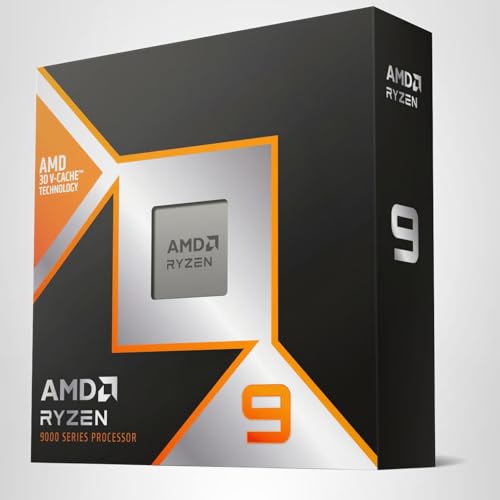
If your priority is gaming performance, the AMD RYZEN 7 9800X3D 8-Core, 16-Thread Desktop Processor is the safer recommendation because it is positioned as “the world’s fastest gaming processor” and pairs 96MB L3 cache with up to 5.2GHz boost clocks. It also emphasizes better thermal performance and great power efficiency, which matters in real gaming rigs.
The AMD Ryzen 9 9950X3D 16-Core Processor wins on raw multi-core horsepower thanks to 16 cores and 32 threads, plus a higher boost clock up to 5.7GHz. That makes it the stronger choice for rendering, streaming, compiling, and other heavily threaded workloads.
Winner: Ryzen 9950X3D — for overall compute performance and productivity headroom.
Value
Value depends on what you actually do with your PC. At a more affordable entry point, the Ryzen 9800X3D delivers elite gaming performance at a much lower entry price than the 9950X3D. For many buyers, that price gap is too large to justify unless they truly need the extra cores.
The Ryzen 9950X3D is a pricier option. If your PC is mostly for gaming, that extra spend may not return much practical benefit. But if your workflow regularly uses all those cores, the higher price is easier to defend.
Winner: Ryzen 9800X3D — better performance-per-dollar for most buyers.
Battery / Durability / Thermals
Desktop CPUs do not have battery life, so the real comparison here is thermals, power efficiency, and long-term practicality. The Ryzen 9800X3D gets the edge because its key features explicitly call out great power efficiency and better thermal performance versus the previous generation. That usually means easier cooling and a more straightforward gaming setup.
The Ryzen 9950X3D is still a premium Zen 5 desktop chip, but with 16 cores it is naturally the more demanding option under sustained heavy workloads. If your case airflow and cooler are already excellent, that is less of an issue; otherwise, the 9800X3D is the less fussy choice.
Winner: Ryzen 9800X3D — easier to cool and more efficient for typical gaming use.
Ryzen 9800X3D Is the Better Choice If…
- You want the best gaming-focused CPU without paying for extra cores you may never use.
- You care about strong thermals and power efficiency in a mainstream AM5 build.
- You want a simpler, drop-in-ready upgrade path for Socket AM5.
- You are building a PC primarily for high-FPS gaming.
- You want the better overall value at a much lower price.
Ryzen 9950X3D Is the Better Choice If…
- You game and also do serious content creation, editing, rendering, or streaming.
- You want 16 cores and 32 threads for heavy multitasking.
- You care about higher boost clocks and more all-around workstation headroom.
- You are willing to pay a premium for one chip that can handle both gaming and productivity.
- You want the strongest option in this matchup for mixed-use performance.
Our Final Verdict
For most shoppers searching Ryzen 9800X3D vs 9950X3D, the AMD RYZEN 7 9800X3D 8-Core, 16-Thread Desktop Processor is the better buy. It offers elite gaming performance, better efficiency, easier cooling, and a much more attractive price.
Choose the AMD Ryzen 9 9950X3D 16-Core Processor only if your PC is doing more than gaming and you can make real use of the extra cores. For creators, streamers, and power users, it is the more versatile premium option.
Frequently Asked Questions
Is the Ryzen 9800X3D better than the 9950X3D for gaming?
Yes, for most gaming-focused buyers, the Ryzen 9800X3D is the better pick because it is positioned as the world’s fastest gaming processor and costs much less.
Is the Ryzen 9950X3D worth the extra money?
It can be, but mainly if you also do heavy productivity work like editing, rendering, or streaming. If you only game, the extra cost is harder to justify.
Which CPU is better for a gaming and streaming PC?
The Ryzen 9950X3D is the stronger all-around choice because its 16 cores and 32 threads give you more headroom for multitasking while gaming.
Do both CPUs work on AM5 motherboards?
Yes, both are AM5 desktop processors, so they fit the same platform family. The 9800X3D is specifically described as drop-in ready for proven Socket AM5 infrastructure.
Which is easier to cool?
The Ryzen 9800X3D is generally the easier chip to cool thanks to its emphasis on power efficiency and better thermal performance.
Frequently asked questions
- Is the Ryzen 9800X3D better than the 9950X3D for gaming?
- Yes, for most gaming-focused buyers, the Ryzen 9800X3D is the better pick because it is positioned as the world’s fastest gaming processor and costs much less. Is the Ryzen 9950X3D worth the extra money?
- Is the Ryzen 9950X3D worth the extra money?
- It can be, but mainly if you also do heavy productivity work like editing, rendering, or streaming. If you only game, the extra cost is harder to justify. Which CPU is better for a gaming and streaming PC?
- Which CPU is better for a gaming and streaming PC?
- The Ryzen 9950X3D is the stronger all-around choice because its 16 cores and 32 threads give you more headroom for multitasking while gaming. Do both CPUs work on AM5 motherboards?
- Do both CPUs work on AM5 motherboards?
- Yes, both are AM5 desktop processors, so they fit the same platform family. The 9800X3D is specifically described as drop-in ready for proven Socket AM5 infrastructure. Which is easier to cool?
- Which is easier to cool?
- The Ryzen 9800X3D is generally the easier chip to cool thanks to its emphasis on power efficiency and better thermal performance.
Get the Full Tech Buyer's Guide
Join our free newsletter — we'll send our latest Tech picks, specs and verdicts straight to your inbox.
Free. No spam. Unsubscribe anytime.
Was this review helpful?
Be the first to share your feedback on this review.
Sign in to vote and let us know what you think.
Discussion (0)
No comments yet. Be the first to start the discussion.
Related Reviews

5 Best ITX Cases in 2026 — Smallest Builds with the Best Cooling, GPU Support, and Portability
If you’re trying to build a powerful small-form-factor PC, the hardest part is finding an ITX case that fits your GPU, cooler, and PSU without turning cable management into a nightmare. The best ITX cases 2026 buyers should consider balance size, thermals, and hardware compatibility instead of just

8 Best 4TB SSDs in 2026 — Fast, Durable, and Storage-Rich Picks for Every Setup
If you’re searching for the best 4TB SSDs in 2026, you probably want one thing above all: huge storage without slowing down your PC, console, or portable workflow. The right 4TB drive can make gaming libraries, 4K video projects, photo archives, and everyday file transfers feel far more manageable.

NVIDIA GeForce RTX 4070 Ti Review (2026): Specs, Pros & Cons, and Who It's For
The Gigabyte GeForce RTX 4070 Ti Super WINDFORCE OC stands out as a practical, premium-feeling graphics card rather than a flashy showpiece. Its metal backplate adds rigidity and a more finished look, while the WINDFORCE cooling system is designed to keep thermals under control during sustained gami