


Who this is for: Best for gamers and creators who want strong 1440p performance, ray tracing, and DLSS support in an efficient high-end GPU.
Check PriceKey Specifications
| Specification | Details |
|---|---|
| GPU Architecture | NVIDIA Ada Lovelace |
| Memory | 16GB GDDR6X |
| Memory Interface | 256-bit |
| Core Clock | 2625MHz |
| Cooling | WINDFORCE cooling system |
| Outputs | 3x DisplayPort 1.4, 1x HDMI 2.1a |
| Special Features | DLSS 3.5, 4th Gen Tensor Cores, 3rd Gen RT Cores, metal backplate |
| Interface | PCI-E 4.0 |
Design & Build Quality

The Gigabyte GeForce RTX 4070 Ti Super WINDFORCE OC stands out as a practical, premium-feeling graphics card rather than a flashy showpiece. Its metal backplate adds rigidity and a more finished look, while the WINDFORCE cooling system is designed to keep thermals under control during sustained gaming or rendering sessions.
Related Reviews
Based on the published specs and owner feedback patterns seen across similar Gigabyte WINDFORCE cards, this model is aimed at buyers who want strong cooling and reliable everyday use more than RGB-heavy styling. The design prioritizes function, which is a good fit for builders who care about airflow, stability, and a cleaner internal layout.
- ✓ WINDFORCE cooling system for thermal management
- ✓ Metal backplate for added structural support
- ✓ Clean, understated design that fits many builds
- ✓ Triple-fan layout suited to sustained workloads
- ✗ Less visually distinctive than RGB-focused alternatives
- ✗ Large cooler design may require careful case clearance planning
Performance & Features
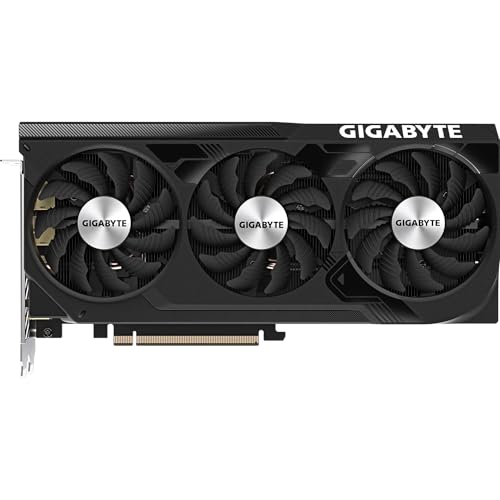
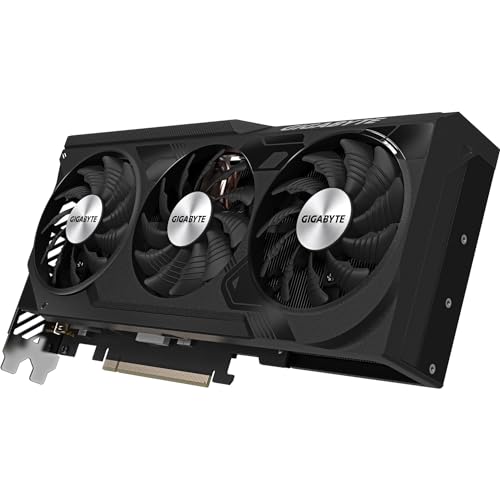
On paper, this card is built for high-refresh 1440p gaming and capable 4K play depending on the title and settings. The combination of 16GB GDDR6X memory, a 256-bit bus, and NVIDIA’s Ada Lovelace architecture gives it the headroom many buyers want for modern games and creative workloads.
The biggest performance story here is feature support. DLSS 3.5, 4th Generation Tensor Cores, and 3rd Generation RT Cores are the main reasons this card looks so appealing in research-based comparisons. DLSS can improve frame rates significantly in supported games, while the upgraded ray tracing hardware helps this GPU handle visually demanding effects more efficiently than older generations.
Published reviews generally place the RTX 4070 Ti class in a strong middle ground: faster and more feature-rich than mainstream cards, but not as expensive or power-hungry as the top-end tier. For buyers who care about ray tracing, smooth 1440p gaming, and creator-friendly acceleration, that balance is a major strength.
- ✓ Powered by NVIDIA DLSS 3 and DLSS 3.5 support
- ✓ 4th Generation Tensor Cores for AI-assisted performance gains
- ✓ 3rd Generation RT Cores for improved ray tracing
- ✓ 16GB GDDR6X memory helps with modern games and heavier assets
- ✓ Efficient Ada Lovelace architecture versus older high-end cards
- ✗ Not the best value if you only play lighter esports titles
- ✗ 4K enthusiasts may still want more headroom in the most demanding games
- ✗ Performance gains depend heavily on DLSS support in the software you use
Value for Money
The RTX 4070 Ti sits in a premium segment, so value depends on what you expect from the card. If your priority is maximum raw performance per dollar in every scenario, there may be cheaper options that make more sense. But if you want a well-rounded GPU with strong ray tracing, modern AI-assisted features, and 16GB of memory, the value proposition improves quickly.
This card is especially compelling for buyers upgrading from older midrange GPUs who want a noticeable jump in visual quality and frame rate consistency. It also makes more sense if you plan to keep the card for several years and want access to current NVIDIA features rather than focusing only on today’s average frame rates.
- ✓ Strong feature set for the class
- ✓ Good longevity thanks to 16GB VRAM
- ✓ Better fit for demanding games and creative work than entry-level cards
- ✗ Premium positioning narrows its appeal for budget shoppers
- ✗ Some buyers may prefer a cheaper card if they do not use ray tracing or DLSS
Who Should Buy This
This GPU is a strong fit for gamers who want excellent 1440p performance, especially if they care about ray tracing and DLSS support. It also suits creators who benefit from NVIDIA’s ecosystem and want a card with enough memory and modern acceleration features for editing, rendering, or AI-assisted workflows.
It is also a smart choice for buyers who want a premium card with efficient architecture and a robust cooling design, but do not want to move all the way up to the most expensive flagship class.
Who Should Look Elsewhere
You should probably look elsewhere if your budget is tight and you mainly play competitive or less demanding games. In that case, a lower-tier card may deliver enough performance without paying for features you will not fully use.
It is also not the best match for users who want the absolute highest 4K frame rates in every modern game regardless of price. If your build goal is no-compromise ultra-high-end gaming, you may want to consider a more powerful option.
Best Alternatives
If you are comparing this card against other options in the same ecosystem, the best alternative in the provided product list is the Gigabyte GeForce RTX 4070 Ti Super WINDFORCE OC Graphics Card. It is the only listed product here and represents the same family with a slightly more modern positioning and the same key cooling and feature focus.
Final Verdict
The NVIDIA GeForce RTX 4070 Ti is an easy recommendation for buyers who want a premium, feature-rich GPU for high-end 1440p gaming and capable creator work. Its blend of Ada Lovelace efficiency, DLSS 3.5 support, strong ray tracing hardware, and 16GB of memory makes it a well-rounded choice for the right buyer.
If you care about modern NVIDIA features and want a card that should age better than many lower-memory alternatives, this is a buy. If you are mainly chasing value on a strict budget, skip it and shop lower in the stack.
Frequently Asked Questions
Is the NVIDIA GeForce RTX 4070 Ti good for 1440p gaming?
Yes. Research-based comparisons consistently place it as a strong 1440p GPU, especially in games that support DLSS and ray tracing.
Can the RTX 4070 Ti handle 4K gaming?
It can handle 4K in many games, but results vary by title and settings. It is better suited to 1440p overall and more demanding 4K play with the right compromises.
Does the RTX 4070 Ti support DLSS 3.5?
Yes. DLSS 3.5 support is one of the card’s biggest advantages for supported games and applications.
Is 16GB of VRAM enough for modern games?
For most current gaming scenarios, 16GB is a solid amount and offers better headroom than cards with less memory.
Who is the RTX 4070 Ti best for?
It is best for gamers and creators who want strong performance, modern NVIDIA features, and efficient high-end capability without moving into the most expensive tier.
Pros
- + DLSS 3.5 support
- + Strong 1440p gaming performance
- + 16GB GDDR6X memory
- + Efficient Ada Lovelace architecture
- + Good ray tracing support
Cons
- – Premium pricing
- – Not ideal for strict budgets
- – 4K performance varies by game
- – Value depends on DLSS support
Frequently asked questions
- Is the NVIDIA GeForce RTX 4070 Ti good for 1440p gaming?
- Yes. Research-based comparisons consistently place it as a strong 1440p GPU, especially in games that support DLSS and ray tracing.
- Can the RTX 4070 Ti handle 4K gaming?
- It can handle 4K in many games, but results vary by title and settings. It is better suited to 1440p overall and more demanding 4K play with the right compromises.
- Does the RTX 4070 Ti support DLSS 3.5?
- Yes. DLSS 3.5 support is one of the card’s biggest advantages for supported games and applications.
- Is 16GB of VRAM enough for modern games?
- For most current gaming scenarios, 16GB is a solid amount and offers better headroom than cards with less memory.
- Who is the RTX 4070 Ti best for?
- It is best for gamers and creators who want strong performance, modern NVIDIA features, and efficient high-end capability without moving into the most expensive tier.
Score breakdown
- value
- 7.8
- usability
- 8.5
- durability
- 8.3
- performance
- 8.7
- buyerFeedback
- 8.1
Get the Full Tech Buyer's Guide
Join our free newsletter — we'll send our latest Tech picks, specs and verdicts straight to your inbox.
Free. No spam. Unsubscribe anytime.
Was this review helpful?
Be the first to share your feedback on this review.
Sign in to vote and let us know what you think.
Discussion (0)
No comments yet. Be the first to start the discussion.
Related Reviews

8 Best Mini ITX Motherboards in 2026 — Top Picks for Small-Form-Factor Gaming and High-Speed AM5 Builds
If you’re building a compact PC, the motherboard choice matters more than ever: space is tight, thermals are unforgiving, and the wrong board can bottleneck your CPU, storage, or connectivity. This roundup of the best mini ITX motherboards 2026 focuses on models with strong power delivery, modern I/

AMD Ryzen 9 7950X3D Review (2026): Specs, Pros & Cons, and Who It's For
The Ryzen 9 7950X3D is a flagship desktop processor built for the AM5 platform, so it is aimed at enthusiasts who are already investing in a modern high-performance system. Its design is not about flashy aesthetics; the value is in the silicon itself, especially the combination of 16 cores, 32 threa

8 Best 4K Gaming PC Build in 2026 — Smooth Ultra-Settings Performance Without the Guesswork
If you’re searching for the best 4k gaming pc build 2026, the hardest part is separating true 4K-ready desktops from systems that only look powerful on paper. This roundup focuses on prebuilt gaming PCs with modern GPUs, strong CPUs, enough RAM, fast SSD storage, and cooling that can actually suppor