

What is AMD vs Nvidia GPU 2026? A Complete 2026 Guide
If you’re trying to decide between AMD and Nvidia GPUs in 2026, the hardest part is cutting through marketing noise, spec sheets, and outdated advice. The real question is not just “which brand is faster,” but which GPU ecosystem fits your budget, games, creative apps, and upgrade path. This guide explains how AMD vs Nvidia GPU 2026 compares in plain English and highlights a few research-backed options worth considering.
Related Reviews
How It Works
A graphics processing unit, or GPU, is the chip that handles visual workloads like gaming, video editing, 3D rendering, and AI-accelerated tasks. Instead of relying on the CPU to do everything, the GPU uses thousands of smaller cores to process many graphics calculations at the same time, which is why it can render complex scenes so much faster.
In the AMD vs Nvidia GPU 2026 conversation, the main difference is usually the balance between raw gaming performance, software features, and driver/ecosystem support. AMD GPUs are often valued for strong value and high VRAM at a given price, while Nvidia cards are commonly chosen for mature creator tools, broader app optimization, and features tied to its software stack.
For most buyers, the “best” GPU is the one that matches the job. A gamer focused on high-refresh 1080p or 1440p play may prioritize frame rates and price, while a content creator may care more about rendering speed, encoding quality, and software compatibility.
Key Benefits & Use Cases
Gaming
GPUs are the foundation of modern PC gaming. They determine how smoothly a game runs, how high you can push resolution and detail, and whether advanced effects like ray tracing are usable without big performance drops.
Content Creation
Video editing, motion graphics, 3D modeling, and photo workflows benefit from GPU acceleration. In many creative apps, a stronger GPU can reduce export times, speed up previews, and make timeline scrubbing feel much smoother.
AI and Productivity
More buyers are now using GPUs for AI-assisted workflows, local model experimentation, and accelerated productivity apps. Nvidia is often associated with stronger software support here, but AMD continues to improve its position and can still be compelling depending on the application.
Value-Focused Upgrades
If you want the most performance per dollar, AMD often competes well in the midrange. If you want premium feature support, creator ecosystem advantages, or specific app compatibility, Nvidia can justify a higher price for some users.
What to Look For When Buying
1. Performance at Your Target Resolution
Don’t shop by model name alone. Look at real-world performance for the resolution you actually use: 1080p, 1440p, or 4K.
2. VRAM Capacity
Video memory matters for modern games, texture quality, large projects, and future-proofing. Higher VRAM can help in demanding workloads, especially at higher resolutions.
3. Cooling and Noise
A strong cooler can keep boost clocks stable and reduce fan noise. Triple-fan designs often run cooler than compact single-fan solutions, especially in sustained workloads.
4. Software Features and Driver Support
Check whether the GPU supports the features you care about, such as upscaling, recording tools, creative app acceleration, and pro software compatibility.
5. Price vs Total Value
The best deal is not always the cheapest card. Consider performance, VRAM, cooling quality, power needs, and the apps you use most often.
Top Recommended Products
Below are two research-based options from the current product list. These are not hands-on test results; they’re based on published specs, owner feedback patterns, and product comparisons.
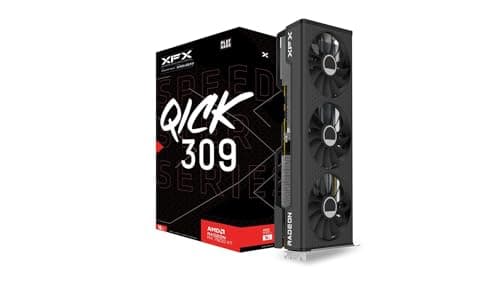
XFX Speedster QICK309 Radeon RX 7600XT Black Gaming Graphics Card $369.99 ✓ Prime
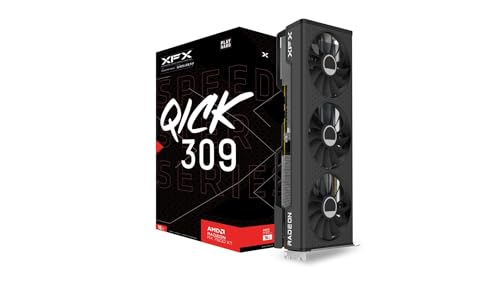


This AMD Radeon option stands out for its 16GB GDDR6 memory, which is attractive for modern games and heavier texture loads. The XFX QICK triple-fan cooling solution and boost clock up to 2810 MHz make it a strong midrange candidate for buyers who want a balance of capacity, cooling, and value.
- ✓ 16GB GDDR6 helps with modern gaming and larger workloads
- ✓ XFX QICK triple-fan cooling for better thermal control
- ✓ Boost clock up to 2810 MHz
- ✓ AMD RDNA 3 platform for current-generation features
- ✓ Prime eligible
- ✗ Not the best fit if you want top-tier 4K performance
- ✗ AMD feature preferences may matter less if your apps favor Nvidia
- ✗ Price may be high for buyers who only need basic 1080p gaming
NVIDIA Quadro K6000 graphics card $250.00 ✓ Prime
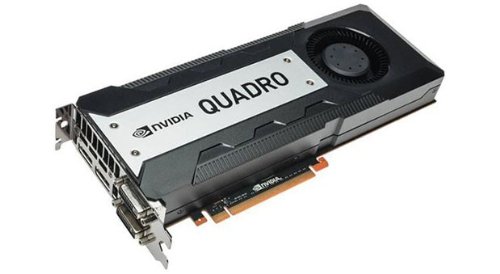
This workstation-focused Nvidia card is aimed at professional visualization and rendering workloads rather than mainstream gaming. Its 12GB DDR5 memory and PCI Express x16 interface make it relevant for buyers who need a pro-grade card for compatible systems and specialized applications.
- ✓ 12GB DDR5 memory for complex visualization workloads
- ✓ Designed for professional rendering and workstation use
- ✓ PCI Express x16 interface for broad motherboard compatibility
- ✓ Single-fan cooling solution for sustained operation
- ✓ Prime eligible
- ✗ Older workstation design may not suit modern gaming buyers
- ✗ Single-fan cooling can be less robust than larger modern coolers
- ✗ Not the best value if your goal is current-gen gaming performance
Common Mistakes to Avoid
Buying by Brand Alone
“AMD” or “Nvidia” by itself does not tell you enough. The right choice depends on the exact model, price, VRAM, cooling, and the software you use.
Ignoring VRAM Needs
Some buyers focus only on frame rates and forget memory capacity. If you play newer games, use high-resolution textures, or work with large creative files, VRAM can become a real bottleneck.
Overpaying for Features You Won’t Use
Premium software features are useful only if your apps actually benefit from them. If your main goal is gaming, make sure you are paying for performance you’ll notice.
Forgetting Power and Case Fit
Check your PSU capacity, connector requirements, and case clearance before buying. A great GPU is not useful if it cannot fit or cannot be powered properly.
Not Matching the GPU to the Monitor
There is little point in buying a very expensive card for a basic 1080p 60Hz display unless you plan to upgrade the monitor soon. Match the GPU to your screen and usage.
Frequently Asked Questions
Is AMD or Nvidia better in 2026?
It depends on your use case. AMD often offers strong value and competitive gaming performance, while Nvidia is frequently preferred for creator software support, ecosystem features, and certain professional workloads.
Which GPU brand is better for gaming?
Both brands can be excellent for gaming. AMD is often attractive for price-to-performance, while Nvidia may appeal more if you want specific features, broad game optimization, or stronger support in certain titles and tools.
How much VRAM do I need in 2026?
For many 1080p and 1440p users, 8GB to 12GB may be enough, but 16GB can be a safer choice for heavier games, textures, and creative workloads. The right amount depends on resolution and the software you use.
Is the XFX Speedster QICK309 Radeon RX 7600XT good for gaming?
Based on its specs, it is a solid midrange gaming card with 16GB GDDR6 and strong cooling. It is best suited to buyers who want good 1080p or lighter 1440p performance rather than top-end 4K gaming.
Is the NVIDIA Quadro K6000 still worth buying?
It can still make sense for certain legacy workstation setups and specific professional needs, but it is not a modern mainstream gaming recommendation. Buyers should compare it carefully against newer cards and only choose it if its workstation-focused features fit their use case.
Pros
- + AMD value-focused midrange option
- + 16GB GDDR6 helps with modern workloads
- + Triple-fan cooling on XFX model
- + Nvidia workstation memory capacity
- + Prime eligible options
Cons
- – Brand choice depends on the exact model
- – Older Quadro design is not ideal for gaming
- – Single-fan cooler may be less robust
- – Not all features matter for every buyer
Frequently asked questions
- Is AMD or Nvidia better in 2026?
- It depends on your use case. AMD often offers strong value and competitive gaming performance, while Nvidia is frequently preferred for creator software support, ecosystem features, and certain professional workloads.
- Which GPU brand is better for gaming?
- Both brands can be excellent for gaming. AMD is often attractive for price-to-performance, while Nvidia may appeal more if you want specific features, broad game optimization, or stronger support in certain titles and tools.
- How much VRAM do I need in 2026?
- For many 1080p and 1440p users, 8GB to 12GB may be enough, but 16GB can be a safer choice for heavier games, textures, and creative workloads. The right amount depends on resolution and the software you use.
- Is the XFX Speedster QICK309 Radeon RX 7600XT good for gaming?
- Based on its specs, it is a solid midrange gaming card with 16GB GDDR6 and strong cooling. It is best suited to buyers who want good 1080p or lighter 1440p performance rather than top-end 4K gaming.
- Is the NVIDIA Quadro K6000 still worth buying?
- It can still make sense for certain legacy workstation setups and specific professional needs, but it is not a modern mainstream gaming recommendation. Buyers should compare it carefully against newer cards and only choose it if its workstation-focused features fit their use case.
Get the Full Tech Buyer's Guide
Join our free newsletter — we'll send our latest Tech picks, specs and verdicts straight to your inbox.
Free. No spam. Unsubscribe anytime.
Was this review helpful?
Be the first to share your feedback on this review.
Sign in to vote and let us know what you think.
Discussion (0)
No comments yet. Be the first to start the discussion.
Related Reviews
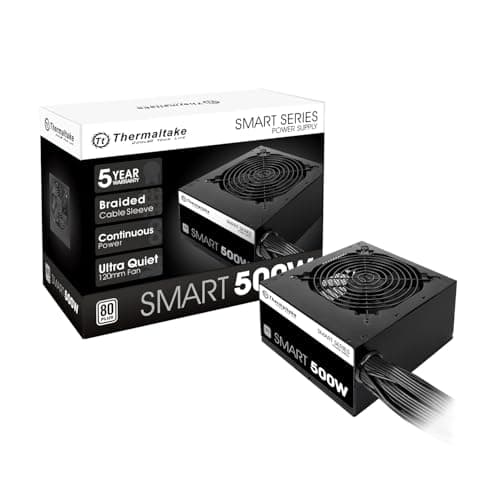
1 Best Power Supplies in 2026 — Reliable Budget Pick for Everyday Builds
If you’re searching for the best power supplies 2026 , you probably want one thing: a PSU that won’t become the weak link in your PC. That means stable power, sensible protections, and enough connectors for a basic graphics card or upgrade path. This research-based roundup focuses on one clearly doc
8 Best Air CPU Coolers in 2026 — Top Cooling Performance Without Liquid Maintenance
If your CPU is running hot, your fans are getting loud, or you want strong cooling without the risk and hassle of liquid, this guide is for you. The best air CPU coolers in 2026 balance thermal performance, socket compatibility, noise, and case fit so you can choose confidently. We researched specs,
8 Best 360mm AIO Coolers in 2026 — Cooler Temps, Less Noise, Better Value
If you’re hunting for the best 360mm aio coolers 2026 , the real challenge is separating genuinely strong thermal performers from flashy RGB models that look better than they cool. This roundup focuses on 360mm AIOs that combine strong cooling, reasonable noise levels, easy installation, and socket