

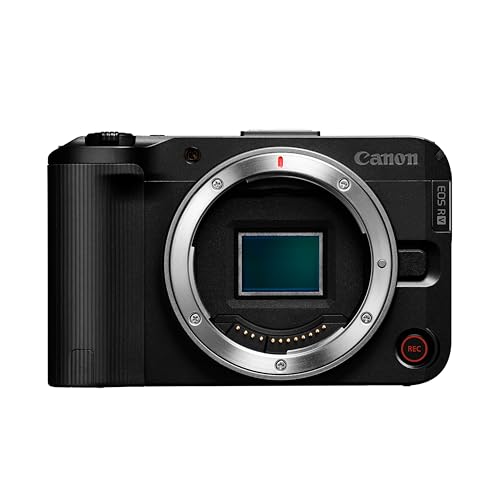
Who this is for: Best for vloggers and content creators who need strong video specs, easy autofocus, and a flexible mirrorless system.
Sony ZV-E10 II vs Canon R50V (2026): Which Should You Actually Buy?
At a Glance
| Category | Sony Alpha ZVE10 II | Canon EOS R50 V |
|---|---|---|
| Sensor | 26MP APS-C back-illuminated Exmor R CMOS | 24.2MP APS-C CMOS |
| Video | Up to 4K 60 fps, Full HD 120 fps | 4K 59.94p crop / 4K 29.97p full-width, Full HD 119.8p |
| Autofocus | Real-time Eye AF, Real-time Tracking | Dual Pixel CMOS AF II with Register People Priority |
| Creator features | Creative Look, My Image Style, bokeh controls | Vertical Video tripod mount, Front Record button, creator UI |
| Lens system | Sony E-mount, wide lens ecosystem | Canon RF lens system |
Design
Winner: Canon R50V

The Canon EOS R50 V is purpose-built around creator ergonomics, and that matters in real vlogging workflows. Its redesigned user interface, vertical video tripod mount, and front record button make it feel more directly optimized for solo shooting, TikTok clips, and quick social content.
Related Reviews
The Sony Alpha ZVE10 II is also creator-friendly, but its design advantage is more about flexibility than specialization. It offers interchangeable lenses and Sony’s familiar mirrorless handling, but the Canon’s dedicated creator touches give it the edge for ease of use.
✓ Canon R50V pros
- Creator-first layout with front record button
- Vertical video tripod mount for social content
- Redesigned UI aimed at faster operation
✗ Canon R50V cons
- Less focused on lens ecosystem breadth than Sony
- More specialized for creators than general-purpose shooters
Performance
Winner: Sony ZV-E10 II

On paper, the Sony Alpha ZVE10 II has the stronger performance profile for hybrid creators. Its 26MP back-illuminated sensor, up to 4K 60 fps recording, and Full HD 120 fps support make it the more versatile choice for people who want sharper stills plus more flexible slow-motion options.
Sony also gets the nod for autofocus breadth. Real-time Eye AF can recognize human, animal, and bird eyes, while Real-time Tracking helps keep subjects locked as they move. Canon’s Dual Pixel CMOS AF II is excellent, especially with Register People Priority, but Sony’s feature set is broader for mixed content creation.
✓ Sony ZV-E10 II pros
- 26MP back-illuminated APS-C sensor
- Up to 4K 60 fps and Full HD 120 fps
- Real-time Eye AF for humans, animals, and birds
- Real-time Tracking for moving subjects
✗ Sony ZV-E10 II cons
- Performance advantage may be overkill for casual short-form creators
- More of a spec-forward pick than a “simple” vlogging body
Value
Winner: Sony ZV-E10 II
Value is where the comparison gets interesting. The Sony Alpha ZVE10 II is the more expensive body, but it also ships with a lens kit in this listing and includes a stronger sensor, faster video specs, and a wider lens upgrade path. For buyers thinking beyond the first purchase, that can justify the higher upfront cost.
The Canon EOS R50 V may be the better entry point if price transparency and creator simplicity matter most, but the listing here does not show a current price. That makes it harder to call it the better value outright, especially when Sony’s discounted kit is clearly presented.
✓ Sony ZV-E10 II pros
- Includes a versatile 16-50mm kit lens
- Strong long-term value through E-mount lens selection
✗ Sony ZV-E10 II cons
- Higher upfront price than many entry-level creator cameras
- Kit pricing may stretch budget buyers
Battery/Durability
Winner: Canon R50V
Neither model is marketed here as a rugged, weather-sealed workhorse, so this category is mostly about practical creator durability and day-to-day usability. The Canon EOS R50 V gets the edge because its creator-focused controls can reduce friction and make it easier to shoot quickly and consistently, which matters when you are recording frequently.
The Sony Alpha ZVE10 II remains the more feature-rich camera, but the Canon’s simpler workflow is a real advantage for creators who want fewer steps between setup and recording. If you are prioritizing convenience over maximum spec sheet power, Canon feels more durable in daily use.
✓ Canon R50V pros
- Creator-first controls reduce setup friction
- Vertical shooting support helps social workflows
- Simple operation can be easier for frequent use
✗ Canon R50V cons
- Durability specs are not as clearly emphasized in the listing
- Less obvious long-term lens flexibility than Sony
Sony ZV-E10 II Is the Better Choice If…
- You want the stronger overall video and hybrid performance package.
- You care about 4K 60 fps, Full HD 120 fps, and advanced subject tracking.
- You plan to build into Sony E-mount lenses over time.
- You want the better long-term value from a more flexible camera system.
Canon R50V Is the Better Choice If…
- You want the easiest creator-focused layout for vlogging and short-form video.
- You value the vertical video tripod mount and front record button.
- You prefer Canon’s Dual Pixel AF approach and creator-first UI.
- You mostly shoot social content and want a camera that feels simple to operate.
Our Final Verdict
For most buyers comparing the Sony ZV-E10 II vs Canon R50V, the better overall pick is the Sony Alpha ZVE10 II. It offers the stronger sensor, more aggressive video specs, broader autofocus recognition, and a more expandable lens system, which makes it the safer long-term buy for creators who expect their needs to grow.
The Canon EOS R50 V is still a very smart choice if your priority is creator ergonomics and fast social-first shooting. But if you want the best blend of performance, flexibility, and future-proofing, Sony takes the win.
Frequently Asked Questions
Is the Sony ZV-E10 II better than the Canon R50V for vlogging?
Yes, for most creators who want stronger video specs and more lens flexibility, the Sony ZV-E10 II is the better all-around vlogging pick.
Which camera has better autofocus, Sony ZV-E10 II or Canon R50V?
Both are strong, but Sony has the broader tracking feature set, while Canon’s Dual Pixel CMOS AF II is especially appealing for creator workflows.
Does the Canon R50V have features made for vertical video?
Yes, the Canon R50V includes a vertical video tripod mount and a front record button, which are useful for social-first creators.
Which is better for beginners, Sony ZV-E10 II or Canon R50V?
The Canon R50V is usually easier for beginners because its interface and controls are more creator-focused and straightforward.
Which camera is the better long-term investment?
The Sony ZV-E10 II is the better long-term investment for most buyers because of its stronger specs and wider lens ecosystem.
Pros
- + Sony has stronger 4K/slow-motion specs
- + Sony offers broader autofocus tracking
- + Sony has better long-term lens ecosystem value
- + Canon has creator-focused controls and vertical shooting support
- + Canon is easier for quick social-first workflows
Cons
- – Sony costs more upfront
- – Canon price was not listed
- – Canon is less flexible for lens expansion than Sony
- – Neither model is presented as rugged or weather-sealed
Frequently asked questions
- Is the Sony ZV-E10 II better than the Canon R50V for vlogging?
- Yes, for most creators who want stronger video specs and more lens flexibility, the Sony ZV-E10 II is the better all-around vlogging pick.
- Which camera has better autofocus, Sony ZV-E10 II or Canon R50V?
- Both are strong, but Sony has the broader tracking feature set, while Canon’s Dual Pixel CMOS AF II is especially appealing for creator workflows.
- Does the Canon R50V have features made for vertical video?
- Yes, the Canon R50V includes a vertical video tripod mount and a front record button, which are useful for social-first creators.
- Which is better for beginners, Sony ZV-E10 II or Canon R50V?
- The Canon R50V is usually easier for beginners because its interface and controls are more creator-focused and straightforward.
- Which camera is the better long-term investment?
- The Sony ZV-E10 II is the better long-term investment for most buyers because of its stronger specs and wider lens ecosystem.
Score breakdown
- value
- 8.0
- usability
- 8.0
- durability
- 7.0
- performance
- 9.0
- buyerFeedback
- 8.0
Get the Full Tech Buyer's Guide
Join our free newsletter — we'll send our latest Tech picks, specs and verdicts straight to your inbox.
Free. No spam. Unsubscribe anytime.
Was this review helpful?
Be the first to share your feedback on this review.
Sign in to vote and let us know what you think.
Discussion (0)
No comments yet. Be the first to start the discussion.
Related Reviews
8 Best 3-Axis Gimbals for Mirrorless Cameras in 2026 — Smooth, Portable Stabilization for Run-and-Gun Creators
If your mirrorless footage still looks shaky when you walk, pan, or shoot handheld for long stretches, a good 3-axis gimbal can completely change your workflow. The best 3-axis gimbals for mirrorless cameras balance payload, portability, battery-friendly ergonomics, and easy vertical shooting for mo
How to Choose the Best Drone for Wedding Videography in 2026: Complete Buying Guide
Choosing a drone for wedding videography is harder than it looks because you need more than just a camera in the sky—you need smooth motion, dependable control, and footage that blends naturally into a once-in-a-lifetime event. The biggest mistake buyers make is focusing on camera resolution alone a
Best Cinema Drones for Every Budget in 2026: Ranked by Price & Performance
If you’re shopping for the best cinema drones for film production in the premium tier, the real challenge is finding the sweet spot between smooth footage, reliable flight, and a setup that won’t overcomplicate production days. Some buyers need the most affordable way to get stabilized aerial shots,