

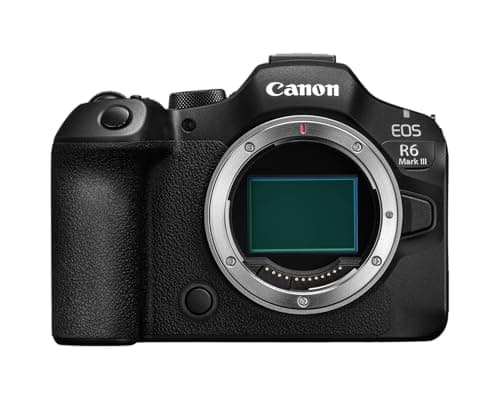
Who this is for: Best for buyers comparing a fast stills-focused Canon against a lower-cost hybrid Sony for full-frame photo/video needs.
Canon R6 Mark III vs Sony A7 IV (2026): Which Should You Actually Buy?
At a Glance
| Category | Canon EOS R6 Mark III Body, Full-Frame Mirrorless Camera | Sony Alpha 7 IV Full-frame Mirrorless Interchangeable Lens Camera |
|---|---|---|
| Sensor | 32.5MP full-frame CMOS | 33MP full-frame Exmor R back-illuminated CMOS |
| Burst Shooting | Up to 40 fps | Not listed in provided specs |
| Autofocus | Dual Pixel CMOS AF II with people, animal, vehicle detection | Sony AF system with BIONZ XR processing |
| Video | Not specified in provided specs | Up to 4K 60p 10-bit 4:2:2; 7K oversampled 4K 30p |
| IBIS | Up to 8.5 stops | Not specified in provided specs |
| Card Slots | CFexpress Type B + UHS-II SD | Not specified in provided specs |
| Price | $2,799.00 ✓ Prime | $1,998.00 ✓ Prime |
Design
Canon R6 Mark III
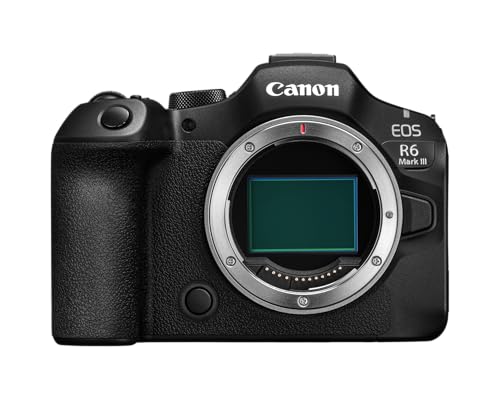

The Canon body is built around a modern full-frame stills-first formula, with a 32.5MP sensor, fast shooting, and a dual-slot setup that includes CFexpress Type B. Based on the published specs, it feels aimed at users who want a more premium action-friendly body.
Related Reviews
Winner: Canon R6 Mark III
Why it wins: the higher-end card slot setup and faster shooting spec make it the more pro-leaning body on paper.
- ✓ 32.5MP full-frame CMOS sensor
- ✓ Dual card slots, including CFexpress Type B
- ✓ Built for fast stills workflows
- ✗ Higher price
- ✗ Less budget-friendly for general users
Sony A7 IV
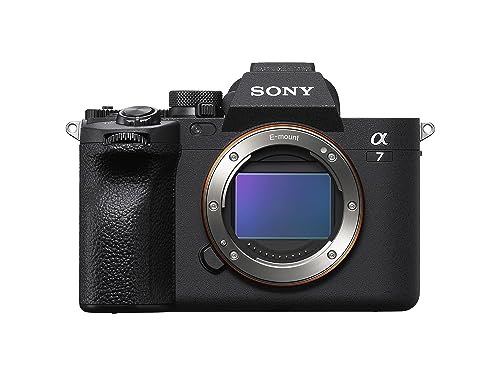

The Sony A7 IV is the more accessible option here, with a lower price and a proven hybrid-camera reputation. Its 33MP sensor keeps resolution competitive, and the body is part of a very mature full-frame ecosystem.
Winner: Sony A7 IV
Why it wins: it delivers a very similar-resolution full-frame body for much less money.
- ✓ 33MP full-frame sensor
- ✓ Lower launch price
- ✓ Strong hybrid-camera positioning
- ✗ Less aggressive stills speed on the provided specs
- ✗ Fewer standout body-level advantages in this matchup
Performance
Canon R6 Mark III
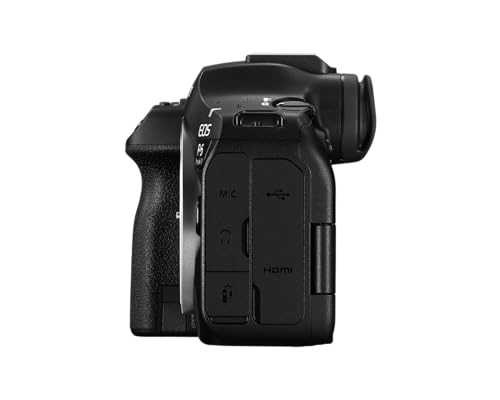
On paper, Canon is the clear performance leader for fast action. The 40 fps burst rate and pre-continuous shooting are major advantages for sports, wildlife, and unpredictable moments.
Winner: Canon R6 Mark III
Why it wins: 40 fps shooting with pre-capture support is a serious advantage for action-focused buyers.
- ✓ Up to 40 fps photo shooting
- ✓ 20 frames of pre-continuous shooting
- ✓ DIGIC X processor
- ✗ Less compelling for buyers who prioritize video specs over stills speed
- ✗ Costs substantially more
Sony A7 IV

Sony’s biggest performance strength is its imaging pipeline. The BIONZ XR engine, 33MP sensor, and 4K 60p 10-bit video support make it a very capable hybrid performer, especially for creators who split time between stills and video.
Winner: Sony A7 IV
Why it wins: it offers the stronger all-around hybrid feature set, especially for video creators.
- ✓ 8x more powerful BIONZ XR processor
- ✓ Up to 4K 60p 10-bit 4:2:2
- ✓ 7K oversampled 4K 30p
- ✓ S-Cinetone color profile
- ✗ Not the fastest stills camera in this comparison
- ✗ Less specialized for action than Canon
Value
Canon R6 Mark III
Canon is the more expensive camera by a wide margin, and that matters. Unless you specifically need the faster burst rate and stronger stabilization, the price premium is hard to justify for general buyers.
Winner: Sony A7 IV
Why it wins: it gives you a very strong full-frame platform for about $800 less.
- ✓ Lower price
- ✓ Excellent feature set for the money
- ✓ Strong hybrid value proposition
- ✗ Older than the Canon in this matchup
- ✗ Not as specialized for high-speed stills
Sony A7 IV
The Sony A7 IV is the better value buy because it lands in a more approachable price bracket while still offering full-frame resolution, strong video capability, and a mature ecosystem that many buyers already know and trust.
Winner: Sony A7 IV
- ✓ Better upfront affordability
- ✓ Excellent balance of stills and video
- ✓ Easier recommendation for most buyers
- ✗ Not the performance king
- ✗ Some buyers may want Canon’s newer autofocus and burst speed
Battery and Durability
Canon R6 Mark III
Canon’s strongest durability-related advantage in the supplied specs is its in-body image stabilization, which is rated up to 8.5 stops in the center and 7.5 stops periphery. That’s a big plus for handheld shooting and low-light work.
Winner: Canon R6 Mark III
Why it wins: the stronger stabilization spec gives it a practical edge for handheld reliability.
- ✓ Up to 8.5 stops of IBIS
- ✓ Better handheld confidence on paper
- ✓ Dual-slot design supports more robust workflows
- ✗ Higher cost to get those advantages
- ✗ Battery life not specified in the provided specs
Sony A7 IV
Sony does not get the edge here from the provided spec sheet, but it remains the safer durability/value pick simply because you are paying less while still getting a serious full-frame camera body.
Winner: Sony A7 IV
Why it wins: better overall ownership value offsets the lack of standout stabilization specs in the provided data.
- ✓ Lower financial risk
- ✓ Full-frame body at a more accessible price
- ✓ Strong all-around platform
- ✗ No listed stabilization advantage in the provided specs
- ✗ Durability details not fully specified here
Canon R6 Mark III Is the Better Choice If…
- You shoot sports, wildlife, or fast-moving subjects and want 40 fps burst speed.
- You value stronger in-body stabilization for handheld shooting.
- You want Canon’s newer autofocus features, including people, animal, and vehicle detection.
- You prefer a more premium stills-focused body with CFexpress support.
- You’re willing to pay more for performance headroom.
Sony A7 IV Is the Better Choice If…
- You want the better value and a much lower purchase price.
- You do a lot of hybrid work and care about 4K 60p 10-bit video.
- You want a very capable full-frame camera without paying flagship-level money.
- You prefer Sony’s color tools like S-Cinetone and the BIONZ XR pipeline.
- You want the safer all-rounder for general photo/video use.
Our Final Verdict
In the Canon R6 Mark III vs Sony A7 IV matchup, the Canon R6 Mark III is the better camera overall if your priority is pure shooting performance, faster stills, and stronger stabilization. It feels like the more advanced body for action-oriented photographers, while the Sony A7 IV remains the smarter buy for most people because it delivers excellent full-frame versatility at a much lower price.
If you are buying for sports, wildlife, or fast-paced event work, Canon is the more compelling upgrade. If you want the best blend of image quality, video capability, and value, Sony is easier to recommend.
Check Canon R6 Mark III Price on Amazon →
Check Sony A7 IV Price on Amazon →
Frequently Asked Questions
Is the Canon R6 Mark III better than the Sony A7 IV?
For fast action and stills performance, yes—the Canon R6 Mark III is stronger on paper. For overall value and hybrid use, the Sony A7 IV is often the better buy.
Which camera is better for video, Canon R6 Mark III or Sony A7 IV?
Based on the provided specs, the Sony A7 IV has the clearer video advantage thanks to 4K 60p 10-bit 4:2:2 and 7K oversampled 4K 30p.
Which is better for sports and wildlife?
The Canon R6 Mark III is the better choice for sports and wildlife because of its 40 fps shooting and pre-continuous capture support.
Why is the Canon R6 Mark III more expensive?
It costs more because it offers a newer body, faster burst shooting, stronger IBIS, and a more premium stills-oriented feature set.
Which one should most buyers choose?
Most buyers should choose the Sony A7 IV because it offers excellent full-frame performance and video features for much less money.
Pros
- + Canon: 40 fps burst shooting
- + Canon: up to 8.5 stops IBIS
- + Sony: lower price and strong value
- + Sony: 4K 60p 10-bit video
- + Sony: 7K oversampled 4K 30p
Cons
- – Canon: much higher price
- – Sony: less specialized for action
- – Canon: video specs not provided here
- – Sony: no standout IBIS spec listed
Frequently asked questions
- Is the Canon R6 Mark III better than the Sony A7 IV?
- For fast action and stills performance, yes—the Canon R6 Mark III is stronger on paper. For overall value and hybrid use, the Sony A7 IV is often the better buy.
- Which camera is better for video, Canon R6 Mark III or Sony A7 IV?
- Based on the provided specs, the Sony A7 IV has the clearer video advantage thanks to 4K 60p 10-bit 4:2:2 and 7K oversampled 4K 30p.
- Which is better for sports and wildlife?
- The Canon R6 Mark III is the better choice for sports and wildlife because of its 40 fps shooting and pre-continuous capture support.
- Why is the Canon R6 Mark III more expensive?
- It costs more because it offers a newer body, faster burst shooting, stronger IBIS, and a more premium stills-oriented feature set.
- Which one should most buyers choose?
- Most buyers should choose the Sony A7 IV because it offers excellent full-frame performance and video features for much less money.
Score breakdown
- value
- 8.1
- usability
- 8.5
- durability
- 8.4
- performance
- 8.8
- buyerFeedback
- 8.3
Get the Full Tech Buyer's Guide
Join our free newsletter — we'll send our latest Tech picks, specs and verdicts straight to your inbox.
Free. No spam. Unsubscribe anytime.
Was this review helpful?
Be the first to share your feedback on this review.
Sign in to vote and let us know what you think.
Discussion (0)
No comments yet. Be the first to start the discussion.
Related Reviews
What is How to Fly a Drone for Beginners? A Complete 2026 Guide
If you’re searching for how to fly a drone for beginners , you probably want a simple way to start without crashing, breaking parts, or feeling overwhelmed by controls. The good news is that beginner drone flying becomes much easier once you understand the basics of lift, controller inputs, and safe
What is how to start photography 2026? A Complete 2026 Guide
If you’re trying to figure out how to start photography 2026 , the hardest part is usually knowing where to begin without wasting money on the wrong gear. The good news is that photography is much easier to enter now because beginner-friendly cameras, phones, editing apps, and learning resources are

What is FAA drone rules 2026? A Complete 2026 Guide
If you’re trying to understand FAA drone rules 2026 , the biggest challenge is usually separating real compliance requirements from outdated advice. The rules can change based on whether you fly recreationally, commercially, or for a specific job like real estate, inspections, or mapping. This guide