


Who this is for: Best for hikers who need a practical, adjustable pack for short multi-day thru-hikes and weather protection.
Check PriceIf you’re trying to figure out how to pick the right hiking backpack for multi-day thru-hikes, the stakes are higher than most buyers realize. The wrong pack can leave you fighting shoulder pain, unstable loads, wet gear, and a miserable fit that gets worse every mile. This guide breaks down the features that matter most, the mistakes to avoid, and which pack type makes sense for different thru-hike needs.
Related Reviews
The most common mistake is buying based on capacity alone. A backpack can look “big enough” on paper and still fail if the suspension, fit, access, or weather protection doesn’t match your body and your trail setup.
Key Features to Look For
1. Capacity That Matches Your Trip Length
For multi-day thru-hikes, capacity is the first filter because it determines whether your shelter, sleep system, food, and layers fit without overstuffing. A pack that is too small forces poor packing choices, while one that is too large can tempt you to carry unnecessary weight.
For shorter multi-day sections, a 50L pack can be a practical sweet spot if your gear is compact and efficient. The goal is not maximum volume; it’s enough room for your kit without turning the pack into a bulky load.
2. Internal Frame Support
An internal frame helps transfer weight from your shoulders to your hips, which matters a lot when you’re carrying food and water for several days. On longer hikes, this support improves stability and reduces fatigue compared with frameless designs that can collapse under heavier loads.
Look for a frame that keeps the pack upright and balanced, especially if you plan to carry tent parts, a sleeping bag, or dense food loads.
3. Comfortable Suspension and Adjustable Fit
Fit is one of the biggest predictors of comfort on trail. Padded shoulder straps, a supportive back panel, and adjustable torso height help the pack align with your body instead of hanging awkwardly from your shoulders.
If you’re comparing packs, prioritize adjustability because hikers come in different heights and torso lengths. A pack that can be tuned to your frame will usually carry better than a “one-size-fits-all” design.
4. Breathable Back Panel
Multi-day hiking means long hours of movement, and a breathable back panel can make a noticeable difference in comfort. Foam padding and airflow-focused construction help reduce hot spots and pressure buildup along the back.
This feature is especially useful in warm weather or on strenuous climbs, where heat buildup can make a pack feel heavier than it is.
5. Weather Protection
Rain resistance matters because wet gear can quickly ruin comfort, warmth, and morale on a thru-hike. A pack made from durable fabric plus a rain cover gives you a better chance of keeping your essentials dry in sudden weather changes.
Even if you use dry bags inside the pack, external weather protection is still valuable because it adds another layer of defense for clothing, electronics, and sleep gear.
6. Smart Organization and Access
Multiple compartments can make packing and trail access easier, especially when you need to separate wet items, shoes, or frequently used gear. A dedicated bottom compartment is useful for keeping dirty or damp items away from clean clothing.
Good organization saves time at camp and helps you avoid unpacking the entire bag just to find one item.
7. Attachment Points for Extra Gear
MOLLE webbing, compression straps, and gear attachment points are helpful when you need to secure a sleeping pad, tent, trekking accessories, or other bulky items. On a thru-hike, external carry options can make your setup more flexible.
Just remember that external attachment points should support a tidy load, not become an excuse to overpack.
What to Avoid
Overbuying Capacity
One of the most common mistakes is choosing a pack that is much larger than your actual gear list requires. Bigger packs often lead to carrying more than you need, which adds fatigue over long distances.
Poor Fit With No Adjustment Range
A backpack that doesn’t match your torso length or body shape can create pressure points, shoulder strain, and poor weight transfer. If the suspension cannot be adjusted, comfort may suffer even if the pack has good specs on paper.
Weak Material or Low Durability Construction
Multi-day hiking is hard on gear. Thin fabrics, flimsy stitching, and weak hardware can become a problem after repeated use, especially if the pack is loaded heavily or scraped against rock, brush, or camp surfaces.
Ignoring Carry Comfort for the Hips and Back
If a pack lacks real support where it matters, your shoulders will end up doing too much work. That’s a bad tradeoff on long hikes, where load distribution is essential for endurance.
Too Many Features You Won’t Use
Overly complex packs can add weight and clutter without improving trail performance. Extra pockets and straps are useful only if they match your packing style and trail routine.
Assuming Weather Resistance Is Enough Without a Backup Plan
Even a pack with a rain cover should be paired with sensible waterproofing for critical items. Don’t assume the outer shell alone will protect your sleep system or electronics in prolonged wet conditions.
Our Top Picks
Best Overall for Multi-Day Budget-Minded Hikers: Jueachy 50L Internal Frame Hiking Backpack
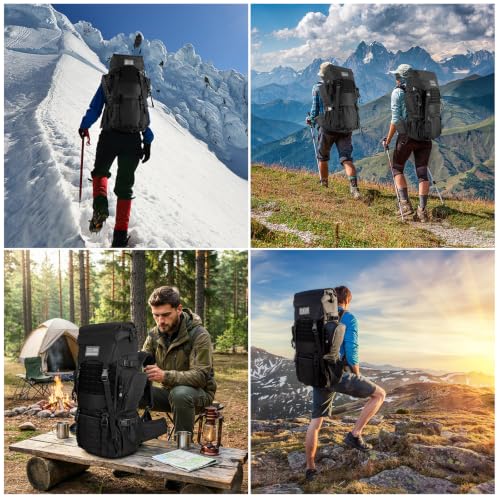

This pack is a strong fit for hikers who want a practical, feature-rich option for 3- to 5-day trips without overcomplicating the buying process. The 50L main compartment, internal frame, adjustable carry system, and included rain cover make it especially appealing for multi-day backpacking where organization and weather protection matter.
Its separate waterproof bottom compartment is a useful detail for storing shoes or wet clothes, and the MOLLE webbing plus compression straps add flexibility for carrying extra trail gear. Based on the published specs, it’s best for hikers who want a versatile all-around pack for backpacking, camping, and travel.
✓ 50L capacity suited to short multi-day trips
✓ Internal frame for improved load support
✓ Adjustable carrying system for different heights
✓ Breathable padded back panel and shoulder straps
✓ Rain cover included for extra weather protection
✓ MOLLE webbing and multiple straps for gear attachment
✗ May be more pack than ultralight hikers want
✗ Organization-focused design may not suit minimalists
✗ Best value depends on whether you’ll use the external attachment system
✗ 50L can still feel large if your kit is very compact
Best for Hikers Who Need Organized Storage and Wet-Gear Separation
If your biggest frustration is digging through a packed bag at camp, the Jueachy’s multiple compartments are the main reason to consider it. The separate lower waterproof section is especially helpful for keeping muddy or damp items isolated from clean clothing and sleep gear.
That kind of layout is useful for hikers who like a more structured packing system and want faster access to essentials during multi-day trips.
Best for Weather-Conscious Trail Use
The included rain cover makes this pack more appealing for hikers who expect changing conditions and want a simple layer of protection built in. While no backpack replaces careful waterproofing, this is a meaningful advantage for anyone who wants to reduce weather-related stress on trail.
For mixed-weather routes, that extra protection can be a practical deciding factor.
Best for Adjustable Fit on a Single Pack
The adjustable carrying system is a major plus if you’re buying for a body type that often falls between standard pack sizes. Being able to tune the height and carry position can improve comfort more than a flashy feature list ever will.
That makes it a useful option for hikers who value fit flexibility over ultralight simplicity.
Budget Guide: What You Get at Each Tier
Budget Tier
At the budget level, you usually get a functional internal-frame pack with basic padding, a simple organization layout, and enough capacity for short multi-day hikes. Expect practical features like compression straps, multiple pockets, and some weather protection, but not the lightest materials or the most refined suspension system.
This tier is best for hikers who want a capable entry point for occasional thru-hike sections or weekend-to-multi-day use.
Mid-Range Tier
Mid-range packs usually improve comfort, adjustability, and durability. You’re more likely to see better back-panel ventilation, more dependable stitching, stronger fabric, and a suspension system that carries weight more naturally over long days.
This is often the sweet spot for hikers who want a pack that feels more stable and comfortable without moving into highly specialized gear.
Premium Tier
Premium hiking backpacks tend to focus on refined fit, lighter materials, smarter load transfer, and more trail-specific design choices. These packs often feel more dialed in for long mileage, especially when your gear list is already optimized and you care about shaving strain from every mile.
This tier is best for committed thru-hikers who want maximum carry comfort and are willing to pay for a more advanced suspension and materials package.
Frequently Asked Questions
What size backpack is best for a multi-day thru-hike?
Most hikers should start by matching pack size to their gear volume rather than choosing the biggest option available. For many multi-day trips, a pack around 50L can work well if your shelter, sleep system, and clothing are compact.
Is an internal frame better for thru-hiking?
For most multi-day thru-hikes, yes. An internal frame usually carries weight more efficiently and helps stabilize the load, which is useful when you’re carrying food, water, and other essentials over long distances.
How important is torso adjustability?
Very important. A pack that can be adjusted to your torso length often carries more comfortably and reduces shoulder strain. Fit matters as much as volume, especially on long hikes.
Do I need a rain cover if my pack fabric is durable?
Yes, a rain cover is still useful. Durable fabric can help, but a cover adds another layer of protection for your gear during sudden weather changes, especially on multi-day routes.
What’s the biggest mistake first-time thru-hikers make when buying a backpack?
The biggest mistake is choosing a pack based only on size or appearance instead of fit, support, and how their gear actually packs. A comfortable, well-fitted pack is usually more important than simply getting the largest capacity available.
Pros
- + 50L capacity fits 3- to 5-day trips
- + Internal frame improves load support
- + Adjustable carry system helps different body sizes
- + Rain cover adds weather protection
- + MOLLE webbing and straps improve gear carry
Cons
- – Not ideal for ultralight minimalists
- – 50L may be more than some hikers need
- – Organization features may feel busy for simple packers
- – Best fit still depends on torso match
Frequently asked questions
- What size backpack is best for a multi-day thru-hike?
- Most hikers should match pack size to gear volume; around 50L can work well for many multi-day trips if your kit is compact.
- Is an internal frame better for thru-hiking?
- For most multi-day thru-hikes, yes. It usually carries weight more efficiently and stabilizes the load.
- How important is torso adjustability?
- Very important. Adjustable fit often reduces shoulder strain and improves comfort on long hikes.
- Do I need a rain cover if my pack fabric is durable?
- Yes. A rain cover adds another layer of protection for gear during sudden weather changes.
- What’s the biggest mistake first-time thru-hikers make when buying a backpack?
- Buying for size or appearance instead of fit, support, and how their gear actually packs.
Score breakdown
- value
- 8.0
- usability
- 8.0
- durability
- 7.0
- performance
- 7.0
Get the Full Outdoor Buyer's Guide
Join our free newsletter — we'll send our latest Outdoor picks, specs and verdicts straight to your inbox.
Free. No spam. Unsubscribe anytime.
Was this review helpful?
Be the first to share your feedback on this review.
Sign in to vote and let us know what you think.
Discussion (0)
No comments yet. Be the first to start the discussion.
Related Reviews

How to Choose the Best 12V Portable Refrigerator for Camping in 2026: Complete Buying Guide
If you’re trying to figure out how to choose a 12V portable refrigerator for camping , the real challenge is not finding one that “cools.” It’s choosing a model that matches your power setup, trip length, vehicle space, and the kind of food you actually want to keep cold or frozen. The most common m

EcoFlow DELTA 2 Portable Power Station Review (2026): Specs, Pros & Cons, and Who It's For
The EcoFlow DELTA 2 has built a reputation around practical, user-friendly design rather than flashy styling. Based on published specs and owner feedback, it is positioned as a portable power station that balances capacity, output, and usability in a form factor many buyers can actually move around

Therm-a-Rest NeoAir NXT Review (2026): Specs, Pros & Cons, and Who It's For
Check Price on Amazon →