

Who this is for: Best for hikers who want a clear, research-based guide to choosing trekking poles that match their budget, comfort needs, and trail use.
If you’re figuring out how to choose trekking poles, the biggest challenge is separating marketing hype from the features that actually improve balance, reduce fatigue, and hold up on real trails. The wrong pair can feel too heavy, slip under load, or be annoying to pack and adjust when conditions change. This guide breaks down the features that matter most, the mistakes to avoid, and the best researched options for different hiking needs.
Related Reviews
Key Features to Look For
1) Pole Material: Aluminum vs. Carbon Fiber
Material affects weight, vibration, and durability. Aluminum poles are usually more affordable and tend to bend before they break, which many hikers like for rough use. Carbon fiber is lighter and can reduce arm fatigue on long days, but it often costs more and may be less forgiving under hard side impacts.
2) Grip Type and Grip Extension
Grip material changes comfort over time. Cork is popular because it can absorb moisture and mold to your hand shape, while EVA foam can feel soft and lightweight. A lower grip extension is especially useful on steep climbs because it lets you choke down without constantly readjusting pole length.
3) Locking Mechanism
The lock system determines how securely the pole stays at your chosen length. Flip locks are easy to use and quick to adjust, which is helpful when you’re changing terrain. Twist locks can be cleaner and more streamlined, but some hikers prefer the more obvious security of external levers.
4) Weight per Pole
Weight matters more than many beginners expect. Lighter poles reduce swing fatigue and make all-day hiking feel easier, especially on long ascents. That said, ultralight poles aren’t automatically better if they sacrifice comfort, stability, or durability.
5) Adjustability Range and Collapse Size
Good trekking poles should fit your height and your terrain. A wider adjustment range helps if multiple people will use them or if you need to shorten them for descents and lengthen them for climbs. Collapse size matters if you travel often, pack poles in a suitcase, or want them to fit inside a daypack.
6) Strap Comfort and Hand Support
Straps help transfer load from your hands to your wrists, which can reduce grip fatigue on long hikes. Look for straps that feel padded or well-shaped rather than thin and abrasive. Poor straps can cause chafing even if the pole itself is excellent.
7) Trail Compatibility and Accessories
Think about where you hike most often. Mud baskets, snow baskets, rubber tips, and walking caps can make a big difference depending on season and terrain. A pole that includes a useful accessory kit offers more value than a bare-bones setup.
What to Avoid
1) Choosing by Price Alone
The cheapest poles often cut corners on locks, grip comfort, or shaft quality. If you hike only occasionally, budget poles can still work, but avoid assuming the lowest price is the best value for long-term use.
2) Ignoring Your Height and Use Case
Poles that are too short or too long can throw off posture and reduce stability. Also, a pole that works well for casual walking may not be ideal for backpacking, steep climbs, or travel. Match the pole to how you actually hike.
3) Overlooking Packability
If you travel by plane or want to stash poles in a pack, collapse length matters a lot. Some poles are compact enough for travel, while others are better for car camping or local trail use. Don’t assume every trekking pole is suitcase-friendly.
4) Buying Without Checking the Lock Type
Weak or awkward locks can become a daily frustration. If you expect frequent adjustments, avoid poles with locking systems that reviewers describe as slipping, difficult to tighten, or finicky in cold weather.
5) Forgetting About Grip Comfort
Hard grips, sweaty hands, and poor strap design can make even a technically strong pole unpleasant to use. Comfort is not a luxury feature—it affects how long you can hike without hand fatigue.
Our Top Picks
Below are the best researched options based on published specs, product details, and owner feedback patterns. Each one fits a different type of buyer, so the “best” choice depends on your priorities.
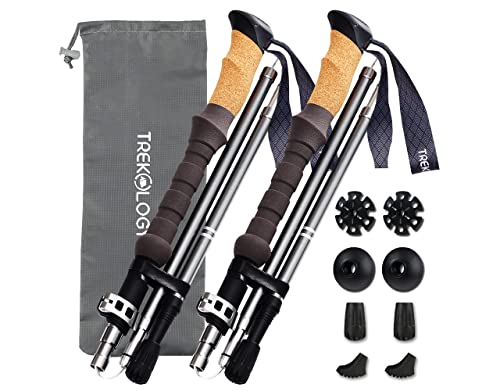
Best Overall for Most Hikers: Trekology Trek-Z Cork Grip Collapsible Lightweight Hiking Trekking Poles


This is a strong all-around pick for hikers who want a balance of comfort, portability, and price. The cork grip, lightweight aluminum build, and tri-fold design make it especially appealing for day hikes, travel, and backpacking where pack size matters.
- ✓ Cork grip helps absorb moisture on long hikes
- ✓ Collapses to a compact 15 inches for easier packing
- ✓ Lightweight aluminum shafts suit all-day use
- ✓ Includes a carry bag and comes as a set of 2
- ✗ Cork grip has slight rotational flex, which may surprise first-time buyers
- ✗ Not as light as carbon fiber options
- ✗ Best for general hiking rather than ultralight purists
Best Premium Lightweight Choice: 100% Carbon Fiber Trekking Poles by USA Brand - Ultra Strong Lightweight Collapsible Hiking Poles with Cork and EVA Foam Grips & Quick Adjustable Flip Locks


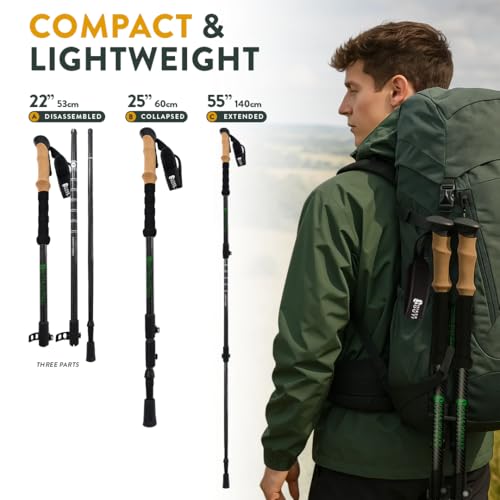
If you want the lightest-feeling option in this guide, this carbon fiber model stands out. It’s best for backpackers and hikers who care about reducing swing weight and want a more premium feel, especially on longer mileage days.
- ✓ 100% carbon fiber keeps weight very low
- ✓ Cork grip and EVA foam extension improve comfort on climbs
- ✓ Metal flip locks offer secure adjustment
- ✓ Backed by a 1-year warranty and long-term brand presence
- ✗ Higher price than aluminum alternatives
- ✗ Carbon fiber can be less forgiving in hard side impacts
- ✗ May be more than casual walkers need
Best Budget Pick: Telescopic Trekking Poles for Hiking, Anti-Shock Nordic Walking Sticks
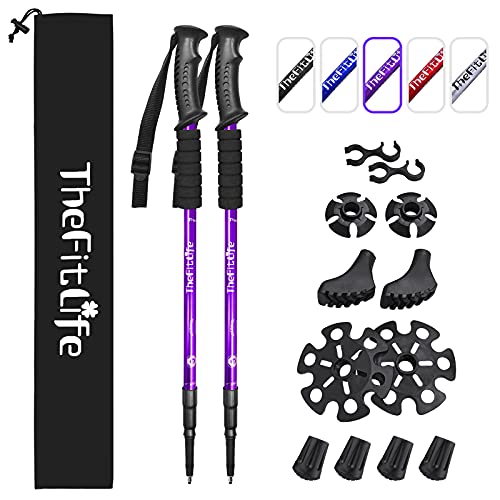


This is the most affordable option in the guide and a smart fit for beginners, occasional hikers, or anyone who wants a low-risk entry point. It includes a broad accessory kit and a shock-absorbing spring, which adds value at this price.
- ✓ Lowest price in the lineup
- ✓ Includes rubber tips, mud baskets, and snow baskets
- ✓ Lightweight aluminum construction
- ✓ Twist-lock adjustment is simple and glove-friendly
- ✗ Twist locks may not feel as secure to every buyer as flip locks
- ✗ Less premium feel than higher-end models
- ✗ Not the best choice if you want the lightest possible pole
Budget Guide: What You Get at Each Price Point
Basic Support and Starter Value
At this level, you’re usually paying for function first. Expect aluminum shafts, simple adjustment systems, and enough durability for casual trail use or occasional walking. The tradeoff is usually less refined grip comfort, fewer premium materials, and a more utilitarian feel.
Best Value Zone for Most Buyers
This is where many hikers find the sweet spot. You can often get lighter construction, better grips, more reliable locking, and a more compact folding or telescoping design. If you’re buying your first real trekking poles, this range usually offers the best balance of price and performance.
Premium Comfort and Lower Weight
In this range, you start seeing carbon fiber or more refined aluminum builds, better strap comfort, and more confidence-inspiring locks. These poles are a good fit if you hike frequently, carry a backpack, or want to reduce fatigue on longer trips.
What Price Usually Means in Practice
Higher price doesn’t always mean better for everyone. A casual walker may be perfectly happy with a budget aluminum pole, while a backpacker covering long distances may appreciate the weight savings and comfort of a premium model. The best value is the one that matches your terrain, frequency, and travel needs.
Frequently Asked Questions
1) What is the most important thing when learning how to choose trekking poles?
The most important factor is matching the pole to your use case. Material, grip comfort, lock type, and packability matter most because they affect how the poles feel on real hikes and whether you’ll actually enjoy using them.
2) Are carbon fiber trekking poles better than aluminum?
Carbon fiber is usually lighter and can feel better on long hikes, while aluminum is often more affordable and can be more forgiving under rough use. The better choice depends on whether you prioritize weight savings or budget and durability.
3) Should I get flip-lock or twist-lock trekking poles?
Flip locks are often preferred for quick, obvious adjustments and secure locking. Twist locks can be simpler in appearance and may feel streamlined, but some hikers prefer the confidence of an external lever.
4) Do trekking poles need to be the same height as my body?
No. Trekking poles should be adjusted based on your height and terrain. Many hikers shorten poles for uphill sections and lengthen them for descents, so adjustability is more useful than a fixed size.
5) Can I take trekking poles on a plane?
Usually they must go in checked luggage rather than carry-on. If you travel often, choose a pole with a compact folded length and check airline and TSA rules before packing.
Pros
- + Cork and EVA grips improve comfort
- + Aluminum and carbon fiber options for different budgets
- + Compact folding and telescopic designs for travel
- + Secure lock systems matter more than price alone
- + Accessory kits add value for mixed terrain
Cons
- – Cheap poles may slip or feel flimsy
- – Carbon fiber costs more than aluminum
- – Twist locks can be less confidence-inspiring for some hikers
- – Packability varies a lot by model
- – Grip comfort is easy to overlook
Frequently asked questions
- What is the most important thing when learning how to choose trekking poles?
- The most important factor is matching the pole to your use case. Material, grip comfort, lock type, and packability matter most because they affect how the poles feel on real hikes and whether you’ll actually enjoy using them.
- Are carbon fiber trekking poles better than aluminum?
- Carbon fiber is usually lighter and can feel better on long hikes, while aluminum is often more affordable and can be more forgiving under rough use. The better choice depends on whether you prioritize weight savings or budget and durability.
- Should I get flip-lock or twist-lock trekking poles?
- Flip locks are often preferred for quick, obvious adjustments and secure locking. Twist locks can be simpler in appearance and may feel streamlined, but some hikers prefer the confidence of an external lever.
- Do trekking poles need to be the same height as my body?
- No. Trekking poles should be adjusted based on your height and terrain. Many hikers shorten poles for uphill sections and lengthen them for descents, so adjustability is more useful than a fixed size.
- Can I take trekking poles on a plane?
- Usually they must go in checked luggage rather than carry-on. If you travel often, choose a pole with a compact folded length and check airline and TSA rules before packing.
Get the Full Outdoor Buyer's Guide
Join our free newsletter — we'll send our latest Outdoor picks, specs and verdicts straight to your inbox.
Free. No spam. Unsubscribe anytime.
Was this review helpful?
Be the first to share your feedback on this review.
Sign in to vote and let us know what you think.
Discussion (0)
No comments yet. Be the first to start the discussion.
Related Reviews

7 Best Insulated Winter Sleeping Bags for Cold-Weather Backpacking in 2026 — Warmth, Packability, and Real-World Comfort
If you’re trying to find the best insulated winter sleeping bags for cold-weather backpacking, the challenge is balancing warmth, weight, and pack size without ending up with a bag that feels cramped or flimsy. The picks below focus on models with cold-weather ratings, insulation-focused constructio

4 Best 12V Portable Refrigerators for Camping in 2026 — Faster Cooling, Better Off-Grid Convenience
If you’re tired of soggy ice, warm drinks, and food that spoils halfway through a trip, a 12V portable refrigerator can make camping a lot easier. The best models for camping in 2026 combine fast compressor cooling, battery protection, and enough storage to handle real weekend or multi-day use. This

EcoFlow RIVER 2 Max Review (2026): Specs, Pros & Cons, and Who It's For
The RIVER 2 Max is built around portability first. At 13.3 pounds, it’s light enough to move from the car to a campsite, into an RV, or around the house without feeling like a burden. That matters a lot for a power station in this capacity class, because many buyers want backup power they can actual