


Who this is for: Best for campers, RV owners, and homeowners who need lightweight, fast-charging backup power for essentials.
Check PriceEcoFlow RIVER 2 Max Review (2026): Specs, Pros & Cons, and Who It's For
Key Specifications
| Spec | Details |
|---|---|
| Product | EF ECOFLOW Portable Power Station River 2 Max 500, 499Wh LiFePO4 Battery |
| Battery Capacity | 499Wh |
| Battery Chemistry | LiFePO4 |
| AC Recharge Time | About 1 hour using EcoFlow X-Stream fast charging |
| Maximum Output | Up to 1000W |
| Solar Charging | Up to 220W input, as fast as 2.3 hours |
| Weight | 13.3 lbs |
| Ports | AC outlets, USB-C, and other essential output options |
| Best For | Camping, RV trips, light home backup, and portable device charging |
Design & Build Quality

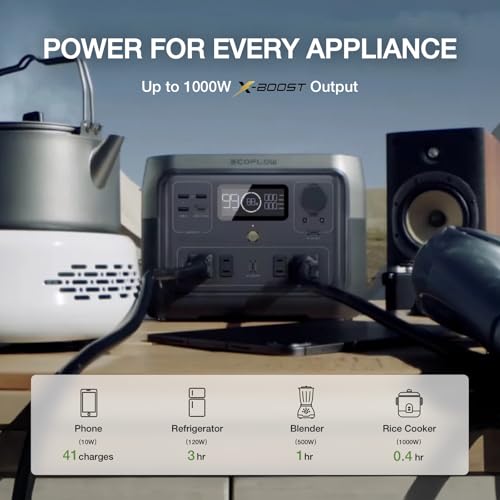
The RIVER 2 Max is built around portability first. At 13.3 pounds, it’s light enough to move from the car to a campsite, into an RV, or around the house without feeling like a burden. That matters a lot for a power station in this capacity class, because many buyers want backup power they can actually carry, not just store in a garage.
Related Reviews
Published specs and owner feedback consistently point to a compact, travel-friendly design with a practical port layout. EcoFlow also emphasizes advanced battery management protection, which helps support long-term reliability by monitoring voltage, current, and temperature. For buyers comparing this to louder fuel generators, the clean, enclosed design is a major plus for indoor-adjacent use cases like apartments, offices, and vehicle travel.
What stands out most in the build story is not ruggedness in the heavy-duty generator sense, but convenience. This is the kind of unit you can keep ready, move quickly, and recharge fast. That combination makes it feel more like an always-ready utility device than a niche emergency gadget.
✓ Pros
- Lightweight at 13.3 lbs for easy transport
- Compact design suits camping, RVs, and home backup
- LiFePO4 battery chemistry supports long service life
- Advanced BMS protection helps monitor battery health
✗ Cons
- Not intended for heavy whole-home backup
- Battery capacity is modest for larger appliances
- Best value depends on whether you need fast charging more than raw capacity
Performance & Features
The biggest reason the EcoFlow RIVER 2 Max gets attention is performance efficiency. EcoFlow says it can recharge from AC in about one hour using X-Stream fast charging, which is a standout spec in a market where many portable power stations take much longer to refill. For buyers who want a unit that can be topped off quickly between trips or after an outage, that speed is a major practical advantage.
Its 1000W output rating also broadens what it can run. According to the manufacturer, it can power multiple essentials at once and handle a wide range of common electronics through its mix of ports. That makes it suitable for charging phones, laptops, lights, cameras, fans, and small appliances, though not for demanding equipment that exceeds its output ceiling. In other words, it’s a strong “essentials” power station, not a brute-force generator replacement.
Another major feature is the LiFePO4 battery. This chemistry is widely favored for portable power stations because it offers better cycle life than many older lithium-ion setups. EcoFlow positions the RIVER 2 Max as a long-life option with over 10 years of use under the right conditions, which is one of the reasons it appeals to buyers looking for durability instead of disposable convenience.
Solar charging support is another plus. With up to 220W solar input, EcoFlow says the unit can recharge in as fast as 2.3 hours under ideal conditions. That makes it attractive for off-grid travel, overlanding, and anyone who wants to reduce dependence on wall power. Real-world solar performance will vary with weather, angle, and panel setup, but the feature set is strong for this size category.
From a user experience standpoint, the RIVER 2 Max is best understood as a fast, flexible power hub. The combination of quick AC recharge, solar input, and portable weight gives it a convenience edge over many competing backup solutions.
✓ Pros
- About 1-hour AC recharge is a major convenience win
- Up to 1000W output covers everyday essentials well
- LiFePO4 battery chemistry is built for long-term use
- Solar charging support adds off-grid flexibility
- Multiple ports make it easy to charge several devices at once
✗ Cons
- 499Wh capacity may feel limited for extended outages
- Not ideal for high-wattage appliances
- Solar performance depends heavily on conditions and panel setup
Value for Money
Value here depends on what you want from a portable power station. If your priority is maximum watt-hours for the dollar, the RIVER 2 Max may not be the obvious winner. But if you care about fast charging, battery longevity, low weight, and a polished user experience, it becomes much more compelling.
This is the kind of product that makes sense for buyers who will actually use the convenience features. Fast recharge is not just a spec-sheet talking point; it changes how often the unit stays ready. Likewise, LiFePO4 battery tech matters more if you plan to keep the station for years rather than treat it as a one-season purchase.
Compared with fuel-powered alternatives, the RIVER 2 Max also has a different value proposition. It won’t run as long as a gas generator, but it is cleaner, quieter, and easier to live with indoors or near living spaces. For many households and travelers, that tradeoff is worth it.
✓ Pros
- Strong feature set for the size and weight
- Fast recharge improves real-world usefulness
- Long-life battery design supports better ownership value
- Cleaner and quieter than fuel generators
✗ Cons
- Not the best choice if you only want maximum capacity
- Better suited to convenience-focused buyers than heavy-duty users
Who Should Buy This
The EcoFlow RIVER 2 Max is a strong fit for campers, RV owners, and road-trippers who want portable backup power without dealing with fuel, fumes, or heavy equipment. It also makes sense for apartment dwellers and homeowners who want a compact emergency power source for phones, routers, lights, and other essentials during short outages.
It is especially appealing if you value fast turnaround. The ability to recharge quickly means you can use it, refill it, and be ready again with far less waiting than many competing portable stations. That convenience is one of the product’s biggest strengths.
If you want a lightweight power station with modern battery tech and a practical feature set, this is one of the more balanced options in its class.
Who Should Look Elsewhere
If your main goal is running large appliances, powering a refrigerator for long periods, or supporting extended whole-home backup, you should probably look at a larger-capacity power station or a fuel generator instead. The RIVER 2 Max is portable and capable, but it is still a mid-size unit with limits.
Heavy users who need longer runtime may also prefer a generator-style solution if they are comfortable with fuel, noise, and maintenance. Likewise, buyers who only care about the lowest upfront cost may find other options more attractive, even if they give up charging speed or battery chemistry.
In short: this is a great convenience-first power station, but not a universal solution for every backup scenario.
Best Alternatives


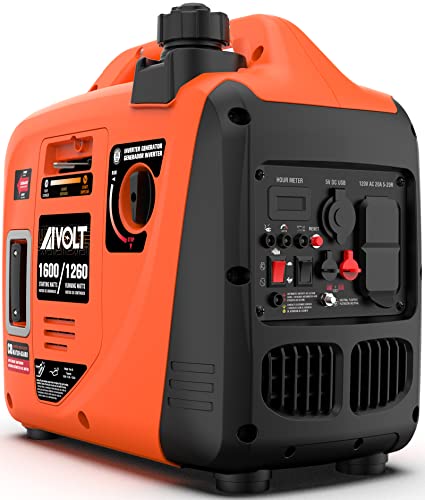
If you want a fuel-powered alternative instead of a battery station, these are the only comparison models in the list worth considering. Each one serves a different buyer type.
AIVOLT 1600W Super Quiet Inverter Generator
This is the budget-friendly alternative for buyers who want a lighter gas generator with clean power, CO protection, and a compact footprint. It makes sense if runtime matters more than battery convenience.
SIOKIUU 2500W Portable Generator
This mid-range alternative offers more output and longer runtime than the EcoFlow, making it a better fit for users who want gas-powered endurance for RVs, job sites, or backup use.
Oxseryn 2800-Watts Portable Inverter Generator
This premium alternative is the strongest option here for buyers who want more output, quiet operation, and a compact generator with multi-output flexibility.
Final Verdict
The EcoFlow RIVER 2 Max is an excellent research-backed pick for buyers who want portable power with fast charging, LiFePO4 battery longevity, and a lightweight design. It is especially well suited to camping, RV travel, and light home backup where convenience matters more than maximum runtime.
If you need a compact power station that is easy to carry, quick to recharge, and versatile enough for everyday essentials, this is a buy. If you need long-duration backup for larger appliances, skip it and move up to a bigger-capacity solution or a fuel generator.
Frequently Asked Questions
1. How long does the EcoFlow RIVER 2 Max take to charge?
EcoFlow says it can recharge from a standard AC outlet in about 1 hour using X-Stream fast charging. Solar charging can also be very fast under ideal conditions.
2. What can the EcoFlow RIVER 2 Max power?
It is designed for everyday essentials like phones, laptops, lights, small appliances, cameras, and other low- to moderate-wattage devices. It is not meant for high-demand equipment that exceeds its output rating.
3. Is the EcoFlow RIVER 2 Max good for camping?
Yes. Its 13.3-pound weight, portable design, and multiple charging options make it a strong fit for camping and RV use.
4. How long will the EcoFlow RIVER 2 Max battery last?
It uses LiFePO4 battery cells, which are designed for long service life. EcoFlow markets the battery as a long-life solution with over 10 years of use under the right conditions.
5. Is the EcoFlow RIVER 2 Max worth buying for home backup?
It is worth buying if you want backup power for small essentials during short outages. If you need to run large appliances or handle longer outages, a larger power station or generator would be a better fit.
Pros
- + 1-hour AC recharge
- + 499Wh LiFePO4 battery
- + 13.3 lb portable design
- + Up to 1000W output
- + Solar charging support
Cons
- – Limited capacity for larger outages
- – Not for high-wattage appliances
- – Solar performance varies by conditions
Frequently asked questions
- How long does the EcoFlow RIVER 2 Max take to charge?
- EcoFlow says it can recharge from a standard AC outlet in about 1 hour using X-Stream fast charging. Solar charging can also be very fast under ideal conditions.
- What can the EcoFlow RIVER 2 Max power?
- It is designed for everyday essentials like phones, laptops, lights, small appliances, cameras, and other low- to moderate-wattage devices. It is not meant for high-demand equipment that exceeds its output rating.
- Is the EcoFlow RIVER 2 Max good for camping?
- Yes. Its 13.3-pound weight, portable design, and multiple charging options make it a strong fit for camping and RV use.
- How long will the EcoFlow RIVER 2 Max battery last?
- It uses LiFePO4 battery cells, which are designed for long service life. EcoFlow markets the battery as a long-life solution with over 10 years of use under the right conditions.
- Is the EcoFlow RIVER 2 Max worth buying for home backup?
- It is worth buying if you want backup power for small essentials during short outages. If you need to run large appliances or handle longer outages, a larger power station or generator would be a better fit.
Score breakdown
- value
- 8.2
- usability
- 9.2
- durability
- 9.1
- performance
- 8.8
- buyerFeedback
- 8.4
Get the Full Outdoor Buyer's Guide
Join our free newsletter — we'll send our latest Outdoor picks, specs and verdicts straight to your inbox.
Free. No spam. Unsubscribe anytime.
Was this review helpful?
Be the first to share your feedback on this review.
Sign in to vote and let us know what you think.
Discussion (0)
No comments yet. Be the first to start the discussion.
Related Reviews
8 Best Ultralight 2-Person Backpacking Tents in 2026 — Lighter Packs, Better Sleep
If you’re trying to cut pack weight without giving up two-person comfort, the wrong tent can make every mile feel harder. The best ultralight 2-person backpacking tents in 2026 balance low carried weight, weather protection, ventilation, and a livable interior for real-world trips. This research-bas
How to Choose the Best Trekking Poles in 2026: Complete Buying Guide
If you’re figuring out how to choose trekking poles , the biggest challenge is separating marketing hype from the features that actually improve balance, reduce fatigue, and hold up on real trails. The wrong pair can feel too heavy, slip under load, or be annoying to pack and adjust when conditions

4 Best Bear Canisters and Food Storage in 2026 — Safer, Lighter Backcountry Food Protection
If you’re trying to choose the best bear canisters and food storage, the hard part is usually balancing safety, weight, and packability without overspending. This guide narrows the field to four researched picks that cover certified hard-sided storage and odor-proof alternatives for different trip s