

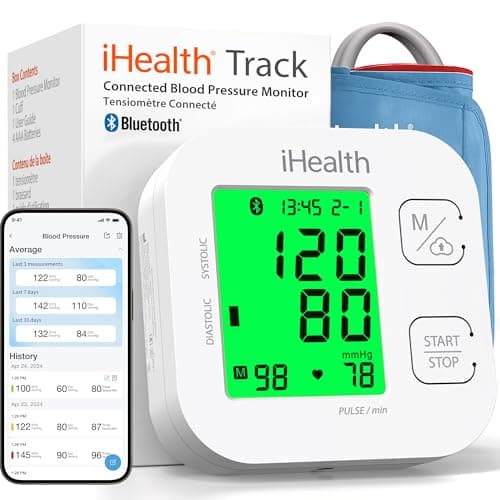
Who this is for: Best for shoppers who need a reliable home blood pressure monitor and want to balance accuracy, cuff fit, and ease of use.
How to Choose the Best Blood Pressure Monitor in 2026: Complete Buying Guide
If you’re trying to figure out how to choose a blood pressure monitor, the hardest part is usually not the price—it’s knowing which features actually improve accuracy at home. A bad purchase can give you inconsistent readings, a cuff that doesn’t fit, or a device that’s awkward enough that you stop using it. This guide breaks down the features that matter most, the mistakes to avoid, and the best options to consider based on published specs, validation claims, and owner feedback patterns.
The most common mistake buyers make is choosing the cheapest monitor without checking cuff size, validation, and whether an arm or wrist model fits their lifestyle. Those three choices can matter more than extra app features or a bigger screen.
Key Features to Look For
1) Upper Arm vs. Wrist Design
For most people, an upper arm monitor is the safer default because it more closely matches the setup used in many clinical measurements. Wrist monitors can be more portable, but they’re more sensitive to arm position and posture, which can make readings less consistent if you’re not careful.
2) Cuff Size and Fit Range
Cuff fit is one of the biggest accuracy factors. If the cuff is too small or too large, your readings can be misleading. Look for the arm circumference range in the product specs and measure your upper arm before buying. A wide-range cuff is especially useful for households with multiple users.
3) Validation and Accuracy Claims
Search for monitors that mention clinical comparison, FDA clearance, or performance standards. While those claims don’t guarantee perfection, they’re better than vague “high precision” marketing. For home use, validation and clear accuracy specs are more important than flashy extras.
4) Easy-to-Read Display
A large, backlit display helps reduce reading errors, especially for older adults or anyone checking blood pressure in low light. Color-coded indicators can also make it easier to interpret results quickly without memorizing blood pressure ranges.
5) Memory Storage and App Sync
Built-in memory is useful if you want to track trends over time without writing results down. App sync is even better for long-term tracking because it can store more readings and make it easier to share data with a doctor. If more than one person will use the monitor, dual-user memory is a major plus.
6) Irregular Heartbeat Detection
Some monitors can alert you to irregular heart rhythms during a reading. This is not a diagnosis, but it can be a helpful early warning feature if you want a monitor that does more than just display systolic and diastolic numbers.
7) Power Options and Portability
Battery-only monitors are convenient for travel, while dual-power or rechargeable models can be easier for daily home use. If you plan to keep the monitor on a nightstand or take it on trips, dual power can reduce frustration.
What to Avoid
Skipping the cuff measurement
Don’t assume “one size fits most” will fit your arm. A poor cuff match is one of the most common reasons home readings go wrong.
Choosing wrist monitors without considering technique
Wrist devices can work, but they’re easier to misuse. If you prefer wrist for portability, make sure you can keep the wrist at heart level and follow the instructions carefully every time.
Buying based on app features alone
An app is useful, but it won’t fix a poorly fitting cuff or an unvalidated device. Accuracy first, convenience second.
Ignoring posture and movement alerts
Some monitors detect body movement or incorrect posture. Those features matter because they help prevent bad readings caused by user error—something very common in home measurements.
Assuming all “accurate” claims are equal
Look for concrete details such as clinical comparison, FDA clearance, or performance standards. Generic marketing language is not the same as documented validation.
Our Top Picks
Best overall for most buyers: iHealth Track Smart Upper Arm Blood Pressure Monitor with Wide-Range Cuff
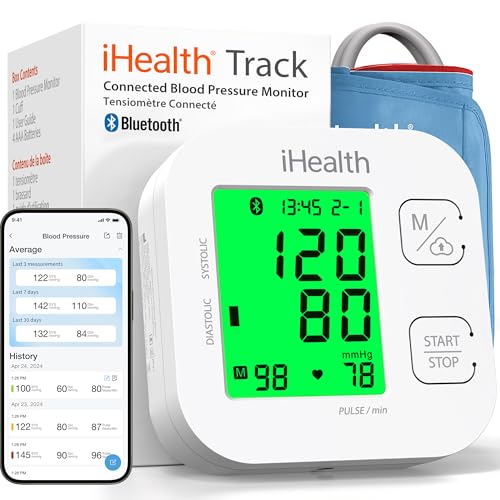
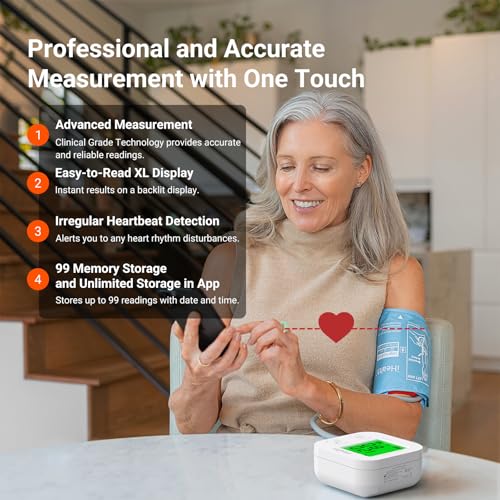

This is the strongest all-around pick if you want a straightforward upper arm monitor with a wide cuff, app syncing, and a display that’s easy to read. It’s a smart fit for households that want a balance of comfort, tracking, and beginner-friendly operation.
- ✓ Wide cuff range for more users
- ✓ Backlit color display is easy to read
- ✓ Bluetooth app tracking for long-term monitoring
- ✓ Irregular heartbeat alerts add peace of mind
- ✓ No calibration required
- ✗ App features may be unnecessary for users who only want basic readings
- ✗ Upper arm setup is less portable than wrist options
Best budget upper arm option: Sinocare Blood Pressure Monitor, Upper Arm Blood Pressure Monitors for Home Use, Adjustable Arm Cuff 8.6"-16.5", One-Button Operation, Dual User, Accurate & Practical (Black)
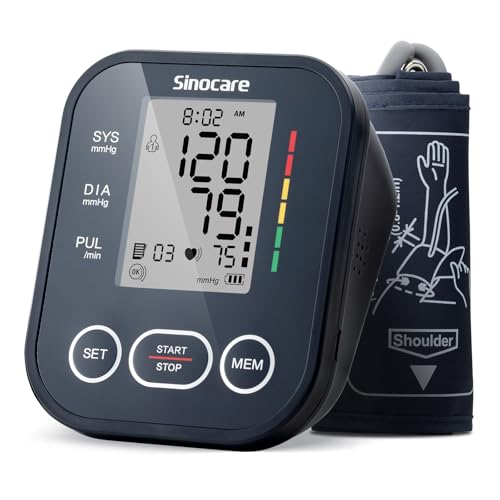

If you want the lowest-cost option that still covers the essentials, this Sinocare model is a practical pick. It includes a large screen, dual-user memory, cuff-size flexibility, and features that help reduce user error.
- ✓ Very affordable entry price
- ✓ Wide cuff range for many adults
- ✓ Dual-user memory for family use
- ✓ Irregular heartbeat and posture detection
- ✓ Simple one-button operation
- ✗ Fewer premium comfort and app features
- ✗ No advanced ecosystem for detailed digital tracking
Best for easy reading and simple daily use: iHealth Track Pro Upper Arm Blood Pressure Monitor for Home Use
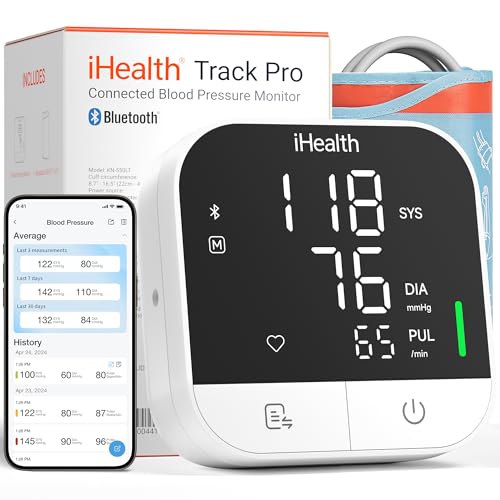

This model makes sense if readability is your top concern. The large display, color indicators, and one-touch operation are especially appealing for seniors, caregivers, and anyone who wants a low-fuss monitor for regular checks.
- ✓ Very clear LED display
- ✓ One-touch operation keeps it simple
- ✓ Movement and cuff-wrap detection can reduce bad readings
- ✓ App syncing supports trend tracking
- ✓ Dual power options improve flexibility
- ✗ App syncing may be more than some buyers need
- ✗ Slightly more expensive than the most basic models
Best wrist monitor for portability: Oklar Wrist Blood Pressure Monitor, FDA Cleared Rechargeable BP Machine
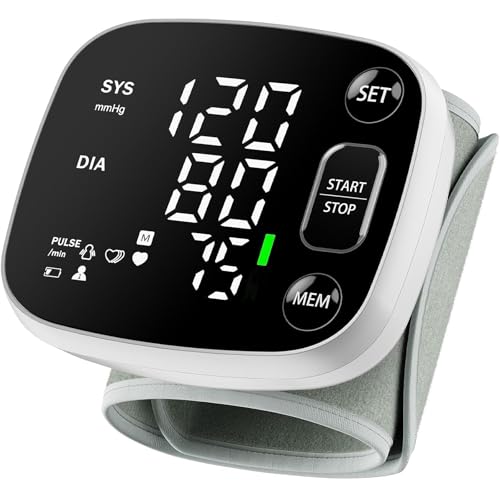

Choose this if portability and convenience matter more than the traditional upper arm format. The rechargeable design, dual-user storage, and voice broadcast feature make it appealing for travel, small spaces, and users who want a very compact monitor.
- ✓ Portable wrist design
- ✓ Rechargeable battery reduces disposable battery use
- ✓ Voice broadcast can help users with poor eyesight
- ✓ Dual-user memory stores plenty of readings
- ✓ Fast measurement cycle
- ✗ Wrist monitors are generally more technique-sensitive
- ✗ Less ideal if you want the most clinical-style home setup
Best value for feature-packed home use: Oklar FDA Cleared Blood Pressure Monitor Upper Arm BP Machine for Home Use
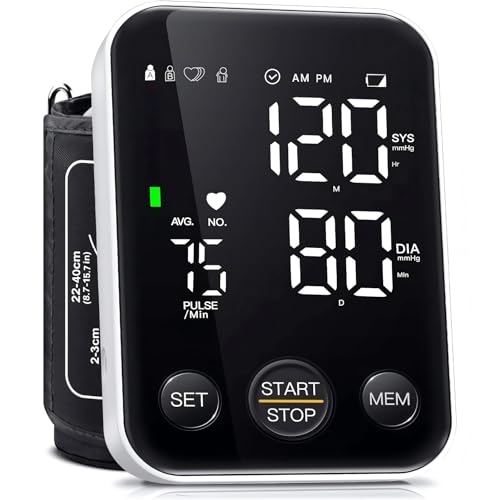

This is a strong middle-ground option for buyers who want an upper arm monitor with a low price, dual-user storage, and flexible power. It’s a good fit for home users who want practical features without paying for premium app ecosystems.
- ✓ Very low price for an upper arm monitor
- ✓ Dual-user memory supports family tracking
- ✓ Large LED display is easy to read
- ✓ Battery or Type-C power adds convenience
- ✓ Adjustable cuff covers a useful size range
- ✗ Type-C use is not the same as rechargeable power
- ✗ Fewer advanced tracking features than app-based models
Budget Guide: What You Get at Each Price Point
Under $25
At this level, you can still find usable upper arm monitors with one-button operation, LED displays, and basic memory features. The tradeoff is usually fewer comfort extras, less polished app support, and simpler build quality. This is the range where cuff fit and validation matter even more, because you want the basics done well.
$25 to $40
This is the sweet spot for most home buyers. You’ll often get better displays, more memory, dual-user support, app syncing, and sometimes irregular heartbeat detection. If you want a monitor you’ll use regularly, this price band tends to offer the best balance of accuracy-focused features and convenience.
Above $40
Higher-priced monitors may add more refined app experiences, wider cuff ranges, better display readability, or more comfortable inflation systems. You’re usually paying for convenience, better design, and a more complete tracking experience rather than a dramatic jump in raw measurement capability.
Frequently Asked Questions
1) Is an upper arm blood pressure monitor better than a wrist monitor?
For most people, yes. Upper arm monitors are generally preferred because they’re closer to the setup used in clinical settings and are less sensitive to positioning errors than wrist models.
2) How do I know what cuff size I need?
Measure the circumference of your upper arm and compare it to the monitor’s listed cuff range. If you’re near the upper or lower edge of that range, consider a different model for a better fit.
3) Are FDA-cleared monitors more accurate?
FDA clearance is a helpful trust signal, but it doesn’t guarantee perfect accuracy. It does suggest the device has met certain regulatory requirements, which is better than relying on marketing claims alone.
4) Can I trust blood pressure monitors with app syncing?
Yes, app syncing can be very useful for trend tracking and sharing data with a doctor. Just remember that the app is a convenience feature—the monitor’s cuff fit and validation still matter most.
5) What is the biggest mistake people make when buying a home blood pressure monitor?
The biggest mistake is ignoring cuff size and choosing a monitor based only on price or extra features. A monitor that fits correctly and is easy to use will usually give you better long-term results.
Pros
- + Upper arm and wrist options for different needs
- + Wide cuff range and fit guidance
- + Validation, display, and memory features explained
- + Budget picks with practical home-use value
- + Easy-to-read displays and dual-user support
Cons
- – Wrist monitors can be technique-sensitive
- – Cheap models may skip app or premium features
- – Incorrect cuff size can distort readings
Frequently asked questions
- Is an upper arm blood pressure monitor better than a wrist monitor?
- For most people, yes. Upper arm monitors are generally preferred because they’re closer to the setup used in clinical settings and are less sensitive to positioning errors than wrist models.
- How do I know what cuff size I need?
- Measure the circumference of your upper arm and compare it to the monitor’s listed cuff range. If you’re near the upper or lower edge of that range, consider a different model for a better fit.
- Are FDA-cleared monitors more accurate?
- FDA clearance is a helpful trust signal, but it doesn’t guarantee perfect accuracy. It does suggest the device has met certain regulatory requirements, which is better than relying on marketing claims alone.
- Can I trust blood pressure monitors with app syncing?
- Yes, app syncing can be very useful for trend tracking and sharing data with a doctor. Just remember that the app is a convenience feature—the monitor’s cuff fit and validation still matter most.
- What is the biggest mistake people make when buying a home blood pressure monitor?
- The biggest mistake is ignoring cuff size and choosing a monitor based only on price or extra features. A monitor that fits correctly and is easy to use will usually give you better long-term results.
Get the Full Health & Fitness Buyer's Guide
Join our free newsletter — we'll send our latest Health & Fitness picks, specs and verdicts straight to your inbox.
Free. No spam. Unsubscribe anytime.
Was this review helpful?
Be the first to share your feedback on this review.
Sign in to vote and let us know what you think.
Discussion (0)
No comments yet. Be the first to start the discussion.
Related Reviews
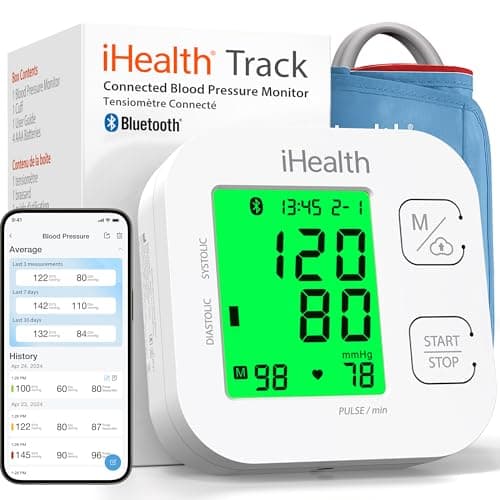
8 Best Blood Pressure Monitors in 2026 — Most Accurate Home Picks for Easy Tracking
If you’re shopping for the best blood pressure monitors 2026 , the hard part is figuring out which models are actually easy to use, readable, and worth trusting at home. This roundup focuses on upper-arm and wrist monitors with clear displays, memory storage, app support, and features that matter fo