

Who this is for: Best for skincare shoppers who want a clear, beginner-friendly explanation of retinoid strength, tolerance, and product selection.
Check PriceWhat is Retinol vs Retinal vs Tretinoin? A Complete 2026 Guide
If you’re confused by retinol vs retinal vs tretinoin, you’re not alone—these ingredients sound similar, but they differ a lot in strength, speed, and irritation risk. Choosing the wrong one can mean wasted money, flaky skin, or results that feel too slow for your goals. This guide breaks down the differences in plain English so you can pick the right retinoid for acne, texture, fine lines, or beginner-friendly anti-aging care.
Related Reviews
How It Works
Retinol, retinal, and tretinoin all belong to the retinoid family, which means they’re related to vitamin A and work by encouraging skin cells to turn over more quickly. Faster cell turnover can help smooth rough texture, fade the look of dark spots, unclog pores, and soften the appearance of fine lines over time.
The big difference is the conversion path. Retinol has to convert into retinal, and then into retinoic acid before your skin can use it in its active form; retinal is one step closer; tretinoin is already retinoic acid, so it acts directly and tends to be the strongest of the three.
That conversion ladder is why retinol is usually the gentlest, retinal is often considered the “middle ground,” and tretinoin is the most potent but also the most likely to cause dryness, peeling, and irritation at the start.
Key Benefits & Use Cases
All three ingredients can support a smoother, brighter-looking complexion, but they’re best suited to different users and goals.
Retinol
Retinol is typically the best starting point for people new to vitamin A skincare. It’s commonly used for first-time anti-aging routines, mild texture concerns, and those who want gradual improvement with a lower irritation profile.
Retinal
Retinal is often chosen by people who want faster visible change than retinol may provide, but without jumping straight to prescription-strength tretinoin. It’s a strong option for stubborn texture, early signs of aging, and users who have already tolerated retinol.
Tretinoin
Tretinoin is usually reserved for users who want the most direct and potent retinoid option, often for acne or more advanced anti-aging routines. Because it’s prescription-strength in many places, it’s the one most likely to require a slower ramp-up and extra moisturizer support.
Who each ingredient tends to suit best
- Retinol: beginners, sensitive skin, and anyone building a long-term routine
- Retinal: intermediate users who want stronger results with a more cosmetic-skincare approach
- Tretinoin: experienced users or those working with a clinician for acne or stronger anti-aging needs
What to Look For When Buying
When comparing retinol vs retinal vs tretinoin products, the ingredient name alone is not enough. These five criteria help you choose a formula that matches your skin tolerance and goals.
1. Ingredient strength
Look for the percentage or concentration when it’s listed. Lower strengths are generally better for beginners, while higher strengths may suit experienced users who already know their skin can tolerate retinoids.
2. Delivery system
Encapsulated, bi-phase, or slow-release formulas can help reduce irritation while improving consistency. This matters because a gentler delivery system can make a stronger ingredient easier to stick with.
3. Barrier-supporting ingredients
Moisturizing and soothing ingredients like glycerin, sirtalice, or NAD+ support can make a retinoid routine more comfortable. If you’re prone to dryness, this is especially important.
4. Texture and finish
Serums that absorb quickly and don’t feel greasy are easier to layer into a nighttime routine. If a product feels too heavy, people often use it less consistently.
5. Usage guidance
Clear directions matter: many retinoids are best used at night, introduced 2–3 times per week, and paired with sunscreen the next morning. Good instructions can reduce the chance of overdoing it.
Top Recommended Products
Below are research-based product picks that illustrate how retinol and retinal formulas are positioned in the market. Since tretinoin is typically prescription-only, the list below focuses on over-the-counter retinoid products that help you compare texture, strength, and tolerance options.
PURITO Retinol + Retinal Serum | Korean Lightweight Anti-aging Care


This dual-action serum combines retinol and retinal in a lightweight, fast-absorbing format. It stands out for users who want a beginner-friendly texture but still want a formula that feels more advanced than a basic retinol cream.
- ✓ Contains 0.1% retinol + 0.1% retinal for a dual-action approach
- ✓ Lightweight, non-greasy serum texture
- ✓ Includes barrier-supporting NAD+ and PM-use guidance
- ✓ Clinically tested for improved firmness and texture
- ✓ Good fit for people easing into retinal-based care
- ✗ May still be too active for very sensitive skin
- ✗ Night-only use requires routine consistency
- ✗ Not a prescription tretinoin replacement
The INKEY List Advanced 0.2% Retinol Serum 0.5 fl oz

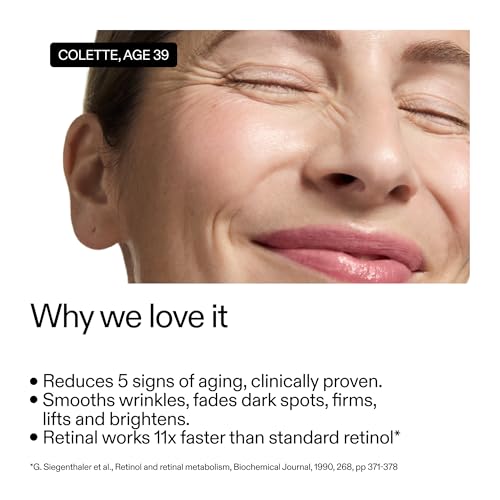
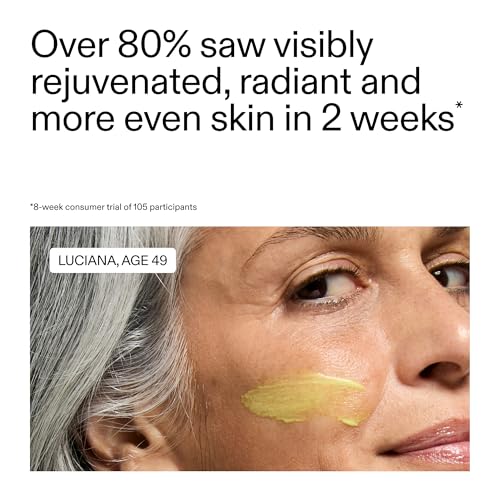
This is a higher-strength retinol option aimed at experienced users who want a more assertive anti-aging serum. The formula is positioned as clinically proven, fragrance-free, and designed to target multiple visible signs of aging.
- ✓ 0.2% encapsulated retinaldehyde/retinoid-forward formula
- ✓ Marketed for wrinkles, dark spots, firmness, and luminosity
- ✓ Fragrance-free and cruelty-free
- ✓ Clear PM-only usage guidance
- ✓ Better suited to users who already tolerate retinoids
- ✗ May be too strong for true beginners
- ✗ Requires patience and sunscreen discipline
- ✗ Can still cause irritation during the adjustment period
2 PCS Retinal Shot Tightening Booster 0.1% Retinal Retinol Essence - Anti-Wrinkle, Pore Minimizer, Firming & Hydrating Serum, Improves Skin Texture, Anti-Aging


This retinal essence is positioned as a lightweight, hydrating option for people who want a smoother-feeling formula without a heavy cream base. It emphasizes pore refinement, firmness, and quick absorption.
- ✓ 0.1% retinal/retinol positioning for targeted anti-aging care
- ✓ Lightweight and non-greasy texture
- ✓ Includes glycerin for moisture support
- ✓ Useful for users focused on texture and pore appearance
- ✓ Can fit into a simpler nighttime routine
- ✗ Brand and naming are less straightforward than major-label options
- ✗ Less clearly documented than some competing products
- ✗ Not ideal if you want a prescription-strength retinoid
NANORETINOL, the Retinol Serum 232% more Effective - Clinically Proven - Encapsulated Nano Retinol Serum for Face & Eye Contour - Anti-Aging & Dark Spots Remover - Less Irritating than Tretinoin
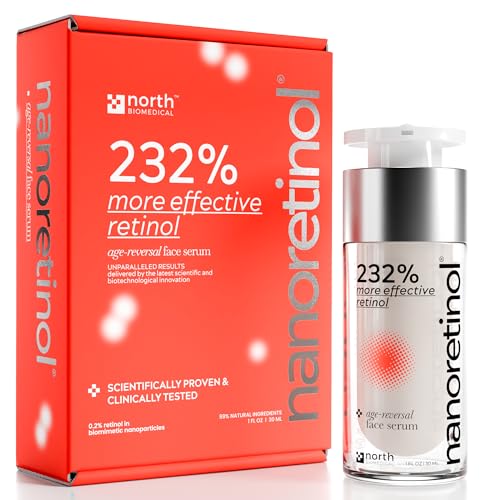


This is the most premium-priced option in the group and is marketed as a more advanced retinol alternative with encapsulated delivery. It may appeal to shoppers who want a gentler-feeling formula but still want claims about strong anti-aging performance.
- ✓ Encapsulated nano-retinol delivery
- ✓ Marketed as less irritating than tretinoin
- ✓ Fragrance-free and vegan positioning
- ✓ Aimed at dark spots, firmness, and eye contour use
- ✓ Good for buyers prioritizing a premium formula
- ✗ Much pricier than the other options here
- ✗ Marketing claims are aggressive and should be read carefully
- ✗ Not a substitute for prescription tretinoin
Common Mistakes to Avoid
- Starting too strong too fast: Jumping straight to a high-strength retinoid often leads to irritation and early quitting.
- Using it too often at first: Most people do better starting 2–3 nights per week and increasing gradually.
- Skipping moisturizer: Retinoids are easier to tolerate when you support the skin barrier.
- Forgetting sunscreen: Retinoids can make your skin more sensitive to sun, so daily SPF matters.
- Mixing too many actives: Combining retinoids with exfoliating acids or other strong actives can overwhelm skin.
- Expecting overnight results: Texture and tone improvements usually build over weeks, not days.
Frequently Asked Questions
Is retinol the same as retinal or tretinoin?
No. Retinol is the gentlest and must convert into retinal and then retinoic acid; retinal is one step closer; tretinoin is retinoic acid itself and is the strongest of the three.
Which is stronger: retinol vs retinal vs tretinoin?
Tretinoin is generally the strongest, retinal is the middle step, and retinol is usually the mildest.
Which one is best for beginners?
Retinol is usually the best starting point for beginners because it tends to be easier to tolerate than retinal or tretinoin.
Can I use retinal instead of tretinoin?
Some people choose retinal as a more accessible alternative, but it is not the same as prescription tretinoin and may not deliver identical results.
Do I need sunscreen when using retinoids?
Yes. Retinoids are best used with daily sunscreen because they can make skin more sensitive to sunlight.
Pros
- + Retinol is beginner-friendly
- + Retinal works faster than retinol
- + Tretinoin is the strongest option
- + Encapsulated formulas can reduce irritation
- + Sunscreen and moisturizer improve tolerance
Cons
- – Too much too soon can irritate skin
- – Retinoids need consistent use
- – Tretinoin may be prescription-only
- – Results take weeks, not days
- – Strong formulas may be too much for sensitive skin
Frequently asked questions
- Is retinol the same as retinal or tretinoin?
- No. Retinol converts into retinal and then retinoic acid; retinal is one step closer; tretinoin is retinoic acid itself and is the strongest.
- Which is stronger: retinol vs retinal vs tretinoin?
- Tretinoin is generally the strongest, retinal is the middle step, and retinol is usually the mildest.
- Which one is best for beginners?
- Retinol is usually the best starting point for beginners because it tends to be easier to tolerate.
- Can I use retinal instead of tretinoin?
- Some people choose retinal as a more accessible alternative, but it is not the same as prescription tretinoin.
- Do I need sunscreen when using retinoids?
- Yes. Retinoids are best used with daily sunscreen because they can make skin more sensitive to sunlight.
Get the Full Beauty & Personal Care Buyer's Guide
Join our free newsletter — we'll send our latest Beauty & Personal Care picks, specs and verdicts straight to your inbox.
Free. No spam. Unsubscribe anytime.
Was this review helpful?
Be the first to share your feedback on this review.
Sign in to vote and let us know what you think.
Discussion (0)
No comments yet. Be the first to start the discussion.
Related Reviews


8 Best Red Light Therapy Panels for Face and Body in 2026 — Top Picks for Home Skin Care and Full-Body Use
If you’re trying to find the best red light therapy panels for face and body 2026, the challenge is sorting real utility from flashy claims. The best panels balance the right wavelengths, enough output for practical sessions, and a design that actually fits your space and routine. This research-base

FOREO BEAR 2 Facial Toning Device Review (2026): Specs, Pros & Cons, and Who It's For
If you’re looking for a facial toning device that feels more advanced than a basic microcurrent wand, the FOREO Bear 2 Advanced Microcurrent Facial Device is one of the most talked-about premium options. The challenge is figuring out whether its higher-end features actually justify the investment fo