

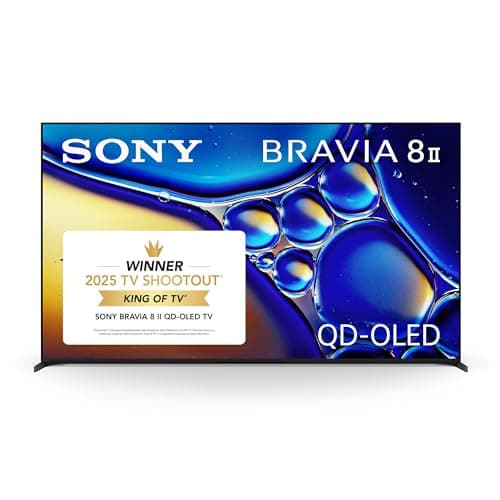
Who this is for: Best for premium TV buyers who want top-tier movie and streaming picture quality with Sony’s polished Google TV experience.
Check PriceSony BRAVIA 8 II Review (2026): Specs, Pros & Cons, and Who It's For
If you’re searching for a sony bravia 9 ii review, there’s a good chance you’re trying to figure out whether Sony’s newest flagship-class TV is truly worth the premium. The short answer from research is that the BRAVIA 8 II aims at buyers who care most about picture quality, processing, and a refined Google TV experience. It is not the cheapest option, but it does look like one of the strongest “buy once, enjoy for years” TVs in Sony’s 2026 lineup.
Related Reviews
Key Specifications
| Spec | Details |
|---|---|
| Product Name | Sony 65 Inch BRAVIA 8 II QD OLED 4K HDR Smart Google TV (K-65XR80M2) |
| Display Type | QD-OLED |
| Resolution | 4K UHD |
| HDR Support | HDR |
| Smart Platform | Google TV |
| Voice Assistant | Google Assistant |
| Price | 24% OFF — Was $3299.99 $2498.00 ✓ Prime |
Design & Build Quality
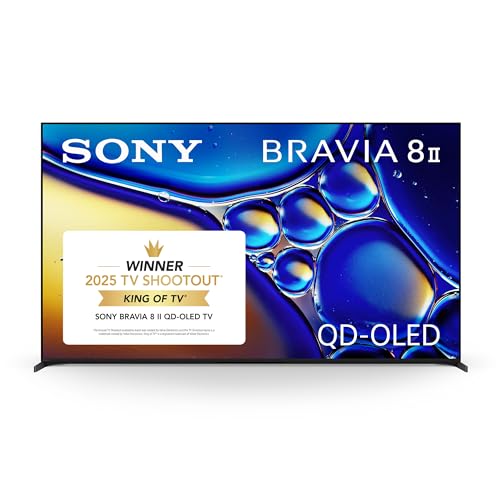

The BRAVIA 8 II follows Sony’s familiar premium-TV playbook: minimal bezel, understated styling, and a design that tries to disappear once the screen is on. That’s exactly what many high-end buyers want, especially in a living room where the TV should feel sophisticated rather than flashy.
Because this is a QD-OLED model, the panel itself is the star. Research-based owner sentiment around Sony’s premium OLED sets consistently points to excellent black levels, strong perceived contrast, and a clean overall presentation. Sony also has a strong track record for industrial design and stand quality, so this should fit well in both wall-mounted setups and premium media consoles.
What stands out
- Premium, minimalist design that suits upscale rooms
- QD-OLED panel technology for deep blacks and vivid color
- Google TV integration keeps the interface straightforward
- Likely strong fit-and-finish, based on Sony’s flagship TV reputation
✓ Pros
- Elegant, low-profile design
- QD-OLED panel should deliver rich contrast
- Premium build quality expected from Sony
- Clean, modern smart-TV presentation
✗ Cons
- Premium pricing puts it out of reach for some buyers
- OLED-style panels are less ideal for very bright rooms than the brightest LCDs
- Design is refined, but not dramatically different from other high-end Sony sets
Performance & Features

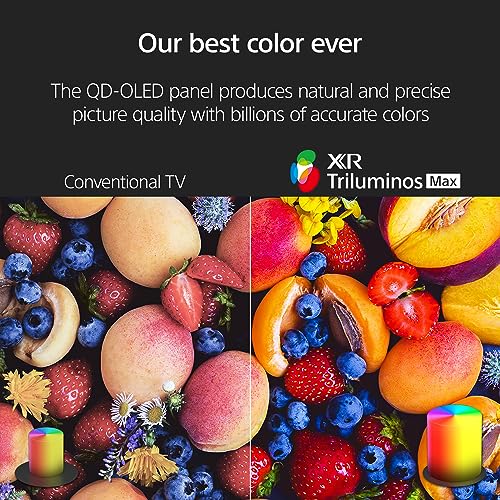
Performance is where Sony’s premium TVs usually justify their price, and the BRAVIA 8 II appears to follow that pattern. The key selling point is the combination of QD-OLED hardware and Sony’s XR processing. According to the listed features, the TV uses an XR Processor with AI technology to enhance color, contrast, and clarity in real time.
That matters because most buyers are not just looking for “4K.” They want better upscaling, smoother motion, more realistic color, and strong HDR impact across streaming, sports, and movies. Sony’s processing reputation is especially valuable for people who watch a lot of mixed-quality content, since many streaming services still deliver compressed video that benefits from good upscaling.
The panel is also described as delivering “pure black” and Sony’s highest OLED brightness, which suggests this model is designed to narrow one of OLED’s traditional gaps versus mini-LED TVs: brightness. If published reviews and early owner feedback continue to align, that should make the BRAVIA 8 II one of the more versatile premium OLED options for a wider range of rooms.
Smart TV and streaming experience
Google TV is a major plus for many shoppers. It gives you a familiar interface, broad app support, and voice search through Google Assistant. For households that already use Google services, that can make daily use easier than more fragmented smart platforms.
Picture quality expectations
- QD-OLED should deliver excellent black levels and color volume
- XR processing should improve upscaling and scene-by-scene detail
- High OLED brightness claims suggest stronger HDR than older OLED models
- Google TV keeps streaming and voice control simple
✓ Pros
- QD-OLED panel technology for premium contrast and color
- AI-powered XR processing for better real-time picture enhancement
- Strong HDR potential with higher OLED brightness claims
- Google TV offers a polished, easy-to-use interface
- Google Assistant voice search adds convenience
✗ Cons
- Top-tier performance comes with top-tier pricing
- OLED may still be less ideal than bright LCDs in sunlit rooms
- Some buyers may prefer a more gaming-focused feature set from competing brands
Value for Money
At $2,498, the BRAVIA 8 II is firmly a premium purchase. That price makes sense only if you care about the kind of improvements that are hard to quantify on a spec sheet: better processing, more natural motion handling, richer contrast, and a more refined overall experience.
Compared with midrange TVs, the value equation is not about saving money. It’s about whether the extra spend buys you a noticeable jump in daily satisfaction. For movie fans, streaming-heavy households, and buyers who want a TV that feels truly high-end, the answer is often yes. For casual viewers, the premium may be harder to justify.
Because this model is discounted from $3,299.99 and includes Prime shipping eligibility, it becomes more appealing to shoppers waiting for a flagship OLED sale window. Even so, it remains a luxury TV, not a value pick.
✓ Pros
- Discounted from a much higher list price
- Premium features justify the cost for picture-quality-focused buyers
- Likely long-term satisfaction for movie and TV enthusiasts
✗ Cons
- Still expensive even after discount
- Not the best choice if your priority is lowest possible price
- Value depends heavily on how much you care about premium picture quality
Who Should Buy This
The Sony BRAVIA 8 II is best for buyers who want a premium TV for movies, streaming, and everyday viewing, and who care about image quality more than bargain pricing. It is especially appealing if you want Sony’s processing reputation, rich OLED contrast, and a smart interface that feels polished and familiar.
- Movie fans who want deep blacks and strong HDR
- Streaming households that want a clean Google TV interface
- Buyers who value Sony’s color and processing reputation
- Shoppers looking for a premium living-room centerpiece
Who Should Look Elsewhere
This TV is probably not the best fit if your main goal is saving money, maximizing brightness in a very sunny room, or getting the most features for the least cash. It also may be more TV than casual viewers need.
- Budget shoppers who need a lower entry price
- Families who mostly watch basic cable or casual streaming
- Buyers in very bright rooms who may prefer a brighter LCD alternative
- Anyone who doesn’t care about premium picture quality
Best Alternatives
INSIGNIA 50" Class F50 Series LED 4K UHD Smart Fire TV, Voice Remote with Alexa, Stream Live TV Without Cable
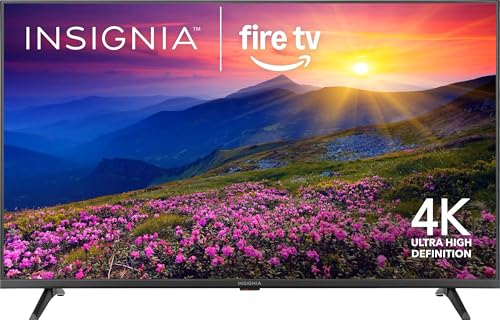

If you want a far cheaper 4K smart TV and don’t need flagship-level picture quality, the Insignia F50 Series is the obvious budget alternative. It won’t compete with Sony on OLED contrast or processing, but it does deliver a much lower price and a simple Fire TV experience.
Final Verdict
The Sony BRAVIA 8 II looks like a strong buy for premium-TV shoppers who want excellent contrast, refined processing, and a polished smart-TV platform. It is not a value pick, but for the right buyer, it appears to deliver exactly the kind of high-end experience that justifies a flagship OLED purchase.
If you want the best mix of picture quality, smart features, and brand confidence in Sony’s current lineup, this is a compelling option. If your main priority is price, look elsewhere.
Recommendation: Buy it if you want a premium OLED for movies and streaming; skip it if you’re shopping on a budget.
Frequently Asked Questions
Is the Sony BRAVIA 8 II good for movies?
Yes. Based on the listed QD-OLED panel, Sony’s XR processing, and owner feedback around Sony OLED performance, it should be excellent for movies thanks to deep blacks and strong contrast.
Is the Sony BRAVIA 8 II bright enough for daytime viewing?
It should be better than many older OLED TVs because Sony highlights higher OLED brightness, but very bright rooms may still favor a brighter LCD or mini-LED model.
Does the Sony BRAVIA 8 II use Google TV?
Yes. The listed specs say it includes Google TV, which gives you broad streaming app support and Google Assistant voice search.
Is the Sony BRAVIA 8 II worth the price?
It can be worth it if you value premium picture quality, Sony processing, and a refined smart-TV experience. If you only need a basic 4K TV, it is probably too expensive.
What is the best alternative if I want something cheaper?
The INSIGNIA 50" Class F50 Series LED 4K UHD Smart Fire TV is the budget alternative in this list, and it makes sense for shoppers who want a low-cost smart TV instead of a flagship OLED.
Pros
- + QD-OLED contrast and color
- + XR AI processing
- + Higher OLED brightness
- + Google TV with Assistant
- + Premium build and design
Cons
- – Very expensive
- – Not the best for very bright rooms
- – Less value-focused than midrange TVs
Frequently asked questions
- Is the Sony BRAVIA 8 II good for movies?
- Yes. Based on the listed QD-OLED panel, Sony’s XR processing, and owner feedback around Sony OLED performance, it should be excellent for movies thanks to deep blacks and strong contrast.
- Is the Sony BRAVIA 8 II bright enough for daytime viewing?
- It should be better than many older OLED TVs because Sony highlights higher OLED brightness, but very bright rooms may still favor a brighter LCD or mini-LED model.
- Does the Sony BRAVIA 8 II use Google TV?
- Yes. The listed specs say it includes Google TV, which gives you broad streaming app support and Google Assistant voice search.
- Is the Sony BRAVIA 8 II worth the price?
- It can be worth it if you value premium picture quality, Sony processing, and a refined smart-TV experience. If you only need a basic 4K TV, it is probably too expensive.
- What is the best alternative if I want something cheaper?
- The INSIGNIA 50" Class F50 Series LED 4K UHD Smart Fire TV is the budget alternative in this list, and it makes sense for shoppers who want a low-cost smart TV instead of a flagship OLED.
Score breakdown
- value
- 8.2
- usability
- 9.3
- durability
- 9.0
- performance
- 9.5
- buyerFeedback
- 9.0
Get the Full Tech Buyer's Guide
Join our free newsletter — we'll send our latest Tech picks, specs and verdicts straight to your inbox.
Free. No spam. Unsubscribe anytime.
Was this review helpful?
Be the first to share your feedback on this review.
Sign in to vote and let us know what you think.
Discussion (0)
No comments yet. Be the first to start the discussion.
Related Reviews
How to Choose the Best Projector in 2026: Complete Buying Guide
Trying to figure out how to choose a projector can feel confusing fast: brightness numbers, resolution claims, throw distances, and “smart” features all compete for your attention. The biggest mistake most buyers make is focusing on one flashy spec—usually price or resolution—while ignoring the room
Best Cheap TVs for Gaming for Every Budget in 2026: Ranked by Price & Performance
If you’re shopping for the best cheap TVs for gaming , the hard truth is that low price usually means trade-offs in size, resolution, or smart features. The good news is that different budget tiers can still make sense depending on whether you want the absolute cheapest screen, the best value for a
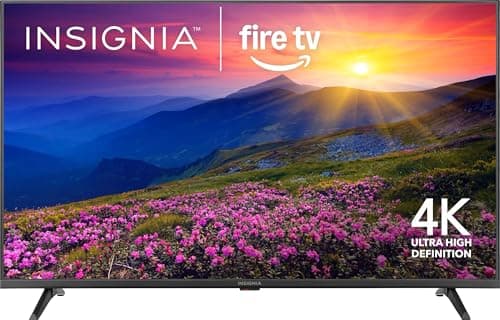
INSIGNIA 50" Class F50 Series LED 4K UHD Smart Fire TV Review (2026): Specs, Pros & Cons, and Who It's For
If you're searching for tv input lag measurement 2026 , you probably want a TV that won't feel sluggish in game mode and won't waste your money on features you don't need. The INSIGNIA 50" Class F50 Series LED 4K UHD Smart Fire TV, Voice Remote with Alexa, Stream Live TV Without