


Who this is for: Best for first-time PC builders who need a clear, beginner-friendly guide to parts, compatibility, and assembly.
Check PriceWhat is How to Build a PC 2026 Step by Step? A Complete 2026 Guide
Learning how to build a pc 2026 step by step can feel intimidating if you’ve never handled parts, cables, or compatibility charts before. The good news is that modern PC building is more approachable than ever, with clearer standards for power, mounting, and airflow. This guide breaks the process into simple stages so you can understand what each component does, what to buy, and how the full system comes together.
Related Reviews
How It Works
A desktop PC works by connecting a set of specialized parts that each handle a different job. The processor does the computing, the graphics card handles demanding visual workloads, the motherboard acts like the communication hub, storage holds your files and software, the power supply delivers electricity, and cooling keeps temperatures under control.
When you build a PC, you are essentially assembling a system where those parts must physically fit, electrically match, and thermally cooperate. That means checking socket compatibility for the CPU and cooler, making sure the case supports your graphics card length, and selecting enough airflow and wattage for the whole setup.
In 2026, the process is still the same at its core, but parts are more standardized and performance-focused than they used to be. The biggest challenge is not the assembly itself; it is choosing parts that work well together before you ever pick up a screwdriver.
Key Benefits & Use Cases
Why people build their own PCs
- Better value per dollar: You can direct more of your budget toward the parts that matter most for your needs.
- Custom performance: Gaming, editing, streaming, and productivity builds can be tuned for specific workloads.
- Easier upgrades: A well-planned build is simpler to improve later with more RAM, storage, cooling, or GPU power.
- Better cooling and acoustics: You can choose quiet fans, larger coolers, and airflow-friendly cases.
- Learning and control: Building teaches you how your PC works, which makes troubleshooting easier.
Best use cases
- Gaming at 1080p, 1440p, or 4K
- Video editing and content creation
- School, office, and remote work
- Streaming and multitasking
- General-purpose home computing
What to Look For When Buying
If you are figuring out how to build a pc 2026 step by step, these five buying criteria matter most:
1. Compatibility
Check CPU socket support, motherboard form factor, RAM type, GPU length, and case clearance before buying anything. A great part is useless if it does not fit or connect properly.
2. Power requirements
Make sure your power supply can handle the total system load, especially if you are using a high-end graphics card. Modern GPUs may require specific connectors and higher wattage than older builds.
3. Cooling performance
Choose cooling based on your CPU’s heat output and your case airflow. Even a budget build benefits from a decent CPU cooler and at least one or two case fans.
4. Noise level
Look for PWM fans, quality bearings, and cooler designs that balance airflow with quiet operation. A silent build is much more comfortable for daily use.
5. Ease of installation
For first-time builders, tool-free mounts, pre-applied thermal paste, and clearly labeled connectors can reduce mistakes and save time.
Top Recommended Products
These products are not a full PC parts list, but they are useful examples of supporting components that matter during a build—especially for cooling and thermal management.
TRONWIRE TW-22 CPU Cooler Aluminum Heatsink 4-Pin PWM 92mm Fan Pre-Applied Thermal Paste for Intel Core i3 i5 i7 i9 Socket 1200 1151 1150 1155 1156 Desktop PC Computer

This is a straightforward low-profile cooler that fits a wide range of Intel sockets and is especially helpful for budget or compact builds. The pre-applied thermal paste and push-pin installation make it beginner-friendly.
- ✓ Supports Intel Core i3/i5/i7/i9 processors on multiple socket types
- ✓ Pre-applied thermal paste saves installation steps
- ✓ 4-pin PWM fan helps the cooler adjust speed based on temperature
- ✓ Low-profile aluminum heatsink suits tighter cases
- ✗ 92mm cooling is modest for hotter CPUs
- ✗ Best suited to lighter workloads rather than high-performance overclocking
Thermalright TL-C14CW CPU Cooler, S-FDB Bearing 140mm Case Fan With 4-PWM Control, Low Noise Computer Chassis Cooling, White (TL-C14CW)


This 140mm PWM fan is a strong option if your build needs better case airflow or radiator support without adding much noise. It is especially appealing for builders who want a simple, low-cost airflow upgrade.
- ✓ 4-pin PWM control automatically adjusts speed based on temperature
- ✓ 140mm size can move more air than smaller fans in many cases
- ✓ Silicone corner pads help reduce vibration and noise
- ✓ Suitable for cases, radiators, and CPU cooler setups
- ✓ Very low price for a Prime-supported fan
- ✗ Single fan does not solve poor overall case airflow by itself
- ✗ White color may not match every build theme
5V 12V 24V 5010 Silent Brushless Cooling Fan 2 pin 5CM Fans 0.1A 50mmX50mmX10mm for Cool 3D Printers Parts PC Case CPU Cooler Sleeve Bearing 7 Blades (5010-12V) (5V)


This tiny fan is best thought of as a niche cooling part for compact projects, small enclosures, or specialty airflow needs. It is not a mainstream PC case fan, but it can be useful in very specific builds or accessory setups.
- ✓ Very small footprint for tight spaces
- ✓ Low price makes it easy to add as a spare or accessory
- ✓ Brushless design supports long-life operation
- ✓ Can be used in small cooling applications where 50mm fans are needed
- ✗ Too small for standard case airflow in most desktop builds
- ✗ 2-pin design offers less control than PWM fans
Common Mistakes to Avoid
- Buying parts without checking compatibility: CPU sockets, RAM type, GPU clearance, and PSU connectors all need to match.
- Ignoring cooling: A powerful CPU or GPU can throttle if airflow is weak or the cooler is undersized.
- Underestimating power needs: Your PSU should have enough wattage and the correct connectors for your graphics card and system.
- Forgetting case measurements: Some GPUs and coolers are physically large and may not fit smaller cases.
- Rushing cable management: Messy cables can block airflow and make future upgrades harder.
- Skipping BIOS and driver updates: A new build often works better and more reliably after software updates.
Frequently Asked Questions
1. What is the easiest way to learn how to build a pc 2026 step by step?
Start by learning the purpose of each part, then verify compatibility before buying anything. After that, follow a basic assembly order: CPU, cooler, RAM, storage, motherboard into the case, GPU, PSU, and finally cable connections.
2. How long does it take to build a PC for the first time?
Most first-time builders take 2 to 5 hours, depending on the case, parts, and how much time they spend checking instructions. Planning ahead usually matters more than speed.
3. What parts do I need to build a PC?
At minimum, you need a CPU, motherboard, RAM, storage, power supply, case, and cooling. If you want gaming or graphics-heavy performance, you also need a dedicated graphics card.
4. Do I need thermal paste to build a PC?
Yes, unless your cooler already comes with paste pre-applied. Thermal paste helps transfer heat from the CPU to the cooler more efficiently.
5. What is the most common mistake first-time builders make?
The most common mistake is buying incompatible parts, especially CPU, motherboard, cooler, case, and power supply combinations. Double-checking fit and connector requirements prevents most build problems.
Pros
- + Explains PC building in simple steps
- + Covers compatibility, cooling, and power
- + Includes beginner-friendly product examples
- + Highlights common mistakes to avoid
- + Answers real search questions
Cons
- – Not hands-on tested
- – Product list is limited to cooling accessories
- – Does not include a full parts list
Frequently asked questions
- What is the easiest way to learn how to build a pc 2026 step by step?
- Start by learning the purpose of each part, then verify compatibility before buying anything. After that, follow a basic assembly order: CPU, cooler, RAM, storage, motherboard into the case, GPU, PSU, and finally cable connections.
- How long does it take to build a PC for the first time?
- Most first-time builders take 2 to 5 hours, depending on the case, parts, and how much time they spend checking instructions. Planning ahead usually matters more than speed.
- What parts do I need to build a PC?
- At minimum, you need a CPU, motherboard, RAM, storage, power supply, case, and cooling. If you want gaming or graphics-heavy performance, you also need a dedicated graphics card.
- Do I need thermal paste to build a PC?
- Yes, unless your cooler already comes with paste pre-applied. Thermal paste helps transfer heat from the CPU to the cooler more efficiently.
- What is the most common mistake first-time builders make?
- The most common mistake is buying incompatible parts, especially CPU, motherboard, cooler, case, and power supply combinations. Double-checking fit and connector requirements prevents most build problems.
Get the Full Tech Buyer's Guide
Join our free newsletter — we'll send our latest Tech picks, specs and verdicts straight to your inbox.
Free. No spam. Unsubscribe anytime.
Was this review helpful?
Be the first to share your feedback on this review.
Sign in to vote and let us know what you think.
Discussion (0)
No comments yet. Be the first to start the discussion.
Related Reviews
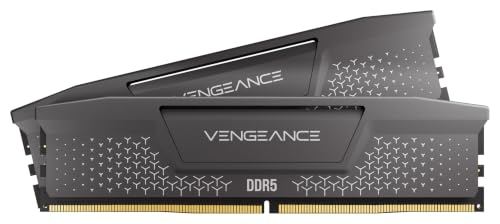
8 Best DDR5 RAM for Ryzen 2026 — Faster Gaming, Smoother Multitasking, and Easier EXPO Tuning
If you’re building or upgrading a Ryzen PC, the wrong DDR5 kit can leave performance on the table, cause stability headaches, or simply miss the sweet spot for AMD platforms. The best ddr5 ram for ryzen 2026 balances speed, latency, capacity, and compatibility so your system feels fast without endle

7 Best RAM for Gaming in 2026 — Faster Loads, Smoother FPS, and Better Value
If you’re shopping for the best ram for gaming 2026 , the hard part isn’t finding RAM — it’s choosing the right kit for your platform, budget, and performance target. Some buyers want the cheapest upgrade that still feels snappy, while others want high-speed DDR5 for a new gaming build or RGB memory

4 Best PC Case Fans in 2026 — Quiet Cooling and Strong Value for Any Build
If your PC runs hotter than you’d like, or your current fans are noisy, weak, or just plain outdated, you’re in the right place. This guide to the best pc case fans 2026 focuses on models that balance airflow, noise, PWM control, and price for real-world builds. These picks are based on published sp