

Who this is for: Best for gamers choosing the right monitor refresh rate for their play style, hardware, and budget.
How to Choose the Best What Refresh Rate Do You Need for Gaming in 2026: Complete Buying Guide
If you’re wondering what refresh rate do you need for gaming, the real challenge is matching monitor speed to the games you play, not just chasing the biggest number on the box. Buy too low and fast games can feel blurry or delayed; buy too high and you may pay for performance your PC or console can’t fully use. This guide breaks down the refresh-rate range that makes sense for different gamers, the features that matter most, and the common mistakes that lead to overspending.
Related Reviews
Key Features to Look For
1) Refresh Rate That Matches Your Game Type
Refresh rate is measured in hertz (Hz), and it tells you how many times per second the display updates. For slower, cinematic games, 60Hz to 120Hz can feel perfectly smooth, while competitive shooters and fast esports titles benefit more from 144Hz, 240Hz, or even higher. The key is to buy for the pace of your games, not just the highest number available.
2) Response Time for Motion Clarity
Refresh rate only helps if the panel can keep up. Lower response time reduces ghosting and blur during quick camera movement, which matters a lot in racing, FPS, and action games. A high refresh monitor with sluggish response can still look messy, so motion performance should be part of your decision.
3) Your PC or Console’s Output Limits
There’s no point paying for a 240Hz or 280Hz display if your hardware can’t push those frame rates in the games you play. For console buyers, HDMI version and supported output modes matter just as much as the panel itself. Matching the monitor to your system prevents wasted money and unrealistic expectations.
4) Resolution at the Same Time
Refresh rate and resolution work together. A 1440p monitor is often the sweet spot for gamers who want sharp detail without making high frame rates too hard to achieve. If you jump to 4K, you may need more powerful hardware to keep frame rates high, which can make very high refresh rates harder to use consistently.
5) Adaptive Sync Support
Features like VRR, FreeSync, or G-SYNC compatibility help reduce tearing and stutter when frame rates fluctuate. This is especially useful if your game performance doesn’t stay locked at one number all the time. Adaptive sync makes midrange refresh rates feel smoother and more stable.
6) Input Lag and Overall Responsiveness
Low input lag helps your controls feel immediate, which is a major advantage in competitive gaming. Even if two monitors both advertise high refresh rates, the one with lower lag usually feels better in real-world play. Competitive gamers should treat responsiveness as seriously as raw Hz.
7) Panel Type and Image Quality
Panel technology affects contrast, color, and motion behavior. OLED and QD-OLED panels tend to deliver excellent contrast and very fast pixel response, while IPS panels are often a balanced choice for color and speed. If you care about both competitive performance and visual quality, panel type can influence whether a given refresh rate feels worth it.
What to Avoid
Buying More Hz Than You Can Actually Use
A common mistake is assuming higher is always better. If you mostly play story games, strategy titles, or console games capped below 120fps, a 240Hz monitor may not deliver much practical benefit. It’s smarter to buy for your actual frame rates than for marketing bragging rights.
Ignoring Response Time and Motion Handling
Some displays advertise a high refresh rate but still show blur, overshoot, or smearing. That can happen when response time and tuning aren’t good enough for fast motion. Don’t focus only on Hz; check documented motion performance and owner feedback when possible.
Overlooking Connection Compatibility
If you’re using a console or a laptop, the ports matter. A monitor may support high refresh only through certain inputs, so buying without checking HDMI or DisplayPort support can limit what you actually get on screen. This is one of the easiest ways to end up disappointed.
Choosing High Refresh Over Better Frame Stability
A game that bounces between 70fps and 110fps can feel worse than a game locked near 90fps on a lower-refresh display. Stability often matters more than chasing peak numbers. If your system is inconsistent, adaptive sync and a sensible refresh target may be the better buy.
Ignoring Ergonomics and Long-Session Comfort
Fast gaming is not the only concern. If you play for hours, height adjustment, tilt, and pivot can make a real difference in comfort. A monitor that looks great on paper but strains your neck or eyes is not a good long-term value.
Our Top Picks
Below are the best kinds of refresh-rate setups to consider based on gaming style and budget. Since this is a research-based buying guide, these recommendations are based on published specs, feature sets, and owner feedback rather than hands-on testing.
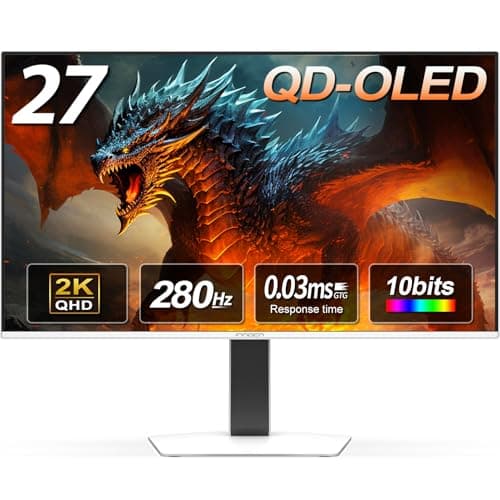
Best for Competitive PC Gamers: INNOCN 27" QD-OLED 2K QHD 2560 x 1440P 280Hz 240Hz PC Computer Gaming Console Monitor, 0.03ms, HDR400, HDMI, DisplayPort, Built-in Speaker, Height Pivot Adjustable Stand - 2780s 4.7★ (1,234 reviews) ✓ Prime 31% OFF — Was $549.99
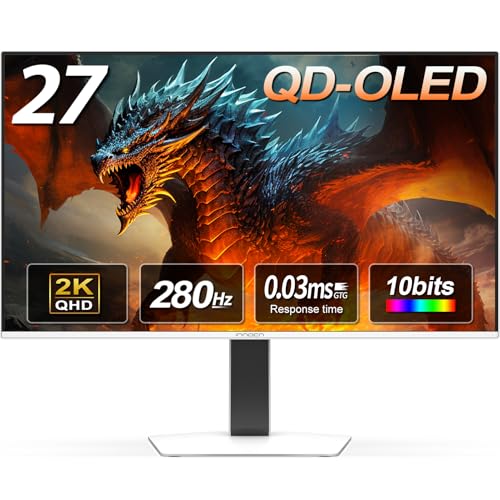


This is the strongest option if you want a premium high-refresh experience for fast PC games and also want excellent image quality. The 280Hz panel, 0.03ms response time, and QD-OLED contrast make it especially appealing for esports players who still care about visual fidelity. The 1440p resolution is also a smart middle ground because it’s easier to drive than 4K while still looking sharp.
- ✓ 280Hz refresh rate for ultra-smooth competitive gameplay
- ✓ 0.03ms response time for fast motion clarity
- ✓ QD-OLED panel with deep blacks and rich colors
- ✓ HDMI 2.1 and DisplayPort support for modern setups
- ✓ Adjustable stand helps with long-session comfort
- ✗ Premium pricing compared with standard 144Hz monitors
- ✗ Best value depends on having hardware that can push high frame rates
- ✗ OLED-style panels may be more than casual gamers need
Best for Most Gamers: 144Hz to 180Hz Monitors
If you play a mix of shooters, RPGs, and general PC games, this is the most balanced refresh-rate range for most buyers. It feels much smoother than 60Hz, is easier to drive than 240Hz, and often gives the best value for the money. For many gamers, this is the practical sweet spot.
- ✓ Big upgrade over 60Hz for everyday gaming
- ✓ Easier to reach with midrange GPUs
- ✓ Usually better value than extreme high-refresh models
- ✓ Good fit for both competitive and casual play
- ✗ Not as fast as 240Hz for top-tier esports play
- ✗ Some lower-cost models may cut corners on response time
Best for Console Gaming: 120Hz Displays
If you mainly play on PS5 or Xbox Series X, 120Hz is usually the point where smoothness and practicality meet. Many console games support up to 120fps only in select modes, so 120Hz gives you the benefit without overbuying. It’s the best target for most console-first shoppers.
- ✓ Ideal refresh target for modern consoles
- ✓ Noticeably smoother than 60Hz in supported games
- ✓ Often easier to pair with 4K or 1440p resolution
- ✓ Better value than chasing 240Hz on a console
- ✗ Won’t fully match the smoothness of high-end PC esports monitors
- ✗ Not every console title supports 120fps modes
Best Budget Choice: 60Hz to 75Hz Monitors
If you mostly play slower titles or use your display for school, work, and casual gaming, a 60Hz to 75Hz monitor can still make sense. This range is affordable and perfectly fine for less demanding play. The tradeoff is that motion won’t feel nearly as fluid as higher-refresh options.
- ✓ Lowest cost of entry
- ✓ Fine for casual gaming and everyday use
- ✓ Less demanding on your graphics hardware
- ✗ Noticeably less smooth than 120Hz and above
- ✗ Not ideal for competitive gaming
- ✗ Can feel dated if you later try high-refresh gaming
Budget Guide: What You Get at Each Price Point
Under $200
At this level, you’ll usually find 60Hz to 75Hz monitors, with occasional 100Hz or 144Hz deals if you shop carefully. These are best for casual players, secondary displays, or buyers who simply want a functional screen without paying for premium motion performance. Expect basic features and fewer extras.
$200 to $350
This is often the sweet spot for value-focused gamers. You can usually find solid 144Hz or 165Hz monitors with better resolution choices, decent response times, and adaptive sync support. If you want the best balance of price and performance, this bracket is often the smartest place to shop.
$350 to $600
In this range, you start seeing higher-end 1440p models, faster refresh rates, and better panel quality. This is where monitors like the INNOCN 27" QD-OLED 2K QHD 280Hz model begin to make sense for serious gamers who want both speed and image quality. It’s the right tier for buyers who notice motion quality and want a more premium experience.
$600 and Up
At the top end, you’re paying for elite refresh rates, premium panel tech, and stronger overall gaming performance. These displays are best for competitive players, enthusiasts, and buyers who want the best possible motion clarity. If your PC can keep up, this tier can deliver a genuinely noticeable upgrade.
Frequently Asked Questions
What refresh rate do you need for gaming?
For most gamers, 120Hz to 144Hz is the best starting point because it feels much smoother than 60Hz without requiring extreme hardware. Competitive players may prefer 240Hz or higher, while casual gamers may be fine at 60Hz to 75Hz.
Is 144Hz better than 60Hz for gaming?
Yes. 144Hz usually feels significantly smoother and more responsive than 60Hz, especially in fast-moving games. It’s one of the most noticeable upgrades you can make if your system can support it.
Do you need 240Hz for gaming?
Not most of the time. 240Hz is most useful for competitive esports players who already get very high frame rates. For many other gamers, 144Hz or 165Hz is the better value.
Is 120Hz enough for PS5 or Xbox Series X?
Yes, 120Hz is usually the ideal target for modern consoles. It gives you smoother motion in supported games without paying for more refresh rate than the console can typically use.
Should I buy a high refresh rate monitor if my PC can’t hit high FPS?
It can still help somewhat, but you’ll get the best value when your frame rate is close to your monitor’s refresh rate. If your PC is limited, a midrange refresh rate plus adaptive sync is often the smarter choice.
Pros
- + 144Hz to 180Hz is the best value sweet spot
- + 120Hz is ideal for modern consoles
- + 240Hz+ benefits competitive esports players
- + Adaptive sync improves smoothness when FPS fluctuates
- + Higher refresh rates reduce motion blur
Cons
- – Very high refresh rates cost more
- – You may not use 240Hz without a strong PC
- – 60Hz can feel dated for fast games
- – Some high-Hz monitors cut corners on response time
Frequently asked questions
- What refresh rate do you need for gaming?
- For most gamers, 120Hz to 144Hz is the best starting point because it feels much smoother than 60Hz without requiring extreme hardware. Competitive players may prefer 240Hz or higher, while casual gamers may be fine at 60Hz to 75Hz.
- Is 144Hz better than 60Hz for gaming?
- Yes. 144Hz usually feels significantly smoother and more responsive than 60Hz, especially in fast-moving games. It’s one of the most noticeable upgrades you can make if your system can support it.
- Do you need 240Hz for gaming?
- Not most of the time. 240Hz is most useful for competitive esports players who already get very high frame rates. For many other gamers, 144Hz or 165Hz is the better value.
- Is 120Hz enough for PS5 or Xbox Series X?
- Yes, 120Hz is usually the ideal target for modern consoles. It gives you smoother motion in supported games without paying for more refresh rate than the console can typically use.
- Should I buy a high refresh rate monitor if my PC can’t hit high FPS?
- It can still help somewhat, but you’ll get the best value when your frame rate is close to your monitor’s refresh rate. If your PC is limited, a midrange refresh rate plus adaptive sync is often the smarter choice.
Get the Full Tech Buyer's Guide
Join our free newsletter — we'll send our latest Tech picks, specs and verdicts straight to your inbox.
Free. No spam. Unsubscribe anytime.
Was this review helpful?
Be the first to share your feedback on this review.
Sign in to vote and let us know what you think.
Discussion (0)
No comments yet. Be the first to start the discussion.
Related Reviews
What is How to Reduce Input Lag? A Complete 2026 Guide
If your games feel “off,” the problem may be input lag: the delay between pressing a button and seeing the action happen on screen. That delay can make aiming harder, combos less reliable, and everyday navigation feel sluggish. This guide explains how to reduce input lag in plain English, plus what
7 Best Fight Sticks in 2026 — Tournament-Ready Picks for Every Budget
If you’re searching for the best fight sticks 2026 , you probably want one thing: a controller that feels accurate, durable, and worth the money for your favorite fighting games. The problem is that “best” depends on your setup, your budget, and whether you want a traditional stick or a more modern
What is How to Extend PS5 Storage? A Complete 2026 Guide
If your PS5 storage fills up fast, you are not alone. Modern games can take up huge amounts of space, and constant deleting and redownloading gets old quickly. This guide explains how to extend PS5 storage in a simple way so you can choose the right expansion method with confidence.