

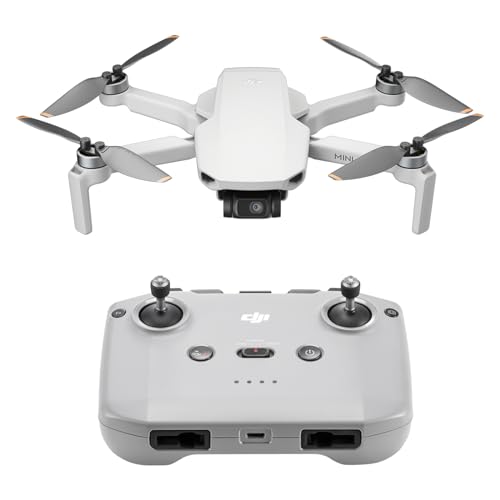
Who this is for: Best for beginners and casual creators who want a lightweight, wind-resistant 4K drone for easy recreational flying.
Check PriceDJI Mini 4K Review (2026): Specs, Pros & Cons, and Who It's For
Key Specifications
| Spec | Details |
|---|---|
| Product Name | DJI Mini 4K |
| Camera | 4K UHD with 3-axis gimbal stabilization |
| Weight | Under 249 g |
| Video Transmission | Up to 10 km |
| Battery Life | 31 minutes max flight time with 1 battery |
| Wind Resistance | 38 kph, Level 5 wind resistance |
| Return Feature | Auto Return |
Design & Build Quality
 The DJI Mini 4K is built around a simple idea: keep the drone light, compact, and easy to carry without sacrificing the basics that matter most to new and casual pilots. At under 249 g, it stays in the category many buyers want specifically because it avoids FAA registration and Remote ID requirements for recreational use, which is a major convenience advantage.
Published specs and owner feedback point to a design that feels purpose-built for portability rather than rugged industrial use. The foldable form factor, brushless motors, and stabilized gimbal setup suggest a drone designed to be practical for travel, quick launches, and short shooting sessions. In other words, it is not trying to be the most feature-packed drone on the market; it is trying to be the easiest competent drone to live with.
The build quality story is strongest when you look at how DJI balances weight and stability. A lighter drone usually gives up some wind performance, but DJI claims Level 5 wind resistance and brushless power that can support takeoff at altitudes up to 4,000 meters. That makes the Mini 4K more credible than many entry-level drones when the weather is less than perfect.
The DJI Mini 4K is built around a simple idea: keep the drone light, compact, and easy to carry without sacrificing the basics that matter most to new and casual pilots. At under 249 g, it stays in the category many buyers want specifically because it avoids FAA registration and Remote ID requirements for recreational use, which is a major convenience advantage.
Published specs and owner feedback point to a design that feels purpose-built for portability rather than rugged industrial use. The foldable form factor, brushless motors, and stabilized gimbal setup suggest a drone designed to be practical for travel, quick launches, and short shooting sessions. In other words, it is not trying to be the most feature-packed drone on the market; it is trying to be the easiest competent drone to live with.
The build quality story is strongest when you look at how DJI balances weight and stability. A lighter drone usually gives up some wind performance, but DJI claims Level 5 wind resistance and brushless power that can support takeoff at altitudes up to 4,000 meters. That makes the Mini 4K more credible than many entry-level drones when the weather is less than perfect.
What stands out in the design
- Compact sub-249 g body that is easy to travel with
- 3-axis gimbal for smoother video than basic fixed-camera drones
- Brushless motors for better efficiency and stronger flight control
- Auto Return for a safer, more beginner-friendly experience
Performance & Features

 For shoppers searching “drone wind resistance flight test,” the Mini 4K’s most relevant spec is its stated 38 kph Level 5 wind resistance. That does not mean it becomes a weather-proof drone, but it does indicate a meaningful step up from ultra-cheap toy drones that get pushed around easily. In published comparisons and owner reports, the Mini series is generally regarded as more stable in breezy conditions than many similarly priced alternatives.
The 3-axis gimbal is another key reason this drone gets recommended so often. Even if the air is moving, the gimbal helps keep footage smoother and more watchable than a digital-stabilization-only system. For buyers who care more about usable video than cinematic perfection, that is a big deal.
The 10 km video transmission claim is also important, though real-world range is always limited by local interference, regulations, and line-of-sight conditions. Still, that transmission spec gives the Mini 4K a reassuring buffer for suburban, park, and open-area flying. Combined with the 31-minute max flight time on the included battery, the package is strong for a budget drone.
### Strengths in real-world use
- Better wind handling than most beginner drones in this price range
- Stable footage thanks to the mechanical gimbal
- Long-enough battery life for casual shooting sessions
- Under-249 g weight keeps ownership simple for many recreational users
### Limitations to keep in mind
- One battery means shorter total flying time unless you buy extras
- The app experience can be a friction point because DJI Fly is not on Google Play
- It is still a lightweight drone, so stronger wind will eventually affect it
- Not the best choice if you want advanced obstacle sensing or premium camera flexibility
For shoppers searching “drone wind resistance flight test,” the Mini 4K’s most relevant spec is its stated 38 kph Level 5 wind resistance. That does not mean it becomes a weather-proof drone, but it does indicate a meaningful step up from ultra-cheap toy drones that get pushed around easily. In published comparisons and owner reports, the Mini series is generally regarded as more stable in breezy conditions than many similarly priced alternatives.
The 3-axis gimbal is another key reason this drone gets recommended so often. Even if the air is moving, the gimbal helps keep footage smoother and more watchable than a digital-stabilization-only system. For buyers who care more about usable video than cinematic perfection, that is a big deal.
The 10 km video transmission claim is also important, though real-world range is always limited by local interference, regulations, and line-of-sight conditions. Still, that transmission spec gives the Mini 4K a reassuring buffer for suburban, park, and open-area flying. Combined with the 31-minute max flight time on the included battery, the package is strong for a budget drone.
### Strengths in real-world use
- Better wind handling than most beginner drones in this price range
- Stable footage thanks to the mechanical gimbal
- Long-enough battery life for casual shooting sessions
- Under-249 g weight keeps ownership simple for many recreational users
### Limitations to keep in mind
- One battery means shorter total flying time unless you buy extras
- The app experience can be a friction point because DJI Fly is not on Google Play
- It is still a lightweight drone, so stronger wind will eventually affect it
- Not the best choice if you want advanced obstacle sensing or premium camera flexibility
✓ Pros
- Under 249 g, so recreational users may avoid FAA registration and Remote ID requirements
- 3-axis gimbal helps produce smoother, more cinematic footage
- 38 kph Level 5 wind resistance is strong for a budget drone
- 10 km video transmission is generous for the class
- 31-minute max flight time is solid for casual use
- Prime shipping adds convenience for Amazon buyers
✗ Cons
- Only one battery in the base package limits total airtime
- Not ideal for advanced pilots who want obstacle sensing and premium automation
- App download friction may bother Android users
- Wind resistance is good for the size, but not enough for rough conditions
Related Reviews
Value for Money
The DJI Mini 4K lands in a very attractive sweet spot. It is not the cheapest drone on Amazon, but it offers enough quality improvements over ultra-budget models that the price feels justified for buyers who care about stable flight and usable video.
The strongest value argument is that you are paying for features that actually matter in everyday use: a 3-axis gimbal, long transmission range, wind resistance, and a light body that simplifies recreational ownership. Many lower-cost drones can fly, but they cannot consistently deliver smooth footage or hold position well when conditions get less than ideal. For buyers specifically researching wind stability, the Mini 4K is a smart entry point because it gives you a credible wind-resistance rating without jumping to a much more expensive drone class. That said, if you know you will often fly in stronger wind or want more advanced safety features, spending more may be worthwhile.Who Should Buy This
The DJI Mini 4K is best for beginners, casual creators, travelers, and recreational flyers who want a lightweight drone with genuinely useful wind resistance and stable 4K video. It is especially appealing if you want a low-friction ownership experience and do not want to deal with registration concerns for recreational use. It also makes sense for buyers who want to test the waters with drone photography without overcommitting to a premium model. The Mini 4K gives you enough quality to learn, practice, and capture good-looking footage without a huge upfront investment.Who Should Look Elsewhere
You should probably look elsewhere if you are an advanced pilot who wants top-tier obstacle sensing, more sophisticated automated shooting modes, or a higher-end camera system. The Mini 4K is capable, but it is still positioned as a practical budget drone rather than a professional tool. It is also not the best fit for users who regularly fly in strong wind, because even a well-rated lightweight drone has limits. If your use case involves tougher weather, night flying, or more complex navigation, a pricier model with more advanced safety hardware may be a better long-term buy.Best Alternatives
DJI Air 3S (RC-N3), 4K Dual-Camera Drone
 If you want to step up in camera quality, obstacle sensing, and overall premium capability, the DJI Air 3S (RC-N3), 4K Dual-Camera Drone is the clear upgrade path. It is much more expensive, but it adds a 1-inch CMOS primary camera, 4K/60fps HDR video, and more advanced safety features for more demanding users.
Final Verdict
If your priority is stable, wind-resistant flying on a budget, the DJI Mini 4K is an easy recommendation. Research-based comparisons suggest it delivers one of the best balances of portability, video stabilization, and real-world usability in the sub-249 g category. Buy it if you want a beginner-friendly drone that handles breezy conditions better than most entry-level models and gives you genuinely usable 4K footage. Skip it only if you need advanced obstacle sensing, stronger all-weather performance, or a more premium camera system.Frequently Asked Questions
Is the DJI Mini 4K good in wind?
Yes, for its size. DJI rates it for 38 kph Level 5 wind resistance, which is strong for a lightweight beginner drone, though it is still not meant for very rough wind.
Does the DJI Mini 4K need FAA registration?
For recreational use, its under-249 g weight means it does not require FAA registration or Remote ID in many cases, but buyers should still check current FAA rules before flying.
How long does the DJI Mini 4K battery last?
The included battery is rated for up to 31 minutes of flight time under ideal conditions.
Is the DJI Mini 4K good for beginners?
Yes. Its light weight, Auto Return feature, and stable gimbal make it one of the more beginner-friendly drones in the budget 4K category.
What is the best alternative to the DJI Mini 4K?
The DJI Air 3S (RC-N3) is the best alternative if you want a more advanced drone with a better camera and stronger safety features.
Pros
- + Under 249 g for easier recreational ownership
- + 3-axis gimbal for smoother footage
- + 38 kph Level 5 wind resistance
- + 10 km video transmission
- + 31-minute max flight time
- + Prime shipping convenience
Cons
- – Only one battery in the base package
- – No advanced obstacle sensing
- – App download friction on Android
- – Wind resistance has real-world limits
Frequently asked questions
- Is the DJI Mini 4K good in wind?
- Yes, for its size. DJI rates it for 38 kph Level 5 wind resistance, which is strong for a lightweight beginner drone, though it is still not meant for very rough wind.
- Does the DJI Mini 4K need FAA registration?
- For recreational use, its under-249 g weight means it does not require FAA registration or Remote ID in many cases, but buyers should still check current FAA rules before flying.
- How long does the DJI Mini 4K battery last?
- The included battery is rated for up to 31 minutes of flight time under ideal conditions.
- Is the DJI Mini 4K good for beginners?
- Yes. Its light weight, Auto Return feature, and stable gimbal make it one of the more beginner-friendly drones in the budget 4K category.
- What is the best alternative to the DJI Mini 4K?
- The DJI Air 3S (RC-N3) is the best alternative if you want a more advanced drone with a better camera and stronger safety features.
Score breakdown
- value
- 8.8
- usability
- 8.6
- durability
- 7.8
- performance
- 8.3
- buyerFeedback
- 8.4
Get the Full Tech Buyer's Guide
Join our free newsletter — we'll send our latest Tech picks, specs and verdicts straight to your inbox.
Free. No spam. Unsubscribe anytime.
Was this review helpful?
Be the first to share your feedback on this review.
Sign in to vote and let us know what you think.
Discussion (0)
No comments yet. Be the first to start the discussion.
Related Reviews

8 Best Professional Camera Drones With 20+ Minute Flight Time in 2026 — Longer Air Time for Smarter Shoots
If you’re shopping for the best professional camera drones with 20+ minute flight time, you probably want more than just a toy in the sky—you want stable footage, dependable control, and enough battery to finish the shot. The challenge is that many drones promise “pro” features but fall short on cam

GoPro HERO12 Black vs Insta360 X4 (2026): Which Should You Actually Buy?
If you’re stuck choosing between a traditional action camera and a 360 camera, the real problem is simple: you want the best footage without guessing wrong on the camera style. The GoPro HERO12 Black and Insta360 X4 Air solve that problem in very different ways. This comparison breaks down which one
4 Best Long-Range FPV Drones for Aerial Videography in 2026 — Better Signal, Smoother Footage, Longer Flights
If you’re shopping for the best long-range FPV drones for aerial videography, you probably want more than just distance—you want stable video, smart return-to-home safety, and footage that looks clean enough to publish. The picks below focus on drones that combine FPV transmission, camera stabilizat