

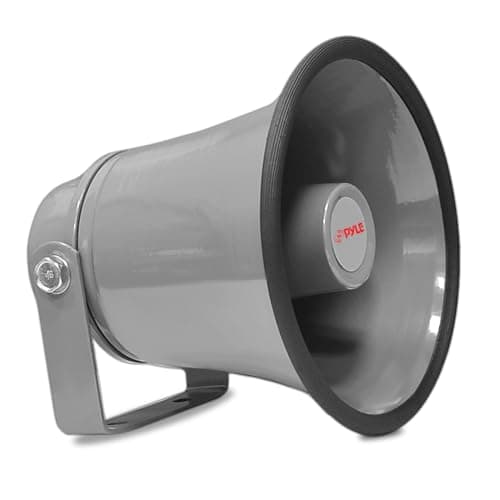
Who this is for: Best for buyers who need a simple PA speaker and want to match impedance and wattage correctly.
Check PriceWhat is Speaker Impedance and Wattage Explained? A Complete 2026 Guide
Confused by speaker impedance and wattage explained in product listings, amp manuals, and Amazon specs? You are not alone—these numbers often get mixed together, which makes it hard to know what will actually work safely and sound good. This guide breaks the terms down in plain English so you can match speakers and amplifiers with confidence. If you are shopping for a PA speaker, home audio setup, or outdoor sound system, understanding impedance and wattage can save you from weak sound, distortion, or equipment damage.
Related Reviews
How It Works
Speaker impedance is the amount of electrical resistance a speaker presents to an amplifier, and it is measured in ohms. Wattage is the amount of power a speaker can handle or an amplifier can deliver, depending on how the spec is written. Together, these two numbers help determine how much current flows through the system, how loud it can get, and whether the amp and speaker are a safe match.
Think of impedance like the width of a pipe and wattage like water pressure. A lower-impedance speaker lets more current flow, which can make an amp work harder and potentially produce more output if it is designed for that load. A higher-wattage speaker can usually handle more power without distortion or damage, but only if the amplifier can supply clean power in the right impedance range.
This is why a speaker labeled 8 ohms and 50 watts peak power needs to be paired carefully. The amplifier does not just need to be “powerful”; it needs to be compatible with the speaker’s impedance and within the speaker’s power-handling limits. When the match is right, the system sounds cleaner, runs cooler, and lasts longer.
Key Benefits & Use Cases
Understanding impedance and wattage is useful because it helps you buy the right gear the first time. Instead of guessing, you can compare specs and avoid common mismatches that lead to poor sound or blown components.
Why it matters
- Helps prevent amplifier overload and speaker damage.
- Makes it easier to predict loudness and headroom.
- Improves sound quality by reducing distortion at higher volumes.
- Lets you build systems that are safer and more reliable.
- Saves money by avoiding returns and incompatible purchases.
Common use cases
- Home audio systems where you want balanced sound without overdriving the amp.
- PA systems for announcements, events, and outdoor coverage.
- Workshop or garage setups where clarity matters more than audiophile detail.
- Portable sound rigs that need efficient speakers and simple installation.
- Commercial or school audio systems that run for long periods.
What to Look For When Buying
When shopping for speakers or amplifiers, focus on these five criteria:
1. Impedance match
Check the speaker’s ohm rating and make sure the amplifier supports that load. Common ratings are 4 ohms, 8 ohms, and sometimes 16 ohms. If the impedance is too low for the amp, the amp may overheat or shut down.
2. RMS vs peak wattage
Peak wattage is the short burst number, while RMS or continuous wattage is the more useful measure for real-world use. A speaker that claims high peak power may still have a modest continuous rating, so do not buy based on peak alone.
3. Sensitivity
Sensitivity tells you how efficiently a speaker converts power into sound. A more sensitive speaker can play louder with less wattage, which is especially helpful in PA and outdoor applications.
4. Intended environment
Indoor, outdoor, and commercial speakers are built differently. Weather-resistant housings, mounting hardware, and rugged materials matter if the speaker will be exposed to dust, moisture, or frequent transport.
5. Amplifier headroom
Choose an amp that can deliver enough clean power without clipping. An underpowered amp pushed too hard can distort and actually be more dangerous to speakers than a properly sized amplifier.
Top Recommended Products
Pyle Indoor / Outdoor PA Horn Speaker - 8.1” Portable PA Speaker with 8 Ohms Impedance and 50 Watts Peak Power - Mounting Bracket and Hardware Included ✓ Prime $46.61
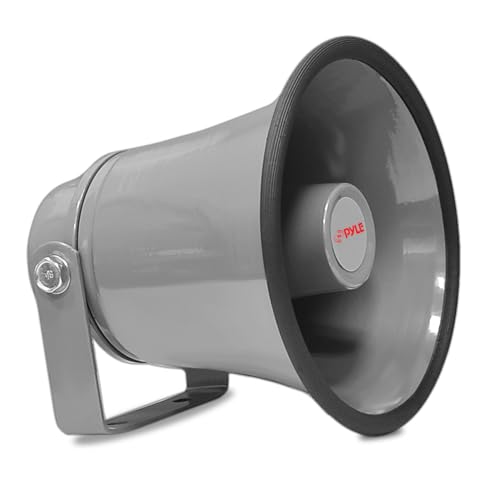


This Pyle horn speaker is a straightforward example of the spec relationship this guide is about: 8 ohms impedance and 50 watts peak power. Based on the published details and owner feedback patterns common to this category, it is aimed at users who want loud, direct sound for announcements, outdoor communication, or simple PA installs rather than hi-fi listening. The included bracket and hardware also make it easier to mount in fixed locations.
- ✓ 8 ohms impedance for broad amplifier compatibility
- ✓ 50 watts peak power for loud PA-style output
- ✓ 103 dB output listed for efficient sound projection
- ✓ Mounting bracket and hardware included
- ✓ Durable ABS/aluminum construction for indoor or outdoor use
- ✗ Peak power is less useful than RMS for judging continuous performance
- ✗ Best suited to PA/announcement use, not detailed music listening
- ✗ Sound character is functional rather than audiophile-focused
Common Mistakes to Avoid
- Do not confuse impedance with wattage. They measure different things and solve different problems.
- Do not assume more watts always means better sound. The wrong amp-speaker match can still sound worse.
- Do not rely only on peak power ratings. Continuous or RMS figures are usually more realistic.
- Do not ignore the amplifier’s supported ohm range. A mismatch can cause overheating or shutdown.
- Do not overlook sensitivity. A more efficient speaker may outperform a higher-wattage one in real use.
Frequently Asked Questions
What is speaker impedance in simple terms?
Speaker impedance is the electrical load a speaker presents to an amplifier, measured in ohms. It affects how much current the amp needs to supply.
Is higher wattage always louder?
Not always. Loudness depends on wattage, speaker sensitivity, and the amplifier’s ability to deliver clean power without distortion.
Can I use an 8-ohm speaker with any amplifier?
No. You need to check whether the amplifier supports 8-ohm speakers and whether it can provide enough power safely for that load.
What happens if speaker impedance is too low?
If the impedance is too low for the amplifier, the amp may run hot, distort, shut down, or even get damaged over time.
Why do some speakers list peak power instead of RMS?
Peak power is a marketing-friendly number that shows short-term maximum output. RMS or continuous power is usually more useful for real-world buying decisions.
Pros
- + 8 ohms impedance for broad amplifier compatibility
- + 50 watts peak power for loud PA-style output
- + 103 dB output listed for efficient sound projection
- + Mounting bracket and hardware included
- + Durable ABS/aluminum construction for indoor or outdoor use
Cons
- – Peak power is less useful than RMS for judging continuous performance
- – Best suited to PA/announcement use, not detailed music listening
- – Sound character is functional rather than audiophile-focused
Frequently asked questions
- What is speaker impedance in simple terms?
- Speaker impedance is the electrical load a speaker presents to an amplifier, measured in ohms. It affects how much current the amp needs to supply.
- Is higher wattage always louder?
- Not always. Loudness depends on wattage, speaker sensitivity, and the amplifier’s ability to deliver clean power without distortion.
- Can I use an 8-ohm speaker with any amplifier?
- No. You need to check whether the amplifier supports 8-ohm speakers and whether it can provide enough power safely for that load.
- What happens if speaker impedance is too low?
- If the impedance is too low for the amplifier, the amp may run hot, distort, shut down, or even get damaged over time.
- Why do some speakers list peak power instead of RMS?
- Peak power is a marketing-friendly number that shows short-term maximum output. RMS or continuous power is usually more useful for real-world buying decisions.
Score breakdown
- value
- 8.0
- usability
- 8.0
- durability
- 8.0
- performance
- 7.0
- buyerFeedback
- 7.0
Get the Full Tech Buyer's Guide
Join our free newsletter — we'll send our latest Tech picks, specs and verdicts straight to your inbox.
Free. No spam. Unsubscribe anytime.
Was this review helpful?
Be the first to share your feedback on this review.
Sign in to vote and let us know what you think.
Discussion (0)
No comments yet. Be the first to start the discussion.
Related Reviews
7 Best DACs for Headphones in 2026 — Cleaner Sound, Better Power, and Easier Desktop Listening
If your headphones sound flat, quiet, or harsh from a laptop, controller, or motherboard jack, a good DAC can make a huge difference. The best DACs for headphones don’t just improve clarity — they also give you better volume control, stronger amplification, and the right inputs for PC, console, or m
8 Best Headphone Amps in 2026 — Cleaner Sound, More Power, and Better Desktop Audio
If your headphones sound thin, quiet, or underpowered from a phone, laptop, or console, a good headphone amp can make an immediate difference. The best headphone amps 2026 picks below were chosen for their power, connectivity, portability, and real-world owner feedback across audiophile, gaming, des
What is Bluetooth 5.3 vs 5.4 explained? A Complete 2026 Guide
If you’re trying to understand Bluetooth 5.3 vs 5.4 explained , the confusing part is that both versions sound similar but can affect battery life, connection stability, and feature support in different ways. The good news is that the differences are easier to understand once you know what Bluetooth