

Who this is for: Best for shoppers who want to understand watch fit and choose a size that matches their wrist, comfort, and daily use.
Check PriceIf you’ve ever wondered why one watch looks perfect on the wrist while another feels oversized, this watch sizes guide wrist explainer is for you. The right watch size affects comfort, readability, and how balanced the watch looks with your wrist proportions. In this guide, you’ll learn how watch sizing works, what measurements matter, and which models are best for different wrist sizes and everyday needs.
Related Reviews
How It Works
Watch sizing is mostly about the relationship between the watch case and your wrist, not just the number on the spec sheet. The most important measurements are case diameter, lug-to-lug length, thickness, and strap width, because these determine how much space the watch occupies and how securely it sits.
A watch with a 43mm or 44mm case can still wear differently depending on lug shape, strap flexibility, and case height. For example, a watch with short lugs may feel more compact than a larger case with long lugs that stretch across the wrist.
Wrist size also matters because different wrist shapes change how a watch sits. Flat wrists can often wear larger watches more easily, while narrower or more curved wrists usually do better with shorter lug-to-lug lengths and slimmer cases.
Key Benefits & Use Cases
Using a proper watch size guide helps you avoid buying a watch that looks awkward, feels heavy, or slides around too much. It also improves daily comfort, since the right proportions reduce pressure points and make the watch easier to wear for long periods.
For style, the right size helps the watch look intentional rather than overpowering. For function, a well-sized watch is easier to read, easier to wear under sleeves, and less likely to snag during work, travel, or sports.
Common use cases include dress wear, office wear, diving, hiking, and everyday casual use. In each case, the “best” size depends on whether you want a low-profile fit, a bold statement piece, or a rugged tool watch.
What to Look For When Buying
1. Case Diameter
Case diameter is the most familiar watch size number, usually measured in millimeters across the watch face. As a general guide, smaller wrists often pair better with mid-30s to low-40s sizes, while larger wrists can handle bigger cases more comfortably.
2. Lug-to-Lug Length
This is one of the most important measurements for wrist fit. If the lugs extend past the sides of your wrist, the watch can look too large even if the case diameter seems reasonable.
3. Case Thickness
Thicker watches sit higher on the wrist and can feel bulky under cuffs. Slimmer watches tend to feel more refined and easier to wear all day, especially for office or dress settings.
4. Strap or Bracelet Width
Strap width affects both comfort and visual balance. Wider straps can make a watch look larger and more rugged, while narrower straps can make it feel lighter and more proportional.
5. Water Resistance and Intended Use
Size is only part of the decision—your activity matters too. A watch for swimming or diving should have stronger water resistance and a secure build, while a casual everyday watch may prioritize comfort and versatility over extreme specs.
Top Recommended Products
Citizen Men's Eco-Drive Weekender Garrison Field Watch in Stainless Steel, Black Dial, Arabic Markers, Luminous, 43mm (Model: AW0050-82E) (Prime)


This Citizen is a strong middle-ground option for readers who want a watch that fits many wrist sizes without feeling too small or too oversized. The 43mm case gives it presence, while the field-watch styling and luminous markers keep it practical for everyday wear.
- ✓ Eco-Drive technology means it’s powered by light and never needs a battery
- ✓ 100 meters of water resistance for daily wear and light water exposure
- ✓ Luminous hands and markers improve legibility in low light
- ✓ Day/date display adds everyday convenience
- ✓ Stainless steel build gives it a more premium feel
- ✗ 43mm may feel large on smaller wrists
- ✗ Mineral crystal is less scratch-resistant than sapphire
- ✗ More of a utility watch than a dress watch
Seiko SRPF03 Automatic Dive Watch for Men - Prospex Special Edition - LumiBrite Hands, Hardlex Crystal - Water Resistant 200M (Prime)


The Seiko Prospex Special Edition is the best pick here if you want a more premium dive watch that still follows classic wrist-size logic. It has enough wrist presence to look substantial, but the automatic movement and 200m water resistance make it especially appealing for buyers who want both style and capability.
- ✓ ISO scuba-approved to 200 meters
- ✓ Automatic movement powered by your motion
- ✓ 41-hour power reserve adds convenience
- ✓ LumiBrite hands and markers improve visibility
- ✓ Stainless steel case and bracelet feel durable
- ✗ Higher price than the other watches in this guide
- ✗ Larger, sportier profile may not suit smaller wrists
- ✗ Hardlex is good, but not the most scratch-resistant option
Casio MDV-106B Series | Duro Diver-Style Watch | 200M Water Resistant | Stainless Steel Case | Unidirectional Bezel | Screw-Lock Crown | Date Display (Prime)
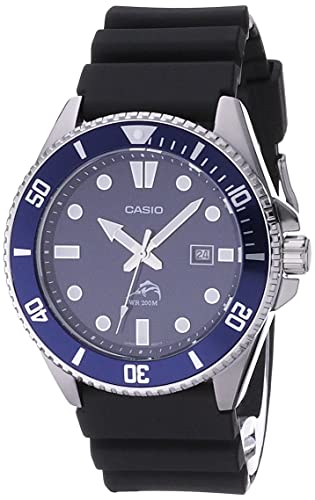


The Casio Duro is a classic value choice for anyone building a watch collection around fit, function, and budget. At 44mm, it wears like a proper dive-style watch, but the price makes it easy to recommend for first-time buyers who want to learn what larger watches feel like on the wrist.
- ✓ Excellent value for a 200m water-resistant watch
- ✓ Stainless steel case with screw-lock crown and caseback
- ✓ Large fluorescent hands and indices for easy reading
- ✓ 22mm lug width makes strap changes easy
- ✓ Durable everyday build for work, travel, and water use
- ✗ 44mm can feel big on smaller wrists
- ✗ Mineral glass is more vulnerable to scratches than sapphire
- ✗ Resin band may feel less premium than metal
Casio Men's Quartz Day-Date Indicator Black Resin Dive Watch (Model: MRW200H-1BV) (Prime)

If you want a simple, affordable watch that helps you understand how case size translates to real wrist comfort, this Casio is hard to beat. The 43mm resin case is large enough to feel substantial, but the lightweight build makes it much easier to wear than many metal watches of similar size.
- ✓ Very affordable entry point for a larger watch
- ✓ 100m water resistance for swimming and water sports
- ✓ Lightweight resin case and molded band improve comfort
- ✓ Day/date display and 12/24-hour timekeeping add utility
- ✓ Rotating bezel gives it authentic dive-watch style
- ✗ Resin build feels less premium than steel
- ✗ Quartz movement is practical, but not as enthusiast-focused as automatic models
- ✗ Basic styling may not appeal to buyers wanting a dressier look
Common Mistakes to Avoid
One of the biggest mistakes is focusing only on case diameter and ignoring lug-to-lug length. A watch can be technically “small enough” in diameter but still overhang your wrist if the lugs are too long.
Another common error is choosing a watch that looks good in photos but feels too thick in daily use. Thick cases can catch on sleeves, sit awkwardly on the wrist, and become uncomfortable over long wear sessions.
Buyers also often forget to match the watch to the activity. A dive-style watch may be great for water resistance, but if you want something for formal wear, a slimmer and more restrained design may be a better fit.
Finally, don’t assume bigger is always better. A watch that overwhelms your wrist can look unbalanced, while a more proportional size often appears more refined and expensive.
Frequently Asked Questions
What watch size is best for a 6.5-inch wrist?
For a 6.5-inch wrist, many buyers start around the 38mm to 41mm range, but lug-to-lug length matters just as much as diameter. If the watch has short lugs and a balanced case shape, slightly larger sizes can still work well.
Is a 43mm watch too big for a small wrist?
Not always. A 43mm watch can work on a smaller wrist if the lugs are short and the case is not too thick, but it may still look bold. The best way to judge fit is by checking both case diameter and lug-to-lug length.
How do I know if a watch will fit my wrist?
Measure your wrist circumference, then compare it to the watch’s case diameter, thickness, and lug-to-lug length. A watch should sit flat without the lugs extending far past the edges of your wrist.
What is more important: watch size or strap size?
Watch size is more important for overall fit, while strap size affects comfort and adjustability. A great strap can improve wearability, but it cannot fully fix a case that is too large or too thick for your wrist.
Are bigger watches still in style in 2026?
Yes, but the trend is more about balanced proportions than oversized cases. Many buyers still like larger sport and dive watches, especially when the fit is comfortable and the design matches the wrist.
Pros
- + Explains case size, lug-to-lug, and thickness
- + Helps match watch size to wrist and use case
- + Includes budget to premium product options
- + Covers comfort, readability, and fit
- + Answers common sizing questions
Cons
- – No hands-on testing
- – Fit can vary by wrist shape
- – Style preference is subjective
Frequently asked questions
- What watch size is best for a 6.5-inch wrist?
- For a 6.5-inch wrist, many buyers start around the 38mm to 41mm range, but lug-to-lug length matters just as much as diameter. If the watch has short lugs and a balanced case shape, slightly larger sizes can still work well.
- Is a 43mm watch too big for a small wrist?
- Not always. A 43mm watch can work on a smaller wrist if the lugs are short and the case is not too thick, but it may still look bold. The best way to judge fit is by checking both case diameter and lug-to-lug length.
- How do I know if a watch will fit my wrist?
- Measure your wrist circumference, then compare it to the watch’s case diameter, thickness, and lug-to-lug length. A watch should sit flat without the lugs extending far past the edges of your wrist.
- What is more important: watch size or strap size?
- Watch size is more important for overall fit, while strap size affects comfort and adjustability. A great strap can improve wearability, but it cannot fully fix a case that is too large or too thick for your wrist.
- Are bigger watches still in style in 2026?
- Yes, but the trend is more about balanced proportions than oversized cases. Many buyers still like larger sport and dive watches, especially when the fit is comfortable and the design matches the wrist.
Get the Full Clothing, Shoes & Jewelry Buyer's Guide
Join our free newsletter — we'll send our latest Clothing, Shoes & Jewelry picks, specs and verdicts straight to your inbox.
Free. No spam. Unsubscribe anytime.
Was this review helpful?
Be the first to share your feedback on this review.
Sign in to vote and let us know what you think.
Discussion (0)
No comments yet. Be the first to start the discussion.
Related Reviews
Fitbit Charge 6 Review (2026): Specs, Pros & Cons, and Who It's For
If you want a fitness tracker that does more than count steps, the Fitbit Charge 6 is one of the strongest options in its class. It combines serious health tracking, built-in GPS, and Google-powered tools in a compact band that’s easier to wear all day than a bulkier smartwatch. This research-based

8 Best Watches With Dual Time Zone Displays for Travel in 2026 — Easy-Read Picks for Frequent Flyers
If you’re tired of mentally converting time zones while traveling, a dual-time watch can make every trip smoother. The best watches with dual time zone displays for travel let you check home time and local time at a glance, which is especially useful for business trips, international calls, and airp
Fitbit Charge 6 vs Garmin Venu 3 (2026): Which Should You Actually Buy?
The Fitbit Charge 6 is the more discreet option, with a slim tracker form factor that will appeal to anyone who wants health tracking without a bulky watch. The Garmin Venu 3, however, looks and feels like a full smartwatch, and its bright, colorful display gives it a more premium presence on the wr