

Who this is for: Best for shoppers comparing 60Hz vs 120Hz who want smoother motion for sports, gaming, and mixed-use TV viewing.
Check PriceWhat is TV refresh rate explained 60Hz vs 120Hz? A Complete 2026 Guide
If you’re trying to understand TV refresh rate explained 60Hz vs 120Hz, the short version is this: refresh rate affects how smooth motion looks on your screen. It matters most for sports, gaming, fast action scenes, and anything with lots of movement. This guide breaks down what refresh rate means, how it works, what to look for when buying, and which TVs are worth considering if you want a smoother picture.
Related Reviews
In simple terms, refresh rate is how many times per second a TV updates the image on screen. A 60Hz TV refreshes 60 times per second, while a 120Hz TV refreshes 120 times per second, which can make motion appear cleaner and reduce blur in fast scenes. The difference is not always dramatic for every viewer, but it becomes much more noticeable with sports, next-gen gaming, and high-motion content.
As a research-based explainer, this guide is built from published specs, manufacturer details, and owner feedback comparisons — not hands-on testing. If you’re deciding between 60Hz and 120Hz, the goal here is to help you understand what you’re paying for and whether the upgrade is actually worth it for your viewing habits.
How It Works
Refresh rate is measured in hertz (Hz), which means “cycles per second.” When a TV has a 60Hz refresh rate, it can redraw the image 60 times each second; at 120Hz, it can redraw it 120 times each second. That extra speed gives the TV more opportunities to show motion more smoothly, especially when objects move quickly across the screen.
Here’s why that matters: video is made of individual frames, and motion can look choppy if the screen can’t keep up well with the content. A 120Hz panel can better handle fast camera pans, sports broadcasts, and gaming signals that are designed to take advantage of higher frame rates. In contrast, a 60Hz TV can still look great for movies and everyday streaming, but it may show more blur or judder in rapid motion.
It’s also important to separate native refresh rate from marketing terms like motion smoothing or “effective” refresh rates. Some TVs use software tricks to simulate smoother motion, but that is not the same as a true 120Hz panel. If you want the real benefit, look for a TV that explicitly supports 120Hz at the panel level and, for gaming, HDMI 2.1 features that allow higher frame rate input.
Key Benefits & Use Cases
1) Sports viewing
Fast-moving sports benefit from higher refresh rates because the ball, players, and camera pans stay clearer. If you watch a lot of football, basketball, hockey, or racing, 120Hz can make the action feel more fluid and easier to follow.
2) Gaming
For PlayStation 5, Xbox Series X, and gaming PCs, 120Hz can be a major upgrade. Many modern games support higher frame rates, and a 120Hz TV can display them more responsively, which can also make controls feel more immediate.
3) Action movies and streaming
Movies are often filmed at 24 fps, so refresh rate is not as critical as it is for gaming. Still, a 120Hz TV can help with motion handling and reduce the stutter some viewers notice during fast camera movement.
4) Everyday TV and casual viewing
If most of your viewing is news, sitcoms, talk shows, or slower-paced streaming, 60Hz is often enough. You may not notice a huge difference unless you compare side by side or watch motion-heavy content regularly.
5) Multi-use family rooms
If one TV needs to handle sports, gaming, movies, and general streaming, 120Hz offers more flexibility. It gives you a better chance of getting smooth motion across different types of content without needing a separate gaming display.
What to Look For When Buying
1) Native refresh rate
Check whether the TV is truly 60Hz or 120Hz native. Some product pages emphasize motion enhancement numbers that can be confusing, so the real spec to compare is the panel’s native refresh rate.
2) HDMI 2.1 support
If you plan to game on a console or PC, HDMI 2.1 is important because it helps enable 4K at 120Hz on compatible devices. Without it, you may not get the full benefit of a 120Hz panel.
3) Motion processing quality
Refresh rate is only part of the story. TV brands also use motion interpolation and processing to reduce blur, so the overall motion handling can vary even between TVs with the same refresh rate.
4) Content type you watch most
Think about your real usage. If you mostly stream dramas and sitcoms, 60Hz may be perfectly fine. If you watch sports every weekend or game frequently, 120Hz is much easier to justify.
5) Panel type and picture quality
OLED and high-end QLED models often pair strong motion handling with excellent contrast and color. Refresh rate matters, but it should be weighed alongside brightness, black levels, color accuracy, and sound quality.
Top Recommended Products
Below are two strong options from the product list for readers who want a TV that can take advantage of smoother motion. Both are premium 2025 models with OLED picture quality, and both are relevant if you’re comparing 60Hz vs 120Hz behavior in real-world viewing.
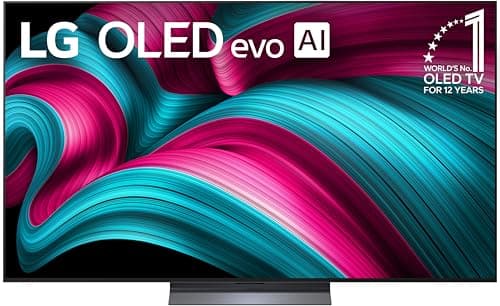
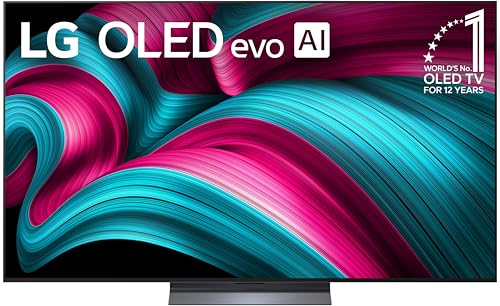
LG 65-Inch Class OLED evo AI 4K C5 Series Smart TV w/Dolby Atmos, Dolby Vision, HDR10, AI Super Upscaling 4K, Filmmaker Mode, Wow Orchestra, Alexa Built-in (OLED65C5PUA, 2025) 4.7★


7% OFF — Was $1396.99 ✓ Prime $1299.99
The LG C5 is a strong pick if you want a premium OLED TV that can make motion look especially clean in sports and games. Its Alpha 9 AI Processor Gen8, Brightness Booster, and Perfect Black/Perfect Color claims point to a TV built for strong all-around picture quality, while the OLED panel is the key reason it stands out for motion clarity and contrast.
✓ OLED panel with perfect black and perfect color for high-contrast viewing
✓ Brightness Booster helps the TV perform better in brighter rooms
✓ AI Super Upscaling can improve lower-resolution content
✓ Strong fit for sports, movies, and gaming thanks to premium processing
✗ Premium price compared with basic 60Hz TVs
✗ OLED owners who watch static content for long hours may still want to manage screen habits carefully
✗ Best value only if you’ll use the higher-end motion and picture features
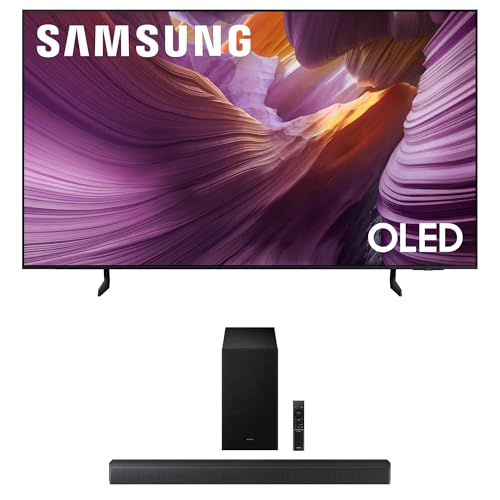
SAMSUNG QN55S85FAFXZA 55 Inch OLED HDR 4K Smart TV with a HW-B630F B-Series Soundbar 3.1 Ch and Subwoofer with Dolby Audio (2025) 4.6★


$1089.99 ✓ Prime
This Samsung bundle is appealing if you want a TV-plus-soundbar setup that simplifies the buying process. The OLED HDR panel, NQ4 AI Gen2 Processor, and 4K AI Upscaling make it a compelling option for viewers who want crisp motion and strong image processing, while the included soundbar adds value right away.
✓ OLED HDR panel with strong contrast and dynamic brightness
✓ 4K AI Upscaling helps lower-resolution content look better
✓ Bundle includes a 3.1-channel soundbar and subwoofer for fuller audio
✓ Good all-in-one value if you also need better sound
✗ Smaller 55-inch size may be less ideal for large living rooms
✗ Bundle pricing may be less flexible if you already own a sound system
✗ As with any premium TV, the value depends on whether you’ll use the advanced features
Common Mistakes to Avoid
1) Assuming all “smooth motion” claims mean 120Hz. Many TVs advertise motion-enhancement features that sound impressive, but those are not always the same as a true 120Hz panel.
2) Paying for 120Hz when you only watch basic TV. If your viewing is mostly news, sitcoms, and casual streaming, you may not notice enough improvement to justify the extra cost.
3) Ignoring HDMI support for gaming. A 120Hz TV is much more useful when it also supports the right input features for modern consoles and PCs.
4) Focusing only on refresh rate. Picture quality, brightness, contrast, and processing can matter just as much, especially for movie watching.
5) Forgetting about room lighting. A TV that looks great in a dark demo room may behave differently in a bright living room, so overall display quality matters beyond refresh rate alone.
Frequently Asked Questions
Is 120Hz really better than 60Hz on a TV?
Yes, 120Hz is generally better for motion clarity, especially in sports and gaming. For casual TV and streaming, though, the difference may be less noticeable.
Can you tell the difference between 60Hz and 120Hz?
Many people can, especially during fast motion, camera pans, or gaming. The difference is usually easiest to spot when comparing the two side by side.
Do movies need 120Hz?
Not necessarily. Most movies are filmed at 24 frames per second, so 120Hz is more of a motion-handling advantage than a requirement for movie watching.
Is 60Hz okay for gaming?
Yes, 60Hz is still fine for many games, especially if you play casually. But if you want smoother motion and lower latency potential, 120Hz is the better choice.
What should I buy: 60Hz or 120Hz?
Choose 60Hz if you mainly watch regular TV and want to save money. Choose 120Hz if you watch sports, play games, or want the smoothest motion possible.
Pros
- + 120Hz improves motion clarity for sports and gaming
- + 60Hz is often enough for casual streaming and TV
- + OLED models offer strong contrast and smoother-looking action
- + Buying guide helps match refresh rate to real use
Cons
- – 120Hz TVs usually cost more
- – Motion marketing can be confusing
- – Refresh rate alone does not guarantee better picture quality
Frequently asked questions
- Is 120Hz really better than 60Hz on a TV?
- Yes, 120Hz is generally better for motion clarity, especially in sports and gaming. For casual TV and streaming, though, the difference may be less noticeable.
- Can you tell the difference between 60Hz and 120Hz?
- Many people can, especially during fast motion, camera pans, or gaming. The difference is usually easiest to spot when comparing the two side by side.
- Do movies need 120Hz?
- Not necessarily. Most movies are filmed at 24 frames per second, so 120Hz is more of a motion-handling advantage than a requirement for movie watching.
- Is 60Hz okay for gaming?
- Yes, 60Hz is still fine for many games, especially if you play casually. But if you want smoother motion and lower latency potential, 120Hz is the better choice.
- What should I buy: 60Hz or 120Hz?
- Choose 60Hz if you mainly watch regular TV and want to save money. Choose 120Hz if you watch sports, play games, or want the smoothest motion possible.
Get the Full Tech Buyer's Guide
Join our free newsletter — we'll send our latest Tech picks, specs and verdicts straight to your inbox.
Free. No spam. Unsubscribe anytime.
Was this review helpful?
Be the first to share your feedback on this review.
Sign in to vote and let us know what you think.
Discussion (0)
No comments yet. Be the first to start the discussion.
Related Reviews
What is how to fix TV screen burn in? A Complete 2026 Guide
TV screen burn-in can be frustrating because it leaves faint ghost images, uneven brightness, or permanent-looking marks that distract from movies, sports, and gaming. If you’re searching for how to fix TV screen burn in , the first thing to know is that some cases are temporary image retention whil
7 Best Universal Remotes in 2026 — Easy Setup, Broad TV Compatibility, and Better Value
If your current remote is lost, broken, or full of dead buttons, finding a replacement that actually works can be frustrating fast. The best universal remotes 2026 shoppers want should be easy to set up, compatible with the TV brands they own, and affordable enough to replace without regret. This re
2 Best Transparent TVs in 2026 — Clear Design, Commercial-Grade Reliability
If you’re searching for the best transparent tvs 2026 , you’re probably looking for something that stands out visually without sacrificing everyday usability. The challenge is that this is still an emerging category, so the safest picks are the models with documented specs, practical screen sizes, a