

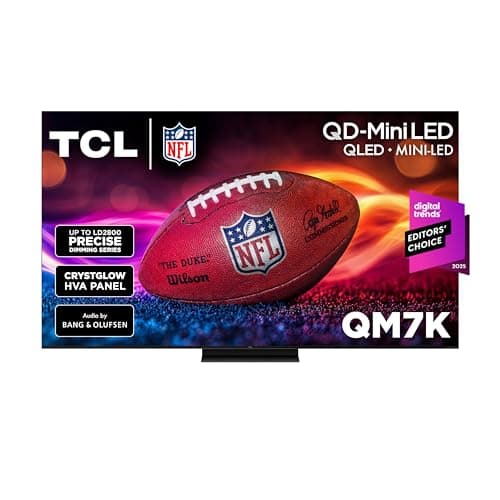
TCL QM7K vs Hisense U8QG (2026): Which Should You Actually Buy?
If you’re stuck between the TCL QM7K and Hisense U8QG, the real question is simple: do you want the better value mini-LED TV, or the more aggressively specced flagship? Both are strong 4K Google TV options with anti-reflection coatings, but they target different buyers. In this TCL QM7K vs Hisense U8QG comparison, we’ll break down the differences that actually matter so you can buy with confidence.
Related Reviews
At a Glance
| Category | TCL QM7K | Hisense U8QG |
|---|---|---|
| Price | $597.99 8% OFF — Was $649.99 ✓ Prime | $785.99 13% OFF — Was $899.99 ✓ Prime |
| Backlight | QD-Mini LED, up to LD2500 | Mini-LED Pro, up to LD5600 |
| Peak Brightness | High HDR brightness | Up to 5000 nits |
| Refresh Rate | 120Hz–144Hz | Native 165Hz |
| Gaming Features | Low-lag smart TV with anti-reflective screen | VRR 48–165Hz, Game Booster 288, FreeSync Premium Pro |
| Audio | Dolby Atmos, Onkyo audio | 4.1.2 channel audio, Dolby Vision IQ · Atmos, IMAX Enhanced |
| Best For | Value-conscious buyers | Premium gaming and brighter rooms |
Design
Winner: TCL QM7K
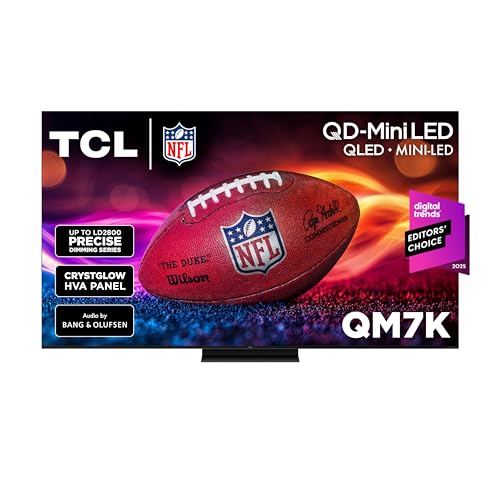
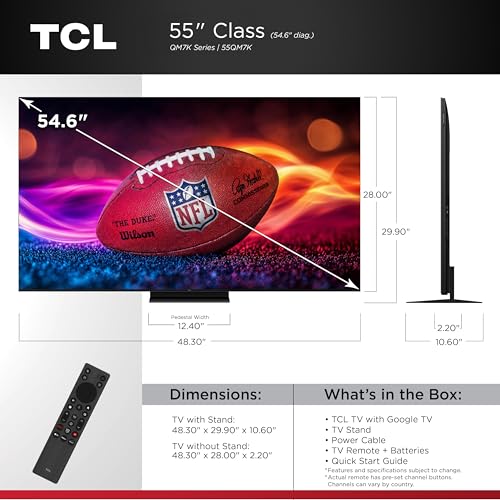

The TCL QM7K leans into practical premium design with its CrystGlow HVA panel and anti-reflective approach, which helps it fit better into bright living rooms. Hisense counters with Anti-Reflection Pro, but TCL’s overall package feels more value-focused and easier to justify if you care about getting flagship-like features without paying flagship pricing.
- ✓ CrystGlow HVA Panel blocks reflections
- ✓ Designed for crisp visibility in varied room lighting
- ✓ Strong premium-value positioning
- ✗ Less aggressively featured than the Hisense in raw specs
- ✗ Doesn’t project the same “maxed-out flagship” vibe
Performance
Winner: Hisense U8QG
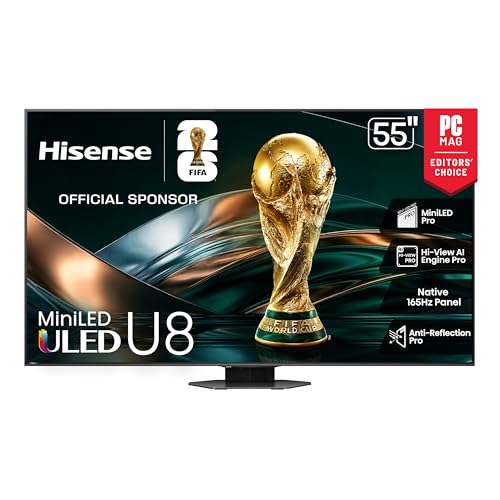


This is where the U8QG pulls ahead hard. With Mini-LED Pro, up to 5000 nits peak brightness, and up to 5600 local dimming zones, it’s built to deliver more impact, stronger contrast control, and a more dramatic HDR image than the TCL. If you watch a lot of movies, sports, or HDR content in bright rooms, the Hisense simply has the more impressive spec sheet and the stronger real-world ceiling.
- ✓ Up to 5000 nits peak brightness
- ✓ Up to 5600 local dimming zones
- ✓ Hi-View AI Engine Pro optimizes picture and sound
- ✗ Costs notably more than the TCL
- ✗ Overkill if you only want a solid everyday TV
Gaming Features
Winner: Hisense U8QG
If gaming is a priority, the U8QG is the more complete package. Its native 165Hz panel, VRR from 48Hz to 165Hz, Game Booster 288, FreeSync Premium Pro, and low-latency features make it the better choice for competitive and next-gen console owners. The TCL QM7K still offers a strong 120Hz–144Hz experience, but it doesn’t match the Hisense in raw gaming flexibility.
- ✓ Native 165Hz panel
- ✓ VRR 48Hz–165Hz
- ✓ Game Booster 288 and Game Bar controls
- ✓ FreeSync Premium Pro and ALLM support
- ✗ More expensive than the TCL
- ✗ Gaming focus may be more than casual buyers need
Brightness and HDR
Winner: Hisense U8QG
For HDR punch, the Hisense U8QG is the clear winner. The TCL QM7K offers high HDR brightness and up to LD2500 dimming zones, which is excellent for the money, but the U8QG’s 5000-nit ceiling and LD5600 backlight system are in a different league. That means brighter highlights, stronger specular detail, and better visibility in sunlit rooms.
- ✓ 5000 nits peak brightness
- ✓ More local dimming zones for finer control
- ✓ Better HDR headroom for movies and sports
- ✗ Higher price
- ✗ Diminishing returns for buyers who don’t need extreme brightness
Value
Winner: TCL QM7K
This is the easiest category to call if you’re shopping on a budget. At $597.99, the TCL QM7K undercuts the Hisense U8QG by a wide margin while still delivering mini-LED, strong HDR brightness, anti-reflection tech, Dolby Atmos, and a 120Hz–144Hz panel. For most buyers, that’s the better balance of price and performance.
- ✓ Much lower price
- ✓ Strong mini-LED feature set for the money
- ✓ Great for value-focused home theater upgrades
- ✗ Not as bright or as advanced as the Hisense
- ✗ Fewer premium gaming and dimming features
Audio
Winner: Hisense U8QG
Both TVs bring respectable audio, but the Hisense has the more ambitious setup with 4.1.2 channel audio, Dolby Atmos, and IMAX Enhanced support. The TCL’s Dolby Atmos and Onkyo audio are solid, especially for casual viewing, but the U8QG is the more complete built-in sound package.
- ✓ 4.1.2 channel audio
- ✓ Dolby Atmos support
- ✓ IMAX Enhanced compatibility
- ✗ More expensive overall
- ✗ Built-in audio still won’t replace a dedicated sound system
TCL QM7K Is the Better Choice If…
- You want the better value mini-LED TV.
- You care about strong brightness and anti-reflection without paying flagship prices.
- You mainly watch streaming, sports, and everyday TV in a bright room.
- You want a capable gaming TV but don’t need the absolute top-end refresh rate.
- You prefer saving money for a soundbar or console upgrade.
Hisense U8QG Is the Better Choice If…
- You want the brighter, more premium mini-LED flagship.
- You play competitive games and want native 165Hz with VRR.
- You watch lots of HDR movies and want stronger highlight pop.
- You’re willing to pay more for more local dimming zones and better spec ceiling.
- You want the most feature-packed TV in this head-to-head.
Our Final Verdict
Overall, the Hisense U8QG wins this TCL QM7K vs Hisense U8QG matchup because it delivers the better all-around flagship experience: more brightness, more local dimming zones, stronger gaming specs, and a more advanced audio package. If you want the best performance and don’t mind paying extra, it’s the smarter premium buy. That said, the TCL QM7K is the better value pick by a wide margin, and for many shoppers it will be the more practical purchase.
Frequently Asked Questions
Which is better, TCL QM7K or Hisense U8QG?
The Hisense U8QG is better overall if you want the brightest and most feature-rich mini-LED TV. The TCL QM7K is better if you want the best value.
Is the Hisense U8QG worth the extra money?
Yes, if you want higher brightness, more local dimming zones, and stronger gaming specs. If you mainly want a good TV for less money, the TCL QM7K makes more sense.
Does the TCL QM7K have good gaming features?
Yes. It supports a 120Hz–144Hz experience and is a strong gaming TV for the price, but it doesn’t match the Hisense U8QG’s native 165Hz and VRR range.
Which TV is better for bright rooms?
Both handle reflections well, but the Hisense U8QG has the edge because of its much higher peak brightness and more advanced backlight system.
Which one should I buy for movies and sports?
If budget is the priority, choose the TCL QM7K. If you want the most dramatic HDR and best overall picture impact, choose the Hisense U8QG.
Frequently asked questions
- Which is better, TCL QM7K or Hisense U8QG?
- The Hisense U8QG is better overall if you want the brightest and most feature-rich mini-LED TV. The TCL QM7K is better if you want the best value. Is the Hisense U8QG worth the extra money?
- Is the Hisense U8QG worth the extra money?
- Yes, if you want higher brightness, more local dimming zones, and stronger gaming specs. If you mainly want a good TV for less money, the TCL QM7K makes more sense. Does the TCL QM7K have good gaming features?
- Does the TCL QM7K have good gaming features?
- Yes. It supports a 120Hz–144Hz experience and is a strong gaming TV for the price, but it doesn’t match the Hisense U8QG’s native 165Hz and VRR range. Which TV is better for bright rooms?
- Which TV is better for bright rooms?
- Both handle reflections well, but the Hisense U8QG has the edge because of its much higher peak brightness and more advanced backlight system. Which one should I buy for movies and sports?
- Which one should I buy for movies and sports?
- If budget is the priority, choose the TCL QM7K. If you want the most dramatic HDR and best overall picture impact, choose the Hisense U8QG.
Get the Full Tech Buyer's Guide
Join our free newsletter — we'll send our latest Tech picks, specs and verdicts straight to your inbox.
Free. No spam. Unsubscribe anytime.
Was this review helpful?
Be the first to share your feedback on this review.
Sign in to vote and let us know what you think.
Discussion (0)
No comments yet. Be the first to start the discussion.
Related Reviews
What is how to fix TV screen burn in? A Complete 2026 Guide
TV screen burn-in can be frustrating because it leaves faint ghost images, uneven brightness, or permanent-looking marks that distract from movies, sports, and gaming. If you’re searching for how to fix TV screen burn in , the first thing to know is that some cases are temporary image retention whil
7 Best Universal Remotes in 2026 — Easy Setup, Broad TV Compatibility, and Better Value
If your current remote is lost, broken, or full of dead buttons, finding a replacement that actually works can be frustrating fast. The best universal remotes 2026 shoppers want should be easy to set up, compatible with the TV brands they own, and affordable enough to replace without regret. This re
2 Best Transparent TVs in 2026 — Clear Design, Commercial-Grade Reliability
If you’re searching for the best transparent tvs 2026 , you’re probably looking for something that stands out visually without sacrificing everyday usability. The challenge is that this is still an emerging category, so the safest picks are the models with documented specs, practical screen sizes, a