

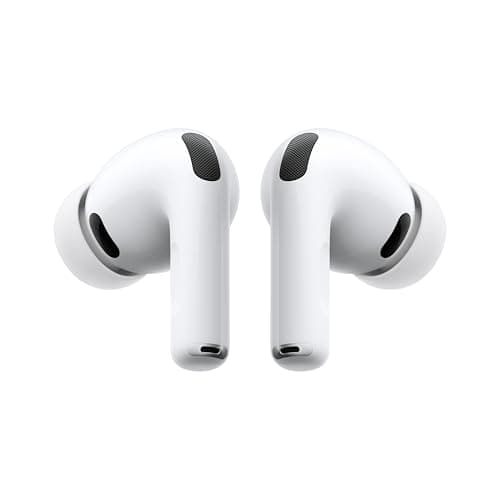
Who this is for: Best for shoppers who want a simple, research-based explanation of Bluetooth 5.3 vs 5.4 before buying audio or smart devices.
Check PriceWhat is Bluetooth 5.3 vs 5.4 explained? A Complete 2026 Guide
If you’re trying to understand Bluetooth 5.3 vs 5.4 explained, the confusing part is that both versions sound similar but can affect battery life, connection stability, and feature support in different ways. The good news is that the differences are easier to understand once you know what Bluetooth version numbers actually change behind the scenes. This guide breaks it down in plain English so you can decide whether 5.4 matters for your next phone, earbuds, speaker, or smart home device.
Related Reviews
How It Works
Bluetooth is a short-range wireless standard that lets devices communicate without a cable, using radio waves in the 2.4 GHz band. Each new Bluetooth version adds refinements to how devices discover each other, stay connected, manage power, and handle crowded wireless environments.
Bluetooth 5.3 and 5.4 are both part of the same broader Bluetooth 5.x family, so they are not dramatic “generation jumps” like Bluetooth 4 to 5. Instead, they are incremental improvements designed to make devices more efficient, more reliable, and better at handling modern use cases like earbuds, smart speakers, trackers, and smart home devices.
In practice, what matters most is not just the version number, but whether the product uses Bluetooth well in real-world conditions. A device with Bluetooth 5.4 can still perform poorly if the antenna design, firmware, or software support is weak, while a well-implemented Bluetooth 5.3 device may feel excellent.
Key Benefits & Use Cases
Why Bluetooth 5.3 matters
Bluetooth 5.3 focused on efficiency and connection quality. It improved how devices manage advertising, power use, and connection intervals, which can help wearables, earbuds, and battery-powered accessories run more smoothly.
Why Bluetooth 5.4 matters
Bluetooth 5.4 adds more value for large-scale connected environments and low-power communication. It is especially relevant for smart retail tags, sensors, and advanced IoT setups, where devices need to send data efficiently and reliably.
Real-world use cases
- Earbuds and headphones: Better connection stability and power efficiency can mean fewer dropouts and longer battery life.
- Portable speakers: Bluetooth helps with quick pairing and dependable playback when you move around the house or outdoors.
- Smart home devices: Version improvements can support smoother communication with phones and hubs.
- Trackers and sensors: 5.4 is more relevant for low-power, always-on devices.
- Multi-device ecosystems: Newer versions can improve how products behave in busy wireless spaces.
What to Look For When Buying
1. Bluetooth version
If you want the latest efficiency and feature support, look for Bluetooth 5.4. If a product has Bluetooth 5.3, that is still very current and usually more than enough for audio and everyday accessories.
2. Device ecosystem compatibility
Make sure the product works well with your phone, tablet, or smart home system. A newer Bluetooth version does not help much if the rest of your devices or apps are outdated.
3. Battery performance
For earbuds, trackers, and portable speakers, battery life often matters more than the version number alone. Look at real battery claims and owner feedback for practical results.
4. Connection stability
Check whether users report fast pairing, fewer dropouts, and reliable range. Bluetooth version helps, but product design and firmware matter just as much.
5. Feature support beyond Bluetooth
Some products rely on Wi-Fi, voice assistants, spatial audio, or app-based controls. In those cases, Bluetooth is only one part of the experience, so compare the full feature set.
Top Recommended Products
While Bluetooth version alone does not define product quality, these well-reviewed items show how Bluetooth fits into real-world buying decisions for audio and smart-home gear.
JBL Authentics 300 Portable Smart Speaker with Voice Control - Black 4.7★ (40% off) ✓ Prime
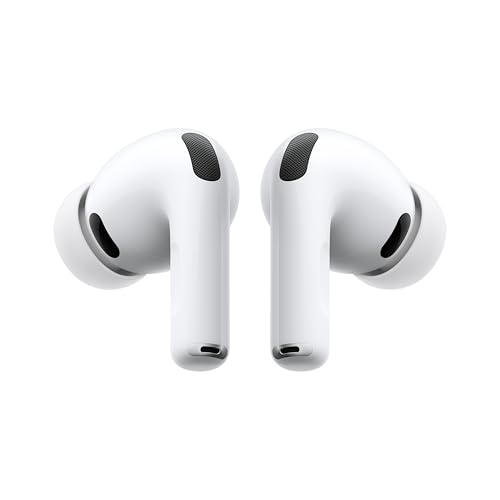


40% OFF — Was $499.95 $299.95 ✓ Prime
This speaker is a strong example of a Bluetooth product where the wireless standard is only part of the story. Its key strengths are room-filling sound, Wi-Fi streaming, dual voice assistants, and a built-in battery for portable use.
- ✓ 100W sound with dual tweeters, a woofer, and passive radiator
- ✓ Retro design with a cast-aluminum handle and premium look
- ✓ Wi-Fi streaming via AirPlay, Spotify Connect, Chromecast built-in, and Alexa Multi-Room Music
- ✓ Dual voice assistants: Google Assistant and Amazon Alexa
- ✓ Up to 8 hours of battery life for room-to-room portability
- ✗ Larger and more expensive than basic Bluetooth speakers
- ✗ Battery life is good, but not class-leading for all-day outdoor use
- ✗ Best value depends on whether you want Wi-Fi and smart features
Sonos Era 300 Wireless Smart Speaker with Dolby Atmos - Black 4.8★ (21% off) ✓ Prime
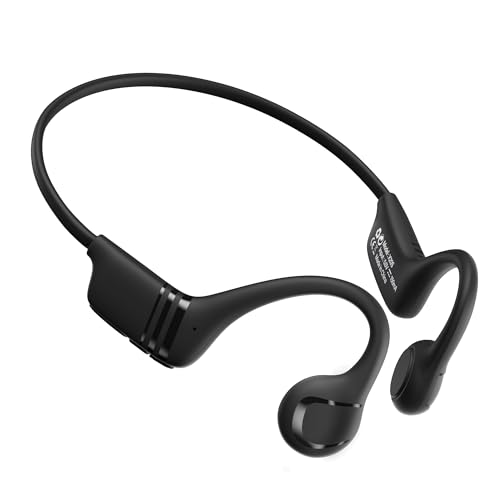


21% OFF — Was $479.00 $379.00 ✓ Prime
For buyers comparing Bluetooth 5.3 vs 5.4 explained in a real product context, this speaker shows how Bluetooth can be a backup or convenience feature while Wi-Fi handles the heavy lifting. It is built for immersive sound and flexible streaming rather than simple phone-to-speaker playback.
- ✓ Six-driver design with Dolby Atmos Music support
- ✓ Spacious soundstage that projects in multiple directions
- ✓ Wi-Fi streaming plus Bluetooth pairing at the press of a button
- ✓ Can connect to a turntable or other audio source with the right adapter
- ✓ Regular software updates and Sonos ecosystem support
- ✗ More expensive than basic Bluetooth speakers
- ✗ Bluetooth is convenient, but not the primary strength
- ✗ Best experience usually depends on the Sonos ecosystem
Apple AirPods Pro 3 Wireless Earbuds with Active Noise Cancellation 4.8★ (20% off) ✓ Prime
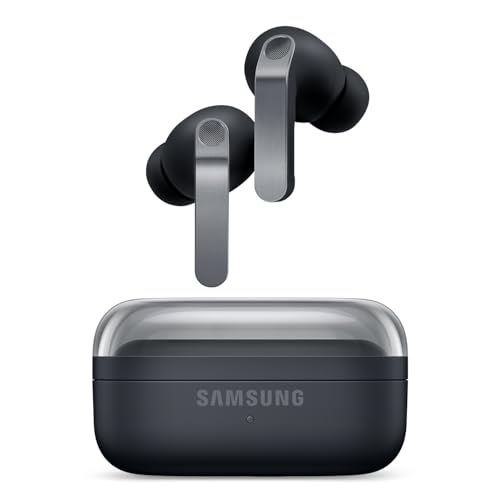


20% OFF — Was $249.00 $199.00 ✓ Prime
Earbuds are one of the clearest examples of why Bluetooth version matters. With active noise cancellation, battery efficiency, and tight ecosystem integration, this model is aimed at users who want dependable wireless audio for commuting, workouts, and calls.
- ✓ Up to 2x more unwanted noise removed than AirPods Pro 2
- ✓ Three-dimensional audio with improved bass and vocal clarity
- ✓ Heart rate sensing for fitness tracking
- ✓ Live Translation feature for cross-language communication
- ✓ Up to 8 hours of listening time with ANC on a single charge
- ✗ Best features are strongest inside the Apple ecosystem
- ✗ Premium pricing compared with many Bluetooth earbuds
- ✗ Some advanced features depend on compatible Apple devices
Common Mistakes to Avoid
Assuming the newest version always sounds better
Bluetooth 5.4 does not automatically make audio quality better than 5.3. Sound quality depends more on the product’s drivers, tuning, codec support, and overall engineering.
Ignoring the rest of the product
Many buyers focus only on Bluetooth version and overlook battery life, comfort, app support, and ecosystem compatibility. Those factors often matter more in daily use.
Confusing Bluetooth with Wi-Fi
Some speakers and smart devices use Bluetooth for setup or fallback use, but rely on Wi-Fi for streaming and advanced features. That means the Bluetooth version may not be the main performance driver.
Expecting 5.4-only benefits in every device
Bluetooth 5.4’s advantages are most meaningful in specialized low-power and large-scale deployments. For many consumers, 5.3 is already plenty.
Overlooking firmware and software updates
A device can improve over time if the manufacturer supports it well. Update support can matter just as much as the Bluetooth version printed on the box.
Frequently Asked Questions
Is Bluetooth 5.4 better than 5.3?
Usually yes, but only by a modest amount for most consumers. Bluetooth 5.4 adds refinements that can improve efficiency and reliability, but 5.3 is still excellent for everyday audio and accessories.
Will Bluetooth 5.4 make my earbuds sound better?
Not by itself. Sound quality depends more on the earbuds’ drivers, tuning, and codec support than on the Bluetooth version alone.
Do I need Bluetooth 5.4 for a speaker?
Most people do not. For speakers, features like sound quality, battery life, Wi-Fi support, and app integration usually matter more than the Bluetooth version number.
Is Bluetooth 5.3 still good in 2026?
Yes. Bluetooth 5.3 remains a modern, capable standard and is more than sufficient for many phones, earbuds, speakers, and smart accessories.
Should I upgrade just for Bluetooth 5.4?
Only if the product offers other benefits you want, such as better battery life, improved connectivity, or new smart features. Upgrading for Bluetooth alone is rarely worth it.
Pros
- + Bluetooth 5.4 adds efficiency and reliability improvements
- + Bluetooth 5.3 is still excellent for everyday audio
- + Version matters less than product design and ecosystem
- + Wi-Fi and app features can matter more than Bluetooth alone
Cons
- – Version numbers can be misleading
- – Audio quality is not determined by Bluetooth alone
- – Many products do not fully use the newest Bluetooth features
Frequently asked questions
- Is Bluetooth 5.4 better than 5.3?
- Usually yes, but only by a modest amount for most consumers. Bluetooth 5.4 adds refinements that can improve efficiency and reliability, but 5.3 is still excellent for everyday audio and accessories.
- Will Bluetooth 5.4 make my earbuds sound better?
- Not by itself. Sound quality depends more on the earbuds’ drivers, tuning, and codec support than on the Bluetooth version alone.
- Do I need Bluetooth 5.4 for a speaker?
- Most people do not. For speakers, features like sound quality, battery life, Wi-Fi support, and app integration usually matter more than the Bluetooth version number.
- Is Bluetooth 5.3 still good in 2026?
- Yes. Bluetooth 5.3 remains a modern, capable standard and is more than sufficient for many phones, earbuds, speakers, and smart accessories.
- Should I upgrade just for Bluetooth 5.4?
- Only if the product offers other benefits you want, such as better battery life, improved connectivity, or new smart features. Upgrading for Bluetooth alone is rarely worth it.
Get the Full Tech Buyer's Guide
Join our free newsletter — we'll send our latest Tech picks, specs and verdicts straight to your inbox.
Free. No spam. Unsubscribe anytime.
Was this review helpful?
Be the first to share your feedback on this review.
Sign in to vote and let us know what you think.
Discussion (0)
No comments yet. Be the first to start the discussion.
Related Reviews
7 Best DACs for Headphones in 2026 — Cleaner Sound, Better Power, and Easier Desktop Listening
If your headphones sound flat, quiet, or harsh from a laptop, controller, or motherboard jack, a good DAC can make a huge difference. The best DACs for headphones don’t just improve clarity — they also give you better volume control, stronger amplification, and the right inputs for PC, console, or m
8 Best Headphone Amps in 2026 — Cleaner Sound, More Power, and Better Desktop Audio
If your headphones sound thin, quiet, or underpowered from a phone, laptop, or console, a good headphone amp can make an immediate difference. The best headphone amps 2026 picks below were chosen for their power, connectivity, portability, and real-world owner feedback across audiophile, gaming, des
6 Best Earbud Tips Replacement in 2026 — Better Fit, Stronger Seal, and Lower Cost
If your earbuds keep slipping out, sound thin, or the original tips are worn down, the right replacement can make a bigger difference than buying a new pair. This roundup of the best earbud tips replacement options focuses on fit, comfort, seal quality, and value based on published specs, owner feed