


Who this is for: Best for hunters who want the right trail camera setup for remote scouting, fast captures, and budget-friendly multi-stand coverage.
If you’re shopping for the best trail cameras for hunting 2026, the hardest part is cutting through specs that sound similar but perform very differently in the field. The right camera depends on whether you want cellular convenience, fast trigger speed, stealthy night vision, or the best budget value for monitoring multiple spots. This research-based roundup compares published specs, owner feedback patterns, and feature sets to help you buy the camera that fits your hunting setup.
Related Reviews
- 7 Best Portable Battery Power Stations for Camping in 2026 — Lightweight Power for Off-Grid Trips
- 7 Best Insulated Winter Sleeping Bags for Cold-Weather Backpacking in 2026 — Warmth, Packability, and Real-World Comfort
- 4 Best 12V Portable Refrigerators for Camping in 2026 — Faster Cooling, Better Off-Grid Convenience
Quick Picks
| Rank | Product | Best For |
|---|---|---|
| 1 | SPYPOINT Flex-M Twin Pack Cellular Trail Cameras | Cellular scouting and remote monitoring |
| 2 | Meidase P70 | Best overall non-cellular image quality |
| 3 | KJK Trail Camera 36MP 2.7K | Budget buyers who still want fast trigger speed |
| 4 | WOSODA 2 Pack Trail Cameras | Two-camera coverage for multi-stand scouting |
1. SPYPOINT Flex-M Twin Pack Cellular Trail Cameras — Best Cellular Coverage

Verdict: This is the best pick for hunters who want remote scouting without relying on WiFi, thanks to cellular transmission, a free starter photo plan, and app-based control.
- ✓ Dual-SIM LTE with cross-carrier coverage helps reduce dead-zone headaches.
- ✓ Free plan includes up to 100 photos per month with no fees or commitment.
- ✓ App support adds instant photo access, maps, weather, and BUCK TRACKER AI.
- ✓ Photo, video, time-lapse, and time-lapse+ modes add flexibility for scouting.
- ✗ MicroSD card is not included, so you’ll need to buy one separately.
- ✗ Cellular plans can add ongoing cost if you exceed the free tier.
- ✗ 720p video is less detailed than higher-resolution non-cellular rivals.
- ✗ Best features depend on app connectivity and network performance.
2. Meidase P70 — Best Image Quality
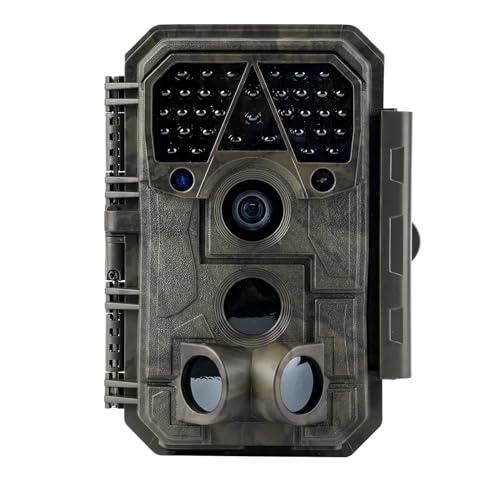

Verdict: For hunters who care most about crisp photos, strong night vision, and quick trigger response, the P70 stands out as the most balanced non-cellular option.
- ✓ 64MP photos and 1296p video deliver more detail than many budget cams.
- ✓ 0.1s trigger speed is ideal for fast-moving deer and other game.
- ✓ No-glow 940nm LEDs help keep nighttime activity from being spooked.
- ✓ 2.4-inch color display makes setup and playback straightforward.
- ✗ Non-cellular design means you must pull the card to check images.
- ✗ No WiFi or app support for remote viewing.
- ✗ Single-camera purchase may be less efficient than a multi-pack for larger properties.
- ✗ Higher-resolution files can mean more storage use than lower-res cams.
3. KJK Trail Camera 36MP 2.7K — Best Budget Pick


Verdict: If you want a low-cost trail camera that still offers fast trigger speed, wide coverage, and decent resolution, this is the best value play.
- ✓ Very affordable for hunters building out multiple setups.
- ✓ 36MP stills and 2.7K video are strong specs for the price.
- ✓ 0.1s trigger time and 130° wide-angle coverage improve capture odds.
- ✓ Built-in 2.0-inch screen makes it easy to review and adjust in the field.
- ✗ No SD card included.
- ✗ Lower waterproof rating than some rivals, so it may be less rugged in harsh conditions.
- ✗ Budget pricing usually means fewer premium app or cellular features.
- ✗ Smaller body can be easier to conceal, but it may not feel as robust as pricier models.
4. WOSODA 2 Pack Trail Cameras — Best Two-Pack Coverage


Verdict: This two-pack is a smart pick for hunters who want to cover multiple scrape lines, trails, or bedding areas without stretching the budget too far.
- ✓ Two cameras in one package make multi-spot scouting more affordable.
- ✓ 48MP photos and 1080P video provide solid daytime detail.
- ✓ 0.3s trigger speed is quick enough for general hunting use.
- ✓ Low-glow IR night vision helps reduce disturbance at night.
- ✗ 1080P video is less detailed than the higher-end picks above.
- ✗ 0.3s trigger speed is slower than top speed-focused competitors.
- ✗ Non-cellular and non-WiFi design requires manual card checks.
- ✗ Best suited to basic scouting rather than premium remote monitoring.
How We Chose These Products
To build this roundup of the best trail cameras for hunting 2026, we focused on the features hunters actually compare before buying: trigger speed, night vision quality, image/video resolution, concealment, weather resistance, and ease of setup. We also weighed value by looking at pricing, discounts, included quantity, and whether a model offered cellular convenience or required manual card checks.
Because this is a research-based review, the rankings are based on published specs, documented owner feedback patterns, and side-by-side feature comparisons rather than hands-on testing. That means the list is designed to help you narrow the field quickly, especially if you’re choosing between a cellular camera for remote scouting and a non-cellular camera for lower-cost coverage.
Frequently Asked Questions
1) What is the best trail camera for hunting in 2026?
Answer: The best overall pick here is the SPYPOINT Flex-M Twin Pack Cellular Trail Cameras if you want remote scouting and app-based monitoring. If you want the best non-cellular image quality, the Meidase P70 is the stronger fit.
2) Are cellular trail cameras worth it for hunting?
Answer: Yes, if you want to check photos remotely and reduce trips to the property. Cellular models usually cost more up front and may add plan fees, but they can save time and disturbance.
3) What trigger speed should I look for in a hunting trail camera?
Answer: Faster is usually better, especially for deer moving quickly across a trail. A 0.1s trigger time is excellent, while slower cameras can still work well on choke points or bait sites.
4) Do no-glow trail cameras scare deer less?
Answer: In general, yes. No-glow infrared LEDs are designed to be less visible at night, which can help reduce disturbance compared with brighter flash options.
5) Should I buy one expensive trail camera or a two-pack?
Answer: If you’re covering multiple stands, food plots, or travel corridors, a two-pack can be the better value. If you only need one premium setup, a single higher-end camera may make more sense.
Pros
- + Cellular remote scouting with app control
- + Fast trigger speed and strong night vision options
- + Budget-friendly two-pack and single-camera picks
- + Easy setup choices for hunters of different needs
Cons
- – Some models require manual SD card checks
- – Cellular plans can add ongoing cost
- – Lower-resolution video on budget options
- – SD cards not included on some models
Frequently asked questions
- What is the best trail camera for hunting in 2026?
- The best overall pick here is the SPYPOINT Flex-M Twin Pack Cellular Trail Cameras if you want remote scouting and app-based monitoring. If you want the best non-cellular image quality, the Meidase P70 is the stronger fit.
- Are cellular trail cameras worth it for hunting?
- Yes, if you want to check photos remotely and reduce trips to the property. Cellular models usually cost more up front and may add plan fees, but they can save time and disturbance.
- What trigger speed should I look for in a hunting trail camera?
- Faster is usually better, especially for deer moving quickly across a trail. A 0.1s trigger time is excellent, while slower cameras can still work well on choke points or bait sites.
- Do no-glow trail cameras scare deer less?
- In general, yes. No-glow infrared LEDs are designed to be less visible at night, which can help reduce disturbance compared with brighter flash options.
- Should I buy one expensive trail camera or a two-pack?
- If you’re covering multiple stands, food plots, or travel corridors, a two-pack can be the better value. If you only need one premium setup, a single higher-end camera may make more sense.
Score breakdown
- value
- 8.4
- usability
- 8.5
- durability
- 8.1
- performance
- 8.7
- buyerFeedback
- 8.3
Get the Full Outdoor Buyer's Guide
Join our free newsletter — we'll send our latest Outdoor picks, specs and verdicts straight to your inbox.
Free. No spam. Unsubscribe anytime.
Was this review helpful?
Be the first to share your feedback on this review.
Sign in to vote and let us know what you think.
Discussion (0)
No comments yet. Be the first to start the discussion.
Related Reviews

7 Best Portable Battery Power Stations for Camping in 2026 — Lightweight Power for Off-Grid Trips
If you’re trying to find the best portable battery power stations for camping 2026, the challenge is usually the same: you want enough power for phones, lights, cameras, and maybe a CPAP, without hauling a bulky unit into camp. The picks below focus on portability, battery chemistry, output options,

7 Best Insulated Winter Sleeping Bags for Cold-Weather Backpacking in 2026 — Warmth, Packability, and Real-World Comfort
If you’re trying to find the best insulated winter sleeping bags for cold-weather backpacking, the challenge is balancing warmth, weight, and pack size without ending up with a bag that feels cramped or flimsy. The picks below focus on models with cold-weather ratings, insulation-focused constructio

4 Best 12V Portable Refrigerators for Camping in 2026 — Faster Cooling, Better Off-Grid Convenience
If you’re tired of soggy ice, warm drinks, and food that spoils halfway through a trip, a 12V portable refrigerator can make camping a lot easier. The best models for camping in 2026 combine fast compressor cooling, battery protection, and enough storage to handle real weekend or multi-day use. This