

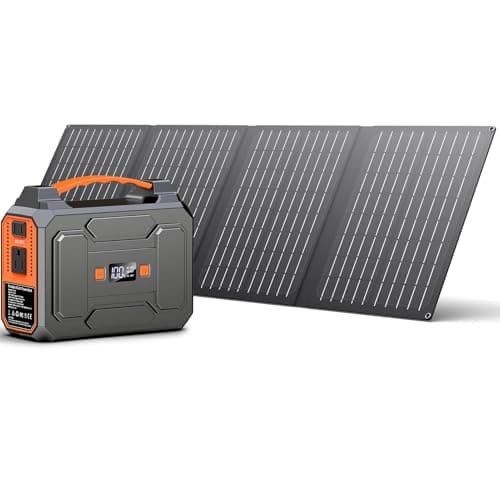
Who this is for: Best for buyers comparing quiet portable power against fuel-powered backup for camping, outages, and everyday emergency charging.
Check PriceWhat is solar generator vs gas generator? A Complete 2026 Guide
If you’re comparing solar generator vs gas generator, the real challenge is usually not “which one works,” but which one fits your budget, noise tolerance, and backup-power needs. Solar generators are cleaner and quieter, while gas generators can deliver more raw power for longer stretches. This guide explains the differences in plain English so you can choose the right option for camping, outages, RV travel, or home emergency use.
Related Reviews
How It Works
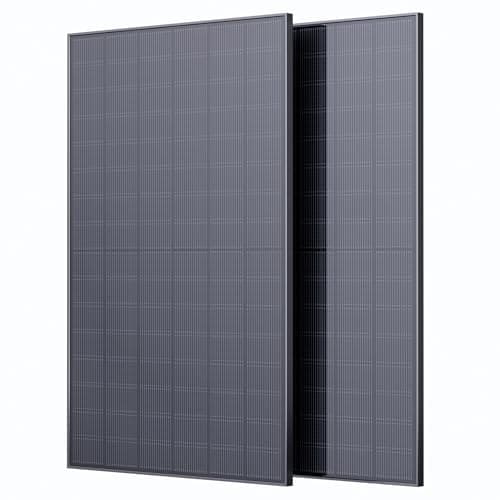
A solar generator is really a portable power station paired with solar panels. The panels convert sunlight into electricity, the power station stores that energy in a battery, and an inverter turns the stored DC power into AC power for devices like laptops, lights, and small appliances.
A gas generator works differently: it burns fuel, usually gasoline, to spin an engine that produces electricity. Because it creates power on demand as long as fuel is available, it can run heavier loads and keep going for many hours, but it also produces noise, exhaust, and ongoing fuel costs.
In simple terms, solar generators are storage systems that recharge from the sun or a wall outlet, while gas generators are fuel-driven machines that generate electricity directly. That difference affects everything from maintenance to safety to where you can use them.
Key Benefits & Use Cases
Why people choose a solar generator
Solar generators are popular for quieter operation, indoor-safe backup use, and lower day-to-day operating costs. They’re especially attractive when you want emergency power without fumes, or when you need to keep smaller electronics charged during camping, road trips, tailgates, or short outages.
Why people choose a gas generator
Gas generators are usually the better fit when you need higher wattage, longer runtime, or a more affordable way to power larger appliances for extended periods. They make sense for job sites, whole-home backup setups, and situations where sunlight is unreliable or unavailable.
Best use cases for each
- Solar generator: phones, laptops, lights, CPAP machines, routers, cameras, camping gear, and short emergency outages.
- Gas generator: refrigerators, sump pumps, power tools, space heaters, and longer outages where fuel is easy to store and refill.
- Hybrid buying strategy: many buyers keep a solar generator for quiet daily use and a gas generator for heavy-duty backup.
What to Look For When Buying
1) Wattage and surge capacity
Check both continuous output and surge rating. A solar generator may be fine for electronics but not for appliances with startup spikes, while a gas generator often handles larger loads more easily.
2) Battery capacity or fuel runtime
For solar generators, look at watt-hours (Wh), which tells you how much energy the battery stores. For gas generators, compare tank size, runtime at 25% load, and fuel efficiency.
3) Recharge speed or refuel convenience
Solar generators should recharge quickly from panels or AC power if you plan to use them often. Gas generators should be easy to refuel and start reliably, especially in emergencies.
4) Noise, fumes, and placement
If you need indoor-safe operation, a solar generator is the clear choice. Gas generators must stay outdoors because of carbon monoxide risk, and they can be disruptive in campgrounds or neighborhoods.
5) Portability and maintenance
Solar generators usually require less maintenance and are easier to move. Gas generators need fuel management, oil changes, and periodic upkeep, so factor in long-term ownership effort, not just purchase price.
Top Recommended Products
Below are research-based product picks from the provided list. These are not hands-on test results; they’re selected by comparing published specs, feature sets, and owner-facing use cases for buyers weighing solar generator vs gas generator alternatives.
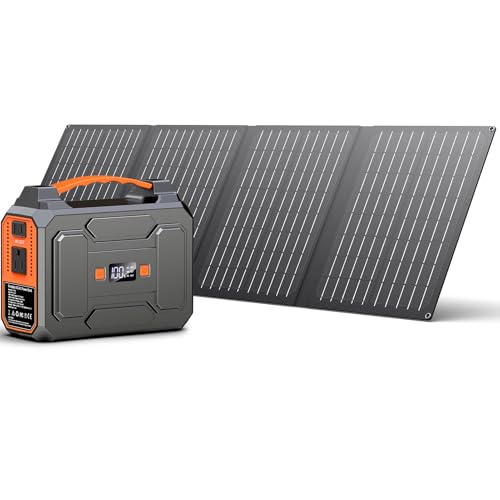
Solar Powered Generator 100W, Portable Power Station with Solar Panels 40W ✓ Prime


$119.99
This compact solar generator is aimed at buyers who want a low-cost entry point into portable power. Its included 40W panels, 146Wh battery, and multiple outputs make it suitable for phones, small electronics, lights, and emergency charging.
- ✓ Includes solar panels with 20.5% conversion efficiency
- ✓ 146Wh/39600mAh capacity for small-device charging
- ✓ 7 outputs, including AC, USB, USB-C, and DC ports
- ✓ Dual LED flashlight with SOS mode
- ✓ BMS protection and cooling vents for safer operation
- ✗ Limited 100W output won’t suit larger appliances
- ✗ Best for light-duty use rather than whole-home backup
- ✗ Smaller battery capacity than premium options
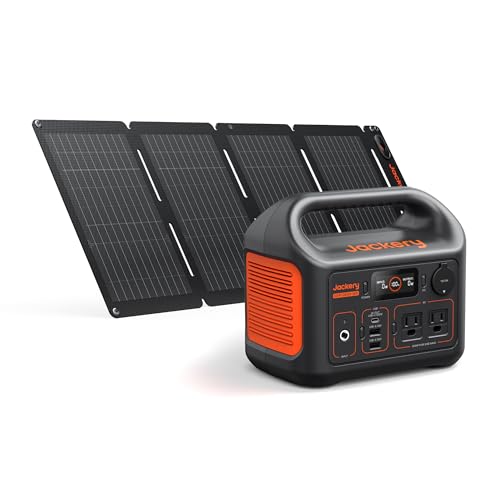
Jackery Solar Generator 300 and 40W Solar Panel,292Wh,300W AC ✓ Prime

$339.00 11% OFF — Was $379.00
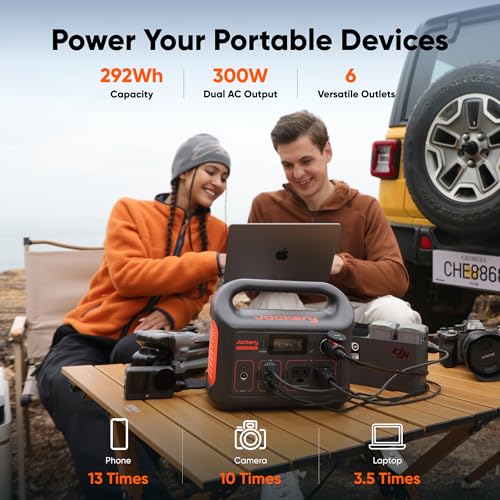
Jackery’s Explorer 300 bundle is a strong middle-ground choice for portable backup and outdoor power. It adds a larger 292Wh battery, LiFePO4 longevity, and enough output for a broader range of small electronics and travel gear.
- ✓ Lightweight at 7.5 lbs for easy carrying
- ✓ 300W output with 600W surge for common devices
- ✓ LiFePO4 battery rated for over 4,000 cycles
- ✓ Fast solar charging with compatible panels
- ✓ Includes the power station, 40W panel, and charging cables
- ✗ Not built for high-wattage appliances
- ✗ Panel and power station may ship separately
- ✗ More expensive than entry-level units
Jackery Solar Generator 1000 v2 and 200W Solar Panel,1070Wh,1500W AC ✓ Prime
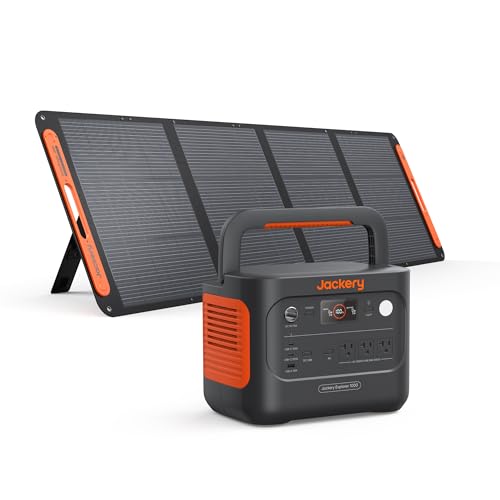


$699.00 20% OFF — Was $879.00
This is the most capable Jackery option in the list for users who want serious portable backup without moving to a fuel-burning generator. Its 1,070Wh capacity and 1,500W output make it better suited to heavier loads like fridges, small appliances, and emergency home use.
- ✓ 1,500W AC output with 3,000W surge peak
- ✓ 1,070Wh capacity for longer runtimes
- ✓ Fast charging options, including solar and app-controlled emergency charging
- ✓ LFP battery with 10+ year lifespan claims
- ✓ Multiple ports plus pure sine wave AC outlets
- ✗ Higher price than smaller solar generators
- ✗ Still not a substitute for a full-size gas generator for heavy loads
- ✗ Weighs more than compact travel models
EF ECOFLOW Solar Generator Delta 3 Classic with 220W Solar Panel, 1024Wh ✓ Prime
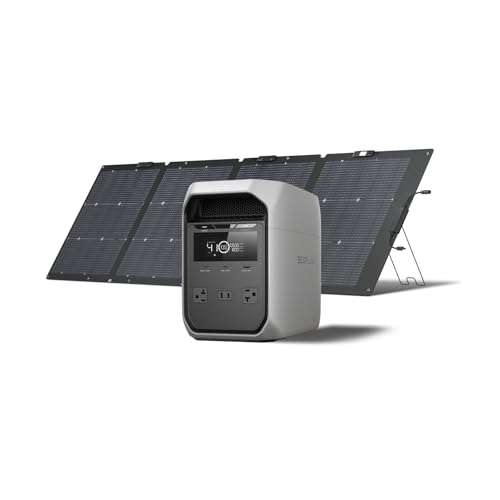


$699.00 36% OFF — Was $1099.00
EcoFlow’s Delta 3 Classic stands out for fast charging and higher-output versatility. It’s a compelling pick if you want a solar generator that behaves more like a serious backup system, especially for home essentials and sensitive electronics.
- ✓ 1,800W output with 3,600W surge
- ✓ X-Boost support for heavier loads
- ✓ 0–80% recharge in 45 minutes via AC
- ✓ 10ms UPS switching for sensitive devices
- ✓ 220W solar recharge in 5.8 hours
- ✗ Premium feature set may be overkill for casual users
- ✗ Solar panel and power station may arrive separately
- ✗ Larger, heavier system than entry-level models
Common Mistakes to Avoid
- Choosing by price alone: the cheapest option may not have enough wattage or battery capacity for your actual needs.
- Ignoring startup surge: appliances like fridges and pumps can need more power at startup than their running wattage suggests.
- Forgetting runtime math: a battery’s Wh rating or a gas tank’s runtime matters more than marketing claims.
- Using a gas generator indoors: this is dangerous because of carbon monoxide risk.
- Overestimating solar in bad weather: solar generators depend on sunlight, so cloudy conditions can slow recharge times significantly.
Frequently Asked Questions
1) Is a solar generator better than a gas generator?
It depends on the use case. A solar generator is usually better for quiet, indoor-safe, low-maintenance power, while a gas generator is better for higher wattage and longer runtime.
2) Can a solar generator run a refrigerator?
Some larger solar generators can run a refrigerator, but you need enough continuous wattage and surge capacity. Smaller units are usually better for phones, lights, and laptops.
3) Are gas generators cheaper than solar generators?
Often the upfront cost is lower for gas generators with similar output, but fuel, maintenance, and storage can add to long-term cost. Solar generators usually cost more upfront but can be cheaper to operate.
4) Can you use a gas generator indoors?
No. Gas generators must be used outdoors only because they produce carbon monoxide and other exhaust gases that can be deadly in enclosed spaces.
5) Which is better for camping: solar generator or gas generator?
For most camping trips, a solar generator is better because it is quieter, lighter, and cleaner. A gas generator may be better only if you need much higher power and don’t mind the noise and fuel handling.
Pros
- + Quiet and indoor-safe operation
- + Lower ongoing operating costs
- + Low maintenance compared with gas
- + Portable options for camping and outages
- + Fast-charging models available
Cons
- – Lower output than many gas generators
- – Depends on sunlight for recharge
- – Higher upfront cost for larger systems
- – Not ideal for heavy-duty appliances
Frequently asked questions
- Is a solar generator better than a gas generator?
- It depends on the use case. A solar generator is usually better for quiet, indoor-safe, low-maintenance power, while a gas generator is better for higher wattage and longer runtime.
- Can a solar generator run a refrigerator?
- Some larger solar generators can run a refrigerator, but you need enough continuous wattage and surge capacity. Smaller units are usually better for phones, lights, and laptops.
- Are gas generators cheaper than solar generators?
- Often the upfront cost is lower for gas generators with similar output, but fuel, maintenance, and storage can add to long-term cost. Solar generators usually cost more upfront but can be cheaper to operate.
- Can you use a gas generator indoors?
- No. Gas generators must be used outdoors only because they produce carbon monoxide and other exhaust gases that can be deadly in enclosed spaces.
- Which is better for camping: solar generator or gas generator?
- For most camping trips, a solar generator is better because it is quieter, lighter, and cleaner. A gas generator may be better only if you need much higher power and don’t mind the noise and fuel handling.
Get the Full Outdoor Buyer's Guide
Join our free newsletter — we'll send our latest Outdoor picks, specs and verdicts straight to your inbox.
Free. No spam. Unsubscribe anytime.
Was this review helpful?
Be the first to share your feedback on this review.
Sign in to vote and let us know what you think.
Discussion (0)
No comments yet. Be the first to start the discussion.
Related Reviews
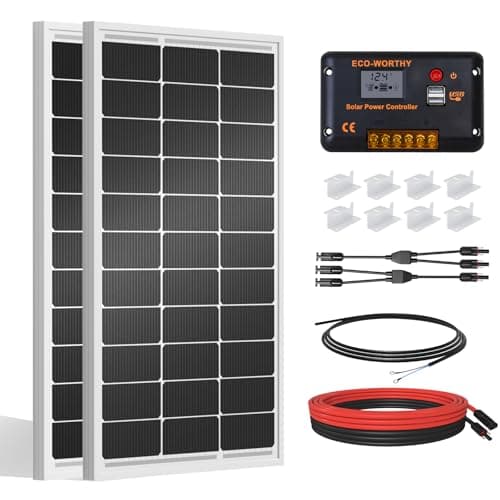
4 Best Balcony Solar Systems in 2026 — Easy Plug-In Power for Small Spaces
If you want to cut electricity bills without installing a full rooftop array, the best balcony solar systems 2026 can deliver a practical entry point. These picks are aimed at renters, apartment owners, and anyone with limited outdoor space who wants a compact, weather-ready setup. Because “balcony
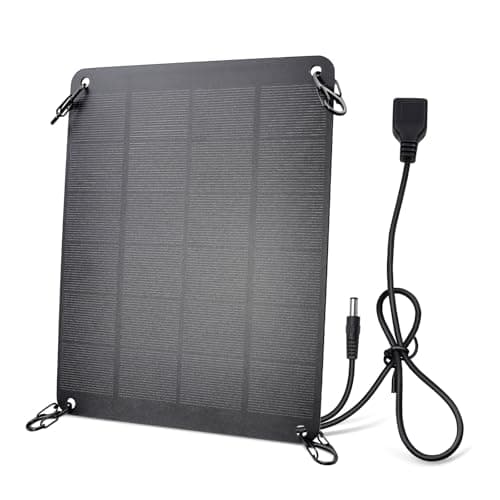
Best Cheapest Way to Add Solar Backup for Every Budget in 2026: Ranked by Price & Performance
If you’re looking for the cheapest way to add solar backup , the good news is that you do not need a full solar generator to start saving battery power. The tradeoff is simple: the lowest-cost options are best for small devices and security cameras, while higher tiers give you better compatibility,
5 Best Solar Panels for Home in 2026 — Higher Output, Better Shading, Smarter Value
If you’re searching for the best solar panels for home 2026 , you probably want more than a wattage number on a spec sheet. You want panels that can handle real rooftop conditions, make the most of limited space, and keep producing when shade, heat, or weather get in the way. This research-based rou