

Who this is for: Best for campers who need portable, reliable off-grid power matched to their gear, trip length, and charging needs.
Check PriceIf you’re trying to figure out how to choose a portable power station for camping, the hardest part is usually not the brand name—it’s matching the battery, output, and charging options to the way you actually camp. Pick the wrong size and you’ll either run out of power too soon or carry more weight than you need. The most common mistake buyers make is focusing on watt-hours alone and ignoring output limits, recharge speed, and whether the unit can handle the devices they plan to use.
Related Reviews
This guide breaks down the features that matter, the red flags to avoid, and the best research-backed options for different camping needs. It’s based on published specs, owner feedback patterns, and product comparisons—not hands-on testing.
Key Features to Look For
1) Battery capacity, but only in context
Capacity tells you how long a power station can run your gear, but it only matters if it matches your use case. For camping, a smaller unit can be enough for phones, headlamps, and a fan, while longer trips or CPAP use often need more reserve. Look at watt-hours as a starting point, then compare it to the devices you’ll actually charge.
2) Continuous output and surge power
Many buyers look at capacity and forget output. A power station can have a decent battery but still fail to start a mini fridge, coffee maker, or other higher-draw device if the inverter is too small. Check the continuous watt rating first, then the surge rating for brief startup loads. This is especially important if you want to power campers, coolers, or CPAP machines.
3) Port mix and simultaneous charging
Camping setups usually involve more than one device at a time. A useful power station should offer a mix of AC outlets, USB-A, USB-C, and DC/car-style ports so you can charge phones, cameras, lights, and small appliances together. The more flexible the port layout, the less you need extra adapters.
4) Recharge speed and charging methods
A good camping power station should recharge from AC, a car outlet, and ideally solar. Fast recharge matters because a battery that takes too long to refill can become a bottleneck on multi-day trips. Solar compatibility is especially valuable for off-grid camping, but it works best when the unit supports efficient solar input and you have a panel sized appropriately.
5) Weight and portability
Camping gear gets carried, lifted, and moved around the site, so portability matters more than many shoppers expect. A lighter unit is easier to take on road trips, beach outings, and tent camping, while larger systems are better suited to base camps or RV use. The best choice is the one you’ll actually bring, not the one with the biggest spec sheet.
6) Battery chemistry and longevity
LiFePO4 batteries are a major plus for camping buyers because they’re generally known for longer cycle life and better long-term durability than older lithium-ion designs. If you camp often, battery chemistry matters because it affects how well the unit holds up over repeated charging and discharging. For occasional use, it still helps to choose a chemistry with a strong safety and longevity reputation.
7) Safety and battery management features
Look for built-in protection against overcharge, overload, short circuits, and overheating. A strong battery management system helps protect both the power station and your devices. For camping in hot weather, enclosed tents, or variable conditions, thermal control and smart protection features are especially important.
What to Avoid
Undersized output for your actual gear
A common mistake is buying a unit because the capacity looks good, then discovering it can’t run the appliance you wanted. Always compare the watt rating to the device’s startup and running draw. If you plan to use a CPAP, mini cooler, fan, or cooking device, output matters as much as battery size.
Ignoring recharge options
If a power station only works well on wall charging, it may be frustrating for camping. You’ll want at least one practical off-grid recharge path, usually car charging or solar. Also watch for solar input limits, because a solar-ready label does not automatically mean fast or efficient solar charging.
Choosing based only on capacity
Watt-hours are important, but they don’t tell the whole story. A higher-capacity unit can still be a poor camping fit if it’s too heavy, too slow to recharge, or lacking the right ports. The best camping choice balances runtime, output, and portability.
Overlooking device compatibility
Some buyers assume every power station works equally well with every device. That’s not true. CPAP machines, for example, can require specific cables or settings, and some appliances need pure sine wave output. Before buying, confirm compatibility with your most important gear.
Skipping the fine print on port types and watt limits
Not all USB-C ports are equal, and not all AC outlets can handle the same load. A station with several ports may still be limited by low USB-C wattage or a modest inverter. Read the specs carefully so you know what each port can actually do.
Our Top Picks
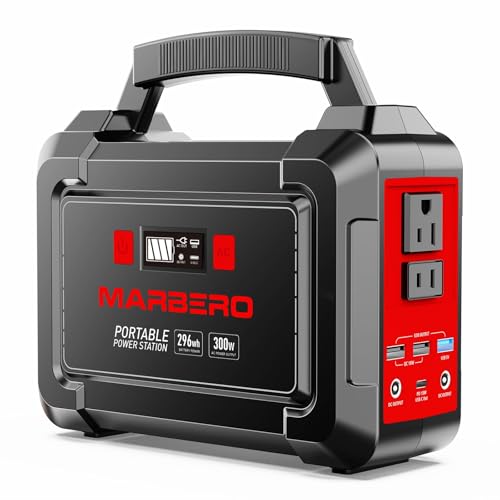
Best budget all-rounder: MARBERO Portable Power Station 350W Peak Camping Solar Generator

This is a strong fit for campers who want a compact, lower-cost power station for phones, lights, laptops, and light-duty gear. Its 296Wh capacity, multiple output types, and built-in LED flashlight make it practical for weekend trips, car camping, and emergency backup. The weight is also low enough to keep it travel-friendly.
✓ Compact and easy to carry for camping trips
✓ Multiple output options for phones, laptops, lights, and small devices
✓ Solar, wall, and car recharging options
✓ Built-in flashlight with SOS mode for emergencies
✗ Not meant for higher-watt appliances
✗ Best suited to light-to-moderate camping power needs
✗ Solar panel is sold separately
Best for CPAP campers: EASYLONGER ES960 PRO CPAP Battery Pack


If your main camping need is reliable sleep therapy power, this is the most focused option in the lineup. The included CPAP cables, LiFePO4 battery, pass-through charging, and smart display make it especially useful for overnight trips and blackout backup. It’s less of a general-purpose campsite hub and more of a specialist solution for CPAP users.
✓ Designed specifically around CPAP use and compatibility
✓ LiFePO4 battery chemistry for better long-term durability
✓ Pass-through charging helps keep therapy uninterrupted
✓ Smart display shows status at a glance
✗ More specialized than a general camping power station
✗ Best value depends on whether you actually need CPAP support
✗ Additional cables may be needed for some machines
Best balance of portability and output: Portable Power Station 600W Surge, 288Wh, 2*350W AC Outlets Solar Generator


This model is a smart middle-ground for campers who want more output flexibility without jumping to a much larger system. The pure sine wave inverter, six ports, MPPT solar charging, and LiFePO4 battery make it a versatile choice for lights, laptops, fans, small coolers, and some CPAP use. It’s a good fit for people who want one unit that can handle both campsite and emergency duties.
✓ Pure sine wave output for broader device compatibility
✓ Six ports for charging multiple devices at once
✓ MPPT support can improve solar charging efficiency
✓ LiFePO4 battery and safety protections for peace of mind
✗ Not intended for large high-watt appliances
✗ CPAP support is limited to lower-draw machines
✗ Moderate capacity means runtime depends heavily on your gear
Best premium pick for heavy use: EF ECOFLOW Portable Power Station DELTA 2 Max


If your camping style leans toward extended base camps, RV travel, or powering a lot of gear, this is the most capable option here. Its large capacity, high output, fast charging, and expandable design make it far more than a weekend charger. It’s also one of the best fits for buyers who want a power station that can handle camping and whole-home backup use.
✓ Very high capacity for extended off-grid use
✓ High continuous output supports more demanding devices
✓ Fast charging reduces downtime between uses
✓ Expandable design adds flexibility over time
✗ Much larger than most casual campers need
✗ Premium build is best justified by heavier use
✗ Overkill for simple phone-and-light charging
Budget Guide: What You Get at Each Tier
Budget tier
Budget models are best for light camping needs: charging phones, tablets, cameras, LED lights, and maybe a small fan. You usually get a compact body, basic AC and USB outputs, and enough capacity for short trips or emergency backup. This tier is ideal if you want portability and convenience without paying for extra power you may never use.
Mid-range tier
Mid-range power stations usually offer a better balance of capacity, output, and battery quality. This is where you start seeing stronger inverters, more port variety, faster USB-C charging, and better solar support. For most campers, this is the sweet spot because it supports more devices without becoming too heavy or oversized.
Premium tier
Premium units are built for people who need serious runtime, faster recharge, and higher output. These models are better for extended camping, RV use, CPAP users who want more flexibility, and buyers who want one system for both outdoor trips and home backup. You’re paying for more capability, more headroom, and more long-term versatility.
Frequently Asked Questions
What size portable power station do I need for camping?
It depends on what you plan to power. For phones, lights, and small electronics, a compact unit can be enough. If you want to run a CPAP, mini fridge, or multiple devices for several days, choose a larger capacity model with enough output headroom.
Is LiFePO4 better for camping power stations?
Often, yes. LiFePO4 batteries are commonly preferred for frequent use because they’re known for longer cycle life and strong durability. They’re a good fit if you camp often or want a power station that should hold up well over time.
Can a portable power station run a CPAP machine while camping?
Yes, but you need to match the battery capacity, output, and cable compatibility to your specific CPAP model. Some CPAP-focused power stations are designed for this exact use and include the right cables and runtime expectations.
Do I need solar charging for camping?
Not always, but it’s very useful for longer off-grid trips. Solar charging can help extend runtime when you’re away from wall power, especially if you camp for multiple days. Just make sure the power station supports practical solar input and that you use a compatible panel.
What’s the biggest mistake people make when buying a camping power station?
The biggest mistake is choosing based on capacity alone. Buyers often forget to check output wattage, recharge options, weight, and whether the unit can handle the devices they actually plan to use. Matching the power station to your real camping setup is the key to avoiding disappointment.
Pros
- + Compact options for light camping
- + Mid-range units balance power and portability
- + Premium models add fast charging and expansion
- + LiFePO4 batteries offer better longevity
- + Solar and car charging improve off-grid use
Cons
- – Some models are too weak for high-watt appliances
- – Capacity alone can be misleading
- – Solar panels are often sold separately
- – Specialized CPAP units may not suit general camping
Frequently asked questions
- What size portable power station do I need for camping?
- It depends on what you plan to power. For phones, lights, and small electronics, a compact unit can be enough. If you want to run a CPAP, mini fridge, or multiple devices for several days, choose a larger capacity model with enough output headroom.
- Is LiFePO4 better for camping power stations?
- Often, yes. LiFePO4 batteries are commonly preferred for frequent use because they’re known for longer cycle life and strong durability. They’re a good fit if you camp often or want a power station that should hold up well over time.
- Can a portable power station run a CPAP machine while camping?
- Yes, but you need to match the battery capacity, output, and cable compatibility to your specific CPAP model. Some CPAP-focused power stations are designed for this exact use and include the right cables and runtime expectations.
- Do I need solar charging for camping?
- Not always, but it’s very useful for longer off-grid trips. Solar charging can help extend runtime when you’re away from wall power, especially if you camp for multiple days. Just make sure the power station supports practical solar input and that you use a compatible panel.
- What’s the biggest mistake people make when buying a camping power station?
- The biggest mistake is choosing based on capacity alone. Buyers often forget to check output wattage, recharge options, weight, and whether the unit can handle the devices they actually plan to use. Matching the power station to your real camping setup is the key to avoiding disappointment.
Get the Full Outdoor Buyer's Guide
Join our free newsletter — we'll send our latest Outdoor picks, specs and verdicts straight to your inbox.
Free. No spam. Unsubscribe anytime.
Was this review helpful?
Be the first to share your feedback on this review.
Sign in to vote and let us know what you think.
Discussion (0)
No comments yet. Be the first to start the discussion.
Related Reviews


Best Portable Power Stations for Every Budget in 2026: Ranked by Price & Performance
If you’re shopping for the best portable power stations for a more affordable budget 2026 , the real challenge isn’t finding a battery pack—it’s finding one that matches your actual needs without overpaying for features you’ll never use. Some buyers need the lightest emergency backup for phones and

7 Best Portable Power Stations for CPAP in 2026 — Reliable Backup Power for Safer Sleep Anywhere
If you use a CPAP machine, the wrong backup battery can mean a rough night, interrupted therapy, or a stranded setup during travel and outages. This guide to the best portable power stations for CPAP 2026 focuses on compact, rechargeable options that are built around capacity, AC output, pure sine w