

Who this is for: Best for homeowners and off-grid buyers who need a simple way to estimate household power needs and choose the right solar setup.
Check PriceWhat is How Many Watts to Power a House? A Complete 2026 Guide
If you’re trying to figure out how many watts to power a house, the short answer is that it depends on the size of the home, what appliances you run, and whether you mean “keep the lights on” or “run everything at once.” A small off-grid cabin may need only a few thousand watts, while a typical family home can require far more when major appliances start cycling on. This guide breaks the topic down in plain English so you can estimate your needs, avoid undersizing your system, and choose the right solar gear for your setup.
Related Reviews
In practical terms, “watts to power a house” usually refers to the total power needed at one moment, not just daily energy use. That’s why a home can have a modest average consumption but still need a much larger inverter or generator to handle startup surges from refrigerators, pumps, and HVAC equipment. Understanding the difference between watts, watt-hours, and surge load is the key to sizing a reliable system.
How It Works
Watts measure instantaneous power—how much electricity your home is using right now. If you turn on a microwave, air conditioner, and water heater at the same time, the watt demand spikes because all three draw power simultaneously. That peak number matters when you’re sizing an inverter, solar system, battery bank, or backup generator.
For homes running on solar, the system usually includes panels, a charge controller, batteries, and an inverter. Solar panels produce DC electricity, the charge controller manages charging, batteries store energy for later, and the inverter converts DC into AC power for household appliances. The inverter’s watt rating is especially important because it determines how much load the system can support at once.
There are two numbers to keep in mind:
- Running watts: the power needed to keep devices operating continuously.
- Surge watts: the brief extra power needed when motors and compressors start up.
That’s why answering how many watts to power a house is never just one fixed number. A home with efficient LED lighting and a few electronics may need a much smaller system than a house with central air, electric cooking, and a well pump.
Key Benefits & Use Cases
Once you understand household wattage, you can size equipment more accurately and avoid overspending on a system that’s too large—or frustratingly underpowered. It also helps you plan what can run during an outage, what can run off-grid, and what should be staggered to prevent overloads.
Common use cases
- Backup power: Keep essential loads like lights, routers, refrigerators, and medical devices running during outages.
- Off-grid living: Power cabins, tiny homes, RV setups, and remote properties where utility power isn’t available.
- Solar planning: Match panel output, battery storage, and inverter size to your actual household needs.
- Load management: Decide which appliances can run together and which need to be scheduled.
Why this matters
A properly sized system improves reliability, reduces battery stress, and helps you get more value from your investment. It also makes it easier to compare products because you can tell whether a 200W solar kit, 800W micro inverter, or 1200W micro inverter fits your real-world needs.
What to Look For When Buying
If you’re shopping for equipment related to household power, these five criteria matter most.
1) Power rating
Look for the continuous watt rating and, if applicable, surge capacity. This tells you whether the product can handle your household load without tripping or shutting down.
2) Efficiency
Higher efficiency means less energy is wasted as heat. In solar gear, that can translate into better real-world output from the same panel or inverter setup.
3) Compatibility
Make sure the system matches your panel voltage, battery voltage, and intended use. A product for a balcony solar setup is not the same as a full-home off-grid system.
4) Durability
Outdoor-rated products should have weather resistance, solid temperature tolerance, and protective ratings like IP65 or IP67 if they’ll be exposed to the elements.
5) Ease of installation and monitoring
Plug-and-play designs, included cables, and app-based monitoring can make setup and ongoing use much easier—especially for beginners who want to track production and spot problems quickly.
Top Recommended Products
Below are research-based product picks that can help you build or understand a household power setup. These are not hands-on test results; they’re based on published specs, feature sets, and owner feedback patterns.
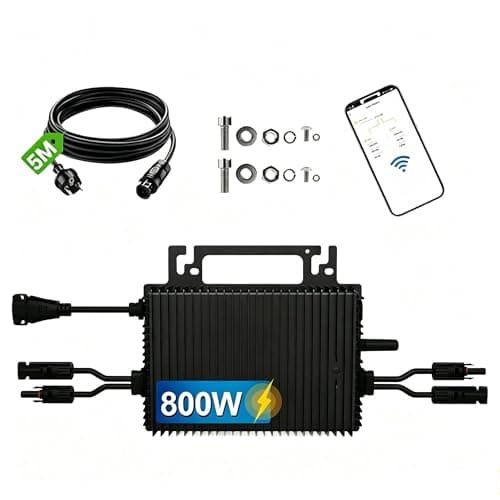
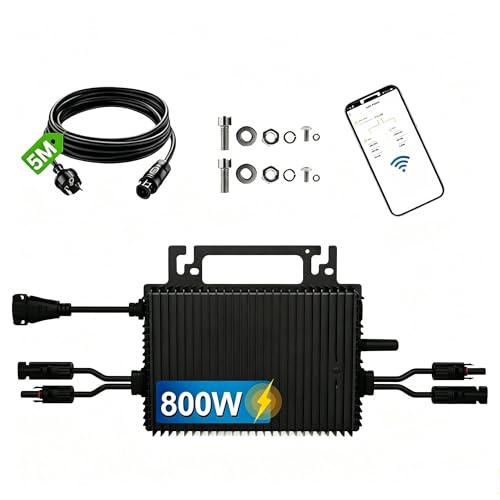 Cosmoxstar 800W Micro Inverter ✓ Prime $149.99


This 800W micro inverter is a strong fit for compact solar setups where you want to offset part of a home’s electricity use rather than power every load at once. Its dual MPPT design and WiFi app control make it appealing for beginners who want simple monitoring and stable solar conversion.
- ✓ 800W output with 96% efficiency
- ✓ Dual MPPT tracking for better solar harvesting
- ✓ IP67 waterproof and dustproof rating
- ✓ WiFi app monitoring for real-time data
- ✓ Plug-and-play design with included 16.4ft AC cable
- ✗ Not a whole-house solution by itself
- ✗ Best for smaller solar applications, not heavy appliance loads
- ✗ Requires proper system matching for safe use
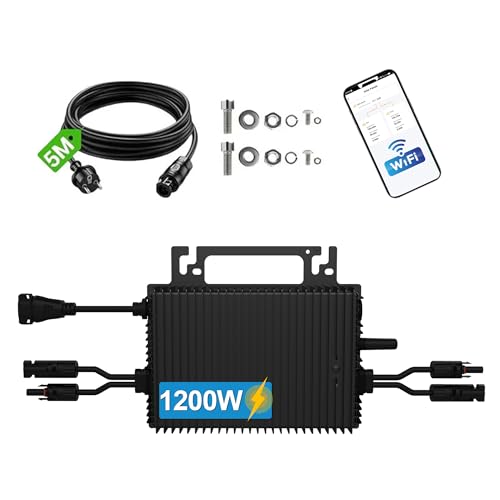 Cosmoxstar 1200W Micro Inverter ✓ Prime $169.99


If you want a little more headroom than the 800W model, this 1200W version gives you more capacity for larger balcony solar or small home setups. It’s still not a full-house power source, but it can support a bigger solar array and more daily offset.
- ✓ 1200W output with 96% efficiency
- ✓ Dual MPPT for improved energy capture
- ✓ WiFi app control for monitoring
- ✓ IP67 protection for outdoor durability
- ✓ Compact, plug-and-play installation
- ✗ Still far below what most full homes need
- ✗ Best for solar offset, not whole-home backup
- ✗ Works best when your panel setup is properly matched
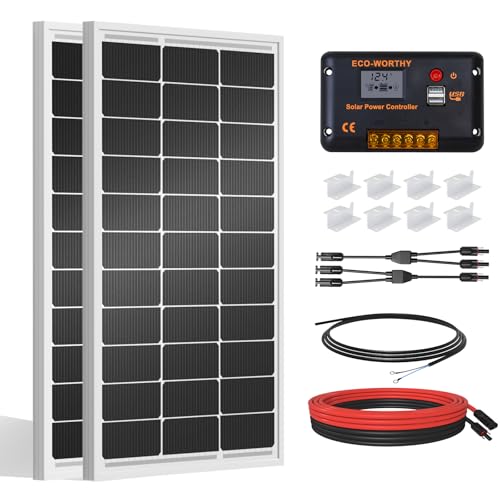 ECO-WORTHY 200 Watts Solar Panel Kit ✓ Prime $219.99


This kit is a practical entry point for off-grid basics, especially if you’re learning how solar output translates into usable household power. It’s better suited to charging batteries and supporting small loads than powering an entire house directly.
- ✓ 200W monocrystalline panel kit with controller included
- ✓ Daily output claim of up to 800Wh under ideal sun
- ✓ Designed for RVs, cabins, campers, and backup use
- ✓ Durable frame and IP65-rated junction box
- ✓ Includes mounting hardware and cables
- ✗ Too small for whole-house power by itself
- ✗ Output depends heavily on sunlight conditions
- ✗ Best for supporting small devices and battery charging
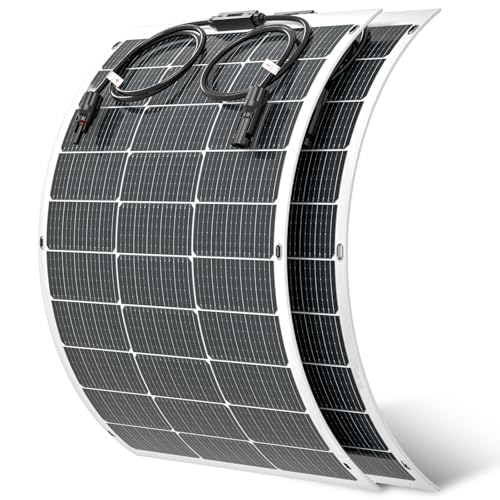 Viewsun Flexible Solar Panel 2PCS 100 Watt ✓ Prime $89.29


This pair of flexible panels is useful when you need lightweight solar on curved or uneven surfaces. For people comparing options while learning how many watts to power a house, it’s a reminder that panel type affects installation flexibility, not just total wattage.
- ✓ Lightweight and ultra-thin design
- ✓ Flexible up to a 30° arc for curved surfaces
- ✓ 16BB cell design with high efficiency claims
- ✓ IP67 waterproof junction box
- ✓ Easy mounting for non-permanent installs
- ✗ Not intended to power a house on its own
- ✗ Flexible panels may not suit every long-term roof application
- ✗ Best for niche installs, not maximum output per dollar
Common Mistakes to Avoid
- Confusing watts with watt-hours. Watts are instant power; watt-hours are energy over time.
- Ignoring startup surge. Motors and compressors often need more power to start than to run.
- Buying too small a system. A setup that runs lights may still fail when appliances kick on.
- Forgetting inverter limits. Your inverter must handle both continuous load and surge demand.
- Assuming solar panels alone power everything. You usually need batteries, an inverter, and proper system design too.
Another common mistake is sizing for average use instead of peak use. A home may average a few hundred watts at times, but the real question is what happens when the refrigerator, microwave, and HVAC all run together. That peak load is what determines whether your system feels reliable or frustrating.
Frequently Asked Questions
How many watts does it take to power a house?
It depends on the home size and appliances, but many houses need several thousand watts for essential loads and much more for whole-home operation with major appliances running.
Can 5,000 watts power a house?
Yes, but usually only a small home or a limited set of essential loads. A 5,000W system may handle lights, a refrigerator, and some electronics, but not every appliance at once.
How many watts does a refrigerator use?
Many refrigerators run on a few hundred watts or less, but they can need a higher startup surge for a brief moment when the compressor kicks on.
How do I calculate how many watts my house needs?
Add up the running watts of the appliances you want to use at the same time, then include extra capacity for surge loads from motors, pumps, and compressors.
What size solar system do I need to power a house?
That depends on your daily energy use, roof space, battery storage, and whether you want to power the whole house or just essential circuits. Start by estimating your peak watt demand and daily watt-hour usage.
Pros
- + Explains watts vs watt-hours clearly
- + Covers surge load and inverter sizing
- + Includes practical solar product options
- + Highlights common sizing mistakes
- + Useful for backup and off-grid planning
Cons
- – Does not provide a one-size-fits-all watt number
- – Whole-house systems require custom sizing
- – Listed products are not full-home solutions
Frequently asked questions
- How many watts does it take to power a house?
- It depends on the home size and appliances, but many houses need several thousand watts for essential loads and much more for whole-home operation with major appliances running.
- Can 5,000 watts power a house?
- Yes, but usually only a small home or a limited set of essential loads. A 5,000W system may handle lights, a refrigerator, and some electronics, but not every appliance at once.
- How many watts does a refrigerator use?
- Many refrigerators run on a few hundred watts or less, but they can need a higher startup surge for a brief moment when the compressor kicks on.
- How do I calculate how many watts my house needs?
- Add up the running watts of the appliances you want to use at the same time, then include extra capacity for surge loads from motors, pumps, and compressors.
- What size solar system do I need to power a house?
- That depends on your daily energy use, roof space, battery storage, and whether you want to power the whole house or just essential circuits. Start by estimating your peak watt demand and daily watt-hour usage.
Get the Full Outdoor Buyer's Guide
Join our free newsletter — we'll send our latest Outdoor picks, specs and verdicts straight to your inbox.
Free. No spam. Unsubscribe anytime.
Was this review helpful?
Be the first to share your feedback on this review.
Sign in to vote and let us know what you think.
Discussion (0)
No comments yet. Be the first to start the discussion.
Related Reviews
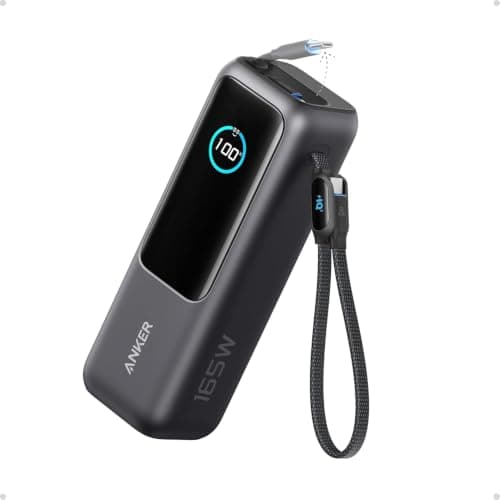
8 Best Power Banks for Laptops in 2026 — Fast Charging, Travel-Friendly Picks for Work Anywhere
If your laptop dies before the workday ends, you need more than a phone charger—you need a power bank that can actually keep a notebook running. The best power banks for laptops in 2026 combine high wattage, airline-friendly capacity, and enough ports to handle a laptop plus your phone and accessori
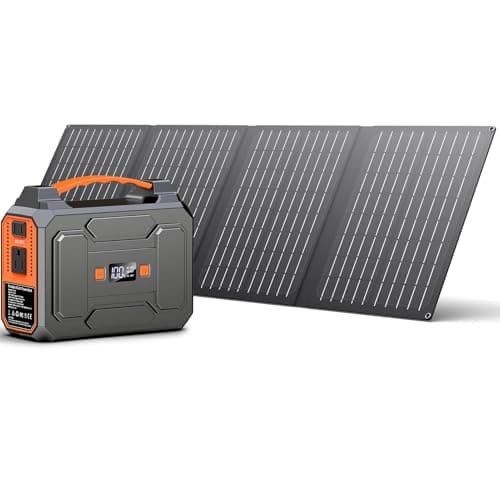
What is solar generator vs gas generator? A Complete 2026 Guide
If you’re comparing solar generator vs gas generator , the real challenge is usually not “which one works,” but which one fits your budget, noise tolerance, and backup-power needs. Solar generators are cleaner and quieter, while gas generators can deliver more raw power for longer stretches. This gu
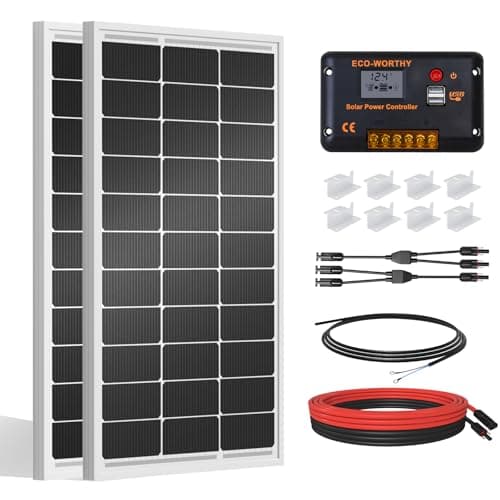
4 Best Balcony Solar Systems in 2026 — Easy Plug-In Power for Small Spaces
If you want to cut electricity bills without installing a full rooftop array, the best balcony solar systems 2026 can deliver a practical entry point. These picks are aimed at renters, apartment owners, and anyone with limited outdoor space who wants a compact, weather-ready setup. Because “balcony