


Who this is for: Best for homeowners, RV users, and campers who need fast-charging backup power with long-life durability.
Check PriceKey Specifications
| Specification | Details |
|---|---|
| Product | EF ECOFLOW Delta 3 Portable Power Station |
| Battery Capacity | 1024Wh |
| AC Output | 1800W |
| USB-C Output | 100W |
| Battery Chemistry | LiFePO4 (LFP) |
| Charge Time | Full charge in 56 minutes with supported input |
| Solar Input | Up to 500W |
| AC Input | Up to 1500W max |
| Expandable Capacity | Up to 5kWh with compatible EcoFlow ecosystem batteries |
| Durability Claim | 4000 cycles to 80% capacity |
| Protection | IP65 battery pack protection |
| Output Capacity | Supports up to 13 appliances simultaneously |
| Included in Box | Power station, AC charging cable, user manual, 5-year customer service |
Design & Build Quality

The EcoFlow DELTA 3 is positioned as a premium portable power station with a clear focus on practical durability and fast recovery between uses. Based on the published specs, the standout build story is its LiFePO4 battery chemistry, which is generally favored for longevity and thermal stability compared with older lithium-ion designs.
Related Reviews
- 8 Best 3000W Pure Sine Wave Inverters for Camping and RVs in 2026 — Clean Power for Sensitive Gear
- 6 Best Portable Power Stations with Battery Expansion in 2026 — More Runtime, Less Generator Hassle
- 1 Best DC-DC Chargers for Dual Battery Systems in 2026 — Fast, Safer Charging for Road Trips and Off-Grid Power
EcoFlow also claims an IP65-protected battery pack, which is a meaningful advantage for buyers who want a unit that can better handle dust, splashes, and rougher storage conditions. That does not make it waterproof or abuse-proof, but it does suggest a more rugged design philosophy than many basic home-backup units.
Another design strength is ecosystem expandability. The DELTA 3 is not just a standalone box; it can scale with additional EcoFlow batteries to reach much higher total storage. For buyers planning a long-term backup setup, that flexibility improves the product’s overall design value.
✓ Pros
- LiFePO4 battery chemistry for long service life
- IP65 battery pack protection adds ruggedness
- Expandable within the EcoFlow ecosystem up to 5kWh
- Compact enough in concept to serve home, RV, and camping use cases
✗ Cons
- Expandable ecosystem adds cost and complexity if you want maximum capacity
- Rugged protection does not replace careful storage and handling
- Not the lightest or simplest option if you only need occasional emergency power
Performance & Features


Performance is where the EcoFlow DELTA 3 earns most of its attention. The headline feature is the rapid recharge claim: EcoFlow says it can go from empty to full in 56 minutes with combined charging support, and reach 80% in about 30 minutes. For a power station in this class, that is a major convenience advantage, especially for users who need quick turnaround between outages, trips, or jobsite use.
The 1800W AC output is strong enough for many essential appliances and electronics, while the 100W USB-C output is useful for modern laptops, tablets, and high-draw mobile devices. EcoFlow also states that the unit can power up to 13 appliances simultaneously, which points to a well-rounded port layout and a design aimed at multi-device households.
One of the most important practical features is X-Boost support for resistive appliances above 2600W continuous demand. That kind of feature can be helpful for some heating-based loads, though buyers should still check the starting and running wattage of their specific appliances before assuming compatibility.
The solar support is another major plus. With up to 500W solar input, the DELTA 3 can be used as a more flexible off-grid or backup charging solution. That matters for RV owners, campers, and homeowners who want a cleaner charging method during extended outages.
Owner feedback across retail and review discussions generally praises EcoFlow products for charging speed, app-based usability, and feature depth. The most common caution is that real-world runtime depends heavily on the appliance being powered, which is true for nearly all portable stations in this category.
✓ Pros
- Very fast charging compared with many competing power stations
- 1800W AC output covers a wide range of essential devices
- 100W USB-C output is great for modern electronics
- Supports solar charging up to 500W
- Can power multiple devices at once
- X-Boost adds flexibility for some higher-demand resistive loads
✗ Cons
- Runtime still depends heavily on the wattage of connected appliances
- High-output convenience can come with a premium ecosystem cost
- Not every heavy-duty appliance will be a fit, despite the X-Boost claim
Value for Money
As a research-based purchase, the EcoFlow DELTA 3 makes the strongest value case for buyers who care about speed, longevity, and expandability more than the absolute lowest entry cost. The combination of a 1024Wh battery, 1800W output, fast recharge capability, and LiFePO4 chemistry gives it a feature set that is easy to justify for serious backup planning.
Its value improves further if you plan to use it regularly rather than leave it on a shelf for emergencies only. The claimed 4000-cycle lifespan to 80% capacity suggests a product designed for repeated use, which is exactly what many buyers want from a premium portable power station.
That said, value is more complicated if you only need occasional emergency power for phones, Wi-Fi, or a few lights. In that scenario, the DELTA 3 may be more capable than you actually need. Its strength is not bargain pricing; it is the balance of speed, durability, and expansion potential.
✓ Pros
- Strong feature set for the class
- Long-life battery chemistry improves long-term value
- Expandable design can reduce the need to replace the base unit later
- Well suited to regular use, not just emergency storage
✗ Cons
- May be more than casual users need
- Best value depends on whether you will actually use the expansion ecosystem
- Premium feature set may not fit every budget-minded buyer
Who Should Buy This
The EcoFlow DELTA 3 is a smart fit for homeowners who want reliable backup power for outages, especially if they value quick recharge times and the ability to support multiple devices. It is also a strong match for RV travelers, campers, and mobile workers who need a portable power source that can handle more than basic charging.
This is also a good option for buyers who expect to grow into a larger power setup over time. If you like the idea of starting with a capable base unit and expanding later, the DELTA 3 ecosystem is one of the more compelling reasons to choose this model.
In short, this product is best for people who want a fast-charging, long-life power station that can serve both everyday convenience and emergency preparedness.
Who Should Look Elsewhere
If you only need a small backup battery for occasional phone charging or short outages, the DELTA 3 may be more machine than you need. Buyers who want the simplest possible setup may prefer a smaller, less feature-rich unit.
You should also look elsewhere if your main priority is the lowest upfront cost. The DELTA 3 is built around performance and longevity, so buyers seeking a basic emergency-only solution may find better fit in a simpler class of power station.
Finally, if your appliances regularly exceed the capabilities of a 1800W-class unit, you may want to step up to a larger backup system instead of trying to stretch this one beyond its intended range.
Best Alternatives
No alternative-role products were listed in the provided product list, so this section is omitted.
Final Verdict
The EcoFlow DELTA 3 is an impressive research-backed choice for buyers who want fast charging, strong output, long battery life, and room to expand later. It is especially appealing for home backup, RV use, and anyone who expects to rely on a portable power station more than once in a while.
Buy it if you want a capable, future-friendly power station with premium features and a strong durability story. Skip it if you only need a basic emergency battery or you are shopping strictly on the lowest upfront cost.
Frequently Asked Questions
1. How fast does the EcoFlow DELTA 3 charge?
EcoFlow states that the DELTA 3 can reach a full charge in 56 minutes with supported high-input charging, and about 80% in roughly 30 minutes.
2. What can the EcoFlow DELTA 3 power?
It is designed to run a wide range of devices, including phones, laptops, small appliances, and other essentials within its 1800W output limit, with support for up to 13 appliances at once.
3. Is the EcoFlow DELTA 3 good for home backup?
Yes. Its fast recharge, LiFePO4 battery, and strong output make it a solid option for home backup power, especially for outages that affect essential electronics and small appliances.
4. Can the EcoFlow DELTA 3 be charged with solar panels?
Yes. The published specs say it supports up to 500W solar input, which makes it useful for off-grid charging and extended backup planning.
5. Is the EcoFlow DELTA 3 worth buying?
It is worth buying for people who want a fast-charging, durable, and expandable portable power station. If you only need very basic emergency power, a simpler model may be a better fit.
Pros
- + Fast charging with strong AC and solar input
- + LiFePO4 battery for long lifespan
- + Expandable up to 5kWh in the EcoFlow ecosystem
- + 1800W output and 100W USB-C for versatile use
- + IP65 battery pack protection adds durability
Cons
- – May be more power than casual users need
- – Expansion ecosystem adds cost and complexity
- – Runtime depends heavily on appliance wattage
Frequently asked questions
- How fast does the EcoFlow DELTA 3 charge?
- EcoFlow states that the DELTA 3 can reach a full charge in 56 minutes with supported high-input charging, and about 80% in roughly 30 minutes.
- What can the EcoFlow DELTA 3 power?
- It is designed to run a wide range of devices, including phones, laptops, small appliances, and other essentials within its 1800W output limit, with support for up to 13 appliances at once.
- Is the EcoFlow DELTA 3 good for home backup?
- Yes. Its fast recharge, LiFePO4 battery, and strong output make it a solid option for home backup power, especially for outages that affect essential electronics and small appliances.
- Can the EcoFlow DELTA 3 be charged with solar panels?
- Yes. The published specs say it supports up to 500W solar input, which makes it useful for off-grid charging and extended backup planning.
- Is the EcoFlow DELTA 3 worth buying?
- It is worth buying for people who want a fast-charging, durable, and expandable portable power station. If you only need very basic emergency power, a simpler model may be a better fit.
Score breakdown
- value
- 8.2
- usability
- 8.7
- durability
- 9.1
- performance
- 9.0
- buyerFeedback
- 8.4
Get the Full Outdoor Buyer's Guide
Join our free newsletter — we'll send our latest Outdoor picks, specs and verdicts straight to your inbox.
Free. No spam. Unsubscribe anytime.
Was this review helpful?
Be the first to share your feedback on this review.
Sign in to vote and let us know what you think.
Discussion (0)
No comments yet. Be the first to start the discussion.
Related Reviews

8 Best 3000W Pure Sine Wave Inverters for Camping and RVs in 2026 — Clean Power for Sensitive Gear
If you need reliable off-grid AC power for an RV, camper, truck, or solar setup, the wrong inverter can mean noisy electronics, tripped protection circuits, or wasted battery capacity. This roundup of the best 3000W pure sine wave inverters for camping and RVs 2026 focuses on models with clean outpu

6 Best Portable Power Stations with Battery Expansion in 2026 — More Runtime, Less Generator Hassle
If you’re looking for the best portable power stations with battery expansion 2026, you probably want more than just a basic battery box—you want a system that can grow with your needs. Whether you’re planning for home backup, RV trips, camping weekends, or emergency power, expandable capacity can m
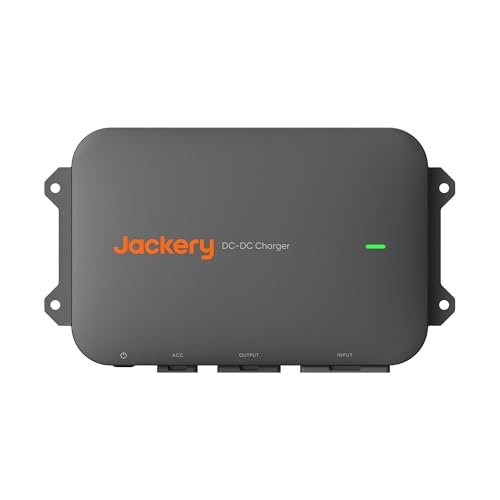
1 Best DC-DC Chargers for Dual Battery Systems in 2026 — Fast, Safer Charging for Road Trips and Off-Grid Power
If you’re building or upgrading a dual battery setup, the biggest challenge is finding a DC-DC charger that charges efficiently without stressing your vehicle’s electrical system. The best DC-DC chargers for dual battery systems in 2026 should offer smart protection, broad vehicle compatibility, and