


Who this is for: Best for backyard gardeners who want a cleaner, faster composting setup with less turning and easier batch management.
If you’re trying to figure out how to choose a compost tumbler for backyard use, the hardest part is usually separating genuinely useful features from marketing fluff. A good tumbler should make composting faster, cleaner, and easier—not become another backyard chore that sits half-filled and hard to turn. The most common mistake buyers make is choosing based on capacity alone, then ending up with a bin that’s awkward to rotate, difficult to load, or poorly suited to their household waste volume.
Related Reviews
This guide breaks down the features that matter most, the red flags to avoid, and the compost tumblers that stand out in research-based comparisons. It’s built from published specs, documented owner feedback, and product comparisons—not hands-on testing—so you can shop with more confidence.
Key Features to Look For
1) Dual-chamber design
A dual-chamber tumbler lets you fill one side while the other side finishes composting. That matters because composting works best as a cycle, not a one-off batch. For backyard users, this design reduces downtime and helps keep a steady stream of finished compost available for garden beds, containers, or lawn care.
2) Capacity that matches your household
Capacity affects how often you’ll need to empty and how much material you can process at once. Smaller households may do fine with a compact tumbler, while families with kitchen scraps, yard trimmings, and garden waste often need a larger unit. Choosing the right size prevents overfilling, which can slow decomposition and make turning harder.
3) Easy rotation and ergonomic handling
A tumbler is only useful if you can actually spin it comfortably. Look for smooth rotation, a stable frame, and handles or gear-assist features that reduce effort. This matters especially when the drum is full and heavier, because difficult turning is one of the main reasons owners stop using compost tumblers regularly.
4) Ventilation and airflow control
Good airflow helps manage moisture, reduce odors, and support decomposition. Adjustable vents are especially useful because compost needs a balance of oxygen, moisture, and heat. Without proper ventilation, a tumbler can become too wet, too dry, or smelly—three of the most common backyard composting complaints.
5) Access doors or sliding panels
Loading scraps and harvesting finished compost should be simple. Large doors or sliding access panels make it easier to add kitchen waste, garden clippings, and browns without making a mess. This feature matters because convenience directly affects how often you’ll use the tumbler.
6) Durable materials and weather resistance
Backyard composters live outdoors year-round, so the materials need to handle sun, rain, cold, and repeated use. UV-resistant plastic, corrosion-resistant hardware, and a sturdy frame all help extend service life. Durability matters not just for longevity, but also for stability when the drum is loaded and rotating.
7) Assembly complexity
Some tumblers are straightforward to set up, while others can be frustratingly time-consuming. If you want to start composting quickly, look for models with pre-assembled parts, fewer screws, or snap-together construction. Assembly matters because a difficult setup can delay use and make the product feel more complicated than it needs to be.
What to Avoid
Overbuying capacity
A larger tumbler sounds appealing, but too much volume can be a bad fit if you don’t generate enough material. An oversized bin may sit underfilled, which can make it harder to maintain the heat and balance compost needs. Choose a size based on your actual kitchen and yard waste output, not just the biggest option available.
Hard-to-turn drums
If the tumbler is awkward to rotate, you’ll likely use it less. Avoid models that appear flimsy, unbalanced, or lacking a practical handle/rotation system. Compost tumblers should simplify mixing, not require extra strength every time you want to aerate the pile.
Poor airflow design
Bins with limited ventilation can trap moisture and odors. That can lead to soggy compost, slower breakdown, and a less pleasant backyard experience. If a product description doesn’t mention vents or airflow management, that’s worth a closer look.
Weak frames or sag-prone construction
A tumbler filled with damp organic material puts real stress on the base and support structure. Avoid models that seem to rely on lightweight framing without reinforcement. A weak frame can affect rotation, stability, and long-term durability.
Complicated assembly with unclear instructions
Some composters require a lot of hardware and patience. If owner feedback repeatedly mentions confusing instructions or long setup times, that’s a sign the product may be more frustrating than helpful. For most backyard buyers, simple setup is a real advantage.
Single-purpose designs that limit flexibility
Some tumblers are fine for one type of material but less convenient for mixed kitchen and yard waste. A better backyard option should handle common inputs like fruit scraps, vegetable peels, coffee grounds, and small yard clippings without constant fuss.
Our Top Picks
Best overall for larger backyards: Maygrove Outdoor Compost Bin 53 Gallon, Dual Chamber Large Compost Tumbler for Garden Backyard, with 360° Rotating, Sliding Doors & Solid Steel Frame, Updated Instructions


This is the strongest fit if you want a high-capacity compost tumbler with features that support frequent use. The dual-chamber layout is ideal for continuous composting, and the rotation system, sliding doors, and steel frame make it a practical choice for gardeners who want a more robust backyard setup.
- ✓ Large dual-chamber design supports continuous composting
- ✓ 360° rotating drum with built-in mixing bars
- ✓ Adjustable air vents help manage moisture and odor
- ✓ Sliding doors make loading and harvesting easier
- ✓ Heavy-duty steel frame adds stability and durability
- ✗ Larger footprint may be more than small patios need
- ✗ Higher-capacity tumblers can be heavier when fully loaded
- ✗ Best suited to users who generate regular compost material
Best budget option for smaller households: Werph 43 Gal Dual Chamber Compost Bin Tumbler for Backyard Garden, Black
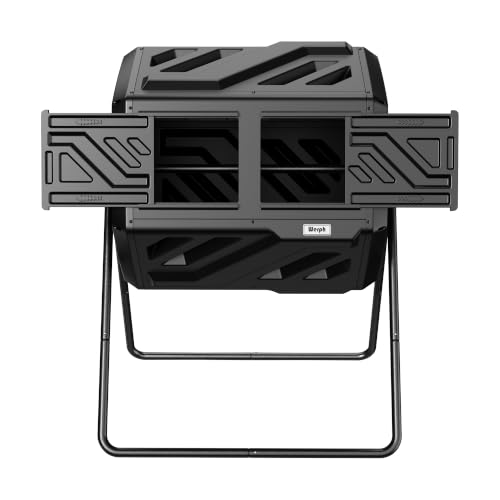


If you want a simpler entry point into backyard composting, this model offers a strong feature set without unnecessary complexity. Its dual chamber, pre-assembled parts, and easy-tumble design make it appealing for first-time buyers who want a more approachable setup.
- ✓ Dual-chamber layout for batch composting
- ✓ 360-degree tumbling with deep fins for mixing
- ✓ Most parts come pre-assembled for faster setup
- ✓ BPA-free construction designed for all-weather use
- ✓ Sliding door access for easier loading
- ✗ Smaller than premium high-capacity options
- ✗ Better for moderate waste output than heavy garden use
- ✗ Less premium in materials and build feel than top-tier models
Best mid-range choice for easy setup: Werph 43 Gal Dual Chamber Compost Bin Tumbler for Backyard Garden, Green


This version is a good middle-ground pick if you want the same core functionality as the black model but prefer a different finish for your backyard. It works well for homeowners who want dual-chamber convenience, straightforward assembly, and a manageable footprint.
- ✓ Quick assembly with pre-assembled parts
- ✓ Dual chambers support continuous composting
- ✓ 360-degree rotation with deep fins for mixing
- ✓ BPA-free materials and all-weather durability
- ✓ Easy-access sliding door panel
- ✗ Capacity may be limiting for larger yards
- ✗ Not as heavy-duty as premium steel-frame options
- ✗ Best for users who value convenience over maximum capacity
Best for a smaller footprint and natural-looking backyard setup: THE Growing 43 Gal Outdoor Compost Bin Tumbler for Backyard Garden, Brown

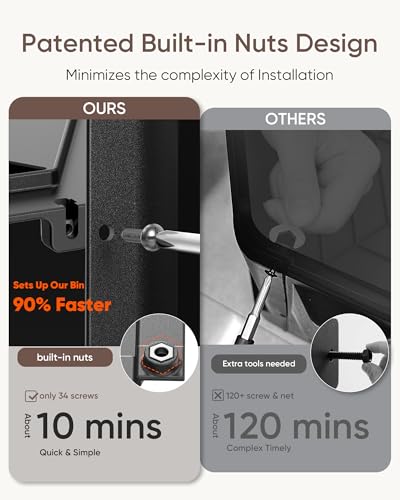

If appearance matters as much as function, this tumbler is worth a look. The twin-chamber layout, weatherproof resin, and compact footprint make it a solid choice for gardeners who want composting support without a bulky visual presence.
- ✓ Twin 21.5-gallon chambers for continuous cycling
- ✓ Pre-embedded nuts support easier solo assembly
- ✓ Agitating fins and cross-ventilation support breakdown
- ✓ Weatherproof resin helps resist pests and odors
- ✓ Compact footprint suits patios and tighter spaces
- ✗ Resin build may feel less substantial than steel-frame models
- ✗ Best for moderate composting needs rather than heavy output
- ✗ Brown finish may matter more to style-conscious buyers than performance-focused ones
Budget Guide: What You Get at Each Tier
Budget tier
Budget compost tumblers usually give you the core essentials: a rotating drum, a dual-chamber layout, and basic weather-resistant materials. They’re a smart choice if you’re just getting started, have moderate waste output, or want to test whether backyard composting fits your routine. Expect simpler materials and fewer premium touches, but still enough functionality to make composting practical.
Mid-range tier
Mid-range tumblers typically improve the experience in ways you’ll notice every week: easier assembly, smoother rotation, better access doors, and a more polished overall build. This tier is often the sweet spot for most backyard users because it balances convenience, durability, and capacity without pushing into oversized or overbuilt territory.
Premium tier
Premium compost tumblers usually offer the most confidence-inspiring construction, larger capacity, and more user-friendly details like stronger frames, better stability, and more refined rotation systems. If you compost regularly, generate a lot of yard waste, or want a unit that feels built for long-term use, this tier is the best fit. The tradeoff is that premium models can be larger and more demanding in terms of space and handling.
Frequently Asked Questions
What size compost tumbler is best for backyard use?
The best size depends on how much food scraps and yard waste you produce. Smaller households can often manage with a compact or mid-size tumbler, while families and avid gardeners usually benefit from a larger dual-chamber model that can handle continuous input.
Is a dual-chamber compost tumbler worth it?
Yes, for most backyard users it is. A dual-chamber design lets one side finish composting while the other receives fresh material, which makes the process more efficient and consistent than a single-chamber setup.
How important is ventilation in a compost tumbler?
Very important. Ventilation helps control moisture, reduces odor, and supports the aerobic breakdown process. Without adequate airflow, compost can become wet, compacted, and slower to decompose.
What materials should I look for in a durable compost tumbler?
Look for UV-resistant plastics, corrosion-resistant hardware, and a sturdy frame. These materials help the tumbler hold up to outdoor weather and repeated rotation, which is especially important for year-round backyard use.
How do I know if a compost tumbler will be easy to assemble?
Check whether the product mentions pre-assembled parts, fewer screws, or snap-together construction. Reviews and product specs that emphasize simple setup are usually a good sign that assembly will be manageable for one person.
Pros
- + Dual-chamber options support continuous composting
- + 360° tumbling helps mix materials without hand turning
- + Ventilation and access doors improve everyday usability
- + Durable, weather-resistant materials suit backyard use
- + Easy-assembly designs reduce setup frustration
Cons
- – Oversized tumblers can be awkward if underfilled
- – Poor airflow can lead to odor and slow breakdown
- – Hard-to-turn drums reduce long-term use
Frequently asked questions
- What size compost tumbler is best for backyard use?
- The best size depends on how much food scraps and yard waste you produce. Smaller households can often manage with a compact or mid-size tumbler, while families and avid gardeners usually benefit from a larger dual-chamber model that can handle continuous input.
- Is a dual-chamber compost tumbler worth it?
- Yes, for most backyard users it is. A dual-chamber design lets one side finish composting while the other receives fresh material, which makes the process more efficient and consistent than a single-chamber setup.
- How important is ventilation in a compost tumbler?
- Very important. Ventilation helps control moisture, reduces odor, and supports the aerobic breakdown process. Without adequate airflow, compost can become wet, compacted, and slower to decompose.
- What materials should I look for in a durable compost tumbler?
- Look for UV-resistant plastics, corrosion-resistant hardware, and a sturdy frame. These materials help the tumbler hold up to outdoor weather and repeated rotation, which is especially important for year-round backyard use.
- How do I know if a compost tumbler will be easy to assemble?
- Check whether the product mentions pre-assembled parts, fewer screws, or snap-together construction. Reviews and product specs that emphasize simple setup are usually a good sign that assembly will be manageable for one person.
Get the Full Outdoor Buyer's Guide
Join our free newsletter — we'll send our latest Outdoor picks, specs and verdicts straight to your inbox.
Free. No spam. Unsubscribe anytime.
Was this review helpful?
Be the first to share your feedback on this review.
Sign in to vote and let us know what you think.
Discussion (0)
No comments yet. Be the first to start the discussion.
Related Reviews

8 Best Greenhouse Kits for Home Gardeners in 2026 — From Compact Indoor Seed Starters to Year-Round Walk-Ins
If you’re trying to find the best greenhouse kits for home gardeners 2026, the challenge is usually the same: too many options, too little clarity, and no easy way to tell which kit fits your space and growing goals. Some gardeners need a compact indoor setup for seedlings and herbs, while others wa

Best Drip Irrigation Kits for Every Budget in 2026: Ranked by Price & Performance
If you’re trying to keep houseplants or small garden containers alive without constant hand-watering, the right drip kit can save time and reduce guesswork. The challenge is that the cheapest option often works for one or two pots, while better kits usually add more control, broader compatibility, o

2 Best Pond Pumps for Backyard Water Features in 2026 — Quiet Flow and Easy Ambiance
If your backyard pond, water garden, or decorative fountain needs better circulation, a pond pump can make a big difference in both appearance and water quality. The best pond pumps for backyard water features 2026 should be quiet, easy to maintain, and strong enough to keep water moving without ove