

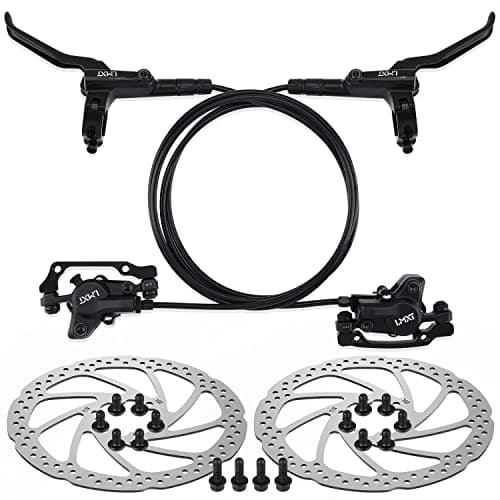
Who this is for: Best for riders comparing brake systems who want practical guidance on stopping power, maintenance, and compatibility.
Check PriceWhat is Disc Brakes vs Rim Brakes? A Complete 2026 Guide
If you’re comparing disc brakes vs rim brakes, you’re probably trying to figure out which setup stops better, lasts longer, and makes the most sense for your bike or mini bike. The short answer is that both systems can work well, but they do different jobs and shine in different conditions. This guide breaks down how they work, where each one excels, what to look for before buying, and which products are worth considering if you need a replacement or upgrade.
Related Reviews
How It Works
Disc brakes and rim brakes both slow a wheel by creating friction, but they apply that force in different places. Rim brakes squeeze the wheel rim itself, while disc brakes clamp a metal rotor mounted near the hub. That difference affects stopping power, heat management, weather performance, and how the bike feels at the lever.
Rim brakes: braking at the wheel edge
With rim brakes, the brake pads press directly against the outer rim of the wheel. When you squeeze the lever, cable tension or hydraulic force pushes the pads inward, and the wheel slows because the rim is being rubbed. This design is usually simpler, lighter, and easier to service, but braking performance can drop when rims are wet, dirty, or worn.
Disc brakes: braking at the hub
With disc brakes, the pads clamp onto a rotor attached to the hub area, away from the tire and rim. Because the rotor is smaller and built specifically for braking, disc systems often deliver stronger, more consistent stopping power and better modulation. They also tend to handle rain, mud, and long descents better because the braking surface is separate from the wheel rim.
Hydraulic vs mechanical disc brakes
Disc brakes can be mechanical, using a cable, or hydraulic, using fluid pressure. Hydraulic systems usually provide smoother lever feel and stronger braking with less hand effort, which is why many riders prefer them for mountain bikes, e-bikes, and mini bikes. Mechanical disc brakes are often easier to understand and maintain, but they may require more frequent adjustment.
Key Benefits & Use Cases
Choosing between disc brakes vs rim brakes depends on how and where you ride. The best system is the one that matches your terrain, weather, budget, and maintenance comfort level.
When disc brakes make the most sense
- Wet or muddy conditions: Disc brakes usually perform better when the weather is poor.
- Steep descents: They manage heat well and maintain more consistent stopping power.
- Heavier bikes: E-bikes, cargo bikes, and mini bikes often benefit from stronger braking.
- Performance riding: Riders who want better modulation and more precise control often prefer discs.
When rim brakes still make sense
- Budget builds: Rim brake systems are often less expensive overall.
- Simple maintenance: They can be easier to inspect and adjust for casual riders.
- Lightweight road use: Some riders still like rim brakes for their low weight and straightforward design.
- Everyday commuting in dry climates: If conditions are mostly dry, rim brakes can be perfectly adequate.
Practical takeaway
If your priority is maximum confidence, all-weather stopping, and stronger braking under load, disc brakes are usually the better choice. If you want a simpler, lighter, and more affordable setup for calm riding conditions, rim brakes may still be enough.
What to Look For When Buying
When comparing disc brakes vs rim brakes, the right choice depends on more than just stopping power. Use these five criteria to narrow down the best system for your bike or riding style.
1. Bike or frame compatibility
Check whether your bike frame, fork, wheel hubs, and brake mounts support disc brakes or rim brakes. A disc brake setup needs rotor mounts and caliper mounts, while rim brakes need compatible rim braking surfaces and frame/fork mounts.
2. Riding conditions
Think about where you ride most often. Wet roads, gravel, trails, and downhill routes generally favor disc brakes, while dry pavement and casual rides can be fine with rim brakes.
3. Maintenance expectations
Rim brakes are often simpler to inspect, but disc brakes can offer better performance if you’re comfortable with periodic pad checks, rotor alignment, and occasional bleeding on hydraulic systems.
4. Braking power and control
If you need strong stopping ability and fine control, especially on heavier bikes, disc brakes are usually the better fit. If you just need basic, predictable stopping in low-stress riding, rim brakes may be sufficient.
5. Budget and replacement costs
Consider not only the initial purchase price but also pad wear, rotor wear, and service costs. Disc brake systems can cost more upfront, but they may be worth it if you need better performance or ride in demanding conditions.
Top Recommended Products
Below are two research-based product options that fit the broader disc brake conversation. These are not hands-on test results; they’re compiled from published specs, feature lists, and documented buyer feedback patterns. If you’re upgrading or replacing a braking setup, these are the kinds of kits that illustrate how disc brake systems differ from rim brakes in real-world use.
TOBWOLF 1 Pair MTB Disc Brake Set, Hydraulic Disc Brake Kit with 160mm Rotors, Left Front 81cm & Right Rear 147cm, Aluminum Oil Pressure Calipers Levers for Mountain Bike E-Bike Fat Bike Road Bike ✓ Prime 5% OFF — Was $45.99 $43.67
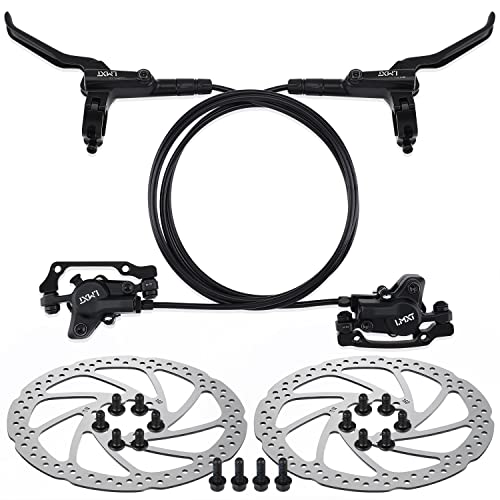


This hydraulic disc brake kit is aimed at riders who want stronger braking performance than a basic rim brake setup can usually provide. The product details emphasize ceramic pads, 160mm rotors, and weather resistance, which are all useful traits for riders comparing disc brakes vs rim brakes in demanding conditions.
✓ Hydraulic braking for stronger lever feel and better modulation
✓ 160mm stainless steel 6-bolt rotors for heat handling and braking power
✓ Ceramic brake pads designed to reduce rotor wear
✓ Built for rain and snow resistance with aluminum alloy construction
✓ Prime shipping and a relatively low entry price for a disc brake kit
✗ Requires installation and alignment care for best results
✗ Compatibility depends on 6-bolt hubs and hose length
✗ Hydraulic systems may need bleeding or extra setup attention
✗ Front/rear hose orientation may need swapping depending on your setup
JMCHstore Front Rim Disc Hydraulic Brake Kit For Mega Moto 80 Suspension,For FRP GMB100 GPS Suspension, Baja DB30 Coleman B100 Motovox MBX10, 6 inch Mini Bike Front Brake ✓ Prime $139.99
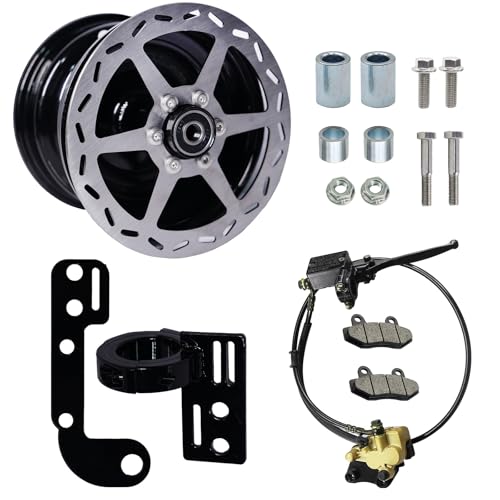


This mini bike brake kit is a more specialized option for riders who need a front braking upgrade on compatible suspension setups. The listing highlights bolt-on installation, stronger stopping ability, and fitment for several mini bike platforms, making it relevant for buyers who need disc-style braking in a compact application.
✓ Designed for several mini bike suspension setups
✓ Bolt-on installation can simplify the upgrade process
✓ Hydraulic braking for stronger front stopping performance
✓ Built for racing and recreational use
✓ Useful for riders who want more confidence than a basic braking system may offer
✗ Requires suspension compatibility and will not work with stock fork setups
✗ More expensive than many general-purpose brake parts
✗ Niche fitment means it is not a universal solution
✗ Best suited to specific mini bike models rather than standard bicycles
Common Mistakes to Avoid
When people compare disc brakes vs rim brakes, they often focus only on stopping power and ignore fit, upkeep, and intended use. Avoid these common mistakes so you end up with the right braking system for your ride.
Choosing based on power alone
More braking power is not always better if the system is incompatible or unnecessary for your riding style. A properly set up rim brake can be enough for many riders, while a poorly installed disc brake can underperform.
Ignoring compatibility
Disc brakes require the right mounts, rotor size, and hub type. Rim brakes require compatible rim surfaces and frame/fork mounts. Buying without checking these details can lead to wasted money and installation headaches.
Overlooking maintenance needs
Disc systems may need pad replacement, rotor alignment, and occasional hydraulic service. Rim brakes may need pad changes and rim wear checks. Either system can work well if maintained, but neglect will reduce performance.
Forgetting about weather and terrain
If you ride in rain, mud, or hilly areas, disc brakes usually have a clear advantage. If your routes are flat, dry, and casual, rim brakes may still be a practical choice.
Buying the wrong kit for the wrong vehicle
Some disc brake kits are made for bicycles, while others are intended for mini bikes or other specialized platforms. Always verify the intended application before buying.
Frequently Asked Questions
Are disc brakes better than rim brakes?
In most demanding conditions, yes. Disc brakes usually offer stronger, more consistent stopping power, especially in wet weather, on steep terrain, or on heavier bikes. Rim brakes can still be a good choice for simpler, lighter, or budget-focused builds.
Why do disc brakes stop better than rim brakes?
Disc brakes clamp a rotor near the hub, which is designed specifically for braking and is less affected by rim wear or wet conditions. That usually gives them better modulation, more consistent heat handling, and stronger performance.
Are rim brakes cheaper to maintain?
Often yes. Rim brake systems are usually simpler and may cost less to service, though they wear the wheel rim over time. Disc brakes can cost more to maintain, especially if hydraulic bleeding or rotor replacement is needed.
Can I upgrade from rim brakes to disc brakes?
Sometimes, but only if your frame, fork, wheels, and hubs are compatible. Many bikes are not designed for a straightforward conversion, so compatibility checks are essential before buying parts.
Which is better for wet weather: disc brakes or rim brakes?
Disc brakes are generally better in wet weather because the braking surface is separate from the rim and less affected by water and grime. Rim brakes can still work, but they usually lose performance sooner in rain.
Pros
- + Disc brakes perform better in wet and muddy conditions
- + Rim brakes are simpler and often cheaper to maintain
- + Hydraulic disc kits offer stronger stopping power and modulation
- + Disc brakes suit heavier bikes and steeper terrain
- + Rim brakes can still be a practical budget choice
Cons
- – Disc brakes require compatibility checks and more setup
- – Hydraulic systems may need bleeding or alignment
- – Rim brakes lose performance in wet weather
- – Some disc kits are niche-fit and not universal
- – Wrong brake type can lead to wasted money
Frequently asked questions
- Are disc brakes better than rim brakes?
- In most demanding conditions, yes. Disc brakes usually offer stronger, more consistent stopping power, especially in wet weather, on steep terrain, or on heavier bikes. Rim brakes can still be a good choice for simpler, lighter, or budget-focused builds.
- Why do disc brakes stop better than rim brakes?
- Disc brakes clamp a rotor near the hub, which is designed specifically for braking and is less affected by rim wear or wet conditions. That usually gives them better modulation, more consistent heat handling, and stronger performance.
- Are rim brakes cheaper to maintain?
- Often yes. Rim brake systems are usually simpler and may cost less to service, though they wear the wheel rim over time. Disc brakes can cost more to maintain, especially if hydraulic bleeding or rotor replacement is needed.
- Can I upgrade from rim brakes to disc brakes?
- Sometimes, but only if your frame, fork, wheels, and hubs are compatible. Many bikes are not designed for a straightforward conversion, so compatibility checks are essential before buying parts.
- Which is better for wet weather: disc brakes or rim brakes?
- Disc brakes are generally better in wet weather because the braking surface is separate from the rim and less affected by water and grime. Rim brakes can still work, but they usually lose performance sooner in rain.
Score breakdown
- value
- 7.0
- usability
- 7.0
- durability
- 8.0
- performance
- 9.0
- buyerFeedback
- 8.0
Get the Full Outdoor Buyer's Guide
Join our free newsletter — we'll send our latest Outdoor picks, specs and verdicts straight to your inbox.
Free. No spam. Unsubscribe anytime.
Was this review helpful?
Be the first to share your feedback on this review.
Sign in to vote and let us know what you think.
Discussion (0)
No comments yet. Be the first to start the discussion.
Related Reviews
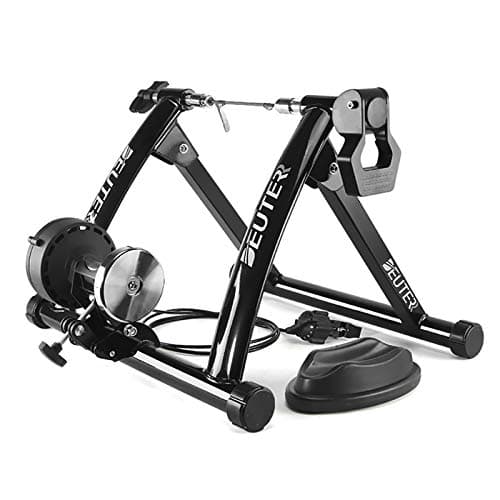
What is How to Set Up an Indoor Bike Trainer? A Complete 2026 Guide
If you’re trying to figure out how to set up an indoor bike trainer , the hardest part is usually not the workout itself—it’s choosing the right setup, fitting your bike correctly, and avoiding noise or stability problems. This guide explains what an indoor bike trainer is, how it works, what to loo
How to Choose the Best Bike Rack for Your Car in 2026: Complete Buying Guide
If you’re trying to figure out how to choose a bike rack for your car , the hard part is not finding options — it’s matching the rack to your vehicle, your bikes, and how often you actually travel. The most common mistake buyers make is choosing by price alone and ending up with a rack that blocks t
Best Cheap Bike Locks That Work for Every Budget in 2026: Ranked by Price & Performance
If you’re searching for the best cheap bike locks that work , the real challenge isn’t finding the lowest price — it’s finding a lock that’s cheap and actually useful for everyday deterrence. In this guide, I break down the most affordable option, the best step-up value, and the strongest pick in th