

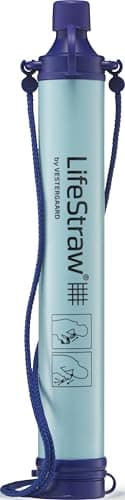
Who this is for: Best for backpackers who need a simple, safe way to treat trail water without carrying heavy bottles.
Check PriceWhat is How to Filter Water Backpacking? A Complete 2026 Guide
If you’re trying to figure out how to filter water backpacking, the main challenge is simple: backcountry water can look clear and still contain harmful microbes, sediment, or other contaminants. The good news is that backpacking water treatment is straightforward once you understand the main methods and what each one does best. This guide breaks down the process in plain English so you can choose the right setup for your trip, your group size, and your risk tolerance.
Related Reviews
How It Works
Backpacking water treatment works by removing or neutralizing things you do not want to drink, such as bacteria, parasites, viruses, dirt, and bad taste. The most common systems use a physical filter, a chemical treatment, or both. In practice, backpackers usually scoop water from a stream, lake, or spring, then run it through a filter, treat it with tablets, or combine methods for extra safety.
Physical filters use tiny pores to block contaminants while letting water pass through. Microfiltration products can stop many bacteria and parasites, and some also reduce microplastics and cloudiness. Chemical tablets disinfect the water by killing microorganisms over time, which is why they are often used as a backup or paired with a filter when water is especially questionable.
The key idea is that not every method does the same job. Some filters are great for bacteria and protozoa, but not viruses; tablets can help with viruses and are ultralight, but they require wait time. For many backpackers, the safest approach is choosing a system that matches the water source, the length of the trip, and how much weight you want to carry.
Key Benefits & Use Cases
Learning how to treat water on the trail gives you more freedom and less dependence on carrying all your water from the start. It can also reduce pack weight, since a filter or tablet weighs far less than several liters of bottled water. Most importantly, it helps lower the risk of dehydration and waterborne illness during hikes, overnights, and multi-day backpacking trips.
- Backpacking and thru-hiking, where you need a repeatable way to refill from natural sources
- Emergency preparedness, where small, lightweight treatment options are valuable
- Group camping, where gravity systems can make treating larger volumes easier
- Solo trips, where compact filters or tablets are often the simplest choice
- Travel and bug-out bags, where long shelf life and portability matter
For many hikers, the best solution is not one “perfect” product, but the right tool for the water conditions they expect. Clear alpine streams, silty storm runoff, and questionable standing water each call for slightly different priorities. That is why backpackers often carry a primary filter plus a backup treatment method.
What to Look For When Buying
1) Filtration size and contaminant coverage
Look at what the product actually removes. Some systems are designed mainly for bacteria and parasites, while others also address viruses or microplastics. If you hike in areas with uncertain water quality, broader protection is usually better.
2) Flow rate and ease of use
A fast filter can save time and frustration on the trail, especially if you are filling multiple bottles. Gravity systems are convenient for camps, while straw-style filters are quick for one person on the move.
3) Weight and packability
Backpacking gear should earn its space. Tablets are the lightest option, personal filters are compact, and gravity systems usually weigh more but serve groups better. Choose based on how much water you need to process at once.
4) Filter lifespan and maintenance
Check how many gallons or liters the device can handle before replacement. Also look for cleaning or backwashing instructions, because a filter that clogs easily can become annoying on longer trips.
5) Backup value and shelf life
A good water-treatment setup should work as a primary tool or as a backup. Tablets are especially useful here because they store easily and last a long time, making them a smart emergency addition to any backpacking kit.
Top Recommended Products
LifeStraw Personal Water Filter for Hiking, Travel and Emergency, Blue, 1PK 4.7★ (0 reviews) ✓ Prime
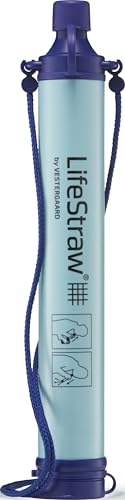

The LifeStraw Personal Water Filter is one of the simplest answers for solo backpackers who want a lightweight, no-fuss way to drink from natural water sources. Its microfiltration membrane is designed to remove bacteria and parasites, while also reducing microplastics and turbidity. For hikers who value simplicity and low weight over large-volume processing, it remains a strong baseline choice.
- ✓ Removes 99.999999% of waterborne bacteria and 99.999% of waterborne parasites
- ✓ Reduces microplastics and improves water clarity
- ✓ Lightweight and easy to carry in a pack or emergency kit
- ✓ Long claimed lifespan of 4,000 liters
- ✓ Lab-verified testing claims add confidence
- ✓ Prime shipping available
- ✗ Best for drinking directly, not for filtering large amounts for a group
- ✗ Does not replace the convenience of a gravity system at camp
- ✗ Still requires access to a water source you can physically scoop or sip from
Waterdrop Gravity Water Filter Straw, Camping Water Filter, 0.1 Micron 30% OFF — Was $45.99 ✓ Prime
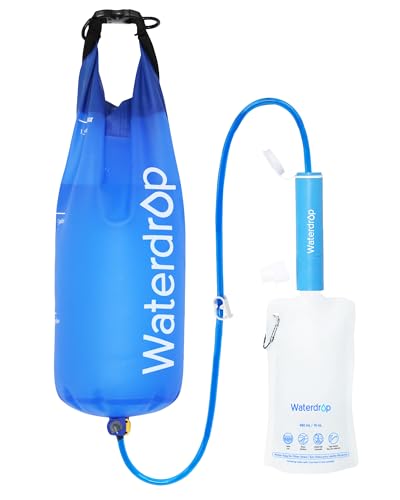

The Waterdrop Gravity Water Filter Straw is a better fit when you want to treat more water at camp without constant pumping or repeated sipping. Its 0.1-micron ultrafiltration membrane and included gravity-fed bag make it especially appealing for overnight use, group settings, or basecamp-style trips. The backwash function is also a practical benefit for hikers who want a reusable system that is easier to maintain.
- ✓ 5-stage filtration with 0.1-micron membrane
- ✓ Includes a 1.5-gallon gravity bag for larger-volume use
- ✓ Claimed flow rate up to 700 ml/min
- ✓ Backwashable design helps restore flow and extend usability
- ✓ Works with water bags and compatible bottles
- ✓ Prime shipping available
- ✗ Bulkier than a personal straw filter
- ✗ More than you need for minimalist solo day hikes
- ✗ Gravity setup takes a little more camp space and setup time
Aquatabs 49mg Water Purification Tablets (100 Pack). Water Filtration System for Hiking, Backpacking, Camping, Emergencies, Survival, and Home-Use. Easy to Use Treatment and Disinfection. ✓ Prime
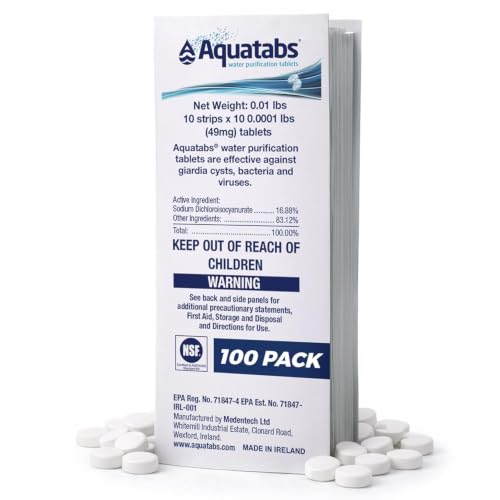
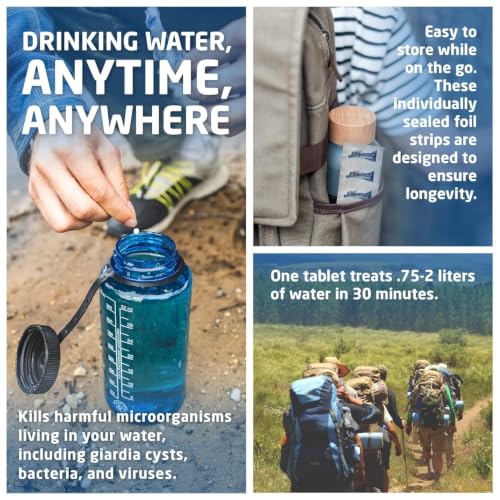
Aquatabs are the lightest and most compact option in this guide, which makes them a smart choice for ultralight backpackers and emergency kits. They are designed to disinfect water rather than physically filter it, so they work best when you need a simple treatment method or a backup to pair with a filter. Because they require wait time, they are less convenient in the moment but excellent for portability and shelf life.
- ✓ Treats water for bacteria, viruses, and cysts
- ✓ Very lightweight and easy to store
- ✓ Long expiration date makes them useful for emergency prep
- ✓ No iodine taste or odor
- ✓ Easy dosage for 0.75–2 liters of water
- ✓ Prime shipping available
- ✗ Requires about 30 minutes of wait time
- ✗ Does not remove sediment or improve water clarity
- ✗ Best used as a treatment method, not a full physical filter replacement in all situations
Common Mistakes to Avoid
One of the biggest mistakes backpackers make is assuming clear water is automatically safe. Water can look clean and still contain harmful organisms, so you should always treat it unless you have a verified safe source. Another common error is choosing a method that does not match the trip, such as bringing a single-person straw filter for a group camp that needs larger volumes.
It is also easy to forget that not all treatment methods are equal. A physical filter may not cover viruses, while tablets do not remove dirt or sediment. If you are traveling in an area where viral contamination is a concern, combining methods can be smarter than relying on one product alone.
Finally, many hikers neglect maintenance and backup planning. Filters can clog, tablets can be forgotten at home, and gravity systems can be awkward without the right bag or bottle. The best backpacking water plan is one you can actually use under field conditions.
Frequently Asked Questions
What is the safest way to filter water backpacking?
The safest approach is usually to use a method that matches your water source and risk level. For many backpackers, that means a physical filter for bacteria and parasites, plus tablets as a backup when conditions are uncertain.
Do I need to filter water if it looks clean?
Yes. Clear water can still contain bacteria, parasites, or viruses, so appearance is not a reliable safety test. Always treat natural water unless you know it has already been made safe.
Are water purification tablets enough for backpacking?
They can be enough in many situations, especially as a lightweight backup or emergency option. However, they do not remove sediment or improve taste, so some hikers prefer to pair them with a filter.
What is better for backpacking: a filter or a gravity system?
It depends on how you travel. A personal filter is usually better for solo hikers who want speed and simplicity, while a gravity system is better for camps and groups that need more water at once.
How long should I wait after using purification tablets?
For the Aquatabs listed here, the product guidance says to wait 30 minutes after adding a tablet to the water. Always follow the label directions for the exact volume and contact time.
Pros
- + Removes or reduces harmful microbes
- + Lightweight options for backpacking
- + Gravity systems help groups and camps
- + Tablets are compact and long-lasting
- + Can pair filter and tablets for backup
Cons
- – Some filters do not remove viruses
- – Tablets require wait time
- – Gravity systems are bulkier
- – Filters need maintenance or backwashing
- – Sediment can still affect some methods
Frequently asked questions
- What is the safest way to filter water backpacking?
- The safest approach is usually to use a method that matches your water source and risk level. For many backpackers, that means a physical filter for bacteria and parasites, plus tablets as a backup when conditions are uncertain.
- Do I need to filter water if it looks clean?
- Yes. Clear water can still contain bacteria, parasites, or viruses, so appearance is not a reliable safety test. Always treat natural water unless you know it has already been made safe.
- Are water purification tablets enough for backpacking?
- They can be enough in many situations, especially as a lightweight backup or emergency option. However, they do not remove sediment or improve taste, so some hikers prefer to pair them with a filter.
- What is better for backpacking: a filter or a gravity system?
- It depends on how you travel. A personal filter is usually better for solo hikers who want speed and simplicity, while a gravity system is better for camps and groups that need more water at once.
- How long should I wait after using purification tablets?
- For the Aquatabs listed here, the product guidance says to wait 30 minutes after adding a tablet to the water. Always follow the label directions for the exact volume and contact time.
Get the Full Outdoor Buyer's Guide
Join our free newsletter — we'll send our latest Outdoor picks, specs and verdicts straight to your inbox.
Free. No spam. Unsubscribe anytime.
Was this review helpful?
Be the first to share your feedback on this review.
Sign in to vote and let us know what you think.
Discussion (0)
No comments yet. Be the first to start the discussion.
Related Reviews
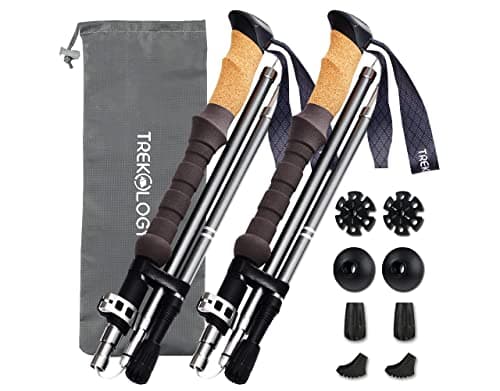
How to Choose the Best Trekking Poles in 2026: Complete Buying Guide
If you’re figuring out how to choose trekking poles , the biggest challenge is separating marketing hype from the features that actually improve balance, reduce fatigue, and hold up on real trails. The wrong pair can feel too heavy, slip under load, or be annoying to pack and adjust when conditions

4 Best Bear Canisters and Food Storage in 2026 — Safer, Lighter Backcountry Food Protection
If you’re trying to choose the best bear canisters and food storage, the hard part is usually balancing safety, weight, and packability without overspending. This guide narrows the field to four researched picks that cover certified hard-sided storage and odor-proof alternatives for different trip s
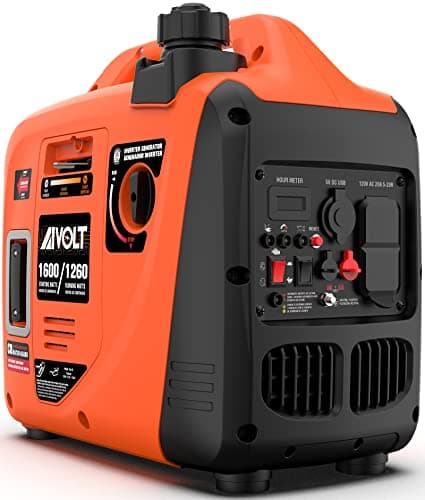
7 Best Camping Generators Quiet in 2026 — Ultra-Low Noise Picks for Campgrounds and RV Trips
If you’re searching for the best camping generators quiet , you probably want power without the roar that ruins a peaceful campsite. The challenge is finding a generator that stays quiet, runs sensitive electronics safely, and still has enough output for lights, phones, a cooler, or a small RV setup