

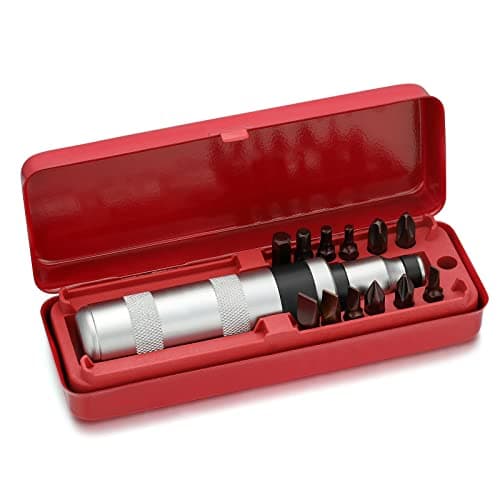
What is How to Use an Impact Driver? A Complete 2026 Guide
If you’re trying to figure out how to use an impact driver, you probably already know the frustration: stripped screws, rusted bolts, and fasteners that refuse to move. An impact driver can make those jobs easier by delivering sudden rotational force when a normal screwdriver or drill starts to slip. In this guide, you’ll learn what it is, how it works, when to use it, and what to look for before buying one.
Related Reviews
How It Works
An impact driver works by combining turning force with quick hammer-like bursts of torque. Instead of applying smooth, constant pressure like a regular screwdriver, it stores energy and releases it in short impacts that help break loose stuck fasteners.
That pulsing action is especially helpful when screws or bolts are corroded, overtightened, or frozen in place. The repeated impacts reduce the chance of cam-out, which is when the bit slips out of the screw head and strips it.
There are two common styles people mean when searching for how to use an impact driver: a manual impact screwdriver and a powered impact driver. A manual version is struck with a hammer to create the turning force, while a powered version uses a motor and internal impact mechanism to do the work for you.
Key Benefits & Use Cases
An impact driver is most useful when ordinary hand tools struggle. It gives you more control over stubborn fasteners while reducing the effort needed to break them loose.
Key Benefits
- Helps loosen rusted, stuck, or over-tightened screws and bolts
- Reduces stripping by keeping better bit engagement under load
- Works well in tight spaces where leverage is limited
- Speeds up repetitive fastening and removal tasks
- Useful for both home repairs and mechanical work
Common Use Cases
- Automotive repairs
- Motorcycle maintenance
- Removing stubborn hardware on doors or locks
- General household machine repair
- Bike repair and small equipment work
For many users, the biggest value is simple: an impact driver can save time and prevent damage when a screw head is already on the edge of stripping.
What to Look For When Buying
If you’re buying an impact driver, focus on these five criteria so you get the right tool for the job.
1. Drive Size and Bit Compatibility
Check whether the tool uses a 1/4-inch or 3/8-inch receiver. This determines what bits and adapters it can accept, and it affects how versatile the tool will be in your kit.
2. Build Material
Look for hardened steel components and impact-grade bits. Stronger materials hold up better under repeated force and are less likely to deform.
3. Grip and Control
A non-slip knurled grip or similarly textured handle helps you keep control when applying force. This matters a lot when you’re working on rusted or stubborn fasteners.
4. Bit Selection
Consider whether the set includes Phillips, slotted, hex, and Torx bits. A broader bit selection makes the tool more useful across automotive, mechanical, and household tasks.
5. Intended Use
Match the tool to your projects. If you mainly work on motorcycles, bikes, or frozen bolts, choose a model designed for stubborn fasteners. If you want a more general-purpose option, prioritize compatibility and included accessories.
Top Recommended Products
JIXINLAR 1/2" Hand Manual Reversible Impact Driver Set Extractor-12 PCS Impact Screwdriver S2 Steel Much More Durable Disengage Rusted Fasteners (Short Impact Screwdriver) ✓ Prime $20.99
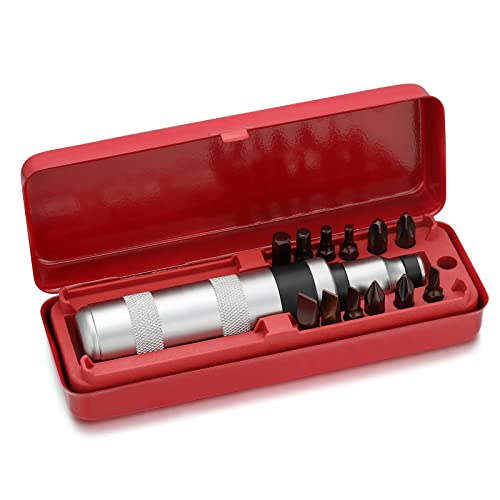


This manual impact driver set is built for loosening corroded and stubborn screw assemblies. Its 3/8 receiver makes it flexible with different bit tips and hex nut drivers, while the S2 high alloy steel bits are designed for exact fit and durability.
- ✓ 3/8 receiver supports a wide range of bit tips and hex nut drivers
- ✓ Built for loosening rusted, corroded, and stubborn fasteners
- ✓ S2 high alloy steel impact-grade bits with precision-milled tips
- ✓ Chrome-plated finish and non-slip knurled grip
- ✓ Includes bits for slotted, Phillips, and hex applications
- ✗ Manual operation requires a hammer and more physical effort
- ✗ Best suited to removal tasks rather than everyday driving
- ✗ Shorter format may not be ideal for all deep-access jobs
AKM Hand Manual Reversible Impact Driver Set Extractor Impact Screwdriver S2 Steel Much More Durable Disengage Rusted Fasteners or Frozen Bolts (1/4" Driver) ✓ Prime $22.00
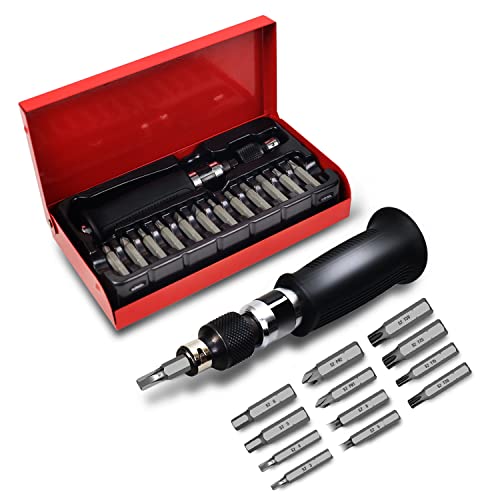


This AKM set is a practical choice if you want a compact 1/4-inch receiver and a broader accessory package. It includes Phillips, slotted, hex, and Torx bits, making it a strong option for bike repair, motorcycle work, and general stubborn-fastener removal.
- ✓ Convenient 1/4 receiver for common bit and nut driver compatibility
- ✓ Designed for rusted screws, frozen bolts, and tight fasteners
- ✓ Includes Phillips, slotted, hex, and Torx bits
- ✓ S2 high alloy steel bits with precision-milled tips
- ✓ Chrome-plated finish and non-slip knurled grip
- ✗ Manual tool may be slower than a powered impact driver for repeated tasks
- ✗ Best for removal and break-loose work, not general drilling
- ✗ 1/4-inch format may be less versatile for some larger accessories
Common Mistakes to Avoid
- Using the wrong bit size: A loose bit increases the chance of stripping the screw head.
- Not applying firm pressure: You need steady inward force so the bit stays seated while the impact action works.
- Using a damaged bit: Worn or rounded bits slip more easily and can ruin fasteners.
- Expecting it to replace every tool: An impact driver is great for stubborn fasteners, but it is not a substitute for a drill in every situation.
- Hitting too lightly or too hard with a manual model: With manual impact drivers, you need enough force to trigger the mechanism without losing control.
If you’re learning how to use an impact driver, the main goal is to keep the bit engaged and let the tool do the work. Rushing the process usually causes more damage than the stuck fastener itself.
Frequently Asked Questions
1. What is the difference between an impact driver and a regular screwdriver?
A regular screwdriver applies steady turning force, while an impact driver adds sudden bursts of torque to help loosen stuck or tight fasteners.
2. Can an impact driver remove rusted screws?
Yes. That is one of its best uses, especially when the screw is corroded, frozen, or too tight for a standard screwdriver.
3. Do I need special bits for an impact driver?
Impact-grade bits are recommended because they are designed to handle repeated force and are less likely to wear out or break.
4. Is a manual impact driver hard to use?
It is simple to use, but you do need to hold it firmly and strike it with a hammer to activate the turning action.
5. What should I buy if I’m learning how to use an impact driver?
Choose a set with strong steel bits, a comfortable non-slip grip, and the drive size that matches your most common fasteners.
Pros
- + 3/8 receiver supports a wide range of bit tips and hex nut drivers
- + Built for loosening rusted, corroded, and stubborn fasteners
- + S2 high alloy steel impact-grade bits with precision-milled tips
- + Chrome-plated finish and non-slip knurled grip
- + Includes bits for slotted, Phillips, and hex applications
- + Convenient 1/4 receiver for common bit and nut driver compatibility
- + Designed for rusted screws, frozen bolts, and tight fasteners
- + Includes Phillips, slotted, hex, and Torx bits
Cons
- – Manual operation requires a hammer and more physical effort
- – Best suited to removal tasks rather than everyday driving
- – Shorter format may not be ideal for all deep-access jobs
- – Manual tool may be slower than a powered impact driver for repeated tasks
- – Best for removal and break-loose work, not general drilling
- – 1/4-inch format may be less versatile for some larger accessories
Frequently asked questions
- 1. What is the difference between an impact driver and a regular screwdriver?
- A regular screwdriver applies steady turning force, while an impact driver adds sudden bursts of torque to help loosen stuck or tight fasteners. 2. Can an impact driver remove rusted screws?
- 2. Can an impact driver remove rusted screws?
- Yes. That is one of its best uses, especially when the screw is corroded, frozen, or too tight for a standard screwdriver. 3. Do I need special bits for an impact driver?
- 3. Do I need special bits for an impact driver?
- Impact-grade bits are recommended because they are designed to handle repeated force and are less likely to wear out or break. 4. Is a manual impact driver hard to use?
- 4. Is a manual impact driver hard to use?
- It is simple to use, but you do need to hold it firmly and strike it with a hammer to activate the turning action. 5. What should I buy if I’m learning how to use an impact driver?
- 5. What should I buy if I’m learning how to use an impact driver?
- Choose a set with strong steel bits, a comfortable non-slip grip, and the drive size that matches your most common fasteners.
Get the Full Home Buyer's Guide
Join our free newsletter — we'll send our latest Home picks, specs and verdicts straight to your inbox.
Free. No spam. Unsubscribe anytime.
Was this review helpful?
Be the first to share your feedback on this review.
Sign in to vote and let us know what you think.
Discussion (0)
No comments yet. Be the first to start the discussion.
Related Reviews
What is Brushless Motor Explained? A Complete 2026 Guide
If you keep seeing “brushless motor” on drills, blowers, and power tools but still aren’t sure what it actually means, you’re not alone. The short version is that a brushless motor uses electronic control instead of physical brushes to spin more efficiently, run cooler, and often last longer. In thi
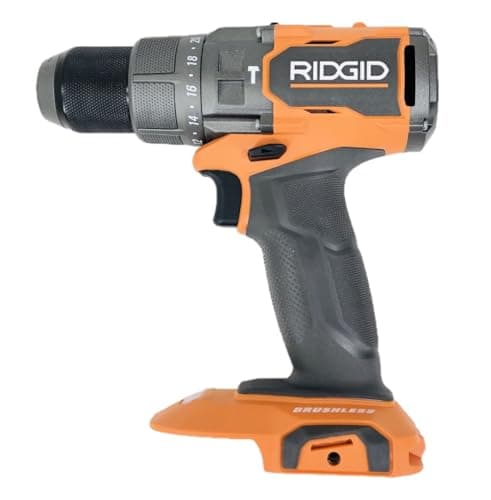
Ridgid Octane Drill Durability Test Review (2026): Specs, Pros & Cons, and Who It's For
If you’re searching for a Ridgid Octane drill durability test , you probably want to know one thing: will this drill hold up when the work gets repetitive, dusty, and demanding? The short answer from researched specs and owner feedback is yes, especially for the price, but it’s not the lightest or m
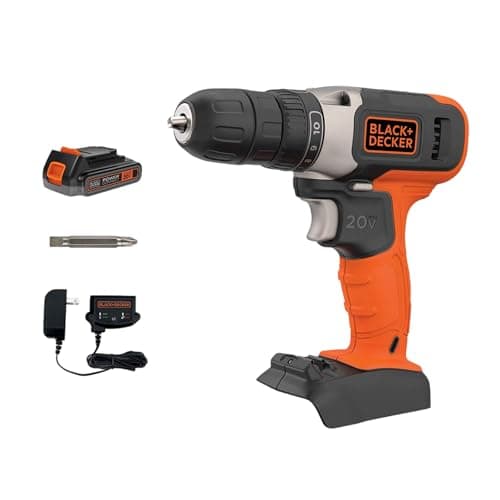
What is 12V vs 18V vs 20V cordless tools? A Complete 2026 Guide
If you’re trying to choose between 12V, 18V, and 20V cordless tools, the biggest challenge is knowing whether “more volts” really means better performance. The short answer: voltage affects power potential, but battery design, motor type, and tool quality matter just as much. This guide breaks down