

What is How to Introduce a Robot Litter Box? A Complete 2026 Guide
If you’re wondering how to introduce a robot litter box, you’re probably dealing with a cat that ignores new things, a home that still smells like the old litter setup, or a fear that the machine will scare your pet. The good news is that most cats can adapt to a robot litter box with the right introduction process, a little patience, and the right model. In this guide, you’ll learn exactly what a robot litter box is, how it works, how to transition your cat safely, and what to buy if you want the easiest possible setup.
Related Reviews
A robot litter box is an automatic cat toilet that sifts or removes waste after your cat leaves, so you scoop less often and keep odors under control. Instead of replacing your cat’s routine overnight, the best approach is to introduce the new box gradually and make it feel familiar. Done correctly, the transition can reduce stress for both you and your cat.
How It Works
Robot litter boxes use sensors, timers, and a cleaning mechanism to separate waste from clean litter after your cat exits. Most models wait until the cat is safely out of the unit, then start a cleaning cycle that either rotates, sifts, or rakes clumps into a waste drawer or bin. That means the litter stays cleaner between uses, and the mess is contained more efficiently than in a standard open pan.
For a cat owner, the technology is designed to do three things at once: detect use, clean automatically, and reduce odor. Some models also connect to an app so you can monitor waste levels, track usage, or get alerts when the drawer is full. In practical terms, the machine is doing the scooping for you while helping you keep an eye on your cat’s bathroom habits.
Why the introduction process matters
Even a great robot litter box can fail if your cat thinks it is strange, noisy, or unsafe. Cats are creatures of habit, so introducing the unit gradually helps them accept the new shape, sound, and movement. If you rush the transition, your cat may avoid it and keep using the old box, or worse, start having accidents elsewhere.
Key Benefits & Use Cases
A robot litter box is not just about convenience. It can be especially helpful for busy households, multi-cat homes, and owners who want to reduce odors without scooping multiple times a day. If you are trying to figure out how to introduce a robot litter box, it helps to know why so many people make the switch in the first place.
Main benefits
- Less daily scooping and less time spent on litter maintenance
- Better odor control because waste is removed sooner
- Cleaner litter for cats that are picky about box hygiene
- App tracking on some models for usage and health monitoring
- Useful for multi-cat homes where one box gets dirty quickly
Best use cases
- Busy pet parents who want a lower-maintenance routine
- Homes with more than one cat
- Owners sensitive to litter odor
- People who want more insight into litter box activity
- Households transitioning from manual scooping to automation
What to Look For When Buying
If you want the transition to go smoothly, the right product matters. A cat that is nervous about change will do better with a stable, quiet, easy-to-clean unit than with one that is overly complicated or poorly sized. Here are five buying criteria that matter most when choosing a robot litter box.
1. Safety sensors and pause features
Look for a model that stops or pauses immediately when a cat enters or approaches during a cycle. Safety protection is one of the most important features because it helps nervous cats feel secure and prevents accidents.
2. Noise level and cycle behavior
Some cats are startled by sudden movement or motor noise. A calmer cleaning cycle can make the introduction easier, especially if your cat is cautious or easily spooked.
3. Litter compatibility
Check whether the unit works with your preferred clumping litter type. If you already know your cat likes a specific litter texture, keeping that the same can make the transition much smoother.
4. Waste capacity and odor control
A larger waste drawer or bin means fewer emptying sessions, while sealed waste storage and odor-control accessories help keep the room fresher. This is especially important if you are introducing the box in a small space.
5. App tracking and maintenance
If you want alerts, usage logs, or health tracking, choose a model with app support. For some owners, the ability to monitor litter levels and bathroom habits makes the upgrade feel much more worthwhile.
Top Recommended Products
Below are two strong options if you are researching how to introduce a robot litter box and want a model that balances convenience, safety, and easier maintenance.
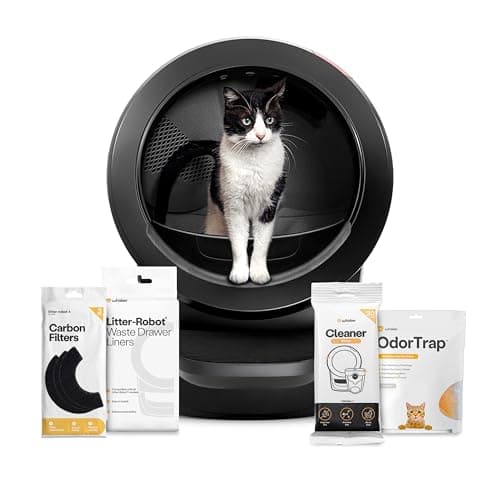
Whisker Litter-Robot 4 Supply Bundle, Black 4.7★ (reviews not provided) ✓ Prime $749.00
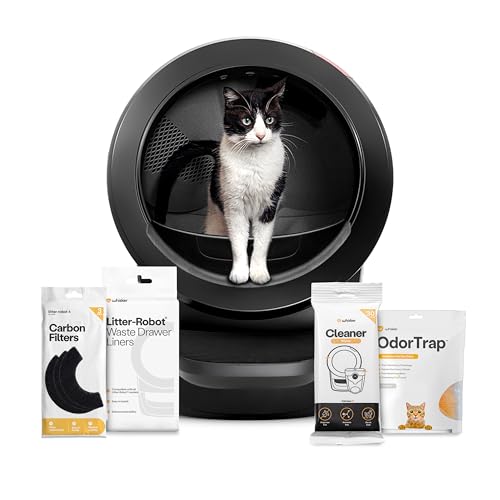


The Whisker Litter-Robot 4 Supply Bundle, Black is the premium option in this list, and it is built for cat owners who want a polished automatic litter box with strong odor control and app monitoring. Its patented sifting process automatically separates waste from clean litter, and the included supply bundle adds liners, wipes, carbon filters, and odor refills to simplify early ownership. It is also suitable for up to four cats, making it a strong choice for multi-cat homes.
Best for: owners who want a high-end self-cleaning litter box with app control and a complete starter bundle.
Why it helps with introductions: the app, odor reduction, and clean cycle automation can reduce the amount of manual intervention needed during the transition.
- ✓ Automatic self-cleaning with patented sifting
- ✓ Real-time monitoring through the Whisker app
- ✓ Includes liners, wipes, carbon filters, and OdorTrap refills
- ✓ Reduces odors and tracking compared to standard boxes
- ✓ Suitable for up to 4 cats
- ✗ Higher price than entry-level alternatives
- ✗ Best performance depends on a firm, level surface
- ✗ Requires cats to weigh at least 3 lbs for Automatic Mode
FEELNEEDY Automatic Litter Box 4.5★ (reviews not provided) ✓ Prime $299.99
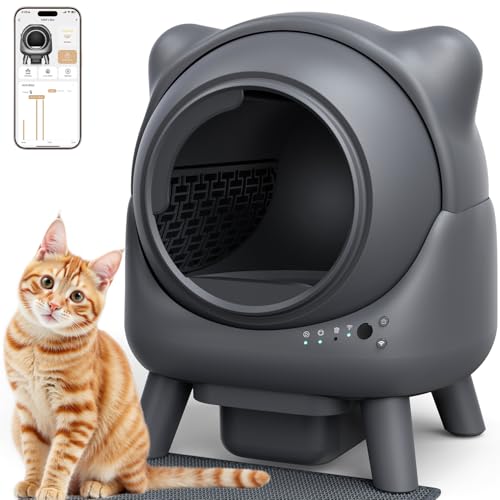
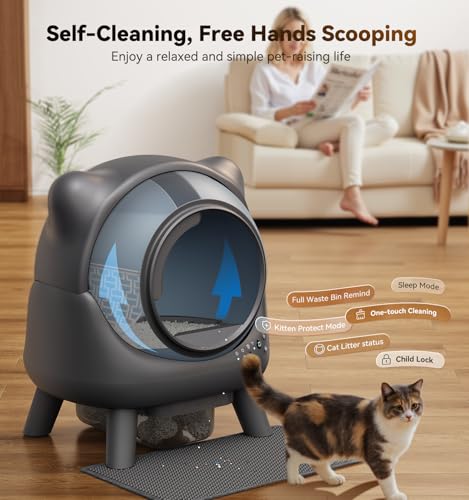

The FEELNEEDY Automatic Litter Box is a more affordable self-cleaning option with app monitoring, safety sensors, and a large waste capacity. It starts cleaning within two minutes after your cat exits, which helps keep the box fresh without requiring daily scooping. The pre-assembled design also makes setup easier, which can be helpful when introducing a robot litter box for the first time.
Best for: budget-conscious buyers who still want app control and safety features.
Why it helps with introductions: the easy setup and automatic cycle can reduce friction when transitioning from a standard litter box.
- ✓ Self-cleaning cycle starts within 2 minutes after use
- ✓ App control with real-time tracking and cleaning
- ✓ Safety sensors pause cleaning when a cat enters
- ✓ Supports multiple litter types
- ✓ Pre-assembled for quick setup
- ✗ Smaller brand recognition than premium competitors
- ✗ App and WiFi features may require a stable 2.4G connection
- ✗ Not as feature-rich as higher-end models
Common Mistakes to Avoid
Introducing a robot litter box is usually straightforward, but a few common mistakes can make cats reject it. If you want a smooth transition, avoid these issues from the start.
1. Removing the old litter box too soon
Your cat should always have access to a familiar backup box during the transition. If you take away the old one too early, you may create stress and accidents.
2. Turning on automation immediately
Some cats need time to inspect the box before it starts moving on its own. Let your cat get used to the new object first, then introduce cleaning cycles gradually if the model allows it.
3. Changing litter and box location at the same time
Too many changes at once can overwhelm a cautious cat. Keep the litter type and placement consistent while the cat is learning the new box.
4. Ignoring safety and surface placement
Robot litter boxes often work best on a firm, level surface. Uneven floors or carpet can affect performance, and cats may feel less confident if the unit wobbles.
5. Expecting instant acceptance
Some cats adapt quickly, while others need several days or even weeks. Patience is part of the process, and forcing the issue usually backfires.
Frequently Asked Questions
How do I introduce a robot litter box to my cat?
Start by placing the new box near the old one and letting your cat explore it without pressure. Keep the old litter box available, use familiar litter, and allow your cat to build confidence before relying on the automatic cycle.
How long does it take for a cat to get used to a robot litter box?
Some cats adapt in a few days, while others need one to three weeks. The timeline depends on your cat’s temperament, how similar the new box feels, and whether you make the transition gradually.
Should I keep the old litter box during the transition?
Yes, keeping the old box nearby is usually the safest approach. It gives your cat a fallback option and reduces the risk of accidents while they learn the new setup.
What if my cat is scared of the robot litter box?
Turn the machine off at first if possible and let your cat investigate it as a stationary object. You can then introduce sounds and movement slowly, rewarding calm behavior with treats or praise.
Do robot litter boxes work for multiple cats?
Yes, many do, but the right model should have enough capacity and a strong enough cleaning system for several cats. If you have multiple cats, choose a unit designed for that use and monitor how each cat responds during the introduction.
Pros
- + Automatic self-cleaning with patented sifting
- + Real-time monitoring through the Whisker app
- + Includes liners, wipes, carbon filters, and OdorTrap refills
- + Reduces odors and tracking compared to standard boxes
- + Suitable for up to 4 cats
- + Self-cleaning cycle starts within 2 minutes after use
- + App control with real-time tracking and cleaning
- + Safety sensors pause cleaning when a cat enters
Cons
- – Higher price than entry-level alternatives
- – Best performance depends on a firm, level surface
- – Requires cats to weigh at least 3 lbs for Automatic Mode
- – Smaller brand recognition than premium competitors
- – App and WiFi features may require a stable 2.4G connection
- – Not as feature-rich as higher-end models
Frequently asked questions
- How do I introduce a robot litter box to my cat?
- Start by placing the new box near the old one and letting your cat explore it without pressure. Keep the old litter box available, use familiar litter, and allow your cat to build confidence before relying on the automatic cycle. How long does it take for a cat to get used to a robot litter box?
- How long does it take for a cat to get used to a robot litter box?
- Some cats adapt in a few days, while others need one to three weeks. The timeline depends on your cat’s temperament, how similar the new box feels, and whether you make the transition gradually. Should I keep the old litter box during the transition?
- Should I keep the old litter box during the transition?
- Yes, keeping the old box nearby is usually the safest approach. It gives your cat a fallback option and reduces the risk of accidents while they learn the new setup. What if my cat is scared of the robot litter box?
- What if my cat is scared of the robot litter box?
- Turn the machine off at first if possible and let your cat investigate it as a stationary object. You can then introduce sounds and movement slowly, rewarding calm behavior with treats or praise. Do robot litter boxes work for multiple cats?
- Do robot litter boxes work for multiple cats?
- Yes, many do, but the right model should have enough capacity and a strong enough cleaning system for several cats. If you have multiple cats, choose a unit designed for that use and monitor how each cat responds during the introduction.
Get the Full Home Buyer's Guide
Join our free newsletter — we'll send our latest Home picks, specs and verdicts straight to your inbox.
Free. No spam. Unsubscribe anytime.
Was this review helpful?
Be the first to share your feedback on this review.
Sign in to vote and let us know what you think.
Discussion (0)
No comments yet. Be the first to start the discussion.
Related Reviews
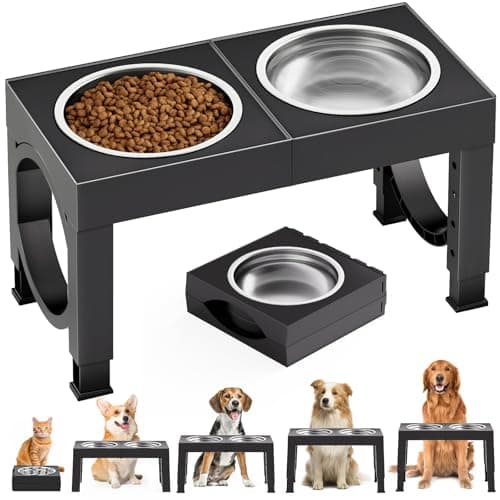
8 Best Elevated Dog Bowls in 2026 — Better Posture, Less Mess, and Easier Mealtimes
If your dog gulps food too fast, strains to reach the bowl, or leaves a mess around the feeding area, an elevated feeder can make a noticeable difference. The best elevated dog bowls combine the right height, stable construction, easy cleaning, and bowl sizes that actually fit your pet. Below, we’ve
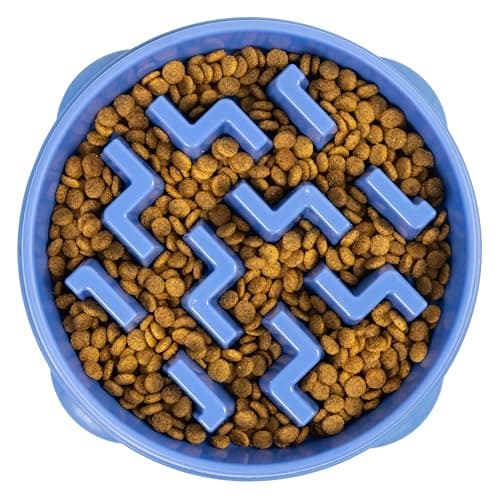
8 Best Slow Feeder Dog Bowls in 2026 — Safer Mealtimes for Fast Eaters
If your dog gulps food in seconds, you’re not just dealing with a messy bowl — you’re also trying to reduce the risk of choking, bloat, and post-meal discomfort. The best slow feeder dog bowls help stretch out mealtime, add mental stimulation, and make portions easier to manage for different breeds
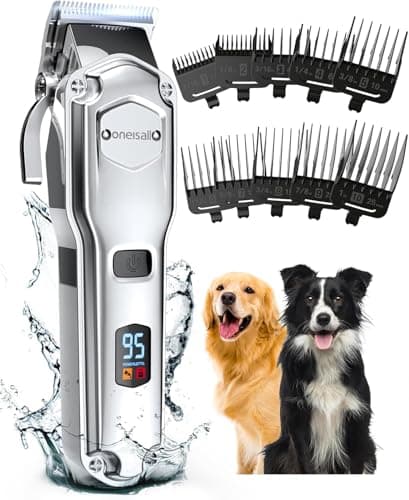
8 Best Dog Clippers in 2026 — Quiet, Powerful Picks for Easier Home Grooming
If you’re searching for the best dog clippers 2026 , you probably want one thing: a clipper that won’t snag, scare, or stall halfway through a trim. The right model depends on your dog’s coat type, your comfort level, and whether you want cordless convenience or pro-level cutting power. This researc