
Quick Summary
The Philips Hue Starter Kit is the easiest way to get into one of the widest smart-lighting ecosystems. Kits commonly include two to four A19 bulbs (white & color ambiance options exist) plus the Hue Bridge, enabling full app scenes, routines, remote access, and integrations with voice assistants
Related Reviews
A modern Hue A19 color bulb pushes up to roughly 810–1,100 lumens depending on the variant, covers a broad color-temperature range (warm to cool whites), and replaces a 60–75 W incandescent equivalent while drawing about 8–10 W. The official kits and configurable bundles are priced from budget-ish single-bulb packs up to premium starter-kit bundles; • Baseline single-bulb (White Ambiance): budget to pricier options depending on model and lumen class • 2-pack and 4-pack starter kits including the Bridge: mid-range to pricier options • If you see a white-and-color starter kit (2–4 bulbs + Bridge) at a more affordable level, that’s a strong buy if you want the Hue ecosystem • If you’re only testing smart bulbs in a single room, consider a single bulb or a 2-pack to reduce per-bulb cost • Per-bulb cost (full price): varies from budget to pricier depending on model and lumen output; replacing a set of 6 sockets with color bulbs is often a significant upfront job • Starter kit at a good value: buy • Individual color bulb at a more affordable price: buy for testing/expansion • If prices look stable on the pricier side for a 4-bulb kit with Bridge, consider waiting unless you need an immediate upgrade
Buy on Amazon: Philips Hue Starter Kit. Click here
Alternative on Amazon: Ring Battery Doorbell Pro. Click here
Alternative on Amazon: Google Nest Hub Max. Click here

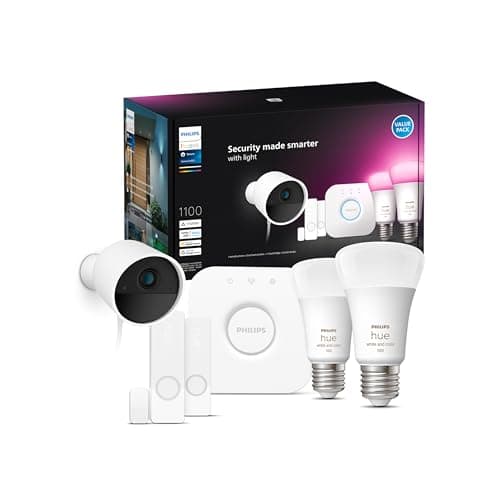
Photo 1: Philips Hue Secure Starter Kit with Bridge, Wired Security Camera, (2) Secure Contact Sensor, (2) 75W A19 Bulb, White & Color Ambiance, Works Security Center in Hue App product image
Price Range and Deal Timing
Street pricing for Hue starter kits varies with bundle size and whether the Bridge is included. Typical retail patterns you should expect in the U.S. market today
Deal-watch guidance
• Watch holiday windows and retailer flash sales for the biggest discounts; Hue historically discounts heavily around major sale events and occasional off-cycle promotions
Technical Snapshot (Practical Numbers
Core Hardware and Feature Profile
• Bulb types: White, White Ambiance, White & Color Ambiance (A19, BR30, GU10, MR16, and specialty shapes
• Brightness: roughly 810 lm (60 W-equivalent) up to about 1,600 lm on higher-output variants; common A19 color types typically sit at ~810–1,100 lm
• Power draw: ~8–10 W for A19 color/ambiance bulbs (varies by lumen tier
• Color temperature: broad ranges, typically from ~2,000 K (very warm) to ~6,500 K (daylight) on Ambiance/Color models
• Expected life: manufacturer-rated lifetimes commonly listed around 20,000–25,000 hours
Performance and Daily-Use Metrics
• Response time: local Bridge + Zigbee setups typically give sub-second on/off and scene changes; Bluetooth-only control is slightly slower and limited in scale
• Dimming floor: true high-quality dimming down to around 1% on Ambiance/Color models for smooth fades
• Bridge capacity: traditional Hue Bridge supports ~50 lights/accessories; newer "Pro" class Bridges increase device capacity substantially (up to roughly 150 lights and expanded accessory support on the newer hardware
Value and Ownership Math
• Electricity savings: at ~10 W draw for a color bulb vs 60–75 W incandescent, expect ~85% lower wattage consumption; yearly savings depend on hours used but typically recover only a fraction of bulb cost over lifetime—Hue’s value is feature and ecosystem access, not pure energy ROI
• Support window: the Hue product policy promises major platform update coverage for at least 1 year and continued security/compatibility patches for several additional years (practical guidance: plan on 3–5 years of active software support for Bridge and lights, though specifics vary by product generation
Head-to-Head Overview
If you’re weighing the Hue Starter Kit against commodity smart bulbs or integrated smart displays and cameras, consider these practical trade-offs
• Hue Starter Kit (Bridge + bulbs) = deepest ecosystem features (routines, scenes, accessory pairing, Hue Sync, advanced automations). It’s the most expandable route but is pricier up-front
• Lower-cost bulbs (Wi‑Fi or Bluetooth-only brands) = cheaper per-bulb, easier single-room installs, but weaker cross-room automations and ecosystem integrations. These are great for budget or a la carte installs
• Smart displays/cameras with built-in hubs (e.g. voice assistants) give convenience but usually can’t match Hue’s lighting feature set (color fidelity, entertainment sync, professional-grade dimming, and accessory support
If you want a future-ready network: newer Hue hardware and bridge options are being positioned to play nicely with the evolving Matter landscape and to act as richer bridges between Zigbee devices and the broader ecosystem. That said, the company has kept Zigbee as the main in-house wireless fabric to preserve reliability and battery performance for their existing devices

Photo 2: Philips Hue Secure Starter Kit with Bridge, Wired Security Camera, (2) Secure Contact Sensor, (2) 75W A19 Bulb, White & Color Ambiance, Works Security Center in Hue App product image
Who Should Buy This
• Homeowners who want a scalable, reliable smart-light ecosystem with advanced automations and entertainment sync
• People replacing many existing bulbs who want unified control, consistent color rendering, and professional dimming
• Enthusiasts who prioritize long-term device support and compatibility with multiple voice assistants and third-party home hubs
Who should skip or wait
• Casual tinkerers who only need one or two bulbs and want the cheapest option. A Wi‑Fi or Bluetooth single-bulb alternative will be less expensive
• Buyers who demand the absolute lowest per-bulb price—Hue remains a premium brand and rarely competes with budget providers on price alone
Comparison Snapshot
Quick practical contrasts to keep decisions simple
• Ecosystem size: Hue wins for accessories (switches, sensors, light strips) and integration depth
• Protocol flexibility: Hue currently uses Zigbee and Bluetooth heavily; newer lines and bridge updates aim to smooth Matter compatibility, but Zigbee remains central for best features
• Expandability: If you plan to grow beyond a few bulbs (rooms, outdoor, sync boxes), Hue’s Bridge-centric approach scales cleaner
• Upfront vs long-term cost: Hue is more expensive initially but typically retains consistent performance and receives multi-year support, which reduces the pain of obsolescence
Buying Advice and Value Check
Before you click Buy
• Inventory first: count sockets/fixtures and decide which rooms truly benefit from color bulbs. Consider color in living/media rooms and White Ambiance in bedrooms and kitchens
• Start with a 2-bulb starter kit + Bridge if you want the ecosystem on the cheap; buy additional bulbs individually when on sale
• If you already have many Zigbee devices on a different coordinator, weigh whether consolidating under Hue is worth the cost; otherwise, run a test cluster on the Bridge and expand if the reliability meets expectations
• Warranty & support: factor in the manufacturer's stated support windows (aim on a practical 3–5 year software/security window for bulbs and Bridge
Smart buy triggers

Photo 3: Philips Hue Secure Starter Kit with Bridge, Wired Security Camera, (2) Secure Contact Sensor, (2) 75W A19 Bulb, White & Color Ambiance, Works Security Center in Hue App product image
Final Verdict
The Philips Hue Starter Kit remains the premium, low-friction way to enter a full smart-light ecosystem. You pay a premium for consistency, dense features, and accessory breadth, but you get rock-solid responsiveness, fine dimming behavior, strong color fidelity, and a clear upgrade path into entertainment and outdoor lighting
If long-term ecosystem depth, multi-room automations, and compatibility with voice assistants and third-party smart-home platforms matter to you, Hue is a defensible investment—especially when picked up on sale. If you only want occasional color or inexpensive one-off bulbs, less expensive alternatives will do the job at a lower cost
FAQ
Q: Do Hue bulbs work without the Bridge? A: Yes — basic on/off and color controls are available, but scale, advanced scenes, remote access, multi-room automation, and most accessories require the Hue Bridge for full functionality
Q: How long will Philips Hue continue to receive software updates and security fixes? A: Manufacturer guidance sets a practical minimum: major platform updates for at least one year and continued security/compatibility patches for a minimum of about three years; many lighting products have longer active support windows. Plan for roughly a 3–5 year practical support window, but the company may extend updates at its discretion
Q: Are Hue bulbs compatible with Matter and Thread? A: The vendor has been expanding Matter-related compatibility across its product families and introduced new bridge and bulb lines designed to work with Matter ecosystems. Implementation details vary by model—some latest products are designed to act as Matter bridges or support Matter interoperability—so check the specific SKU notes if Matter-over-Thread native operation is a hard requirement
Q: Is it worth buying the Hue Bridge Pro if I have a midsize home? A: If you plan on running 20–100 smart lights and many accessories, the newer higher-capacity Bridge models (marketed for pro or heavy-use setups) are worth the investment because they increase device capacity and performance. For very small installs (under ~20 lights), the standard Bridge is usually sufficient
Q: Best first-room to upgrade? A: Living room or media room gives the biggest immediate payoff—color scenes, movie-sync lighting, and mood routines transform shared spaces faster than bedroom swaps. For practical lighting, pair White Ambiance bulbs in kitchen and bathroom for better task lighting
Where to Check Pricing
Check latest Amazon listing for Philips Hue Starter Kit. Click here
Get the Full Home Buyer's Guide
Join our free newsletter — we'll send our latest Home picks, specs and verdicts straight to your inbox.
Free. No spam. Unsubscribe anytime.
Was this review helpful?
Be the first to share your feedback on this review.
Sign in to vote and let us know what you think.
Discussion (0)
No comments yet. Be the first to start the discussion.
Related Reviews

8 Best French Door Refrigerators in 2026 — Smarter Storage, Easier Access, and Better Ice
If you’re shopping for the best french door refrigerators, you probably want more than just a stylish front panel—you need smart storage, reliable cooling, and a layout that actually makes daily life easier. This roundup focuses on models that stand out for capacity, organization, ice and water conv

8 Best Refrigerators in 2026 — Smarter Storage, Better Cooling, and Easier Everyday Use
If you’re searching for the best refrigerators 2026 , you probably want more than just cold food—you want the right size, layout, and features for your kitchen. This roundup focuses on refrigerators with strong storage design, practical cooling features, and owner-friendly details like spill-proof s

8 Best Dishwashers in 2026 — Quiet, Space-Saving Picks for Cleaner Dishes
If you’re trying to find the best dishwashers 2026 has to offer, the hard part isn’t finding options — it’s finding the right one for your kitchen size, noise tolerance, and load capacity. This roundup focuses on models with the most useful real-world features for shoppers comparing built-in, compac