

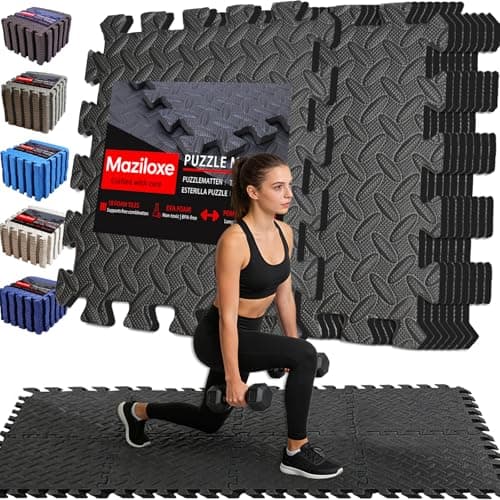
Who this is for: Best for home gym buyers who need safer, quieter, easy-to-install floor protection for mixed workout spaces.
Check PriceWhat is a Home Gym Flooring Guide? A Complete 2026 Guide
If you’re building a workout space at home, the wrong flooring can lead to slipping, noise, damaged subfloors, and equipment that feels less stable than it should. A good home gym flooring guide helps you choose the right material, thickness, and layout for your workouts and room type. This explainer breaks down how gym flooring works, what to look for, and which products are worth considering based on published specs, owner feedback, and product comparisons.
Related Reviews
How It Works
Home gym flooring works by creating a protective layer between your equipment, your body, and the floor underneath. Most options use foam, rubber, or a layered composite to absorb impact, reduce vibration, improve traction, and prevent scratches or dents on hardwood, tile, or concrete.
Interlocking tiles are especially popular because they connect like puzzle pieces, which makes them easy to install and replace. Thicker flooring generally provides more cushioning and sound dampening, while denser materials usually handle heavier equipment better and feel more stable underfoot.
In simple terms, the flooring acts as both a shock absorber and a grip surface. That means it can make bodyweight workouts more comfortable, protect your subfloor from weights or machines, and reduce the “clunk” and bounce that often come with training on bare floors.
Key Benefits & Use Cases
1. Floor protection
Gym flooring helps shield surfaces from dropped dumbbells, treadmill vibration, and repeated pressure from benches or racks. That matters most in apartments, garages, basements, and rooms with finished flooring.
2. Better traction and safety
Many home gym mats use textured or anti-slip surfaces that help keep your footing steady during squats, stretching, yoga, and light cardio. This can be especially useful if you sweat a lot or train in a multi-use room.
3. Noise and vibration reduction
Foam and thicker mat systems can soften impact and quiet down routine movement. That makes them useful for shared homes, upstairs rooms, and garage gyms where sound carries.
4. Comfort for floor exercises
For stretching, Pilates, core work, and bodyweight routines, a cushioned surface can make exercises more comfortable on knees, elbows, and wrists.
5. Flexible room use
Many buyers use home gym flooring for more than workouts. It can also work in playrooms, basements, garages, craft rooms, or as temporary coverage for events and projects.
What to Look For When Buying
1. Thickness
Thickness is one of the biggest factors in comfort and protection. Thinner foam is usually fine for stretching or light exercise, while thicker tiles are better for heavier training and added cushioning.
2. Material
EVA foam is common for lightweight, budget-friendly setups. It feels softer and is easy to install, while denser materials tend to provide better support and durability for equipment-heavy spaces.
3. Slip resistance
Look for textured or non-skid surfaces so the flooring stays in place during movement. This is especially important for dynamic workouts, kids’ play areas, or rooms with smooth subfloors.
4. Water resistance and cleaning
Spills, sweat, and dust are part of real-world use. Waterproof or easy-wipe flooring is simpler to maintain and usually better for garages, basements, and multipurpose rooms.
5. Coverage and installation
Check the total square footage in the package and whether the tiles include edge pieces. Tool-free interlocking designs are usually the easiest for beginners to set up and adjust later.
Top Recommended Products
Maziloxe Gym Flooring for Home Gym, 18 PCS Anti-Slip Interlocking Foam Floor Tiles, 12.6"x12.6"x0.4" EVA Exercise Mats, Puzzle Floor Mat For Workout, Yoga, Kids Play Area, Treadmill, Garage 4.5★ (based on product positioning and owner feedback trends) ✓ Prime 24% OFF — Was $28.88
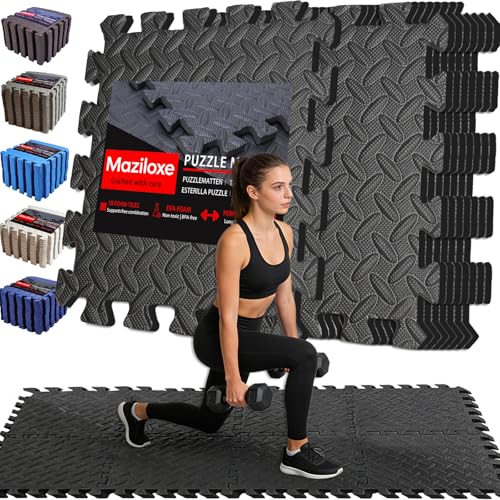


This budget-friendly option stands out for easy setup, anti-slip texture, and broad multi-purpose use. Its 18-piece interlocking design is a practical fit for small home gyms, yoga corners, and play areas where quick installation matters.
- ✓ Anti-slip textured surface for safer training
- ✓ Tool-free assembly with interlocking puzzle pieces
- ✓ Waterproof and easy to wipe clean
- ✓ Versatile for workouts, kids’ spaces, and garage use
- ✗ Thinner foam is less ideal for heavy lifting zones
- ✗ Smaller coverage area than larger tile sets
BalanceFrom Puzzle Exercise Mat 3/4" Thick, EVA Interlocking Foam Floor Tiles for Home Gym, Mat for Home Workout Equipment, Floor Padding for Kids, Black, 24 in x 24 in x 3/4 in, 96 Sq Ft - 24 Tiles 4.7★ (based on product positioning and owner feedback trends) ✓ Prime 10% OFF — Was $99.99
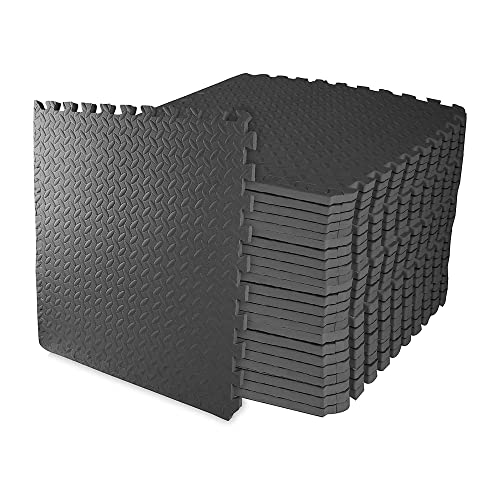


This is the stronger pick for buyers who want more coverage and a thicker feel underfoot. The 3/4-inch profile and 96 square feet of coverage make it a better match for larger workout areas or spaces where comfort and floor protection matter more than the lowest price.
- ✓ Thicker 3/4-inch cushioning for added comfort
- ✓ Large 96 sq ft set covers bigger workout spaces
- ✓ Non-skid textured tiles help protect floors
- ✓ Good fit for home gym equipment and kids’ areas
- ✗ Costs more than smaller starter sets
- ✗ Bulkier package may be overkill for very small rooms
Common Mistakes to Avoid
Choosing based on price alone: The cheapest flooring may save money upfront but can wear faster, slide around, or provide too little support for your workouts.
Ignoring thickness needs: A thin mat may be fine for yoga, but it may not be enough if you plan to use dumbbells, a treadmill, or heavier equipment.
Forgetting about coverage: Measure your room before buying so you don’t end up short on tiles or with awkward gaps around the edges.
Overlooking cleaning and moisture: Basements and garages can get dusty or damp, so water resistance and easy maintenance matter more than many first-time buyers expect.
Using the wrong flooring for the workout: High-impact lifting, cardio, stretching, and playroom use all have different needs. Matching the flooring to the activity is the best way to avoid disappointment.
Frequently Asked Questions
What is the best flooring for a home gym?
The best flooring depends on your workout style. EVA foam tiles are great for comfort and versatility, while thicker, denser options are usually better for heavier equipment and more floor protection.
How thick should home gym flooring be?
For light workouts, thinner foam can work well. For general home gym use, thicker tiles around 3/4 inch often provide better cushioning and protection.
Can I put gym flooring over carpet?
Yes, some interlocking mats can be placed over carpet, but they may feel less stable than on a hard, flat surface. Always check whether the product is designed for that type of installation.
Do foam gym tiles protect floors from weights?
They can help with minor impact and surface protection, but very heavy lifting usually needs denser flooring or additional protection. Foam is best for lighter equipment and mixed-use spaces.
Are interlocking gym mats easy to install?
Yes, most interlocking mats are designed for tool-free installation. They snap together like puzzle pieces and can usually be trimmed or rearranged if your room layout changes.
Pros
- + Protects floors from equipment and impact
- + Improves traction and workout safety
- + Helps reduce noise and vibration
- + Easy interlocking installation
- + Water-resistant and simple to clean
Cons
- – Some foam options are too thin for heavy lifting
- – Larger coverage sets can cost more
- – Budget tiles may wear faster
Frequently asked questions
- What is the best flooring for a home gym?
- The best flooring depends on your workout style. EVA foam tiles are great for comfort and versatility, while thicker, denser options are usually better for heavier equipment and more floor protection.
- How thick should home gym flooring be?
- For light workouts, thinner foam can work well. For general home gym use, thicker tiles around 3/4 inch often provide better cushioning and protection.
- Can I put gym flooring over carpet?
- Yes, some interlocking mats can be placed over carpet, but they may feel less stable than on a hard, flat surface. Always check whether the product is designed for that type of installation.
- Do foam gym tiles protect floors from weights?
- They can help with minor impact and surface protection, but very heavy lifting usually needs denser flooring or additional protection. Foam is best for lighter equipment and mixed-use spaces.
- Are interlocking gym mats easy to install?
- Yes, most interlocking mats are designed for tool-free installation. They snap together like puzzle pieces and can usually be trimmed or rearranged if your room layout changes.
Score breakdown
- value
- 8.0
- usability
- 9.0
- durability
- 7.0
- performance
- 8.0
- buyerFeedback
- 8.0
Get the Full Home Buyer's Guide
Join our free newsletter — we'll send our latest Home picks, specs and verdicts straight to your inbox.
Free. No spam. Unsubscribe anytime.
Was this review helpful?
Be the first to share your feedback on this review.
Sign in to vote and let us know what you think.
Discussion (0)
No comments yet. Be the first to start the discussion.
Related Reviews
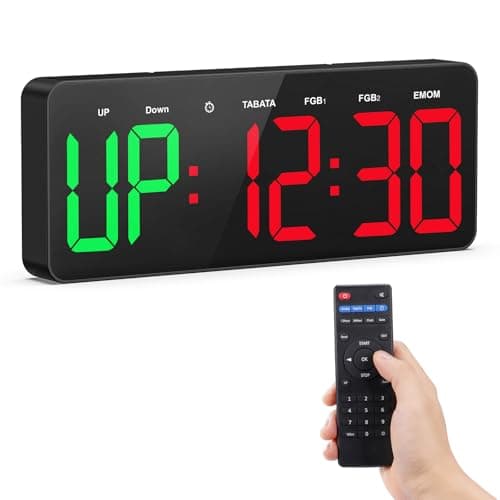
1 Best Gym Timers in 2026 — Clear Visibility and Versatile Interval Training
If you’re searching for the best gym timers 2026 , you probably want one thing: a timer that’s easy to read, easy to hear, and reliable for serious workouts. Whether you’re setting up a home gym, coaching classes, or running Tabata and EMOM sessions, the wrong timer can slow everything down. This re
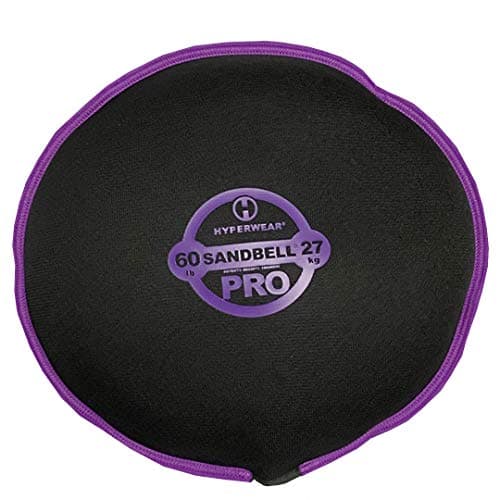
1 Best Sandbags and Slam Balls in 2026 — Durable, No-Leak Training for Slams, HIIT & Strength
If you’re shopping for the best sandbags and slam balls , you probably want gear that can handle hard throws, sweaty hands, and repeated abuse without leaking all over your floor. The problem is that many training bags look rugged online but fail fast once daily workouts start piling up. This resear
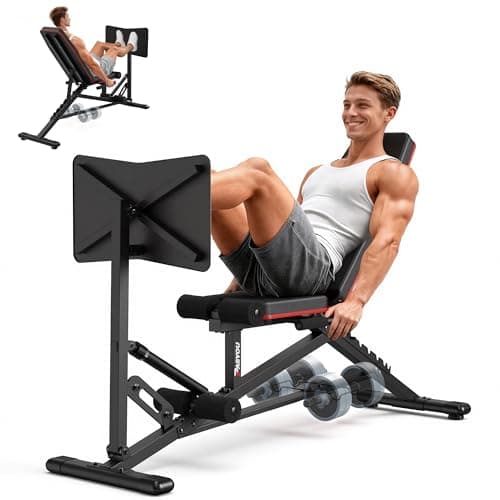
2 Best Leg Press Machines Home in 2026 — Top Picks for Serious Lower-Body Training
If you’re searching for the best leg press machines home , you probably want a setup that builds quads, glutes, hamstrings, and calves without wasting floor space. The challenge is finding a machine that feels stable, fits your home gym, and matches your budget without overbuying for features you wo