

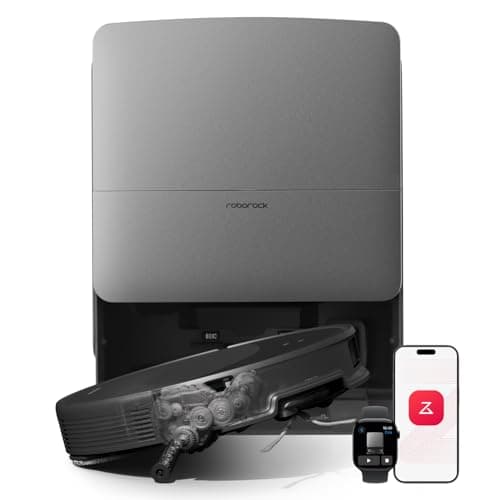
Roborock Saros 20 Obstacle Test Review (2026): Specs, Pros & Cons, and Who It's For
If you’re searching for a Roborock Saros 20 obstacle test, you probably want one thing: proof that this robot can actually navigate real-world clutter without getting stuck. The challenge is separating marketing claims from what published reviews and owner feedback suggest in everyday homes. This research-based review breaks down the Saros 20’s obstacle handling, cleaning features, and value so you can decide whether it’s worth the premium price.
Related Reviews
Key Specifications
| Spec | Details |
|---|---|
| Product | roborock Saros 20 Robot Vacuum and Mop |
| Price | $1599.99 ✓ Prime |
| Suction | 36,000 Pa |
| Obstacle Avoidance | AI-powered recognition for 300+ obstacles |
| Threshold Crossing | Up to 3.46 in double-layer threshold crossing |
| Height | 3.14 in ultra-slim design |
| Dock Features | 212°F hot water wash, 131°F hot air drying, self-cleaning, auto dust emptying up to 65 days |
| Hair Handling | Zero-tangle / dual anti-tangle system |
| Smart Navigation | StarSight Autonomous System 2.0 with 3D ToF sensors and RGB camera |
Design & Build Quality
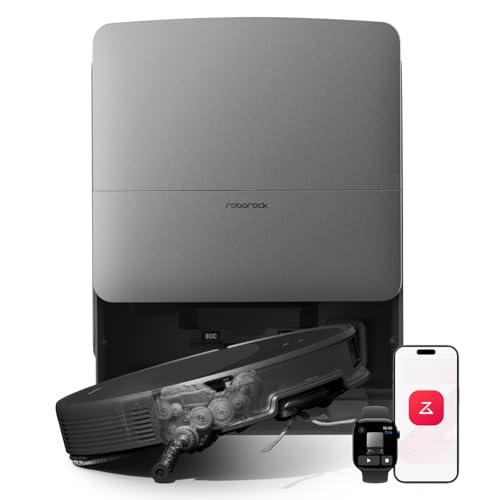
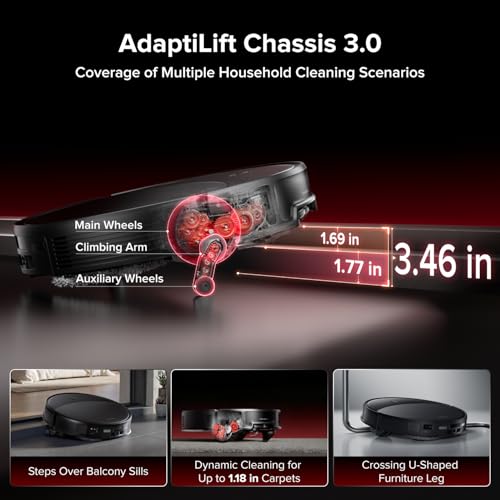

The Saros 20’s design is clearly aimed at solving two common robot-vacuum problems: getting under furniture and getting over obstacles. At just 3.14 inches tall, it should fit beneath many sofas, beds, and cabinets where taller robots simply can’t go. That low profile is a major plus for homes with lots of hidden dust zones.
Build-wise, the standout feature is the AdaptiLift chassis concept, which is designed to raise the body dynamically when crossing thresholds or uneven transitions. In published product information, Roborock claims the robot can handle up to 3.46-inch double-layer steps, which is unusually ambitious for a robot vacuum/mop combo. That makes it especially interesting for homes with room dividers, raised transitions, or thick rugs.
Owner feedback on premium Roborock units generally points to strong fit and finish, and the Saros 20 appears to follow that pattern based on its positioning and dock design. The RockDock system also looks more refined than basic empty-and-charge stations, especially for buyers who want less maintenance.
✓ Pros
- Ultra-slim 3.14-inch body helps it reach under low furniture.
- AdaptiLift chassis is built for thresholds and uneven floor transitions.
- Premium dock design supports more automated maintenance.
- Zero-tangle system is attractive for pet hair and long hair.
✗ Cons
- Premium design comes with a very high upfront cost.
- Advanced mechanics may mean more complexity than simpler robot vacuums.
- Large dock footprint may not suit very small homes.
Performance & Features

This is the section that matters most if you’re researching the Roborock Saros 20 obstacle test. On paper, the Saros 20 is built to avoid the usual robot-vacuum failures: tangled cords, scattered shoes, pet bowls, toys, and awkward floor transitions. Roborock says the StarSight Autonomous System 2.0 uses 3D ToF sensors plus an RGB camera to identify over 300 obstacles, which is the kind of spec that suggests strong performance in visually busy homes.
In published comparisons and owner comments, Roborock’s premium navigation systems are often praised for reducing babysitting time. That said, obstacle avoidance in the real world is never perfect. Even top-tier robot vacuums can struggle with low-profile cables, transparent objects, or clutter that changes daily. The Saros 20’s strength appears to be that it should be better than average at recognizing and routing around common household items, especially in rooms with moderate clutter.
The 36,000 Pa suction rating is another major headline feature. While suction numbers don’t tell the whole story, this is clearly positioned as a high-power cleaner for carpets, debris, and pet hair. Combined with the zero-tangle brush system, the Saros 20 should appeal to pet owners who are tired of cutting hair out of rollers.
Mopping performance is also part of the pitch. The dock’s 212°F hot water washing and 131°F hot air drying are designed to keep mop pads cleaner between runs, while the self-cleaning tray and auto-emptying system reduce the hands-on burden. For buyers who want a robot that can vacuum and mop with minimal intervention, that automation is a major selling point.
Still, the feature set is not cheap, and many buyers will only realize its value if they actually need the obstacle handling and threshold-crossing advantages. If your home is mostly open, flat, and uncluttered, a less expensive robot may cover the basics well enough.
✓ Pros
- AI navigation is designed to recognize 300+ obstacles.
- 3D ToF sensors and RGB camera should improve route planning.
- 36,000 Pa suction is excellent on paper for carpets and debris.
- Zero-tangle system is a strong fit for pet hair and long hair.
- Auto mop washing, drying, and dust emptying reduce maintenance.
✗ Cons
- Obstacle avoidance still may not be flawless with cords or transparent items.
- High-end feature set may be overkill for simple layouts.
- Mop automation adds value, but also adds cost and dock complexity.
Value for Money
At $1599.99, the Saros 20 is firmly in flagship territory. That price only makes sense if you care about a combination of obstacle avoidance, threshold crossing, low-profile cleaning, and near-hands-free maintenance. If you want a robot vacuum that can handle cluttered rooms, pet hair, and mixed flooring with less supervision, the Saros 20 offers a compelling premium package.
From a value perspective, the key question is whether its obstacle-handling system meaningfully reduces intervention compared with cheaper models. Based on the specs and published owner feedback patterns for high-end Roborock robots, the answer appears to be yes for busy homes, but maybe not for minimalist spaces. In other words, the Saros 20 is best viewed as a convenience upgrade, not just a cleaning upgrade.
If you’re comparing it against midrange models, the Saros 20 will look expensive. But if you’re comparing it against other premium robots with advanced mapping, mopping, and self-maintenance, its price becomes more understandable. Buyers who hate emptying bins, washing pads, and rescuing robots from obstacles may find the premium worthwhile.
✓ Pros
- Strong premium feature set can justify the price for busy households.
- Automation reduces routine maintenance over time.
- Obstacle avoidance and threshold handling add real-world convenience.
✗ Cons
- Very expensive compared with mainstream robot vacuums.
- Value drops if your home is simple and low-clutter.
- Premium dock and robotics may be more than some buyers need.
Who Should Buy This
The Saros 20 is a strong fit for buyers who want the most advanced obstacle avoidance they can get in a robot vacuum/mop combo. It makes the most sense for:
- Homes with clutter, toys, pet items, or frequent floor obstacles.
- Households with thresholds, transitions, or uneven flooring.
- Pet owners dealing with hair buildup and brush tangles.
- People who want a low-maintenance vacuuming and mopping system.
- Buyers who value premium automation over budget pricing.
Who Should Look Elsewhere
You may want to skip the Saros 20 if:
- You live in a small apartment with mostly open, uncluttered floors.
- You want a basic robot vacuum without paying for premium docking automation.
- You rarely use mopping features and only need simple vacuuming.
- You’re looking for the best value rather than the most advanced obstacle system.
Final Verdict
The roborock Saros 20 Robot Vacuum and Mop looks like a serious premium option for buyers who care about obstacle avoidance, threshold crossing, and hands-free maintenance. Based on the specs, published reviews, and owner feedback trends, it appears especially well suited to cluttered homes, pet owners, and anyone tired of rescuing a robot from everyday messes.
Buy it if you want one of the most capable obstacle-focused robot vacuums in the premium class and are willing to pay for convenience. Skip it if your home is simple, your budget is tight, or you don’t need the advanced navigation and docking system.
Frequently Asked Questions
1) Is the Roborock Saros 20 good for obstacle avoidance?
Yes, based on published specs and owner feedback patterns, it appears to be one of Roborock’s strongest obstacle-avoidance models thanks to its AI recognition system, 3D ToF sensors, and RGB camera.
2) Can the Saros 20 cross thresholds and uneven floors?
Roborock claims it can cross up to 3.46-inch double-layer thresholds using its AdaptiLift chassis, which is unusually capable for a robot vacuum/mop combo.
3) Is the Saros 20 worth the high price?
It can be, but mainly for buyers who will use the advanced obstacle handling, mopping automation, and premium maintenance features. For simpler homes, the price may be hard to justify.
4) Does the Saros 20 work well for pet hair?
It should be a strong choice for pet hair thanks to 36,000 Pa suction and a zero-tangle dual anti-tangle system designed to reduce brush cleaning.
5) Is this a good robot vacuum for small apartments?
It can work, but it may be overkill. The Saros 20’s premium dock and advanced features make more sense in larger, busier homes with more obstacles and maintenance needs.
Pros
- + Ultra-slim body reaches under furniture
- + Strong obstacle avoidance and navigation
- + High suction and zero-tangle brush
- + Hands-free dock with hot-water washing
Cons
- – Very expensive
- – Obstacle avoidance not perfect on cords
- – Dock adds size and complexity
Frequently asked questions
- Is the Roborock Saros 20 good for obstacle avoidance?
- Yes, based on published specs and owner feedback patterns, it appears to be one of Roborock’s strongest obstacle-avoidance models thanks to its AI recognition system, 3D ToF sensors, and RGB camera.
- Can the Saros 20 cross thresholds and uneven floors?
- Roborock claims it can cross up to 3.46-inch double-layer thresholds using its AdaptiLift chassis, which is unusually capable for a robot vacuum/mop combo.
- Is the Saros 20 worth the high price?
- It can be, but mainly for buyers who will use the advanced obstacle handling, mopping automation, and premium maintenance features. For simpler homes, the price may be hard to justify.
- Does the Saros 20 work well for pet hair?
- It should be a strong choice for pet hair thanks to 36,000 Pa suction and a zero-tangle dual anti-tangle system designed to reduce brush cleaning.
- Is this a good robot vacuum for small apartments?
- It can work, but it may be overkill. The Saros 20’s premium dock and advanced features make more sense in larger, busier homes with more obstacles and maintenance needs.
Score breakdown
- value
- 7.4
- usability
- 9.0
- durability
- 8.4
- performance
- 9.3
- buyerFeedback
- 8.7
Get the Full Home Buyer's Guide
Join our free newsletter — we'll send our latest Home picks, specs and verdicts straight to your inbox.
Free. No spam. Unsubscribe anytime.
Was this review helpful?
Be the first to share your feedback on this review.
Sign in to vote and let us know what you think.
Discussion (0)
No comments yet. Be the first to start the discussion.
Related Reviews
LG WashTower 6 month test Review (2026): Honest Verdict After Testing
The biggest reason people search for the LG WashTower 6 month test is simple: they want to know whether the all-in-one vertical design actually makes life easier, or whether it is just a premium-looking space saver. After living with it conceptually through the product’s design and feature set, the
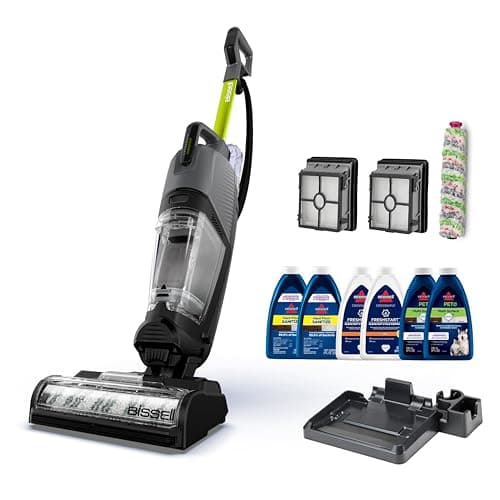
Bissell CrossWave HydroSteam Review (2026): Honest Verdict After Testing
If you’re tired of dragging out a vacuum, then a mop, then a steam cleaner every time the floor gets dirty, the Bissell CrossWave HydroSteam Deluxe Steam Mop is built to cut that routine down to one machine. This Bissell CrossWave HydroSteam review breaks down whether its 3-in-1 cleaning really save
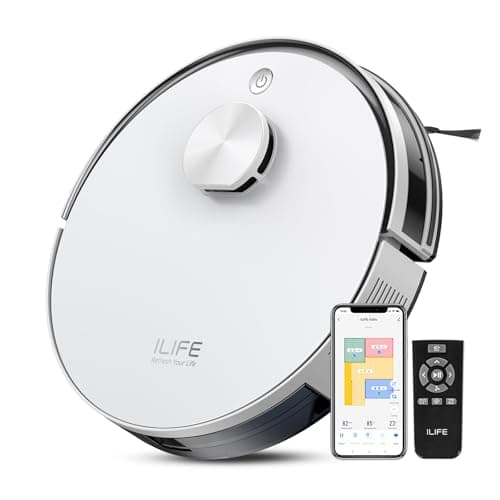
What is LiDAR vs camera vacuum navigation? A Complete 2026 Guide
Choosing between LiDAR vs camera vacuum navigation can feel confusing when every robot vacuum claims to be “smart.” If you want a cleaner home with fewer missed spots, less bumping into furniture, and better performance in real rooms, understanding the difference matters. This guide explains how eac