
Who this is for: Best for shoppers comparing B9 supplements who want clear guidance on folate vs folic acid and practical product picks.
Check PriceWhat is folate vs folic acid? A Complete 2026 Guide
If you’re confused about folate vs folic acid, you’re not alone—these terms are often used interchangeably even though they’re not exactly the same. That confusion matters when you’re choosing a supplement for pregnancy, heart health, or general B-vitamin support. This guide breaks down the difference in plain English and shows you what to look for when buying the right product.
Related Reviews
How It Works
Folate is the natural form of vitamin B9 found in foods like leafy greens, beans, and citrus. Folic acid is the synthetic form used in many supplements and fortified foods because it’s stable, inexpensive, and easy to dose consistently.
Once you consume folate or folic acid, your body uses vitamin B9 to help make DNA, support red blood cell production, and assist with cell growth. That’s why it’s especially important during pregnancy, when rapid cell division and fetal development increase the need for B9.
The key practical difference is absorption and conversion: folic acid must be converted by the body into the active form, while dietary folate is already closer to the form your body uses. For most people, either can help meet B9 needs, but the best choice depends on diet, tolerance, and whether you’re looking for a prenatal-focused formula or a simple daily supplement.
Key Benefits & Use Cases
1) Pregnancy and prenatal planning
Folate is widely associated with healthy fetal development, especially early in pregnancy. Many people take folic acid before conception and during pregnancy because adequate B9 intake is linked to normal neural tube development.
2) General B-vitamin support
Folate and folic acid both support normal cell function and red blood cell production. If your diet is inconsistent or low in B9-rich foods, a supplement can help fill the gap.
3) Heart and homocysteine support
Some supplements highlight folic acid’s role in maintaining healthy homocysteine levels already within the normal range. That’s why you’ll often see folic acid marketed for cardiovascular wellness.
4) Nervous system support
Vitamin B9 plays a role in nervous system function, which is why many folic acid products mention nerve support on the label.
5) Dietary gaps and restricted diets
People who eat fewer folate-rich foods, or who want a simple, low-cost supplement, often choose folic acid. Those who prefer a more food-based nutrient may look for folate or folate-equivalent labeling.
What to Look For When Buying
1) The form of B9
Check whether the label says folate, folic acid, or dietary folate equivalent (DFE). If you’re comparing folate vs folic acid, this is the first thing to notice because it affects how the product is labeled and dosed.
2) Dosage per serving
Supplements range from lower daily doses like 400 mcg to higher amounts like 800 mcg or 1,000 mcg. Choose a dose that fits your goals and any guidance from your clinician, especially if you’re pregnant or already taking a prenatal vitamin.
3) Ingredient quality and restrictions
Look for non-GMO, gluten-free, vegan, or allergen-friendly options if those matter to you. Simpler formulas can be easier to stack with other supplements.
4) Supply size and value
Bottle count matters if you want a budget-friendly daily supplement. A larger count can lower the cost per serving and reduce how often you reorder.
5) Brand reputation and manufacturing standards
Prefer brands that mention GMP, NSF, or other quality controls. That doesn’t replace medical advice, but it can add confidence in consistency and manufacturing practices.
Top Recommended Products
Below are the most relevant supplement picks for readers researching folate vs folic acid. These are research-based recommendations built from product specs, published claims, and owner feedback patterns—not hands-on testing.
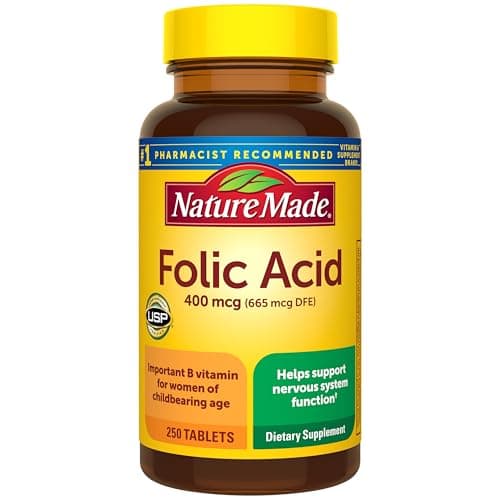
Nature Made Folic Acid 400 mcg (665 mcg DFE) Dietary Supplement for Nervous System Function, Folic Acid Supplements for Women and Men, 250 Tablets, 250 Day Supply $5.97 (was $6.99) 15% OFF — Was $6.99 ✓ Prime
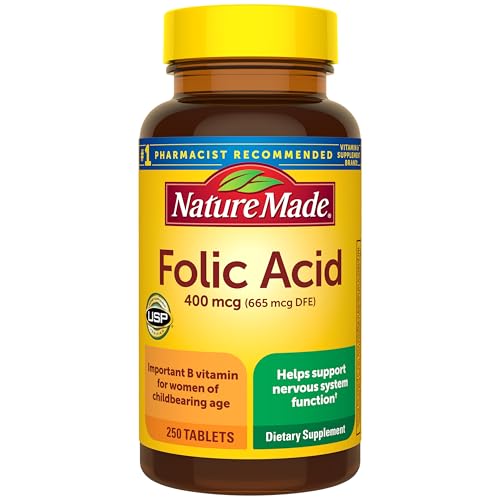


This is the simplest low-cost option for people who want a basic daily folic acid supplement. The 400 mcg dose is a familiar starting point, and the 250-tablet bottle makes it especially convenient for long-term use.
- ✓ 400 mcg folic acid per tablet with 665 mcg DFE labeling
- ✓ Large 250-day supply for convenience
- ✓ Gluten-free with no color added, artificial flavors, or preservatives
- ✓ Designed to support nervous system function
- ✓ Prime shipping and budget-friendly price
- ✗ Not a folate-based product if you specifically want the natural form
- ✗ Lower dose may not suit users looking for higher-strength supplementation
- ✗ Basic formula without extra prenatal or multivitamin ingredients
Solgar Folate 1,333 MCG Dietary Folate Equivalent (800 mcg Folic Acid), 250 Tablets - Heart Health, Healthy Nervous System, Prenatal Support - Non-GMO, Vegan, Gluten Free, Dairy Free - 250 Servings $11.58 (was $16.39) 29% OFF — Was $16.39 ✓ Prime
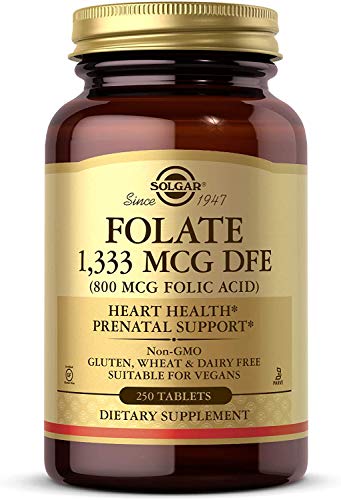


This pick is for shoppers who want a more premium, label-conscious formula. It’s especially appealing if you want folate-equivalent labeling, vegan-friendly ingredients, and a supplement that explicitly mentions prenatal, nervous system, and heart-health support.
- ✓ Folate-equivalent labeling for easier comparison
- ✓ Non-GMO, vegan, gluten-free, dairy-free, and kosher
- ✓ 250-tablet bottle offers strong value per serving
- ✓ Supports prenatal, nervous system, and heart-health use cases
- ✓ Trusted supplement brand with long market history
- ✗ Higher upfront price than the most basic folic acid options
- ✗ 800 mcg folic acid equivalent may be more than some people need
- ✗ Tablets may be less convenient than smaller-dose alternatives for some users
Nutricost Folic Acid (Vitamin B9) 1000 mcg, 240 Capsules $12.95 (was $14.95) 13% OFF — Was $14.95 ✓ Prime
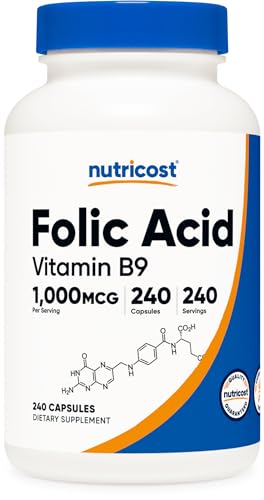


Nutricost is the straightforward higher-dose option in this lineup. It’s a good match for buyers who want a 1,000 mcg folic acid capsule and prefer a simple supplement made in a GMP-compliant, FDA-registered facility.
- ✓ Higher 1,000 mcg dose per capsule
- ✓ 240 capsules for long-term use
- ✓ Non-GMO, soy-free, and gluten-free
- ✓ Manufactured in NSF-certified, GMP-compliant, FDA-registered facility
- ✓ Capsule format may suit users who dislike tablets
- ✗ Higher dose may be unnecessary for users who only need a basic daily amount
- ✗ Not positioned as a prenatal-specific formula
- ✗ Fewer lifestyle/brand claims than some premium competitors
Nature's Bounty Folic Acid Supplement, Supports Cardiovascular Health, 800mcg, 250 Tablets $6.75 ✓ Prime
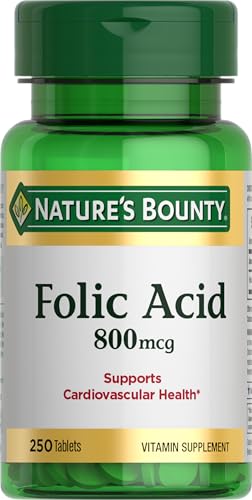


This is another value-focused folic acid pick, with a slightly higher 800 mcg dose and a strong emphasis on cardiovascular health. It’s a practical middle ground for shoppers who want affordability without dropping to the lowest dose.
- ✓ Affordable bottle with 250 tablets
- ✓ 800 mcg dose for users who want more than a basic 400 mcg option
- ✓ Supports cardiovascular and heart health
- ✓ Prime shipping
- ✓ Straightforward daily supplement format
- ✗ Not a folate-form product
- ✗ Less feature-rich than premium vegan or specialty formulas
- ✗ May be more than some users need for everyday maintenance
Common Mistakes to Avoid
1) Assuming folate and folic acid are identical
They’re related, but not the same. Folate is the natural food form, while folic acid is the synthetic supplement form.
2) Ignoring the dose on the label
Two products may look similar but deliver different amounts of B9. Always check mcg and DFE so you know what you’re actually getting.
3) Taking more than you need
Higher isn’t automatically better. If you already take a prenatal or multivitamin, adding extra folic acid may be unnecessary unless your clinician recommends it.
4) Overlooking dietary sources
Supplements are helpful, but folate-rich foods still matter. Leafy greens, legumes, and fortified grains can contribute meaningfully to your intake.
5) Choosing a product without checking restrictions
If you need vegan, gluten-free, or allergen-friendly options, confirm the label before buying. That’s especially important if you’re planning to take it daily.
Frequently Asked Questions
Is folate better than folic acid?
Not always. Folate is the natural form found in foods, while folic acid is the synthetic form used in supplements and fortified foods. The “better” choice depends on your diet, goals, and how you prefer to supplement.
Why do supplements use folic acid instead of folate?
Folic acid is stable, inexpensive, and easy to formulate consistently. That makes it a common choice for tablets, capsules, and fortified foods.
Can I get enough folate from food alone?
Sometimes, yes—especially if you eat plenty of leafy greens, beans, and fortified grains. But many people still use supplements to help cover gaps, especially during pregnancy planning.
What does DFE mean on a folic acid label?
DFE stands for dietary folate equivalents. It’s a way to compare the folate you get from food with the folic acid you get from supplements or fortified foods.
Should pregnant women take folate or folic acid?
Many prenatal supplements use folic acid, and folate intake is especially important before and during pregnancy. The right choice should be discussed with a healthcare professional, especially if you already take a prenatal vitamin.
Pros
- + Explains folate vs folic acid in plain English
- + Covers pregnancy, heart, and nervous system use cases
- + Includes budget-friendly and premium supplement options
- + Highlights dosage, form, and quality criteria
- + Uses research-based product comparisons
Cons
- – Not a substitute for medical advice
- – Supplements may be unnecessary if diet is already adequate
- – Higher doses may not suit every buyer
- – Product choice depends on individual needs
Frequently asked questions
- Is folate better than folic acid?
- Not always. Folate is the natural form found in foods, while folic acid is the synthetic form used in supplements and fortified foods. The “better” choice depends on your diet, goals, and how you prefer to supplement.
- Why do supplements use folic acid instead of folate?
- Folic acid is stable, inexpensive, and easy to formulate consistently. That makes it a common choice for tablets, capsules, and fortified foods.
- Can I get enough folate from food alone?
- Sometimes, yes—especially if you eat plenty of leafy greens, beans, and fortified grains. But many people still use supplements to help cover gaps, especially during pregnancy planning.
- What does DFE mean on a folic acid label?
- DFE stands for dietary folate equivalents. It’s a way to compare the folate you get from food with the folic acid you get from supplements or fortified foods.
- Should pregnant women take folate or folic acid?
- Many prenatal supplements use folic acid, and folate intake is especially important before and during pregnancy. The right choice should be discussed with a healthcare professional, especially if you already take a prenatal vitamin.
Score breakdown
- value
- 9.0
- usability
- 9.0
- durability
- 8.0
- performance
- 8.0
- buyerFeedback
- 8.0
Get the Full Health & Fitness Buyer's Guide
Join our free newsletter — we'll send our latest Health & Fitness picks, specs and verdicts straight to your inbox.
Free. No spam. Unsubscribe anytime.
Was this review helpful?
Be the first to share your feedback on this review.
Sign in to vote and let us know what you think.
Discussion (0)
No comments yet. Be the first to start the discussion.
Related Reviews
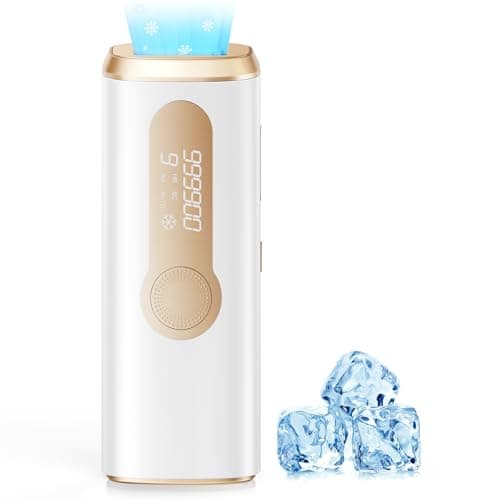
8 Best At-Home Laser Hair Removal Devices for Women in 2026 — Smooth Skin Faster, for Less
If you’re tired of shaving every other day, dealing with razor burn, or paying salon prices for hair reduction, the right IPL device can make at-home maintenance much easier. The best at-home laser hair removal devices for women combine comfort, flash speed, and enough energy to help reduce regrowth
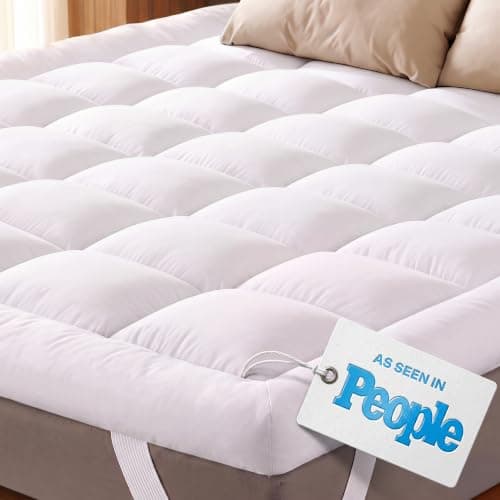
7 Best Pregnancy Mattress Topper for Side Sleepers in 2026 — Softer Pressure Relief for Hip, Shoulder, and Back Comfort
If side sleeping is the only way you can get comfortable during pregnancy, the wrong mattress can make every night feel longer. The best pregnancy mattress topper for side sleepers should soften pressure points at the hips and shoulders, help you stay cooler, and stay securely in place as you move.

8 Best Pregnancy Mattress for Back Pain in 2026 — Comfort Picks That Help You Sleep Better
If pregnancy back pain is making sleep feel impossible, you’re not alone. The best pregnancy mattress for back pain is usually the one that reduces pressure on the hips, supports the belly, and lets you rest in a position your body can tolerate. In this research-based roundup, we compared inflatable