

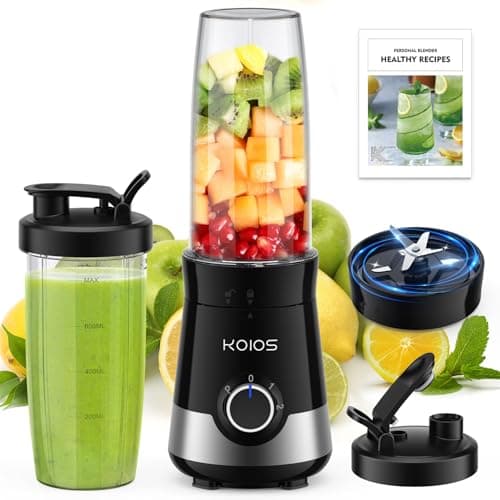
Who this is for: Best for buyers who want a practical, affordable personal blender for daily protein shakes and smoothies.
Check PriceHow to Choose the Best Blender for Protein Shakes and Smoothies in 2026: Complete Buying Guide
If you’re trying to figure out how to choose a blender for protein shakes and smoothies, the biggest challenge is avoiding a machine that looks powerful on paper but leaves you with gritty shakes, stuck ingredients, or a motor that struggles with ice. The right blender should handle daily protein powders, frozen fruit, and leafy greens without turning cleanup into a chore. In this guide, you’ll learn exactly which features matter, what to avoid, and which budget-friendly options make the most sense for real-world use.
Related Reviews
Key Features to Look For
1. Motor Power and Real Blending Strength
For protein shakes and smoothies, motor strength matters because it affects how well the blender handles frozen fruit, ice, nut butter, and thicker mixes. A higher-wattage motor is generally better for smoother results, especially if you want fewer chunks and less shaking the cup to help ingredients move. For a single-serve blender, look for enough power to blend quickly without sounding strained.
2. Blade Design That Can Handle Ice and Frozen Fruit
Blade shape is just as important as wattage. A stronger blade assembly can help break down frozen ingredients more evenly and reduce the chance of powder clumps sticking to the sides. For smoothies, a multi-blade setup often performs better than a basic two-blade design because it creates more consistent circulation in the cup.
3. Cup Size and Portability
If you make shakes before work or after the gym, a portable cup can save time. Personal blenders with to-go cups are especially useful because you can blend and drink from the same container. Check whether the cup size matches your routine: smaller cups are fine for protein shakes, while larger bottles are better if you want to add oats, fruit, or extra liquid.
4. Ease of Cleaning
Cleaning is one of the most overlooked factors when learning how to choose a blender for protein shakes and smoothies. If cleanup is annoying, you’ll use the blender less often. Dishwasher-safe parts, removable blades, and self-cleaning cycles can make a big difference for daily use, especially if you blend sticky ingredients like peanut butter or protein powder.
5. Controls and Ease of Use
Simple controls are ideal for shakes and smoothies because you usually want fast, repeatable results. One-touch blending, pulse modes, or a small number of preset options can make the blender easier to use. More complicated controls aren’t always better if your goal is quick breakfast prep.
6. Container Material and Safety
Look for BPA-free cups if you plan to use the blender often. This matters for both peace of mind and durability, especially if you’re carrying drinks to work, the gym, or class. A sturdy container also helps resist cracks, clouding, and odor buildup over time.
7. Noise Level and Countertop Footprint
Blenders used for protein shakes often run early in the morning or in shared spaces. A smaller footprint can be easier to store, while a quieter machine is more pleasant for daily use. Compact personal blenders are usually the best fit if you want something that stays out of the way.
What to Avoid
Weak Motors for Frozen Ingredients
A common mistake is buying a blender that works fine with liquids but struggles once you add frozen fruit, ice, or thick protein mixes. If the machine bogs down, you’ll get uneven texture and may wear out the motor faster.
Overly Large Pitchers for Single Servings
Big countertop blenders can be great for families, but they are often inconvenient for one-person protein shakes. If the jar is too large, small amounts may not circulate well, which can lead to powder clumps and poor blending.
Hard-to-Clean Designs
A blender with too many crevices, fixed blades, or awkward seals can become frustrating fast. Protein powder residue dries quickly, and sticky smoothie ingredients can make cleanup annoying if the parts aren’t easy to rinse or wash.
Fragile Cups or Lids
Thin plastic cups, loose-fitting lids, or weak seals can cause leaks and shorten the blender’s useful life. If you plan to travel with your shake, durability matters as much as blending performance.
Ignoring Your Actual Routine
One of the biggest buying mistakes is focusing only on power and ignoring how you’ll use the blender every day. If you want grab-and-go shakes, a personal blender makes more sense than a full-size model. If you’ll blend family-sized smoothies, capacity matters more than portability.
Our Top Picks
Below are practical recommendations for different buyer needs. These are based on published specs, product features, and owner feedback patterns—not hands-on testing.
1. KOIOS Smoothie Blender 4.5★ ($35.99) ✓ Prime
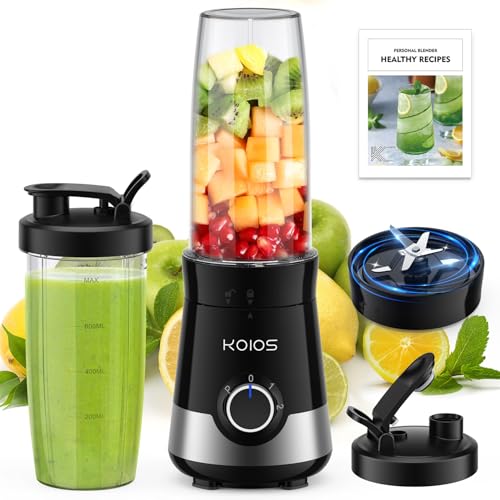


This is a strong fit for shoppers who want a compact, affordable personal blender with enough power for daily shakes and frozen fruit. The 900W motor, 27oz BPA-free bottles, and three blending modes make it especially appealing for gym-goers, students, and anyone who wants a blend-and-go setup. Its dishwasher-friendly parts and self-cleaning option also make it easier to stick with long term.
- ✓ 900W motor is designed for fast blending of shakes and smoothies
- ✓ Includes two 27oz BPA-free portable bottles with spout lids
- ✓ Three blending modes add flexibility for different ingredients
- ✓ 6-leaf blade design is built to handle ice and frozen fruit
- ✓ Easy-clean design helps reduce daily cleanup time
- ✗ Best for personal servings, not large batches
- ✗ Compact design may not suit families or meal-prep users
- ✗ As with most personal blenders, very thick mixtures may need extra liquid
2. KOIOS Smoothie Blender for Budget Buyers
If your main goal is to spend as little as possible while still getting a usable smoothie blender, this model is the most practical choice in the provided product list. It offers a useful mix of power, portability, and easy cleaning at a low price point, which is exactly what many first-time buyers need.
- ✓ Low entry price for a personal blender with decent power
- ✓ Portable bottles make it convenient for daily routines
- ✓ Good match for protein shakes and basic smoothies
- ✓ Prime shipping can be a plus for quick replacement or gifting
- ✗ Not the best option if you regularly blend very dense ingredients
- ✗ Limited capacity compared with full-size blenders
3. KOIOS Smoothie Blender for Gym and Travel Use
This is a smart pick if you want to make your shake at home and take it with you immediately. The included portable bottles, spout lids, and compact footprint make it better suited to commuters, office workers, and fitness-focused buyers than a bulky countertop blender.
- ✓ Portable bottles are ideal for the gym, car, or office
- ✓ Compact size is easier to store than larger blenders
- ✓ Simple operation makes it easy to use every day
- ✓ Designed for quick single-serve blending
- ✗ Not intended for large family smoothies
- ✗ May require liquid balance for very thick recipes
Budget Guide: What You Get at Each Price Point
Under $40
At this level, you’re usually looking at a personal blender rather than a full-size countertop machine. That means smaller servings, simpler controls, and a focus on convenience. For protein shakes and smoothies, this price tier can still be very effective if you mainly blend one serving at a time and want easy cleanup.
$40 to $80
In this range, you typically start to see better build quality, more stable blending performance, and more useful accessories. If you’re making smoothies several times a week, this is often the sweet spot for buyers who want a balance of value and reliability.
$80 to $150
This tier often brings stronger motors, larger containers, better materials, and more versatility for frozen ingredients or thicker recipes. If your smoothies include nuts, oats, ice, or fibrous greens on a regular basis, a higher-end machine may be worth it.
$150 and Up
Premium blenders usually offer the best durability, stronger blending consistency, and more refined user experience. They make the most sense for heavy daily use, large batches, or buyers who want a single machine that can do much more than shakes and smoothies.
Frequently Asked Questions
What is the best type of blender for protein shakes and smoothies?
A personal blender is usually the best type for protein shakes and single-serve smoothies because it blends quickly, is easy to clean, and often comes with portable cups. If you make larger batches, a full-size blender may be better.
How many watts should a blender have for smoothies?
For most protein shakes and smoothies, look for at least enough power to handle frozen fruit and ice without struggling. A higher-wattage blender is generally better if you blend thick ingredients often.
Do I need a special blender for protein powder?
You do not need a special blender, but you do want one with good circulation and enough power to prevent powder clumps. A strong blade design and proper liquid ratio help protein powder mix more evenly.
Are personal blenders good for ice and frozen fruit?
Yes, many personal blenders can handle ice and frozen fruit, but performance varies. Models with stronger motors and multi-blade assemblies tend to do a better job with harder ingredients.
What should I prioritize if I only make one smoothie a day?
If you make one smoothie a day, prioritize ease of cleaning, portability, and enough power for your usual ingredients. A compact blender with dishwasher-safe parts is often the most practical choice.
Pros
- + 900W motor for quick blending
- + 27oz BPA-free portable bottles
- + 3 blending modes for flexibility
- + 6-leaf blade design handles ice
- + Easy-clean parts and self-cleaning
Cons
- – Best for personal servings
- – Not ideal for large batches
- – May need extra liquid for thick mixes
Frequently asked questions
- What is the best type of blender for protein shakes and smoothies?
- A personal blender is usually the best type for protein shakes and single-serve smoothies because it blends quickly, is easy to clean, and often comes with portable cups. If you make larger batches, a full-size blender may be better.
- How many watts should a blender have for smoothies?
- For most protein shakes and smoothies, look for at least enough power to handle frozen fruit and ice without struggling. A higher-wattage blender is generally better if you blend thick ingredients often.
- Do I need a special blender for protein powder?
- You do not need a special blender, but you do want one with good circulation and enough power to prevent powder clumps. A strong blade design and proper liquid ratio help protein powder mix more evenly.
- Are personal blenders good for ice and frozen fruit?
- Yes, many personal blenders can handle ice and frozen fruit, but performance varies. Models with stronger motors and multi-blade assemblies tend to do a better job with harder ingredients.
- What should I prioritize if I only make one smoothie a day?
- If you make one smoothie a day, prioritize ease of cleaning, portability, and enough power for your usual ingredients. A compact blender with dishwasher-safe parts is often the most practical choice.
Score breakdown
- value
- 9.1
- usability
- 9.0
- durability
- 7.8
- performance
- 8.4
- buyerFeedback
- 8.3
Get the Full Health & Fitness Buyer's Guide
Join our free newsletter — we'll send our latest Health & Fitness picks, specs and verdicts straight to your inbox.
Free. No spam. Unsubscribe anytime.
Was this review helpful?
Be the first to share your feedback on this review.
Sign in to vote and let us know what you think.
Discussion (0)
No comments yet. Be the first to start the discussion.
Related Reviews
Best Protein Powder Dispensers for Every Budget in 2026: Ranked by Price & Performance
If you’re shopping for the best protein powder dispensers under $200 , the real challenge isn’t finding something expensive—it’s finding a dispenser that pours cleanly, stores powder securely, and fits your routine without waste. Budget picks are usually the most practical, while mid-range options t
8 Best EMS Muscle Stimulators for Recovery in 2026 — Faster Relief, Better Mobility, Smarter Value
If you’re searching for the best EMS muscle stimulators for recovery 2026 , you probably want something that helps with post-workout soreness, muscle activation, or everyday aches without overpaying for features you won’t use. This research-based roundup compares specs, published product details, an
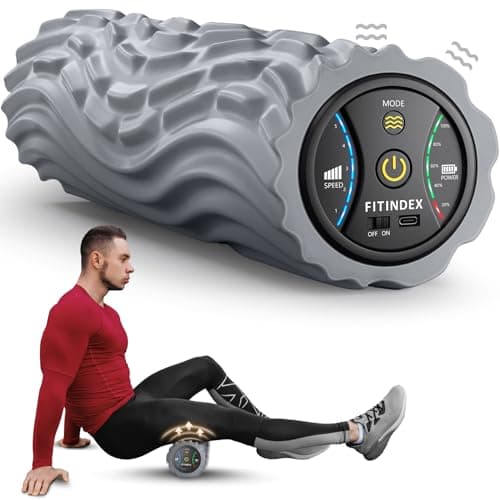
7 Best Vibration Foam Rollers for Runners in 2026 — Faster Recovery, Less Soreness
If your legs feel heavy after tempo runs, long runs, or hill repeats, a vibrating foam roller can help you recover faster without adding another complicated tool to your routine. The best vibration foam rollers for runners in 2026 combine firm pressure, adjustable vibration, and runner-friendly port