


Who this is for: Best for people recovering from ankle sprains or foot pain who want guided, adjustable stability training at home.
If you’re recovering from a sprain, dealing with plantar fasciitis, or trying to rebuild ankle stability, the right balance board can make rehab feel more structured and less guesswork-heavy. The best balance boards for ankle rehab 2026 combine controlled instability, non-slip footing, and clear guidance so you can progress safely. This roundup focuses on boards with rehab-friendly features, strong owner-facing support materials, and designs that make sense for home recovery, PT-style training, and daily mobility work.
Related Reviews
Because this is a research-based review, the picks below are based on published specs, product materials, and documented buyer-oriented features rather than hands-on testing. I’ve prioritized boards that appear especially useful for ankle-strengthening routines, single-leg work, and gradual progression.
Quick Picks
| Rank | Product | Best For |
|---|---|---|
| 1 | Frgofl Adjustable Ankle Balance Board | Customizable rehab progression |
| 2 | SIDEKICK | AxisBoard Balance Board | Guided rehab programs |
| 3 | StrongTek Ankle Balance Board | Portable single-leg training |
| 4 | Ankle Balance Board & Ankle Strengthener for Rehab & Physical Therapy | Fast resistance changes |
| 5 | Ankle Foot Strengthener Exerciser for Sprained | Structured daily rehab tracking |
| 6 | Amazon Basics Wood Wobble Balance Trainer Board | Simple general-purpose stability work |
| 7 | Ankle Balance Board Foot Strengthener Trainer for Sprained Ankle | Budget-friendly portability |
| 8 | OPTP Dynamic Duo Balance & Stability Trainers | Professional-grade paired training |
1. Frgofl Adjustable Ankle Balance Board — Best for customizable rehab progression

Verdict: This is the strongest all-around pick if you want a rehab board that can grow with you, thanks to its highly adjustable setup and guided training support.
The Frgofl board stands out for users who want more than a basic wobble surface. Its adjustable pegs, 360-degree controlled movement, and included video guidance make it especially appealing for sprain recovery, plantar fasciitis routines, and gradual single-leg progression.
- ✓ Adjustable pegs let you tailor the board to beginner or more advanced rehab work
- ✓ Designed for ankle strengthening, stability, and neuromuscular activation
- ✓ Non-slip textured surface and durable wood build add confidence during barefoot use
- ✓ Includes illustrated guide and QR-code video tutorials for exercise instruction
- ✗ More complex than a simple wobble board if you want a minimal setup
- ✗ Best value depends on whether you’ll actually use the adjustable configurations
- ✗ Not the smallest option for tossing into a bag every day
2. SIDEKICK | AxisBoard Balance Board — Best for guided rehab programs


Verdict: If you want a rehab plan that tells you exactly what to do, the AxisBoard is one of the most structured options in this roundup.
This model is built around 10-day programs and app-based guidance, which makes it especially useful for anyone who doesn’t want to improvise rehab sessions. The stackable peg system also adds meaningful progression for mobility and stability work.
- ✓ 10-day guided programs help remove guesswork from rehab
- ✓ App-based exercise instructions support daily consistency
- ✓ Stackable pegs unlock a wide range of progression options
- ✓ Anti-slip surface and lifetime warranty strengthen the value case
- ✗ App-centered experience may be more than some buyers need
- ✗ Premium positioning may not suit very casual users
- ✗ The learning curve is higher than a basic wobble board
3. StrongTek Ankle Balance Board — Best for portable single-leg training


Verdict: A strong choice for users who want a focused single-leg trainer that’s easier to store, carry, and use in different settings.
The StrongTek model emphasizes one-foot practice, controlled rocking, and a foldable design, making it a practical pick for people who want a rehab-friendly board without extra complexity. It’s also one of the easier options to move between home, office, and gym use.
- ✓ Single-leg design supports focused balance and coordination work
- ✓ Foldable build and carry bag improve portability
- ✓ Non-slip grip and floor-gripping base support controlled movement
- ✓ Exercise guide helps beginners and experienced users structure sessions
- ✗ Less adjustable than some peg-based rehab boards
- ✗ Users wanting highly specific progression levels may prefer a more configurable system
- ✗ Foldable design may not appeal to those who want a one-piece platform
4. Ankle Balance Board & Ankle Strengthener for Rehab & Physical Therapy — Best for fast resistance changes


Verdict: This is a smart pick if you want a rehab board that can switch levels quickly without interrupting your session.
The standout here is the quick-release system paired with two training levels, which should appeal to rehab users who like simple progression. The bamboo build and included guide also make it feel more polished than many basic budget boards.
- ✓ Quick-release system makes level changes fast and convenient
- ✓ Two training levels help with beginner-to-advanced progression
- ✓ Solid bamboo construction and non-slip surface support safe use
- ✓ Includes a quick-start guide and digital training access
- ✗ Less adjustable than the most configurable peg-based boards
- ✗ Best for users who value level switching more than deep customization
- ✗ Single-leg focus may feel narrow if you want broader lower-body training
5. Ankle Foot Strengthener Exerciser for Sprained — Best for structured daily rehab tracking


Verdict: A well-rounded option for buyers who want a clear rehab plan, a compact form factor, and a way to track progress day by day.
This trainer combines adjustable panels, a Velcro balance bar, and a 14-day training plan with an online guide, making it a practical choice for anyone who likes structure. It’s especially relevant for rehab users who want consistency without needing a large or complicated board.
- ✓ Two movable panels and adjustable bar support customized training
- ✓ 14-day plan and online guide help guide daily rehab sessions
- ✓ Compact, portable, and includes a storage bag
- ✓ Non-slip, skin-friendly coating adds safety and comfort
- ✗ Smaller format may feel limited for users wanting a larger stance area
- ✗ Not as advanced as the most configurable premium systems
- ✗ Best suited to focused rehab rather than multi-exercise strength training
6. Amazon Basics Wood Wobble Balance Trainer Board — Best for simple general-purpose stability work
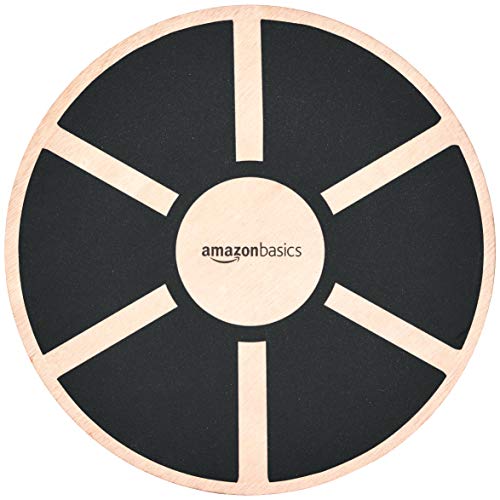

Verdict: If you want a straightforward wobble board for balance basics, this is the simplest and most familiar option in the list.
Unlike the more rehab-specific trainers above, this board is a broad-use stability tool that can still support ankle work, especially if you’re also interested in core and posture training. Its appeal is simplicity: solid wood, slip-resistant surface, and a no-frills design.
- ✓ Simple wobble board format is easy to understand and use
- ✓ Solid wood top and non-slip surface provide a secure feel
- ✓ Suitable for balance, coordination, posture, and core work
- ✓ Works well in home, gym, or rehab-center settings
- ✗ Less ankle-rehab-specific than the dedicated single-leg trainers
- ✗ No built-in progression system or guided rehab program
- ✗ Better as a general stability tool than a targeted recovery system
7. Ankle Balance Board Foot Strengthener Trainer for Sprained Ankle — Best for budget-friendly portability
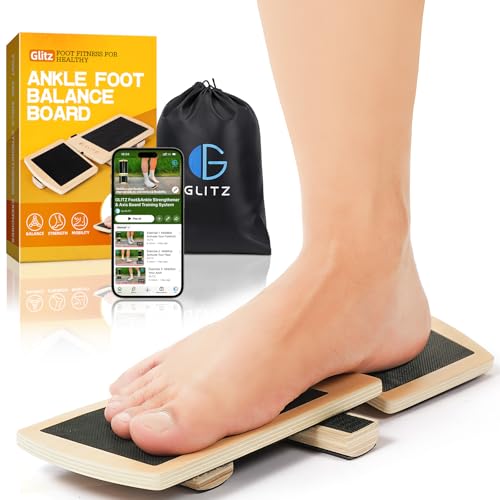

Verdict: A solid budget option for users who want a lightweight, no-fuss board that can travel easily between settings.
This board focuses on the basics: balance training, ankle stability, and portability. The Velcro-attached bars and included video guide add useful flexibility, while the birch plywood build and anti-slip pads help it feel more rehab-ready than a barebones board.
- ✓ Adjustable balance bars support targeted training
- ✓ Lightweight and portable for home, therapy, or travel use
- ✓ Anti-slip surface and sturdy birch plywood build improve confidence
- ✓ Includes video guidance for proper form
- ✗ Less premium-feeling than higher-end guided systems
- ✗ Not as feature-rich as the top adjustable picks
- ✗ Best for budget-conscious buyers who mainly want the basics
8. OPTP Dynamic Duo Balance & Stability Trainers — Best for professional-grade paired training


Verdict: This is the best pick if you want a more clinic-style setup and the flexibility to use one trainer or both together.
The Dynamic Duo is less of a single-board rehab gadget and more of a versatile training system. Because it comes as a pair and supports multi-plane movement, it can work well for users who want broader conditioning alongside ankle rehab.
- ✓ Set of 2 provides flexibility for solo or tandem training
- ✓ Multi-plane movement supports balance, flexibility, and coordination
- ✓ Slip-resistant bases improve safety on most surfaces
- ✓ Professional-grade positioning suits rehab and conditioning work
- ✗ Less compact than a single-board option
- ✗ Pair-based format may be more than many home users need
- ✗ Not as directly focused on single-leg ankle rehab as the top picks
How We Chose These Products
To build this list of the best balance boards for ankle rehab 2026, I looked for products that matched the needs of recovery-focused users rather than general fitness shoppers. The main factors were adjustable difficulty, single-leg training support, non-slip safety features, included guides or programs, and whether the design made sense for sprain recovery, plantar fasciitis, Achilles support, or ankle-strengthening routines.
I also considered durability signals from the product specs, such as wood or bamboo construction, weight support, and whether the board appeared easy to use consistently at home. Finally, I gave extra weight to products with clearer instructions, because guided rehab tools are often easier to stick with than generic balance surfaces.
Frequently Asked Questions
1. What type of balance board is best for ankle rehab?
The best option is usually a board designed for single-leg training, controlled movement, and gradual progression. Rehab-specific models with adjustable resistance or guided programs are often better than basic wobble boards.
2. Are balance boards good for a sprained ankle?
They can be useful as part of a rehab plan because they help rebuild balance, stability, and coordination. However, they should be used only when appropriate for your stage of recovery and ideally with guidance from a clinician.
3. What is the difference between a wobble board and an ankle rehab board?
A wobble board is usually a general balance tool, while an ankle rehab board often includes features like adjustable resistance, single-leg positioning, or exercise guidance aimed at recovery and stability training.
4. How often should I use a balance board for ankle rehab?
Many rehab-style products are designed for short, frequent sessions rather than long workouts. The right frequency depends on your recovery stage and the guidance you’ve been given, but consistency usually matters more than duration.
5. Can beginners use these balance boards safely?
Yes, many of these boards are beginner-friendly, especially those with guides, app programs, or adjustable difficulty. Starting with chair support and a low-challenge setting is usually the safest approach.
Pros
- + Adjustable and guided rehab options
- + Single-leg training support
- + Non-slip surfaces and stable builds
- + Portable choices for home or travel
- + Beginner-friendly instruction included
Cons
- – Some models are more complex than basic wobble boards
- – Premium picks may be more than casual users need
- – Not every board is equally adjustable
- – A few options are better for general stability than targeted rehab
Frequently asked questions
- What type of balance board is best for ankle rehab?
- The best option is usually a board designed for single-leg training, controlled movement, and gradual progression. Rehab-specific models with adjustable resistance or guided programs are often better than basic wobble boards.
- Are balance boards good for a sprained ankle?
- They can be useful as part of a rehab plan because they help rebuild balance, stability, and coordination. However, they should be used only when appropriate for your stage of recovery and ideally with guidance from a clinician.
- What is the difference between a wobble board and an ankle rehab board?
- A wobble board is usually a general balance tool, while an ankle rehab board often includes features like adjustable resistance, single-leg positioning, or exercise guidance aimed at recovery and stability training.
- How often should I use a balance board for ankle rehab?
- Many rehab-style products are designed for short, frequent sessions rather than long workouts. The right frequency depends on your recovery stage and the guidance you’ve been given, but consistency usually matters more than duration.
- Can beginners use these balance boards safely?
- Yes, many of these boards are beginner-friendly, especially those with guides, app programs, or adjustable difficulty. Starting with chair support and a low-challenge setting is usually the safest approach.
Score breakdown
- value
- 8.2
- usability
- 8.6
- durability
- 8.4
- performance
- 8.7
- buyerFeedback
- 8.3
Get the Full Health & Fitness Buyer's Guide
Join our free newsletter — we'll send our latest Health & Fitness picks, specs and verdicts straight to your inbox.
Free. No spam. Unsubscribe anytime.
Was this review helpful?
Be the first to share your feedback on this review.
Sign in to vote and let us know what you think.
Discussion (0)
No comments yet. Be the first to start the discussion.
Related Reviews

8 Best Lumbar Traction Devices for Home Use in 2026 — Better Back Relief Without Leaving Home
If you’re searching for the best lumbar traction devices for home use , you probably want something that can help ease lower-back tension without booking repeated clinic visits. The challenge is that not every device is built the same: some are simple stretchers, some use belts and harnesses, and ot

TimTam PowerMassager Pro Review (2026): Specs, Pros & Cons, and Who It's For
The biggest design advantage of the TimTam PowerMassager Pro is its size-to-output balance. Research-backed product specs point to a very compact, 1.01 lb aluminum body that is meant to fit into everyday carry situations rather than live permanently in a home gym.
6 Best Knee Scooters for Post-Surgery Recovery in 2026 — Easier Mobility, Better Stability
If you’re recovering from foot, ankle, calf, or lower-leg surgery, the right knee scooter can make everyday movement far less frustrating than crutches. The best knee scooters for post-surgery recovery should balance comfort, control, foldability, and stability so you can get around your home and sh