
Who this is for: Best for skincare shoppers who want to understand chemical vs physical exfoliation and choose the right product for smoother skin.
Check PriceWhat is Chemical vs Physical Exfoliation? A Complete 2026 Guide
Chemical vs physical exfoliation is one of the most confusing skincare decisions because both can smooth rough skin, but they work in very different ways. If you’ve ever wondered which option is gentler, which gives faster results, or which is better for acne, sensitive skin, or body bumps, this guide breaks it down clearly. You’ll also get a research-based shortlist of products that match different exfoliation needs, so you can choose with more confidence.
Related Reviews
How It Works
Exfoliation means removing dead skin cells from the surface of the skin so newer skin can show through more easily. The main difference in chemical vs physical exfoliation is the method: chemical exfoliants use acids or enzymes to loosen the “glue” holding dead cells together, while physical exfoliants use friction to manually scrub them away.
Chemical exfoliants usually include alpha hydroxy acids (AHAs) like glycolic or lactic acid, beta hydroxy acids (BHAs) like salicylic acid, or fruit enzymes. These ingredients work by dissolving the bonds between dead skin cells, which can help create a smoother look with less rubbing. Because they don’t rely on scrubbing, they’re often preferred for uneven texture, clogged pores, dullness, and body concerns like rough bumps.
Physical exfoliants use particles, beads, crystals, pumice, or textured tools to buff the skin’s surface. They can give a more immediate “polished” feel, but the tradeoff is that too much pressure or overly rough particles can irritate skin, especially if you already have redness, sensitivity, or a weakened skin barrier. Some modern formulas combine both approaches for a dual-action result, which can be helpful if you want visible smoothness without choosing only one method.
Key Benefits & Use Cases
When chemical exfoliation makes sense
Chemical exfoliation is often a smart choice if you want a more even skin texture, fewer clogged pores, or a gentler routine with less scrubbing. It can be especially useful for body concerns like keratosis pilaris, “strawberry legs,” and rough patches because acids can help loosen buildup that sits inside follicles and on the skin’s surface.
When physical exfoliation makes sense
Physical exfoliation can be appealing if you like instant smoothness and can tolerate a bit of friction. It may be a good fit for thicker body skin, occasional use on dull areas, or people who want a tactile scrub as part of a shower routine. That said, physical exfoliation usually requires more caution on the face than on the body.
Why some people choose both
Combination products can offer the best of both worlds: acids to soften the bonds between dead cells and gentle particles to lift away what’s left. For many shoppers, this is the middle ground between “too harsh” scrubs and “too mild” acids, especially when the formula also includes hydrators or soothing ingredients.
What to Look For When Buying
1. Your skin type
Match the exfoliant to your skin’s tolerance. Sensitive or easily irritated skin usually does better with lower-strength chemical exfoliation or very gentle physical texture, while oilier or rougher skin may handle stronger formulas better.
2. The exfoliating ingredient
For chemical exfoliation, look for AHAs like lactic or glycolic acid if your goal is smoothing and brightness. For physical exfoliation, look at the texture: pumice, microcrystals, or fine scrubbing particles are generally more controlled than harsh, jagged scrubs.
3. Hydrating and soothing support
Good exfoliators often include ingredients like glycerin, aloe, hyaluronic acid, squalane, vitamin E, or bisabolol. These can help reduce the dryness and tightness that sometimes follow exfoliation.
4. Where you plan to use it
Facial skin is usually more delicate than body skin, so facial exfoliators should be gentler than body scrubs. If you’re shopping for rough elbows, knees, or keratosis pilaris, a body-specific formula is often a better fit than a face scrub.
5. Frequency and formula style
Some exfoliators are designed for daily use, while others are meant for once or twice weekly application. If you’re new to chemical vs physical exfoliation, start with a lower-frequency formula and build slowly so you can see how your skin responds.
Top Recommended Products
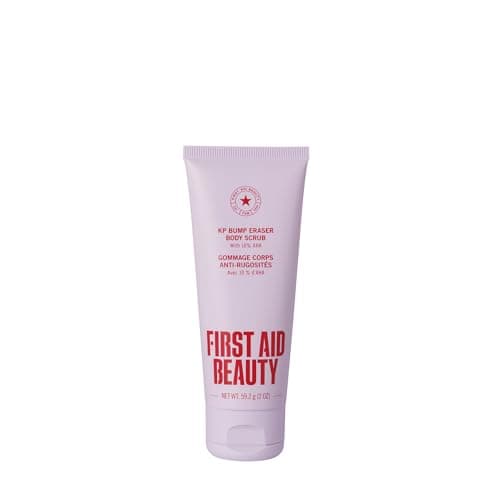
First Aid Beauty KP Bump Eraser Body Scrub, 10% AHA, 2 oz 4.6★ (research-based pick) ✓ Prime 20% OFF — Was $12.00
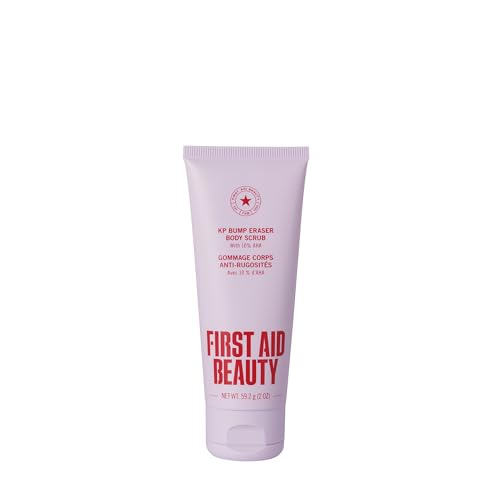

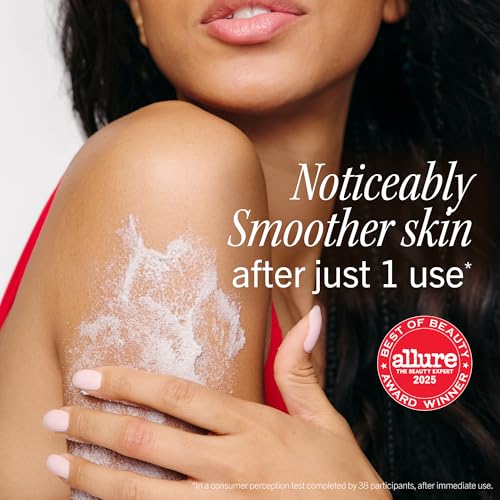
This body scrub is a strong example of chemical vs physical exfoliation working together. It combines glycolic and lactic acids with pumice beads, which makes it especially relevant for rough bumps, strawberry skin, and keratosis pilaris-style texture on the body.
Its formula also includes soothing support like bisabolol and vitamin E, and the brand positions it as suitable for sensitive skin. For shoppers who want a targeted body exfoliator rather than a general scrub, this is one of the most practical options in the list.
- ✓ Combines AHAs with pumice for dual-action exfoliation
- ✓ Designed for rough bumps and strawberry skin
- ✓ Includes soothing ingredients like bisabolol and vitamin E
- ✓ Vegan and cruelty-free formula
- ✓ Prime eligible and discounted
- ✗ Small 2 oz size
- ✗ May be too strong for very reactive skin if overused
- ✗ Body-focused, so not ideal if you want a facial exfoliator
VASANTI BrightenUp! Exfoliator (20g) 4.4★ (research-based pick) ✓ Prime
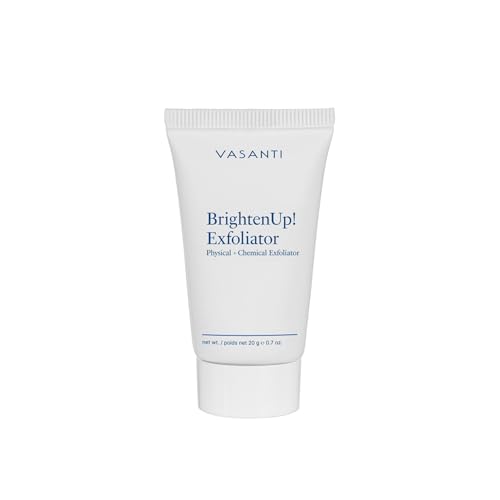

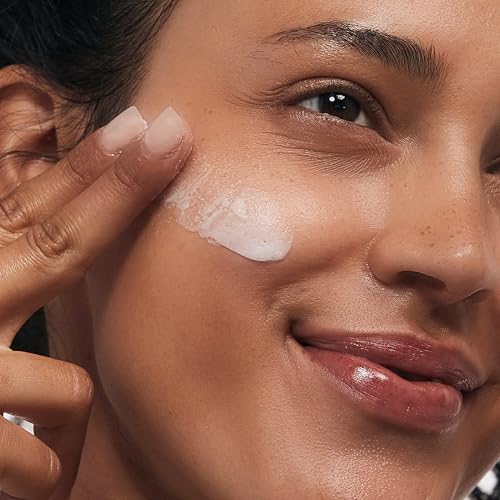
This is a hybrid facial exfoliator that blends physical and chemical exfoliation in one product. With papaya, microcrystals, and aloe, it’s aimed at users who want quick visible smoothness and a brighter finish without having to buy separate exfoliating products.
Because it’s a smaller size and marketed for instant results, it may appeal to shoppers who want to test the category before committing to a larger routine. It’s a straightforward entry point for people comparing chemical vs physical exfoliation for the face.
- ✓ Dual physical + chemical exfoliation
- ✓ Facial formula with aloe for added comfort
- ✓ Designed for instant smoothness and radiance
- ✓ Prime eligible
- ✓ Compact size for first-time buyers
- ✗ Small 20g size may run out quickly
- ✗ May not be ideal for very sensitive skin if used too often
- ✗ Less specialized than a dedicated AHA or BHA treatment
Mad Hippie MicroDermabrasion Facial – Exfoliating Face Scrub with Probiotics + AHA Fruit Acid Complex, Light Citrus Scent, 2.1 Fl Oz 4.7★ (research-based pick) ✓ Prime
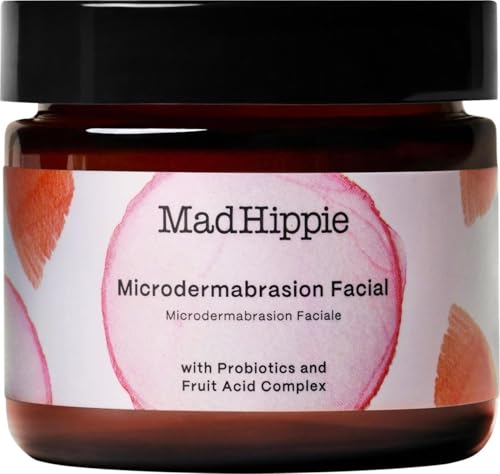
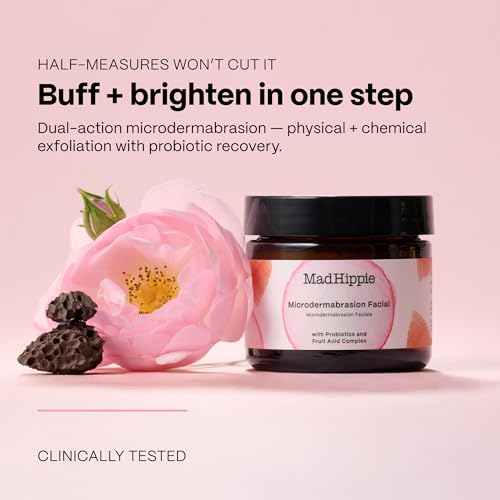
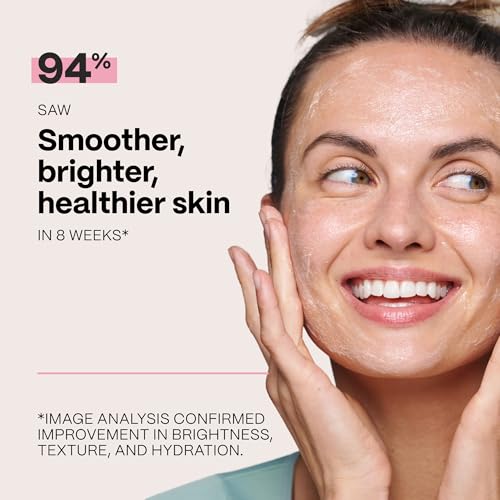
Mad Hippie is the most balanced facial option here for shoppers who want a researched, barrier-conscious approach to chemical vs physical exfoliation. The formula combines two physical exfoliants with six AHAs, plus probiotics, squalane, and hyaluronic acid to support comfort and hydration.
Published product claims highlight smoother and brighter skin after continued use, and the formula avoids synthetic fragrance, parabens, sulfates, and dyes. If you want a face exfoliator that aims for both visible refinement and skin-barrier support, this is the standout pick.
- ✓ Dual-action face exfoliator with AHAs and physical grit
- ✓ Includes hydrating and barrier-supporting ingredients
- ✓ Fragrance-free and barrier-safe positioning
- ✓ Prime eligible
- ✓ Best all-around facial balance in the list
- ✗ Higher price than the other face scrubs listed
- ✗ Citrus scent may not suit everyone
- ✗ Physical texture may still be too much for ultra-sensitive skin
Cyklar Lactic Acid Body Polish – Chemical Exfoliator with AHAs & Volcanic Pumice – Added Glycerin for Skin Hydration – Fragrance-Free, 11 fl oz 4.5★ (research-based pick) ✓ Prime
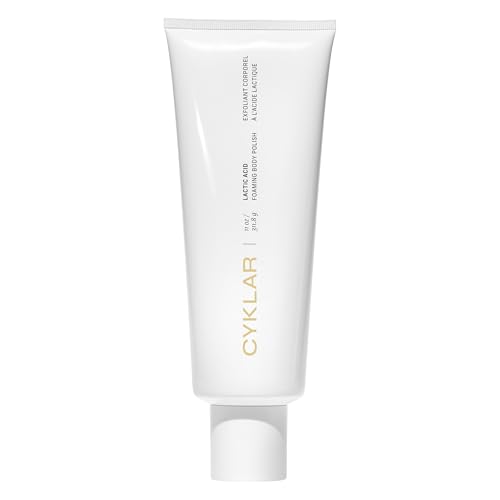


This body polish is another strong example of chemical vs physical exfoliation done in a dual-action format. It uses lactic acid alongside volcanic pumice, then adds glycerin to help maintain hydration while you exfoliate.
Because it is fragrance-free and body-specific, it may appeal to buyers who want a more refined, spa-like exfoliating routine without a heavily perfumed formula. The larger 11 fl oz size also makes it more practical for regular body use than a small trial-size product.
- ✓ Dual-action body exfoliation
- ✓ Fragrance-free formula
- ✓ Includes glycerin for hydration support
- ✓ Larger 11 fl oz size
- ✓ Prime eligible
- ✗ More expensive than the smaller scrub options
- ✗ Body-focused, not ideal for facial use
- ✗ May be more product than casual exfoliators need
Common Mistakes to Avoid
Using physical exfoliation too aggressively
Scrubbing harder does not mean better results. Too much pressure can lead to redness, micro-irritation, and a compromised skin barrier, especially on the face.
Over-exfoliating with acids
Chemical exfoliation can be effective, but more is not always better. Using acids too often can leave skin dry, sensitive, or flaky, which can make texture look worse instead of better.
Choosing a face scrub for body concerns
Body roughness, keratosis pilaris, and “strawberry legs” often need stronger or more targeted formulas than a basic facial exfoliator. A body-specific product is usually the better choice.
Ignoring hydration
Exfoliation works best when your skin barrier is supported. If you don’t follow with moisturizer or use a formula that includes soothing ingredients, you may end up with dryness and irritation.
Mixing too many actives at once
If you already use retinoids, strong acids, or acne treatments, adding another exfoliant can be too much. Start slowly and keep the rest of your routine simple until you know how your skin responds.
Frequently Asked Questions
Is chemical exfoliation better than physical exfoliation?
Not always. Chemical exfoliation is often better for sensitive skin, clogged pores, and uneven texture, while physical exfoliation can be useful for instant smoothing on body skin. The best choice depends on your skin type and your goal.
Which is gentler: chemical vs physical exfoliation?
For many people, chemical exfoliation is gentler because it does not rely on scrubbing. That said, strong acids can still irritate skin if overused, so “gentler” depends on the formula and how often you apply it.
Can I use both chemical and physical exfoliation?
Yes, but carefully. Some products combine both methods in one formula, and that can work well if the texture is gentle and your skin tolerates it. If you’re new to exfoliation, it’s usually safer to start with one method first.
How often should I exfoliate?
Most people do best starting one to three times per week, depending on the product strength and skin sensitivity. Body exfoliators may be used more often than facial ones, but you should always adjust based on dryness or irritation.
What should I buy for rough bumps or strawberry legs?
A body exfoliator with AHAs, like a lactic or glycolic acid formula, is often a strong choice. Products that combine acids with gentle physical exfoliation can be especially helpful for rough, bumpy texture on the body.
Pros
- + Explains chemical vs physical exfoliation clearly
- + Helps match exfoliation type to skin needs
- + Includes research-based product recommendations
- + Covers common mistakes and buying criteria
- + Answers high-intent search questions
Cons
- – No hands-on testing
- – Results vary by skin type
- – Some products may be too strong for sensitive skin
Frequently asked questions
- Is chemical exfoliation better than physical exfoliation?
- Not always. Chemical exfoliation is often better for sensitive skin, clogged pores, and uneven texture, while physical exfoliation can be useful for instant smoothing on body skin. The best choice depends on your skin type and your goal.
- Which is gentler: chemical vs physical exfoliation?
- For many people, chemical exfoliation is gentler because it does not rely on scrubbing. That said, strong acids can still irritate skin if overused, so “gentler” depends on the formula and how often you apply it.
- Can I use both chemical and physical exfoliation?
- Yes, but carefully. Some products combine both methods in one formula, and that can work well if the texture is gentle and your skin tolerates it. If you’re new to exfoliation, it’s usually safer to start with one method first.
- How often should I exfoliate?
- Most people do best starting one to three times per week, depending on the product strength and skin sensitivity. Body exfoliators may be used more often than facial ones, but you should always adjust based on dryness or irritation.
- What should I buy for rough bumps or strawberry legs?
- A body exfoliator with AHAs, like a lactic or glycolic acid formula, is often a strong choice. Products that combine acids with gentle physical exfoliation can be especially helpful for rough, bumpy texture on the body.
Score breakdown
- value
- 8.0
- usability
- 8.0
- durability
- 7.0
- performance
- 8.0
- buyerFeedback
- 8.0
Get the Full Beauty & Personal Care Buyer's Guide
Join our free newsletter — we'll send our latest Beauty & Personal Care picks, specs and verdicts straight to your inbox.
Free. No spam. Unsubscribe anytime.
Was this review helpful?
Be the first to share your feedback on this review.
Sign in to vote and let us know what you think.
Discussion (0)
No comments yet. Be the first to start the discussion.
Related Reviews
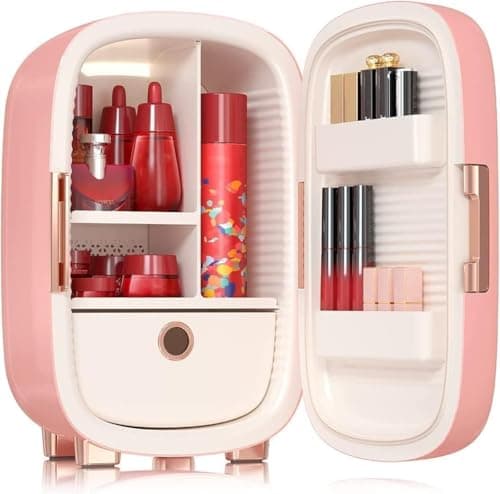
What is a Beauty Fridge Buying Guide for Skincare Storage? A Complete 2026 Guide
A beauty fridge buying guide for skincare storage helps you choose a mini refrigerator that keeps serums, creams, masks, and makeup at a stable cool temperature without wasting money on the wrong features. The challenge is that not every compact fridge is built for cosmetics, and the wrong one can b
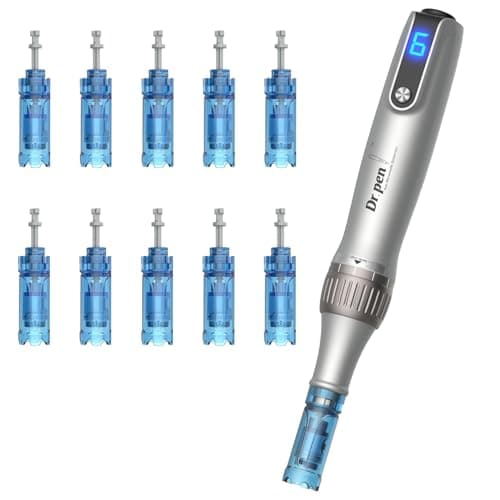
How to Choose the Best At-Home Microneedling Pen in 2026: Complete Buying Guide
If you’re trying to figure out how to choose an at-home microneedling pen , the hardest part is not the price tag — it’s knowing which features actually matter for safe, easy home use. The most common mistake buyers make is choosing based on needle depth claims alone, without checking usability, car
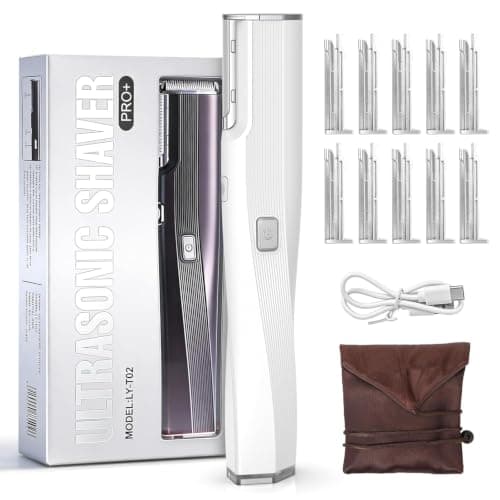
What is a Dermaplaning Tool Buying Guide? A Complete 2026 Guide
If you’re trying to figure out which dermaplaning tool is actually worth buying, the choices can feel confusing fast. Some tools are designed for simple facial exfoliation, while others add sonic vibration, safety guards, or replacement blades that change the experience a lot. This dermaplaning tool