
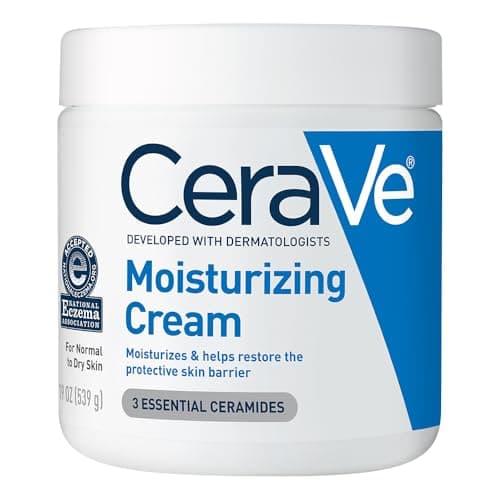
Who this is for: Best for shoppers choosing between a richer dry-skin cream and a lighter sensitive-skin lotion.
CeraVe vs Cetaphil (2026): Which Should You Actually Buy?
At a Glance
| Category | CeraVe Moisturizing Cream | Cetaphil Face & Body Moisturizer |
|---|---|---|
| Best for | Dry skin, barrier support, richer hydration | Sensitive skin, lighter everyday use, all skin types |
| Texture | Rich, velvety cream | Lightweight, fast-absorbing lotion |
| Hydration claim | 24-hour hydration | 48-hour hydration |
| Key ingredients | Hyaluronic acid, 3 essential ceramides | Glycerin, vitamin B5, vitamin B3 |
| Sensitive-skin friendly | Fragrance free, paraben free, allergy-tested, non-comedogenic | Fragrance free, hypoallergenic, non-comedogenic |
| Price | 7% OFF — Was $20.49 ✓ Prime $18.96 | ✓ Prime $15.97 |
Design
CeraVe Moisturizing Cream
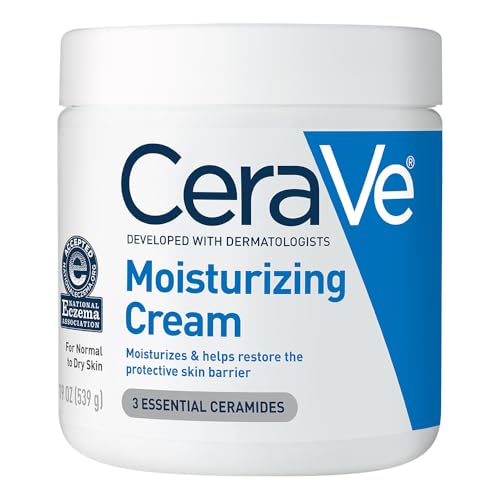
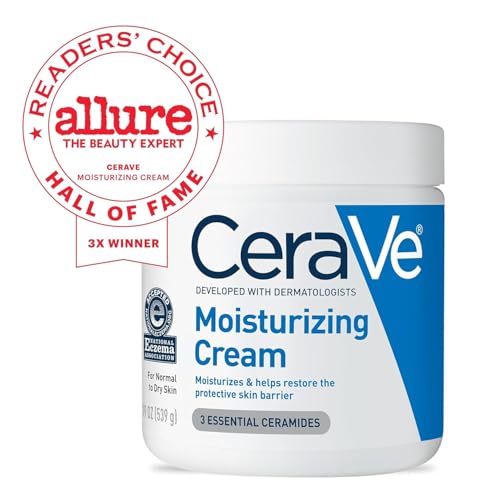
CeraVe Moisturizing Cream is positioned like a heavy-duty skin barrier product: rich, velvety, and built for dry or flaky skin. The formula focus is clearly on ceramides and hyaluronic acid, which makes it feel more treatment-like than a basic lotion.
Related Reviews
- 1 Best Radiofrequency Face Devices for Neck and Jowls in 2026 — Firmer-Looking Skin Without Clinic Pricing
- 8 Best Ultrasonic Skin Scrubbers for Blackheads in 2026 — Clearer Pores Without the Spa Price
- 2 Best Derma Pens for Home Microneedling in 2026 — Smoother-Looking Skin at Home Without the Guesswork
Winner: CeraVe — its cream texture and barrier-first positioning make it the better-designed option for users who want a more intensive moisturizer.
Cetaphil Face & Body Moisturizer
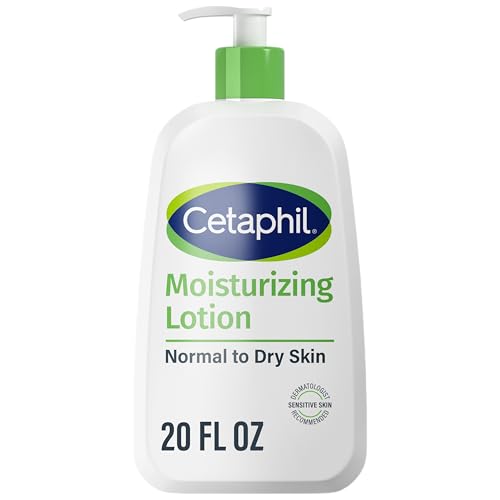

Cetaphil Face & Body Moisturizer leans lighter and simpler. The lotion format is easier to spread quickly across large areas, which is a plus if you want a no-fuss daily hydrator.
Why it loses: it’s more about convenience than deep moisture support, so it feels less specialized than CeraVe.
Performance
CeraVe Moisturizing Cream
CeraVe’s published specs make a strong case for performance on dry skin: hyaluronic acid for hydration, three essential ceramides for barrier support, and MVE technology for 24-hour moisture delivery. Owner feedback across retail listings typically aligns with that promise, especially from users dealing with rough, itchy, or flaky skin.
Winner: CeraVe — it offers the more robust ingredient profile for skin that needs actual repair-minded hydration, not just a light moisturizing layer.
Cetaphil Face & Body Moisturizer
Cetaphil’s formula emphasizes immediate soothing and 48-hour hydration, plus glycerin, vitamin B5, and niacinamide. That makes it appealing for sensitive skin and for people who want a lotion that absorbs quickly without feeling heavy.
Why it loses: while it hydrates well, its ingredient story is less targeted toward barrier rebuilding than CeraVe’s ceramide-based approach.
Value
CeraVe Moisturizing Cream
At $18.96 for 19 ounces, CeraVe sits in the middle of the pack price-wise, and the current 7% discount helps. Since it doubles as a face, body, and hand cream, the value improves if you prefer one product for multiple uses.
Winner: CeraVe — it costs a bit more than Cetaphil, but the richer formula and broader dry-skin support justify the premium for many buyers.
Cetaphil Face & Body Moisturizer
At $15.97 for 20 ounces, Cetaphil is the cheaper option and gives you slightly more product by volume. If your priority is stretching a basic daily moisturizer budget, that lower entry price matters.
Why it loses: it’s the better bargain on paper, but the formula is also more basic, so the value edge is not overwhelming if your skin is very dry.
Battery/Durability
CeraVe Moisturizing Cream
For skincare, durability is really about how long the moisture lasts and how well the formula holds up on the skin. CeraVe’s 24-hour hydration claim, plus the inclusion of ceramides, suggests a more durable moisture barrier outcome for dry skin users.
Winner: CeraVe — it is the better long-wear moisturizer for people who need a cream that stays effective through the day.
Cetaphil Face & Body Moisturizer
Cetaphil claims 48-hour hydration, which sounds stronger on paper, and its lightweight formula may feel more wearable for some people. Still, owner feedback tends to frame it as a comfort-first lotion rather than a heavy-duty skin barrier product.
Why it loses: the lighter feel is a plus, but it’s not as clearly built for tougher dry-skin cases.
CeraVe Moisturizing Cream Is the Better Choice If…
- You have dry, flaky, or itchy skin and want a richer cream.
- You care about ceramides and hyaluronic acid in a daily moisturizer.
- You want one product for face, body, and hands.
- You prefer a more barrier-supportive formula over a light lotion.
- You want a moisturizer with strong dermatologist-backed positioning.
Cetaphil Face & Body Moisturizer Is the Better Choice If…
- You want the lower-priced option.
- You prefer a lightweight lotion that absorbs quickly.
- You have sensitive skin and want a simple fragrance-free formula.
- You want a moisturizer for all-over daily use without a heavy feel.
- You like glycerin, panthenol, and niacinamide in a basic body lotion.
Our Final Verdict
For most shoppers comparing CeraVe vs Cetaphil, CeraVe Moisturizing Cream is the better overall buy in 2026. It offers the stronger combination of ceramides, hyaluronic acid, and richer hydration support, which makes it the smarter pick for dry or compromised skin.
Cetaphil is still a very good option if you want a lighter, more affordable lotion for sensitive skin and everyday use. But if your main goal is to seriously moisturize and support the skin barrier, CeraVe wins the head-to-head.
Best overall: CeraVe Moisturizing Cream
Budget-friendly alternative: Cetaphil Face & Body Moisturizer
Frequently Asked Questions
1. Is CeraVe better than Cetaphil for dry skin?
Yes, CeraVe is usually the better choice for dry skin because it uses ceramides and hyaluronic acid in a richer cream formula designed for barrier support.
2. Which is better for sensitive skin, CeraVe or Cetaphil?
Both are good for sensitive skin, but Cetaphil is often preferred by people who want a lighter, simpler lotion, while CeraVe is better if sensitivity comes with dryness.
3. Is Cetaphil cheaper than CeraVe?
Yes, Cetaphil is the lower-priced option in this comparison, and it also gives you slightly more ounces for the money.
4. Can I use CeraVe or Cetaphil on my face?
Yes, both products are marketed for face and body use, and both are fragrance free and non-comedogenic.
5. Which one should I buy if I only want one moisturizer for everything?
CeraVe is the better all-around pick if you want one moisturizer for face, body, and hands with stronger hydration support.
Pros
- + CeraVe has ceramides and hyaluronic acid for dry skin
- + Cetaphil is lighter and lower priced
- + Both are fragrance free and non-comedogenic
- + Both are suitable for face and body use
Cons
- – CeraVe costs more than Cetaphil
- – Cetaphil is less barrier-focused than CeraVe
- – CeraVe may feel too rich for some users
- – Cetaphil may not be enough for very dry skin
Frequently asked questions
- Is CeraVe better than Cetaphil for dry skin?
- Yes, CeraVe is usually the better choice for dry skin because it uses ceramides and hyaluronic acid in a richer cream formula designed for barrier support.
- Which is better for sensitive skin, CeraVe or Cetaphil?
- Both are good for sensitive skin, but Cetaphil is often preferred by people who want a lighter, simpler lotion, while CeraVe is better if sensitivity comes with dryness.
- Is Cetaphil cheaper than CeraVe?
- Yes, Cetaphil is the lower-priced option in this comparison, and it also gives you slightly more ounces for the money.
- Can I use CeraVe or Cetaphil on my face?
- Yes, both products are marketed for face and body use, and both are fragrance free and non-comedogenic.
- Which one should I buy if I only want one moisturizer for everything?
- CeraVe is the better all-around pick if you want one moisturizer for face, body, and hands with stronger hydration support.
Get the Full Beauty & Personal Care Buyer's Guide
Join our free newsletter — we'll send our latest Beauty & Personal Care picks, specs and verdicts straight to your inbox.
Free. No spam. Unsubscribe anytime.
Was this review helpful?
Be the first to share your feedback on this review.
Sign in to vote and let us know what you think.
Discussion (0)
No comments yet. Be the first to start the discussion.
Related Reviews
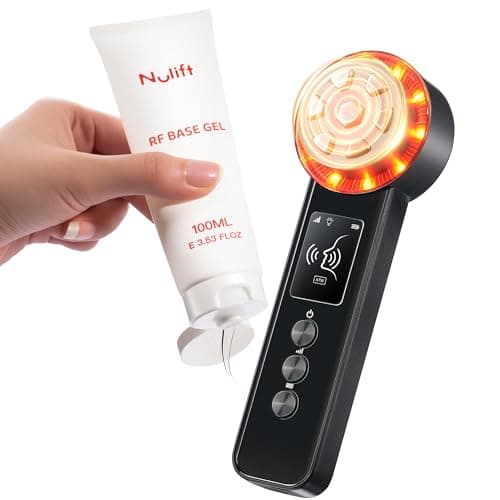
1 Best Radiofrequency Face Devices for Neck and Jowls in 2026 — Firmer-Looking Skin Without Clinic Pricing
If you’re searching for the best radiofrequency face devices for neck and jowls, you probably want a non-invasive way to make the lower face look tighter, smoother, and less puffy. The challenge is that many at-home devices promise a lot, but only a few are designed with jawline, chin, and neck trea
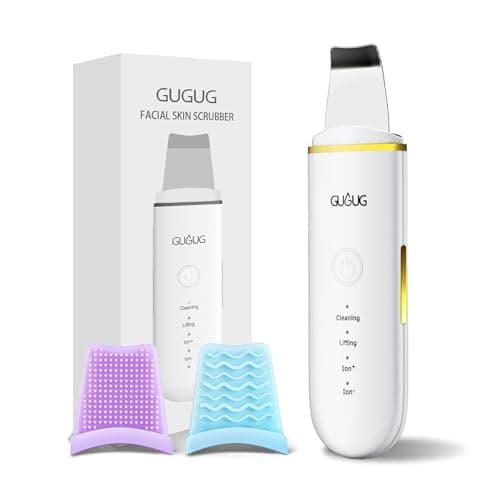
8 Best Ultrasonic Skin Scrubbers for Blackheads in 2026 — Clearer Pores Without the Spa Price
If blackheads keep coming back no matter how often you cleanse, a skin scrubber can be a smarter at-home option than squeezing or scrubbing harder. The best ultrasonic skin scrubbers for blackheads combine pore-clearing modes, gentle exfoliation, and easy charging so you can actually stick with a ro
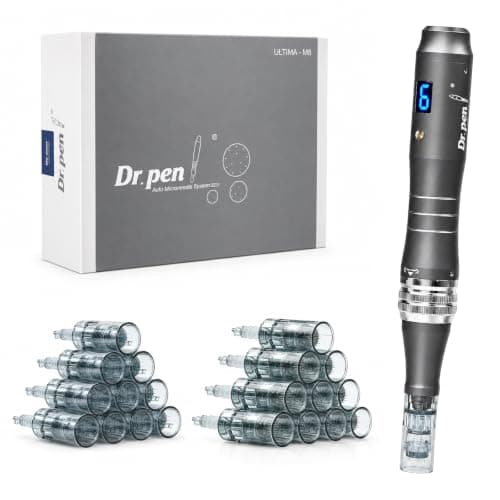
2 Best Derma Pens for Home Microneedling in 2026 — Smoother-Looking Skin at Home Without the Guesswork
If you’re searching for the best derma pens for home microneedling 2026 , you probably want something that feels effective, beginner-friendly, and worth the money. The challenge is that not every at-home pen is equally easy to control, hygienic, or practical for regular use. This research-based roun