

Who this is for: Best for readers who want evidence-based guidance on whether shower filters are worth it for chlorine, dryness, and simple water-quality improvement.
Check PriceWhat is do shower filters work evidence? A Complete 2026 Guide
If you’re trying to figure out do shower filters work evidence, the short answer is: sometimes, but it depends on what contaminant you care about and how the filter is certified. Many shower filters are marketed with big promises about softer skin, less dandruff, and healthier hair, yet the real evidence is usually strongest for reducing chlorine and weaker for broad health claims. This guide breaks down the science in plain English so you can judge what’s proven, what’s plausible, and what’s mostly marketing.
Related Reviews
- 8 Best At-Home IPL Hair Removal Devices for Body in 2026 — Fast, Nearly Painless Full-Body Results
- Best At-Home Laser Hair Removal Devices Under $300 for Every Budget in 2026: Ranked by Price & Performance
- 8 Best Whirlpool Jetted Tubs for Home in 2026 — Spa-Style Hydrotherapy for Every Bathroom Layout
A shower filter is a device that attaches between your shower arm and showerhead to remove or reduce certain substances in the water. In most cases, it’s designed to improve shower water quality by targeting chlorine, some metals, sediment, and odor-causing compounds. The evidence suggests these filters can help some people notice less dryness or irritation, but results vary based on water quality, filter media, and how well the product is tested.
How It Works
Shower filters usually rely on one or more filtration materials rather than a single “magic” technology. Common media include activated carbon, calcium sulfite, KDF-type redox media, ceramic beads, and sediment filtration layers, each aimed at different contaminants. The basic idea is simple: water passes through the cartridge, and the media either bind chemicals, reduce them through a chemical reaction, or trap particles before the water reaches your skin and hair.
For example, chlorine reduction is one of the most common claims because chlorine is widely used in municipal water and can contribute to dryness, odor, and a “stripped” feeling after showering. Some higher-end filters also claim reduction of PFAS or particulates, but those claims are more dependent on independent lab verification than on generic marketing language. That’s why the phrase “do shower filters work evidence” usually leads to a more nuanced answer: they can work for specific targets, but not all claims are equally supported.
It also helps to separate water treatment from skin and hair outcomes. A filter may reduce chlorine effectively, but whether that translates into visibly better skin or hair depends on your baseline water quality, your skin sensitivity, and your routine. In other words, the filter can be doing its job even if the cosmetic change is subtle.
Key Benefits & Use Cases
1. Reducing chlorine exposure in the shower
This is the most common reason people buy shower filters. If your water has a noticeable chlorine smell or you experience dryness after bathing, a filter may make showers feel gentler.
2. Helping sensitive skin feel less irritated
People with dry skin, eczema-prone skin, or scalp sensitivity often look for shower filters as a low-effort way to reduce a possible trigger. The evidence here is mostly indirect: less chlorine and fewer irritants can help some users feel more comfortable.
3. Improving hair feel and scalp comfort
Many owners report softer-feeling hair, less frizz, or less “stripped” hair after switching to filtered shower water. That said, improvements are usually modest and may be more noticeable in hard-water or chlorinated-water areas.
4. Cutting odor and visible sediment
Some filters can reduce unpleasant smells and trap particles, which can make the shower experience more pleasant. This is a practical use case even when the cosmetic benefits are hard to measure.
5. A simple upgrade for renters and non-handy buyers
Shower filters are popular because they’re easy to install and remove without plumbing changes. If you want a low-commitment water-quality upgrade, they’re one of the easiest options to try.
What to Look For When Buying
Not all shower filters are created equal. If you want evidence-based value instead of hype, focus on these five criteria:
1. Independent certification or third-party verification
Look for NSF certification or credible third-party lab testing. Certification matters because it’s a stronger signal than vague claims like “advanced purification” or “maximum filtration.”
2. The specific contaminant reduced
Ask what the filter is actually designed to reduce. Chlorine reduction is common; broader claims like PFAS, heavy metals, or pharmaceuticals require stronger proof.
3. Filter media and stage design
Multi-stage filters often combine several media to address different issues. More stages don’t automatically mean better performance, but they can improve the odds of handling multiple contaminants.
4. Flow rate and shower comfort
A filter should not turn your shower into a weak trickle. If the flow drops too much, the product may be more annoying than helpful.
5. Replacement cost and lifespan
The ongoing cost matters as much as the upfront price. A cheaper filter that needs frequent replacement may cost more over time than a premium model with a longer cartridge life.
Top Recommended Products
Below are the products from the provided list, with the strongest options first for readers who want the best mix of evidence, convenience, and value.

 Weddell Duo Shower Filter mid-range
This is the strongest pick if you want the most evidence-friendly option in the list. Its standout advantage is NSF-certified performance and independent verification for additional reductions, which gives it more credibility than filters that rely only on marketing claims. It also emphasizes high flow rate, universal fit, and long cartridge life, which matter in real-world use.
- ✓ NSF-certified performance for chlorine reduction
- ✓ Independently verified for PFAS and particulates
- ✓ High flow rate and large-capacity design
- ✓ Tool-free installation with broad compatibility
- ✓ Long-lasting cartridges with visual monitoring
- ✗ Higher upfront price than most alternatives
- ✗ Premium features may be more than casual buyers need
- ✗ Cosmetic benefits can still vary by water quality
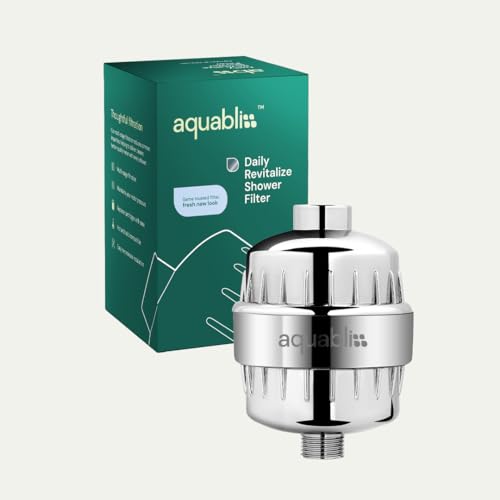 Aquabliss High Output Revitalizing Shower Filter more affordable
This is the value pick for buyers who want a lower-cost shower filter with broad consumer appeal. It uses a multi-stage design and is positioned around reducing chlorine and other common shower-water irritants. The main draw is affordability paired with easy installation.
- ✓ Multi-stage filtration design
- ✓ Lower price than premium certified options
- ✓ Easy, tool-free installation
- ✓ Cartridge replacement is straightforward
- ✓ Good fit for fixed, rain, combo, and handheld showers
- ✗ Marketing claims are broader than the strongest evidence
- ✗ No certification highlighted in the provided data
- ✗ Cartridge cost still adds up over time
 Weddell Duo Shower Filter mid-range
This is the same core product as the white version, just in black. If you care about matching bathroom hardware or want the same evidence-backed filtration in a darker finish, this is the alternative to consider.
- ✓ NSF-certified performance for chlorine reduction
- ✓ Independently verified for PFAS and particulates
- ✓ High flow rate and large-capacity design
- ✓ Tool-free installation with broad compatibility
- ✓ Long-lasting cartridges with visual monitoring
- ✗ Higher upfront price than most alternatives
- ✗ Premium features may be more than casual buyers need
- ✗ Cosmetic benefits can still vary by water quality

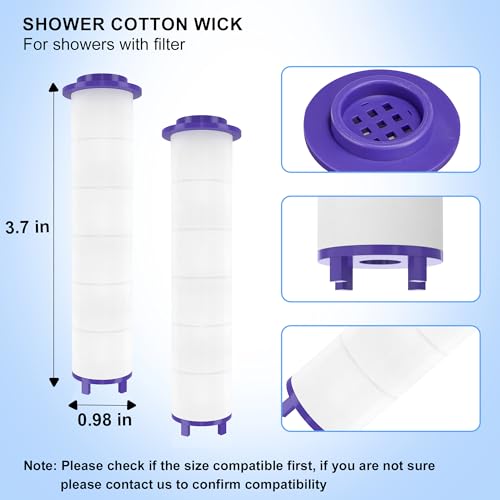 12 Pieces Hydro Jet Shower Head Filter budget
This budget option is best viewed as a replacement-filter pack for compatible shower heads, not a premium whole-shower solution. It may appeal to buyers who want a low-cost consumable and already know their shower head uses this filter size. Because the product data is narrower and more compatibility-specific, it’s less of a universal recommendation.
- ✓ Extremely low upfront cost
- ✓ Comes as a 12-pack for ongoing replacements
- ✓ Designed for compatible hydro jet and vortex shower heads
- ✓ Simple swap-in maintenance
- ✗ Compatibility is limited and must be checked carefully
- ✗ Less evidence of broad shower-water improvement
- ✗ More of a consumable than a full-featured filter system
Common Mistakes to Avoid
Assuming every shower filter does the same thing
Some products focus on chlorine reduction, while others make broader claims about heavy metals, PFAS, or skin benefits. Always check what is actually verified.
Confusing marketing language with proof
Phrases like “rejuvenating,” “revitalizing,” or “maximum filtration” sound impressive but don’t replace certification or lab testing. Evidence matters more than adjectives.
Ignoring cartridge replacement costs
A filter only works as intended if you replace the cartridge on schedule. A neglected filter can become an expensive placebo.
Expecting dramatic medical results
Shower filters may help with comfort, odor, and some dryness issues, but they are not a treatment for eczema, hair loss, or other medical conditions. If symptoms are severe, a dermatologist or clinician is the right next step.
Buying without checking shower compatibility
Not every filter fits every setup. Confirm the connection type, showerhead style, and physical dimensions before buying.
Frequently Asked Questions
Do shower filters work evidence-wise?
Yes, but the strongest evidence is usually for reducing chlorine and some particulates, especially when the product has certification or third-party testing. Evidence for visible skin and hair improvements exists mostly through owner feedback and plausibility, not universal clinical proof.
Do shower filters really help dry skin?
They may help some people, especially if chlorine or irritating water conditions are part of the problem. Results vary, and a filter is more likely to provide modest comfort improvement than a dramatic cure.
Are NSF-certified shower filters better?
Usually yes, because certification gives you a clearer signal that performance has been tested against a standard. It doesn’t guarantee every benefit, but it is more trustworthy than unsupported marketing claims.
How long does a shower filter last?
It depends on the cartridge and your water quality. Some last a few months, while others are rated for thousands of gallons, so replacement timing should follow the manufacturer’s guidance.
Can a shower filter remove hard water?
Most shower filters do not truly soften hard water in the same way a water softener does. They may reduce chlorine, odor, or some sediment, but hard-water minerals usually require a different type of system.
Pros
- + Can reduce chlorine and some irritants
- + May help dry or sensitive skin feel more comfortable
- + Easy to install and maintain
- + Certified or verified models offer stronger evidence
Cons
- – Skin and hair results vary by water quality
- – Some claims go beyond the strongest evidence
- – Cartridge replacements add ongoing cost
- – Not a substitute for a water softener
Frequently asked questions
- Do shower filters work evidence-wise?
- Yes, but the strongest evidence is usually for reducing chlorine and some particulates, especially when the product has certification or third-party testing. Evidence for visible skin and hair improvements exists mostly through owner feedback and plausibility, not universal clinical proof.
- Do shower filters really help dry skin?
- They may help some people, especially if chlorine or irritating water conditions are part of the problem. Results vary, and a filter is more likely to provide modest comfort improvement than a dramatic cure.
- Are NSF-certified shower filters better?
- Usually yes, because certification gives you a clearer signal that performance has been tested against a standard. It doesn’t guarantee every benefit, but it is more trustworthy than unsupported marketing claims.
- How long does a shower filter last?
- It depends on the cartridge and your water quality. Some last a few months, while others are rated for thousands of gallons, so replacement timing should follow the manufacturer’s guidance.
- Can a shower filter remove hard water?
- Most shower filters do not truly soften hard water in the same way a water softener does. They may reduce chlorine, odor, or some sediment, but hard-water minerals usually require a different type of system.
Get the Full Beauty & Personal Care Buyer's Guide
Join our free newsletter — we'll send our latest Beauty & Personal Care picks, specs and verdicts straight to your inbox.
Free. No spam. Unsubscribe anytime.
Was this review helpful?
Be the first to share your feedback on this review.
Sign in to vote and let us know what you think.
Discussion (0)
No comments yet. Be the first to start the discussion.
Related Reviews

8 Best At-Home IPL Hair Removal Devices for Body in 2026 — Fast, Nearly Painless Full-Body Results
If you’re tired of shaving every few days, dealing with razor bumps, or booking salon sessions just to keep body hair under control, an at-home IPL device can be a smarter long-term fix. The best at-home IPL hair removal devices for body are the ones that balance speed, comfort, safety features, and

Best At-Home Laser Hair Removal Devices Under $300 for Every Budget in 2026: Ranked by Price & Performance
If you want smoother skin without paying for salon sessions, the challenge is finding an at-home IPL device that actually feels worth the money. The best at-home laser hair removal devices at more affordable price points usually come down to three things: cooling comfort, flash count, and how easy t

8 Best Whirlpool Jetted Tubs for Home in 2026 — Spa-Style Hydrotherapy for Every Bathroom Layout
If you’re searching for the best whirlpool jetted tubs for home 2026, you probably want more than a pretty bathtub—you want a soak that actually feels restorative, fits your bathroom, and is practical to install. This roundup focuses on tubs with strong hydrotherapy features, thoughtful comfort deta