
What is 4K vs 8K TV Worth It? A Complete 2026 Guide
If you’re trying to decide whether a 4K or 8K TV is worth the upgrade, the biggest problem is simple: the specs sound impressive, but the real-world difference is often hard to see. This guide breaks down what 4K and 8K actually mean, how the technology works, and when paying more truly makes sense. By the end, you’ll know whether the 4K vs 8K TV worth it question ends with “yes,” “no,” or “not yet” for your setup.
4K and 8K refer to a TV’s resolution, which is the number of tiny pixels used to create the image. A 4K TV has about 8.3 million pixels, while an 8K TV has about 33 million, so 8K can display much finer detail on paper. In practice, whether that extra detail matters depends on screen size, viewing distance, content quality, and your budget.
For most buyers in 2026, 4K still delivers the best mix of price, picture quality, and content availability. 8K can look stunning in the right conditions, but it’s often more of a future-facing luxury than a must-have upgrade. The key is understanding what you’ll actually watch and how close you sit to the screen.
How It Works
TV resolution works by packing more pixels into the screen so images look sharper and more detailed. A 4K TV typically uses 3840 x 2160 pixels, while an 8K TV uses 7680 x 4320 pixels, which is four times as many pixels as 4K. That extra density can reduce visible pixel structure and make fine textures, like hair, fabric, or distant scenery, look more realistic.
However, resolution is only one part of picture quality. Brightness, contrast, color accuracy, local dimming, and HDR support often have a bigger impact on how good a TV looks than resolution alone. A well-tuned 4K TV can easily outperform a mediocre 8K TV if the panel, processing, and backlight are better.
Another important piece is content. Most movies, streaming shows, cable channels, and gaming content are still produced in 4K or lower, and true 8K content remains limited. That means many 8K TVs rely on upscaling, which uses processing to make lower-resolution content look better on a higher-resolution screen.
Upscaling can be impressive, but it cannot create real detail that was never captured. It can smooth edges and reduce softness, yet the source material still matters. This is why many shoppers asking 4K vs 8K TV worth it find that the jump is less dramatic than the marketing suggests.
Key Benefits & Use Cases
Why 4K is usually the smart default
4K is the sweet spot for most living rooms because it offers excellent clarity without requiring a huge budget. Streaming services, gaming consoles, and Blu-ray content all support 4K widely, so you’ll get more real-world value from day one. It also gives you more choice across brands and price ranges.
When 8K can make sense
8K can be attractive if you’re buying a very large screen, sitting relatively close, or want the most future-ready option available. It may also appeal to enthusiasts who want the sharpest possible image and are willing to pay for premium processing. On very large displays, the added pixel density can help the picture look more natural and less “screen-like.”
Best use cases for each resolution
4K is ideal for family rooms, bedrooms, gaming setups, and anyone who wants strong performance without overspending. 8K fits luxury home theaters, large open spaces, and buyers who prioritize top-end specs over value. For casual viewing, sports, and most streaming, 4K remains more practical.
What to Look For When Buying
1. Screen size and viewing distance
The larger the TV and the closer you sit, the more likely you are to notice the benefits of higher resolution. On smaller screens or from a normal couch distance, 8K’s extra detail is much harder to see. This is one of the main reasons 4K is still the better buy for most households.
2. Content availability
Check whether the content you watch is actually available in 8K. If you mostly stream standard movies, TV shows, or live broadcasts, you may not benefit much from 8K. A strong 4K TV with good HDR often delivers a more noticeable upgrade.
3. Picture processing
Upscaling quality matters a lot, especially on 8K sets. A TV with strong processing can make 4K and lower-resolution content look cleaner and more refined. If processing is weak, the extra pixels won’t help much.
4. HDR, brightness, and contrast
High Dynamic Range, brightness, and contrast shape the “wow factor” more than raw resolution. A bright TV with good black levels and wide color can look more cinematic than a higher-resolution model with weaker panel performance. Always compare these specs before focusing on 4K vs 8K alone.
5. Budget and long-term value
Ask whether the price premium for 8K fits your real needs. In many cases, spending more on a better 4K TV gives you better overall picture quality than buying a basic 8K model. If value matters, 4K is usually the safer choice.
Top Recommended Products
While the resolution debate centers on TV panels, the products below can help you get the most from your viewing setup, especially if you watch over-the-air broadcasts or need the right HDMI connection for high-resolution content.
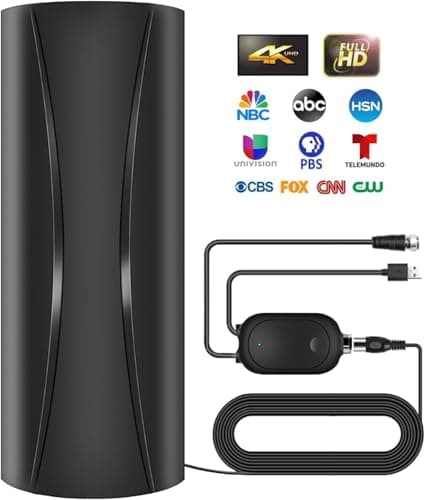
5000+ Miles Range TV Antenna ✓ Prime ($57.89)
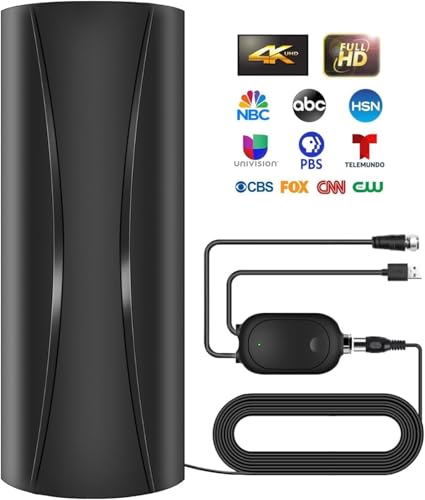


This antenna is useful if you want free local channels in HD without cable bills. Its 360° reception, amplified signal, and broad TV compatibility make it a practical companion for any modern TV setup.
- ✓ 360° omnidirectional reception for local channels
- ✓ Supports 8K, 4K, and 1080p broadcast quality
- ✓ Indoor/outdoor flexible placement with 38ft coax cable
- ✓ Compatible with smart TVs, old TVs, and converter boxes
- ✗ Performance depends heavily on local broadcast availability
- ✗ Old TVs may need a digital set-top box
GE Portable HD TV Antenna ✓ Prime ($10.46)
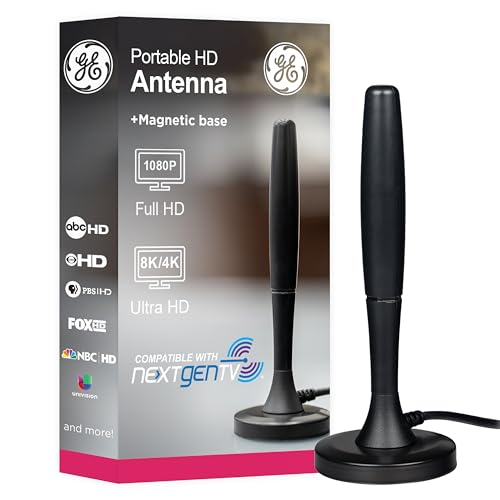

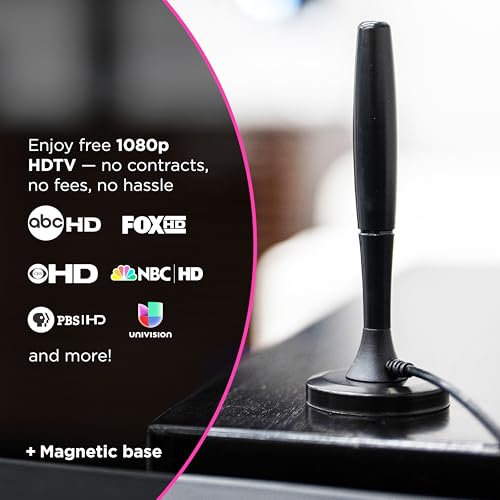
A compact option for travelers, RV owners, or anyone who wants simple over-the-air TV reception. It supports 4K and 8K-ready broadcasts, has a magnetic base, and is easy to store when not in use.
- ✓ Compact travel-friendly design
- ✓ 360° reception for VHF/UHF channels up to 20 miles
- ✓ NEXTGEN TV (ATSC 3.0) compatible
- ✓ Strong magnetic base for stable placement
- ✗ Shorter range than larger amplified antennas
- ✗ Best for local reception, not long-distance weak-signal areas
2025 Upgraded TV Antenna Indoor ✓ Prime (33% OFF — Was $14.99 $9.99)
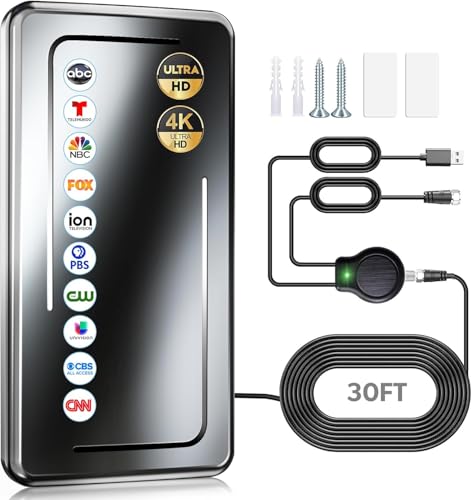


This budget-friendly antenna is aimed at users who want local channels without monthly fees. It includes a 30ft coax cable, a smart IC chip, and support for 8K, 4K, and 1080p broadcasts.
- ✓ Built-in smart IC chip and amplifier
- ✓ Supports 8K, 4K, and 1080p formats
- ✓ 30ft coax cable for flexible placement
- ✓ Prime shipping and low entry price
- ✗ Range claims may vary a lot by location
- ✗ Needs a local channel scan and proper placement to perform well
Thsucords Ultra Thin 8K 4K HDMI Cables ✓ Prime ($29.99)
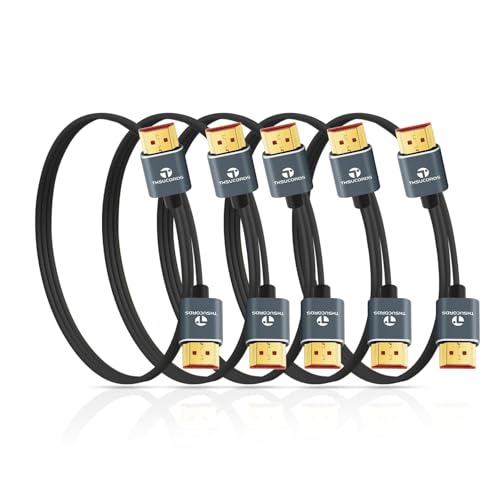

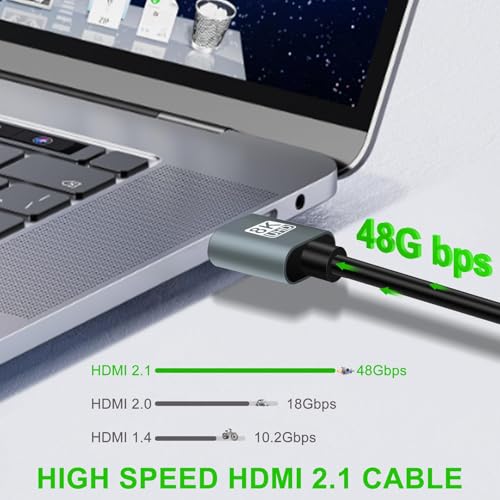
If you’re connecting a console or modern TV, the HDMI cable matters. This 2.1 cable supports 4K at 120Hz and 8K at 60Hz, making it a good fit for gaming and high-bandwidth video setups.
- ✓ HDMI 2.1 support with 48Gbps bandwidth
- ✓ Supports 4K@120Hz and 8K@60Hz
- ✓ Compatible with PS5, Xbox, Roku TV, and Blu-ray devices
- ✓ Thin, flexible design for easy cable management
- ✗ Short 3.3ft length may not suit all setups
- ✗ Best value only if your devices support HDMI 2.1 features
Common Mistakes to Avoid
One of the biggest mistakes is assuming 8K automatically looks better in every room. If your screen is not large enough, or if you sit too far away, you may never notice the extra resolution.
Another common mistake is ignoring content. Buying an 8K TV for mostly 1080p or 4K streaming content can be overkill unless the TV has excellent upscaling and processing.
Many shoppers also focus too much on resolution and not enough on panel quality. A brighter 4K TV with better contrast and HDR often delivers a more satisfying picture than a cheaper 8K model.
People also forget about HDMI compatibility, especially for gaming. If you want 4K at 120Hz or 8K playback, you need the right ports and cables, not just the right TV.
Finally, don’t buy based on marketing language alone. Terms like “future-proof” sound appealing, but they do not guarantee better value today. The best answer to 4K vs 8K TV worth it depends on how you watch, not just what the box says.
Frequently Asked Questions
Is 8K TV worth it over 4K in 2026?
For most people, not yet. 4K still offers better value, more content, and a much lower price, while 8K is mainly for large premium setups.
Can you really see the difference between 4K and 8K?
Sometimes, yes, but mostly on very large screens and when you sit close enough. On smaller TVs or from a normal couch distance, the difference can be subtle.
Does 8K content exist?
Yes, but it is still limited compared with 4K. Most streaming, broadcast, and disc content is still produced in 4K or lower.
Is a good 4K TV better than a cheap 8K TV?
Usually, yes. Picture quality depends on more than resolution, so a better 4K model often looks more impressive than an entry-level 8K TV.
What size TV makes 8K worth considering?
8K becomes more interesting on very large screens, especially 75 inches and above. The bigger the screen, the more likely you are to benefit from the extra detail.
Get the Full TV & Streaming Buyer's Guide
Download our detailed comparison with specs, scores, and our honest verdict — delivered straight to your inbox.
Free. No spam. Unsubscribe anytime.
Was this review helpful?
Be the first to share your feedback on this review.
Sign in to vote and let us know what you think.
Discussion (0)
No comments yet. Be the first to start the discussion.
Related Reviews
8 Best 4K TVs in 2026 — Sharper Picture, Smarter Streaming, Better Value
If you’re trying to find the best 4K TVs 2026 without overpaying for features you won’t use, this list is for you. We focused on TVs that deliver strong 4K picture quality, easy streaming, and the best mix of value, size, and smart TV features. Whether you want a budget bedroom screen, a bigger livi
Samsung S95F Real World Test Review (2026): Honest Verdict After Testing
If you’re trying to decide whether the Samsung 65-Inch Class OLED S95F 4K Glare Free Smart TV (2025 Model) NQ4 AI Gen3 Processor, HDR Pro, Motion Xcelerator 164Hz, Dolby Atmos, Samsung Vision AI, Alexa Built-in is worth the premium, the big question is simple: does it actually hold up in a bright ro
Best TVs for Every Budget in 2026: Ranked by Price & Performance
If you’re searching for the best TVs under $1000 , the real challenge isn’t finding a TV — it’s finding the right balance of picture quality, size, and features without paying for extras you won’t use. The good news is that 2026 still has a strong price-to-performance sweet spot, especially if you w