

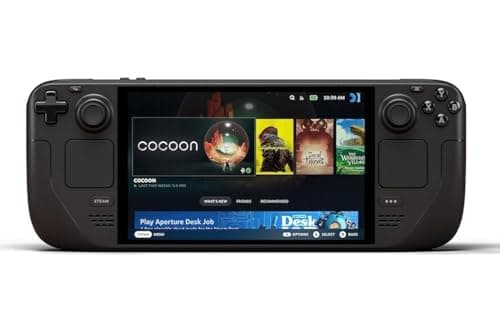
Who this is for: Best for Steam gamers who want a premium handheld with a great screen, solid battery life, and easy portable play.
Check PriceSteam Deck OLED Review (2026): Specs, Pros & Cons, and Who It's For
Key Specifications
| Spec | Details |
|---|---|
| Product | Valve Steam Deck OLED 1TB Handheld Gaming Console |
| Storage | 1TB NVMe SSD |
| Display | 7.4" HDR OLED, 1280 x 800, up to 90Hz, premium anti-glare etched glass |
| Wireless | Wi‑Fi 6E |
| Battery | 50Whr battery; estimated 3–12 hours of gameplay, content-dependent |
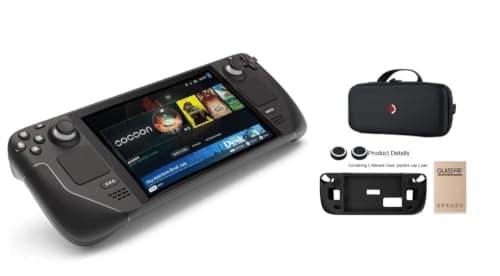
| Included Accessories | Carrying case with removable liner |
| Price | 12% OFF — Was $1220.00 ✓ Prime $1073.95 |
Design & Build Quality
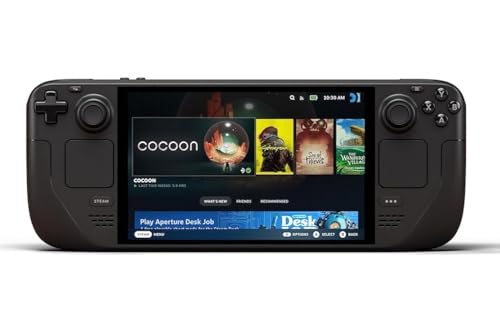


The Valve Steam Deck OLED 1TB Handheld Gaming Console keeps the familiar Steam Deck shape, but the OLED revision is widely viewed as the more refined version thanks to its display upgrade and improved overall experience. In published reviews and owner feedback, the chassis is often described as sturdy, comfortable for longer sessions, and thoughtfully laid out for a wide range of hand sizes.
Related Reviews
The biggest design win is the 7.4-inch HDR OLED panel. Compared with the original LCD model, the OLED screen is the main reason many buyers upgrade: it delivers stronger contrast, richer colors, and a more premium feel in games that benefit from deep blacks and vibrant highlights. The premium anti-glare etched glass also helps in bright environments, which is useful if you plan to play near windows or under indoor lighting.
That said, this is still a fairly large handheld, so portability is relative. It is travel-friendly in the sense that it fits in a case and runs independently, but it is not as pocketable as smaller handhelds. The included carrying case is a practical bonus, and the removable liner is a nice touch for owners who want a little flexibility in how they store and protect it.
✓ Pros
- 7.4" HDR OLED display with better contrast and color than LCD handhelds
- Premium anti-glare etched glass improves visibility in brighter spaces
- Comfortable, familiar Steam Deck ergonomics for long sessions
- Includes a carrying case with removable liner
✗ Cons
- Still larger than some competing handhelds, so it is not the most compact option
- Design is excellent for gaming, but not especially premium-looking compared with some rivals
- Weight and size may be tiring for users who prefer ultra-light devices
Performance & Features
From a research standpoint, the Steam Deck OLED’s performance story is less about raw power gains and more about a smarter, more polished handheld package. The 1TB NVMe SSD gives you ample room for a large Steam library, and the Wi‑Fi 6E support is a meaningful upgrade for faster downloads, smoother streaming, and better wireless reliability where supported.
The OLED model’s battery life is another major selling point. Valve rates it at roughly 3 to 12 hours depending on content, which is a wide range, but that range reflects the reality of handheld gaming: lighter indie titles and streaming can stretch battery life much further than demanding AAA games. Compared with the original model, owners and reviewers generally report that the OLED revision is the better choice for unplugged play.
The 90Hz refresh rate also helps the experience feel smoother in supported games and system navigation. It will not turn every title into a high-frame-rate showcase, but it does contribute to a more responsive feel when games and settings allow it. Pair that with the HDR OLED panel and the Steam Deck OLED becomes especially appealing for players who value presentation as much as performance.
Where it stands out most is the software ecosystem. SteamOS remains a major advantage for Steam-centric buyers: library integration, suspend/resume convenience, and a console-like interface are all part of the appeal. For many shoppers, that ease of use matters more than benchmark chasing.
✓ Pros
- 1TB NVMe SSD provides generous storage for modern game libraries
- Wi‑Fi 6E improves download and connectivity potential
- Up to 90Hz refresh rate makes supported games feel smoother
- 50Whr battery is a strong fit for portable gaming
- SteamOS offers a streamlined, console-like experience for Steam users
✗ Cons
- Battery life varies heavily by game, so the upper estimate is not universal
- Performance is good for a handheld, but not on par with a gaming laptop or desktop
- Best experience is tied closely to the Steam ecosystem
Value for Money
At $1073.95, the Valve Steam Deck OLED 1TB Handheld Gaming Console is not a budget buy. The current pricing reflects a premium handheld position, and that makes value depend heavily on how you plan to use it. If you want a handheld PC primarily for Steam games, the OLED screen, 1TB storage, and better battery life make a strong case.
In comparison with lower-priced handhelds, the Steam Deck OLED often justifies its cost through polish rather than raw specs. Owners frequently praise the balance of comfort, software simplicity, and display quality. If you already know you want a Steam-first handheld and plan to use it regularly, the premium can be easier to defend.
If, however, you only play occasionally or mostly want a portable device for lighter gaming, the price may feel steep. The value proposition is best when the OLED screen and improved battery life are features you will actually notice every week.
✓ Pros
- Premium display and battery upgrades improve the day-to-day experience
- 1TB storage reduces the need for immediate upgrades
- Strong owner satisfaction for Steam-focused gaming
- Prime eligibility and current discount improve the deal somewhat
✗ Cons
- Higher price than many entry-level handheld gaming options
- Value drops if you do not care about OLED or long battery life
- Best suited to buyers already invested in Steam
Who Should Buy This
This is a strong pick for gamers who want a handheld that feels close to a console while still opening the door to a PC-sized Steam library. It is especially appealing if you value a great screen, decent battery life, and an easy, familiar interface over tinkering.
Buy this if you:
- Mostly play Steam games and want a handheld made around that ecosystem
- Care about display quality and want OLED contrast and color
- Want a 1TB model so you can install more games right away
- Prefer a polished handheld experience over maximum raw performance
Who Should Look Elsewhere
This is not the best fit for everyone. If your main goal is the highest possible frame rates, a gaming laptop or desktop will still be the better choice. Likewise, if you want the lightest or smallest handheld available, the Steam Deck OLED’s size may be more than you want to carry around.
You should look elsewhere if you:
- Want the most compact handheld possible
- Need top-tier performance for demanding AAA games at higher settings
- Do not use Steam much and prefer a more platform-agnostic setup
- Are shopping on a tight budget
Final Verdict
The Steam Deck OLED is one of the best-reviewed handheld gaming devices for good reason: the screen upgrade, improved battery behavior, and roomy 1TB storage make it feel like the refined version of the original idea. Based on specs, published comparisons, and owner feedback, it is an easy recommendation for Steam-first gamers who want a premium portable library machine.
If that sounds like you, this is a buy. If you want the cheapest handheld or the absolute fastest portable PC, skip it and shop around.
Frequently Asked Questions
Is the Steam Deck OLED worth it in 2026?
Yes, for Steam-focused buyers it remains worth considering because the OLED screen, better battery experience, and 1TB storage make it the most refined Steam Deck option in this listing.
How long does the Steam Deck OLED battery last?
Valve lists about 3 to 12 hours of gameplay depending on the game and settings. Lighter titles can last much longer than demanding AAA games.
Does the Steam Deck OLED have a better screen than the original Steam Deck?
Yes. The OLED panel offers better contrast, richer colors, and HDR support, which is the main reason many buyers prefer it over the LCD model.
Is 1TB enough for a Steam Deck OLED?
For most buyers, yes. A 1TB NVMe SSD gives you plenty of room for a large library, though very heavy users may still manage space carefully.
Who is the Steam Deck OLED best for?
It is best for gamers who want a premium handheld for Steam, value a great display, and want a balance of portability, battery life, and ease of use.
Pros
- + 7.4-inch HDR OLED display
- + 1TB NVMe SSD
- + Wi‑Fi 6E
- + 50Whr battery
- + SteamOS is polished and easy to use
Cons
- – Higher price than entry-level handhelds
- – Battery life varies widely by game
- – Large size may not suit everyone
Frequently asked questions
- Is the Steam Deck OLED worth it in 2026?
- Yes, for Steam-focused buyers it remains worth considering because the OLED screen, better battery experience, and 1TB storage make it the most refined Steam Deck option in this listing.
- How long does the Steam Deck OLED battery last?
- Valve lists about 3 to 12 hours of gameplay depending on the game and settings. Lighter titles can last much longer than demanding AAA games.
- Does the Steam Deck OLED have a better screen than the original Steam Deck?
- Yes. The OLED panel offers better contrast, richer colors, and HDR support, which is the main reason many buyers prefer it over the LCD model.
- Is 1TB enough for a Steam Deck OLED?
- For most buyers, yes. A 1TB NVMe SSD gives you plenty of room for a large library, though very heavy users may still manage space carefully.
- Who is the Steam Deck OLED best for?
- It is best for gamers who want a premium handheld for Steam, value a great display, and want a balance of portability, battery life, and ease of use.
Score breakdown
- value
- 8.2
- usability
- 9.2
- durability
- 8.7
- performance
- 8.5
- buyerFeedback
- 9.0
Get the Full Tech Buyer's Guide
Join our free newsletter — we'll send our latest Tech picks, specs and verdicts straight to your inbox.
Free. No spam. Unsubscribe anytime.
Was this review helpful?
Be the first to share your feedback on this review.
Sign in to vote and let us know what you think.
Discussion (0)
No comments yet. Be the first to start the discussion.
Related Reviews
What is How to Reduce Input Lag? A Complete 2026 Guide
If your games feel “off,” the problem may be input lag: the delay between pressing a button and seeing the action happen on screen. That delay can make aiming harder, combos less reliable, and everyday navigation feel sluggish. This guide explains how to reduce input lag in plain English, plus what
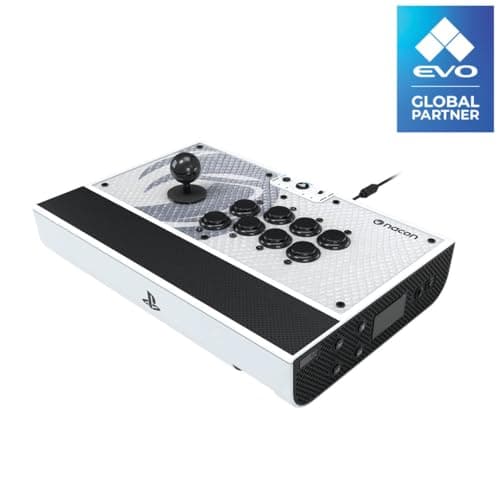
7 Best Fight Sticks in 2026 — Tournament-Ready Picks for Every Budget
If you’re searching for the best fight sticks 2026 , you probably want one thing: a controller that feels accurate, durable, and worth the money for your favorite fighting games. The problem is that “best” depends on your setup, your budget, and whether you want a traditional stick or a more modern
What is How to Extend PS5 Storage? A Complete 2026 Guide
If your PS5 storage fills up fast, you are not alone. Modern games can take up huge amounts of space, and constant deleting and redownloading gets old quickly. This guide explains how to extend PS5 storage in a simple way so you can choose the right expansion method with confidence.