
Sony A6700 vs Fujifilm X-T5 (2026): Which Should You Actually Buy?
At a Glance
| Category | Sony Alpha a6700 Mirrorless Camera with E PZ 16-50mm f/3.5-5.6 OSS II Lens | FUJIFILM X-T5 Mirrorless Digital Camera Body - Silver |
|---|---|---|
| Sensor | 26.0MP APS-C Exmor R BSI CMOS | 40.2MP X-Trans CMOS 5 HR BSI |
| Video | 4K/60p, 6K oversampled, 4:2:2 10-bit, 4K/120p | Strong hybrid features, but not as video-forward on provided specs |
| Autofocus | Dedicated AI Processor, Real-time Recognition tracking | Excellent stills camera AF, but less video-centric in this matchup |
| IBIS | Not highlighted in provided specs | Up to 7 stops of internal body image stabilization |
| Burst / Shutter | Fast action-focused performance | 15 fps mechanical, 1/180,000 max electronic shutter |
| Price | Check Amazon for price | 5% OFF — Was $1999.95 ✓ Prime — $1899.00 |
Design
Winner: Fujifilm X-T5

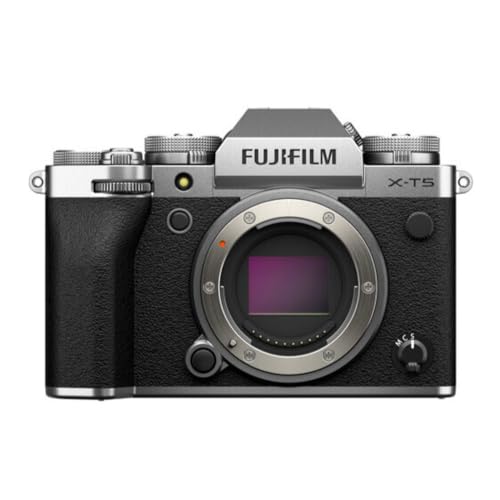
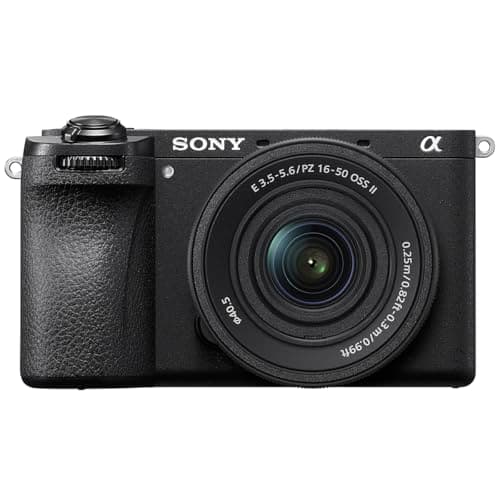
 The Sony Alpha a6700 Mirrorless Camera with E PZ 16-50mm f/3.5-5.6 OSS II Lens is built like a modern content machine: compact, practical, and clearly aimed at speed and versatility. The FUJIFILM X-T5 Mirrorless Digital Camera Body - Silver feels more premium in the classic sense, and its body-first approach appeals to photographers who want tactile control and a more traditional shooting experience.
✓ Sony a6700 pros:
The Sony Alpha a6700 Mirrorless Camera with E PZ 16-50mm f/3.5-5.6 OSS II Lens is built like a modern content machine: compact, practical, and clearly aimed at speed and versatility. The FUJIFILM X-T5 Mirrorless Digital Camera Body - Silver feels more premium in the classic sense, and its body-first approach appeals to photographers who want tactile control and a more traditional shooting experience.
✓ Sony a6700 pros:
- Compact mirrorless design that suits travel and hybrid use
- Lens kit included, which lowers the barrier to getting started
- Practical body for creators who prioritize portability
- Less of a classic enthusiast feel than Fujifilm’s body design
- Kit-lens package may not satisfy buyers wanting a pure body-only setup
- Body-only configuration appeals to serious photographers building a system
- Classic Fuji styling and controls are a major draw
- Feels more like a dedicated stills camera than a general-purpose bundle
- Higher upfront cost
- Less convenient for buyers who want an all-in-one starter package
Performance
Winner: Sony A6700
Sony wins this round because the a6700 is built around speed, autofocus intelligence, and video power. Its 26.0MP APS-C format Exmor R back-illuminated CMOS sensor, BIONZ XR processing, dedicated AI Processor, and Real-time Recognition make it the more aggressive performance tool for creators who shoot moving subjects or hybrid content. The Fujifilm X-T5 is no slouch, but its strengths lean more toward high-resolution stills than all-around speed. For many buyers, that makes the Sony the more versatile performer. ✓ Sony a6700 pros:- Dedicated AI Processor and Real-time Recognition for accurate subject tracking
- 4K/60p 6K oversampled 4:2:2 10-bit recording
- High frame rate 4K 120p recording
- Excellent hybrid camera for video-first or mixed workloads
- Lower resolution than the Fujifilm for still photography
- Not the most photography-centric option in this matchup
- 40.2 Megapixel X-Trans CMOS 5 HR BSI Imaging Sensor
- Great for detail-heavy stills work
- 15 frames per second mechanical shutter
- 1/180,000 max shutter speed in electronic shutter
- Less video-forward than the Sony based on the provided feature set
- Not as clearly optimized for AI-driven tracking and creator workflows
Image Quality
Winner: Fujifilm X-T5
If your buying decision is driven by pure still-image quality, the X-T5 has the edge. Its 40.2MP sensor gives you more room to crop, more detail for large prints, and more flexibility for landscape, studio, and travel photography. The Sony’s 26MP sensor is still excellent, but it is clearly the lower-resolution option here. ✓ Sony a6700 pros:- 26MP is plenty for most everyday shooters
- Balanced resolution for faster workflow and file management
- Less detail capture than the Fujifilm X-T5
- Not the best choice if maximum resolution is your top priority
- 40.2MP X-Trans sensor offers significantly more detail
- 160MP pixel shift multi shot for ultra-high-resolution work
- Better fit for photographers who crop heavily
- Larger files and potentially slower workflow
- Resolution advantage may be unnecessary for casual users
Video
Winner: Sony A6700
This is the clearest win in the comparison. The Sony a6700 is built for creators who care about serious video capability: 4K/60p, 6K oversampling, 4:2:2 10-bit recording, and 4K/120p all make it a standout APS-C hybrid camera. Fujifilm can absolutely serve hybrid shooters, but the Sony is the more obvious video-first choice. ✓ Sony a6700 pros:- 4K/60p 6K oversampled 4:2:2 10-bit recording
- High frame rate 4K 120p recording
- AI-assisted autofocus is ideal for solo creators
- Excellent choice for YouTube, travel video, and social content
- Video strength may overshadow its still-photo appeal for some buyers
- Not the highest-resolution stills camera in the class
- Strong hybrid capability for photographers who occasionally shoot video
- Excellent image quality for mixed use
- Not as feature-forward for video creators as the Sony
- Less compelling if video is a major purchase driver
Battery, Stabilization, and Durability
Winner: Fujifilm X-T5
The Fujifilm X-T5 takes this category thanks to its stronger in-body stabilization story. Up to 7 stops of IBIS is a major advantage for handheld shooting, especially for stills in lower light or when using lenses without stabilization. In a practical sense, that makes the Fuji the safer pick for photographers who value stability and confidence in the field. ✓ Sony a6700 pros:- Modern APS-C body built for active use
- Excellent for handheld video workflows when paired with the right setup
- IBIS is not highlighted in the provided specs
- Less compelling than the Fuji for stabilization-focused buyers
- Up to 7 stops of internal body image stabilization
- Great for handheld shooting and travel photography
- Excellent durability-oriented value for stills shooters
- Stabilization strength may matter less to tripod users
- Body-only purchase means extra lens cost on top of the camera
Value
Winner: Sony A6700
On pure value, the Sony a6700 gets a boost because it comes as a kit with the E PZ 16-50mm f/3.5-5.6 OSS II lens. That makes it easier to start shooting immediately without buying a separate lens. The Fujifilm X-T5 is discounted, but it is still a body-only purchase at a much higher price. ✓ Sony a6700 pros:- Includes the E PZ 16-50mm f/3.5-5.6 OSS II lens
- Better entry value for buyers starting from scratch
- Strong feature set for the money in a hybrid package
- Kit lens is convenient, but not the same as buying a premium body-only setup
- Value depends on whether you want the included lens
- 5% OFF — Was $1999.95 makes the body a bit more attractive
- Premium stills-focused feature set
- $1899.00 body-only is a steep buy-in
- You still need to budget for a lens
Sony A6700 Is the Better Choice If…
- You want the stronger video camera for 2026.
- You care about AI-assisted autofocus and subject tracking.
- You want a ready-to-shoot bundle with a lens included.
- You shoot a lot of 4K content, social video, or hybrid projects.
- You prefer a more practical all-rounder over a pure stills body.
Fujifilm X-T5 Is the Better Choice If…
- You want the better APS-C stills camera.
- You value higher resolution for cropping, prints, and detail.
- You want up to 7 stops of IBIS for handheld photography.
- You prefer a body-only setup and already own compatible lenses.
- You want the more premium photographer-first experience.
Our Final Verdict
If your priority is the best overall APS-C flagship for still photography, the FUJIFILM X-T5 Mirrorless Digital Camera Body - Silver is the better long-term buy. Its 40.2MP sensor, strong IBIS, and high-end stills features make it the more compelling camera for photographers who want maximum image quality.
But if you’re a hybrid creator, YouTuber, or action shooter who wants the most versatile camera in this matchup, the Sony Alpha a6700 Mirrorless Camera with E PZ 16-50mm f/3.5-5.6 OSS II Lens is the smarter pick. It’s faster for video, smarter in autofocus, and more convenient out of the box thanks to the included lens.
Bottom line: Fujifilm wins for stills; Sony wins for hybrid value and video. For most buyers searching “Sony A6700 vs Fujifilm X-T5,” the best answer depends on whether you shoot more photos or more video.
Check Sony Price on Amazon → Check Fujifilm Price on Amazon →
Frequently Asked Questions
Is the Sony A6700 better than the Fujifilm X-T5?
The Sony A6700 is better for video and hybrid shooting, while the Fujifilm X-T5 is better for still photography and resolution. The “better” camera depends on your main use case.
Which camera has better image quality, Sony A6700 or Fujifilm X-T5?
The Fujifilm X-T5 has better image quality for stills because of its 40.2MP sensor and high-resolution feature set. The Sony A6700 still produces excellent images, but with less detail.
Which is better for video, Sony A6700 or Fujifilm X-T5?
The Sony A6700 is clearly better for video thanks to 4K/60p, 6K oversampling, 4:2:2 10-bit recording, and 4K/120p support.
Does the Fujifilm X-T5 have IBIS?
Yes. The Fujifilm X-T5 offers up to 7 stops of internal body image stabilization, which is a major advantage for handheld shooting.
Which is the better APS-C flagship in 2026?
The Fujifilm X-T5 is the better APS-C flagship for photographers, while the Sony A6700 is the better APS-C flagship for creators who need strong video and autofocus performance.
Get the Full Cameras & Drones Buyer's Guide
Download our detailed comparison with specs, scores, and our honest verdict — delivered straight to your inbox.
Free. No spam. Unsubscribe anytime.
Was this review helpful?
Be the first to share your feedback on this review.
Sign in to vote and let us know what you think.
Discussion (0)
No comments yet. Be the first to start the discussion.
Related Reviews
What is APS-C vs full frame explained? A Complete 2026 Guide
Trying to understand APS-C vs full frame explained without getting lost in camera jargon? The biggest confusion is usually not about megapixels or “better” image quality, but about how sensor size changes your field of view, low-light performance, depth of field, and the way lenses behave. In this g
8 Best Mirrorless Camera for Beginners in 2026 — Easy-to-Use Picks That Make Learning Photography Simple
If you’re searching for the best mirrorless camera for beginners 2026 , you probably want something that takes sharp photos, feels easy to learn, and won’t overwhelm you with pro-level complexity. The right beginner camera should also give you room to grow, whether you care more about family photos,
Best Mirrorless Cameras Under $1000 for Every Budget in 2026: Ranked by Price & Performance
Finding the best mirrorless camera under $1000 means balancing price with features that suit your photography needs. Whether you're a beginner looking for affordability, an enthusiast seeking quality, or a semi-professional wanting premium capabilities, this guide breaks down the best options for ev