
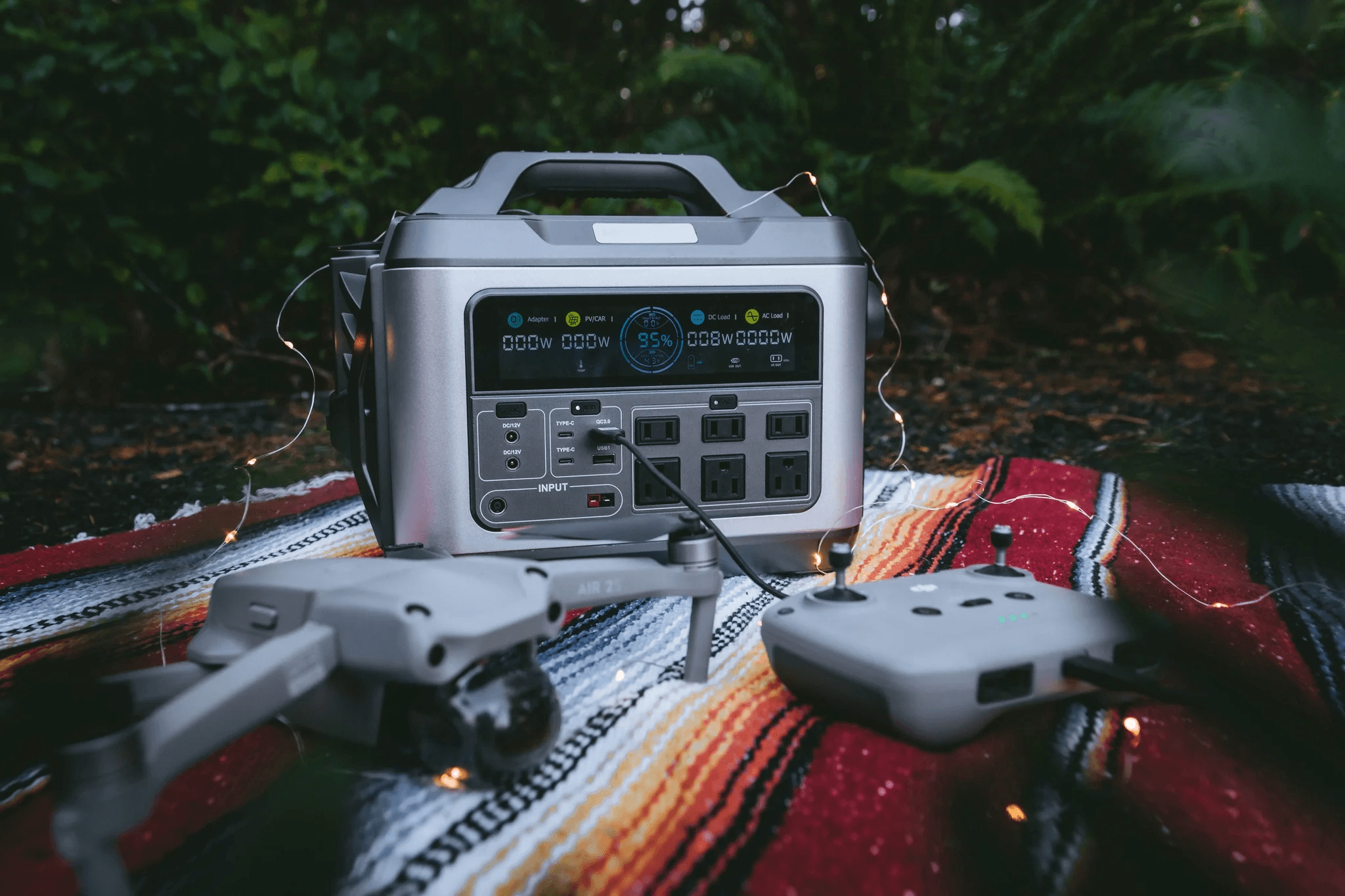
TL;DR
Battery chemistry: LiFePO₄ = longer life (3,000–6,000 cycles), safer, heavier. NMC = lighter, higher energy density, shorter cycle life.
Inverter power: Match continuous watts to your highest draw device; make sure surge watts cover startup spikes (fridge, power tools).
Charging: Prioritize fast AC recharge and high solar input (MPPT) if you’ll be off-grid.
Outputs: Look for pure sine wave AC, 100W USB-C, regulated 12V ports, and an app for monitoring.
Use cases: Home backup, RV/van, camping, photo/video sets, tailgates, and as a quiet UPS for desktops/routers.
Step 1 — Size Your Watt-Hours (Quick Worksheet)
Add up the power (W) × time (hours) for everything you’ll run in a typical session:
Device | Watts | Hours | Wh (W×h) |
Laptop | 60 | 4 | 240 |
Router | 12 | 6 | 72 |
Mini fridge (avg) | 60 | 8 | 480 |
Phone x2 | 20 | 2 | 40 |
Total | 832 Wh |
Now add 25–40% headroom for inverter losses and peaks.Recommended capacity: ~1,100–1,200 Wh in this example.
Rule of thumb: For camping/weekenders, 500–1000 Wh. RV/home backup, 1,500–3,000 Wh. Power tools or full kitchens? Consider >2,000 W inverters.
Step 2 — Chemistry: LiFePO₄ vs NMC
Feature | LiFePO₄ (LFP) | NMC |
Cycle life | 3,000–6,000+ to 80% | 500–1,000+ (varies) |
Safety/thermal stability | Excellent | Good |
Weight/energy density | Heavier | Lighter |
Cold performance | Good (still prefers above freezing) | Often better at cold starts |
Price | Trending down, great value | Can be higher at same Wh |
Takeaway: If you plan to cycle the station often (RV, off-grid, frequent outages), pick LiFePO₄. For maximum portability and occasional use, NMC can be fine.
Step 3 — Inverter: Continuous vs Surge
Continuous (rated) watts: What the station can output indefinitely (e.g., 2000W).
Surge (peak) watts: Short bursts (e.g., 4000W) to start compressors, pumps, power tools.
Devices with motors (fridges/blenders) can need 2–3× their running watts at startup.
Tip: If your fridge is 150W running, plan for ≥ 400–500W surge headroom beyond your other loads.
Step 4 — Charging Matters More Than You Think
AC fast charge: 0–80% in <1 hour is increasingly common; great for last-minute prep.
Solar input (MPPT): Look for PV input ≥ 400–1200W on larger units; check voltage/current window to match panel arrays.
Car charging: 12V/24V DC input for on-the-move top-ups.
Pass-through power: Run devices while charging (handy for all-day work sets).
Step 5 — Ports & Features
AC outlets: Pure sine wave for sensitive electronics and audio gear.
USB-C PD: At least 1× 100W for laptops; extra 60W ports are a plus.
12V DC: Regulated cigarette and barrel ports for fridges/ham radios.
Wireless charging pads: Nice-to-have for phones at camp.
Display/App: Battery %, input/output watts, time-to-empty/full, eco modes, firmware updates.
UPS mode: Some stations can act like a line-interactive UPS—keep your desktop and router alive during outages.
Quick Picks by Scenario
Scenario | Capacity (Wh) | Inverter (W) | Must-Haves |
Weekend camping + laptops | 500–1000 | 600–1200 | LiFePO₄, 100W USB-C, 300W+ solar |
RV / Van life | 1000–3000 | 1500–3000 | LiFePO₄, 800W+ solar, 12V regulated |
Home backup (essentials) | 1500–4000 | 2000–4000 | Fast AC, UPS mode, extra batteries |
Photo/Video shoot | 1000–2000 | 1500–2400 | 100W USB-C x2, pure sine, app |
Tailgate / power tools | 1000–2000 | 2000+ | High surge, rugged outlets |
Buyer’s Checklist
LiFePO₄ battery for longevity (or NMC for lighter weight)
Capacity (Wh) sized to W×h needs +30% headroom
Inverter continuous watts ≥ your max load; surge for motor starts
Fast AC recharge (0–80% < 1–1.5h)
MPPT solar input with high watt window; compatible connectors (MC4/XT60)
Pure sine AC, 100W USB-C, regulated 12V outputs
App with SOC %, power flow, and firmware updates
UPS/Pass-through if you’ll protect a desktop or router
Setup Tips (Faster Wins)
Label loads. Know each device’s watts and prioritize essentials during outages.
Balance solar strings. Match voltage/current to the station’s PV window for best efficiency.
Cable discipline. Use short, thick cables for DC fridges and inverters to minimize voltage drop.
Battery care. Store at 40–60% if unused for months; avoid baking it in a hot car.
UPS mode test. Simulate an outage once to confirm your router/desktop stays online.
FAQ
How long will a 1000 Wh station run a 60W fridge (average)?
Roughly 12–14 hours accounting for inverter losses and compressor cycling; add solar for all-day runtime.
Can I power a desktop PC and monitors?
Yes—check combined watts. Many mid towers draw 200–400W under load. A 1000–1500W inverter leaves headroom.
Is chaining extra batteries worth it?
If you need multi-day autonomy or want quieter nights without a gas generator, yes—just plan your recharge strategy (solar/AC).
Do I need pure sine wave?
For electronics, audio gear, and appliances with motors—yes. Modified sine can buzz or run inefficiently.
Final Verdict
If you’ll cycle the battery regularly or want years of daily use, choose LiFePO₄.
Size by watt-hours (not just peak watts), and don’t skimp on solar input if you’ll be off-grid.
For home backup, fast AC recharge, UPS mode, and expandable batteries deliver real peace of mind.
Ready to compare top picks by size and price? See the curated list → Here
Get the Full Outdoor Buyer's Guide
Download our detailed comparison with specs, scores, and our honest verdict — delivered straight to your inbox.
Free. No spam. Unsubscribe anytime.
Was this review helpful?
Be the first to share your feedback on this review.
Sign in to vote and let us know what you think.
Discussion (0)
No comments yet. Be the first to start the discussion.
Related Reviews
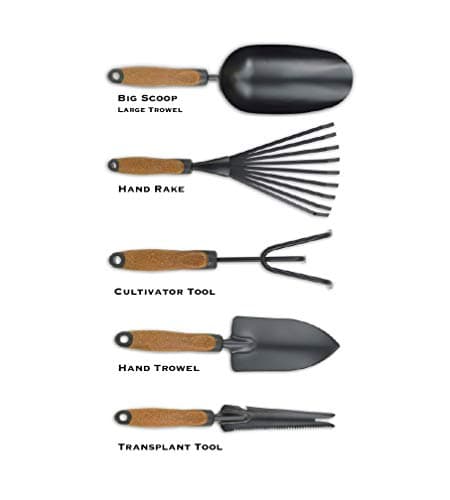
I Tested Olmsted Forge 5-Piece Garden Tool Set — Honest Review
The buzz around the Olmsted Forge 5-Piece Garden Tool Set is real, but there's a catch. I tested it and here’s what actually matters for your garden, week in an
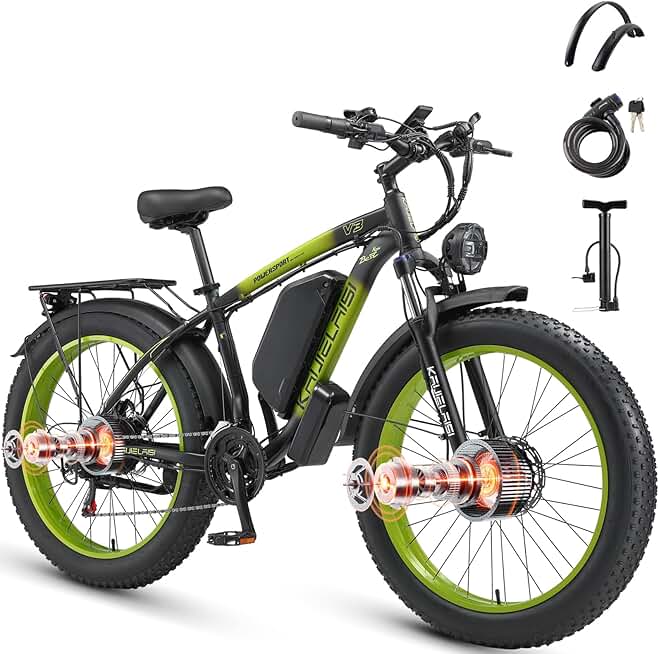
AWD Electric Bike for Adults, Peak 4000W Power 26” Fat Tire Ebike, Dual Motor Electric Bicycles, 48V 22.4AH Removable Battery Fast Dual Hydraulic Brakes 21-Speed All Terrain E-Bikes
Honestly, I wasn't sure the AWD Electric Bike would deliver, but after testing it on trails and city streets, the verdict surprised me. In a good way.
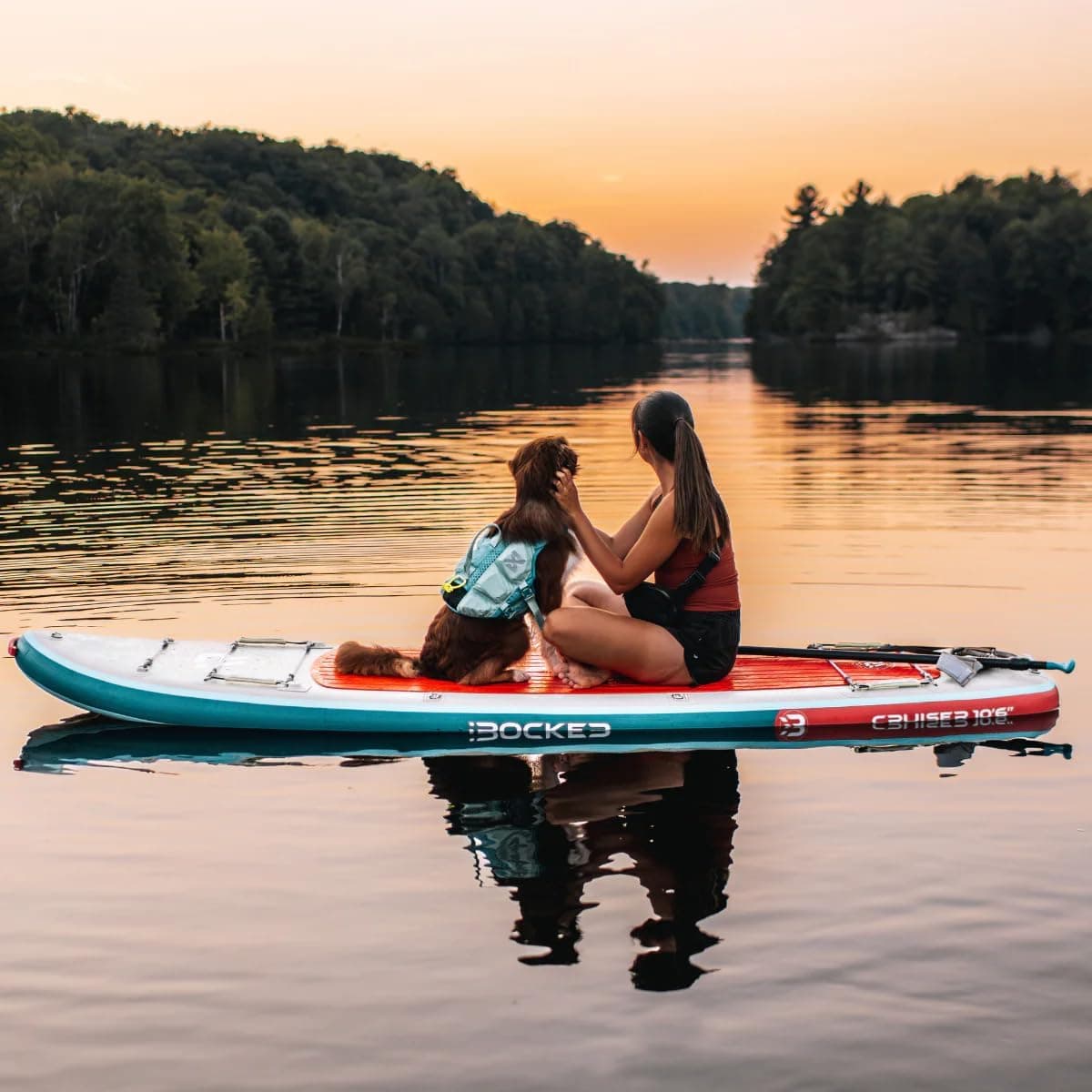
Best Inflatable Stand Up Paddle Board 2025 – iRocker All‑Around SUP Review
Best inflatable stand up paddle board 2025 – iRocker All‑Around SUP offers stability, durability, and portability for lakes and rivers.