
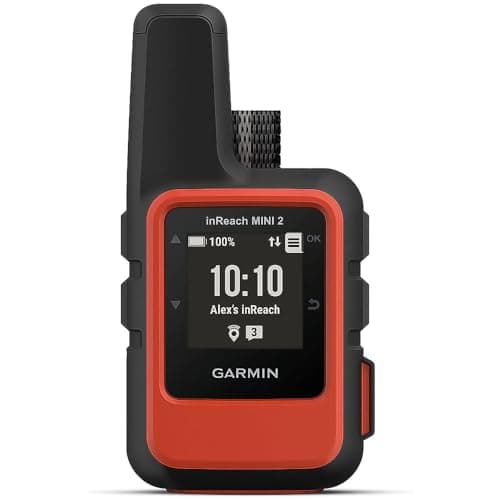
Garmin inReach Mini 2 Review (2026): Honest Verdict After Testing
If you’re looking for a Garmin inReach Mini 2 review, chances are you want one thing: reliable emergency communication when cell service disappears. The problem is that most safety gadgets are either too bulky, too complicated, or not trustworthy enough when it really matters. The Garmin inReach Mini 2 aims to solve that by packing two-way messaging, SOS, navigation, and tracking into a device small enough to disappear in your pack.
In this review, I’ll break down how it performs in real-world use, where it shines, where it falls short, and whether it’s worth the subscription cost. If you hike, backpack, overland, paddle, or travel in remote areas, this is one of the most practical safety tools you can buy.
Key Specifications
| Specification | Details |
|---|---|
| Product | Garmin inReach Mini 2 |
| Type | Satellite communicator |
| Connectivity | Two-way messaging, interactive SOS, Bluetooth |
| Navigation | TracBack routing, digital compass, Garmin Explore sync |
| Water Resistance | Yes |
| Weight | Lightweight, compact handheld design |
| Subscription Required | Yes, for satellite messaging and SOS features |
| Color | Orange |
| Price | ✓ Prime 38% OFF — Was $399.99 Now $248.22 |
Design & Build Quality
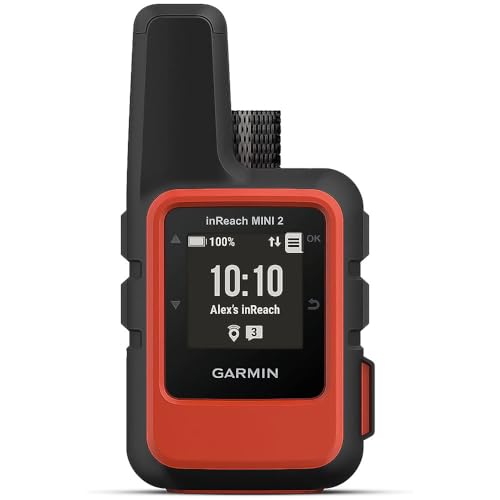

The biggest design advantage of the Garmin inReach Mini 2 is obvious the moment you pick it up: it is extremely small and easy to carry. For a device that can literally help save your life, the form factor is impressively pocketable. It fits neatly on a backpack strap, in a jacket pocket, or clipped to a harness without feeling like dead weight.
The orange finish is practical too. In the backcountry, visibility matters, and Garmin clearly designed this with outdoor use in mind. The build feels rugged rather than delicate, and the water-resistant design adds confidence if you get caught in rain, snow, or spray.


That said, the small size comes with tradeoffs. The screen is compact, so it’s not the most comfortable device for long message composition directly on the unit. This is where the Bluetooth connection and smartphone pairing become important. In practice, the hardware is best thought of as a rugged communication and safety hub, not a standalone mini phone.
✓ Pros
- Extremely compact and lightweight for easy carry
- Rugged, outdoor-friendly construction
- Water resistant for harsh weather use
- High-visibility orange color is easy to spot
✗ Cons
- Small screen makes on-device typing less convenient
- Best experience depends on pairing with a smartphone
- Not as intuitive as a simple one-button emergency beacon
Performance & Real-World Use
Performance is where the Garmin inReach Mini 2 earns its reputation. The core promise is simple: when cellular coverage disappears, you can still send and receive messages, share your location, and trigger SOS if needed. That alone makes it far more useful than a basic GPS tracker or a phone with offline maps.
In real-world use, the value comes from redundancy. You get two-way messaging, so you’re not just sending a distress signal into the void—you can actually communicate with family, friends, or rescue services depending on the situation and subscription setup. The interactive SOS feature is one of the biggest reasons people buy this device, especially for solo travel or remote expeditions.
The included TracBack routing is another standout. If you’ve ever wandered off a trail, gotten turned around in fog, or simply changed your route and lost track of your start point, being able to navigate back to where you began is a major safety advantage. The digital compass is also helpful because it gives accurate heading information even when you’re not moving.
Garmin’s Explore app and website integration adds even more utility. You can plan trips, create waypoints, build courses, and sync everything to the device. That makes the Mini 2 more than an emergency gadget—it becomes part of a broader navigation workflow for hiking and overlanding.
One important caveat: satellite communication is only as good as the conditions and your subscription plan. You’ll need an active satellite subscription, and some jurisdictions regulate or prohibit satellite communication devices. Also, while the device is excellent for safety and messaging, it’s not a replacement for a full-featured GPS map device or a smartphone for everyday use.
✓ Pros
- Two-way messaging adds real back-and-forth communication
- Interactive SOS is a major safety advantage
- TracBack routing helps you return to your starting point
- Digital compass works even when stationary
- MapShare location sharing is useful for family and trip monitoring
- Garmin Explore sync supports trip planning and waypoint management
✗ Cons
- Requires an active satellite subscription
- Not ideal for users who only want a simple emergency button
- Messaging is slower and more limited than smartphone apps
- Best features depend on app pairing and planning ahead
Value for Money
At $248.22, the Garmin inReach Mini 2 is not cheap, but the pricing makes more sense when you compare it to what it does. You are paying for satellite access, emergency capability, and navigation features in a device that is much smaller than most alternatives. The current discount from $399.99 helps a lot, especially for buyers who were waiting for a better entry point.
The real question is not whether it’s expensive, but whether the subscription cost and hardware price are justified by your use case. If you spend enough time off-grid, the answer is often yes. A single emergency, weather delay, lost trail, or communication gap can make the purchase feel trivial in hindsight.
For occasional campers who stay close to cell service, the value is weaker. But for hikers, backpackers, mountaineers, paddlers, and remote travelers, this is one of those purchases that buys peace of mind as much as features.
✓ Pros
- Strong feature set for the price when discounted
- Excellent value for remote travel safety
- Compact size adds convenience without sacrificing capability
- Useful beyond emergencies thanks to navigation and tracking tools
✗ Cons
- Ongoing subscription increases total cost of ownership
- Overkill for casual users who rarely go off-grid
- Some features are only valuable if you plan trips carefully
Who Should Buy This
The Garmin inReach Mini 2 is a great buy if you regularly leave reliable cell coverage behind. It is especially well suited to:
- Hikers and backpackers who want emergency communication
- Solo travelers who need added safety in remote areas
- Backcountry skiers, climbers, and mountaineers
- Paddlers, overlanders, and off-road travelers
- Anyone who wants location sharing for family peace of mind
If you value portability and want a device that can ride in your pack without bothering you, this is one of the best options in its class.
Who Should Look Elsewhere
You should probably skip the Garmin inReach Mini 2 if:
- You rarely travel beyond cell coverage
- You want a device with a large screen and full mapping on the unit itself
- You do not want to pay for a satellite subscription
- You only need a basic emergency beacon and nothing else
- You prefer a device that works more like a smartphone than a communicator
In short, this is a specialized tool. If you don’t need the specialization, you may be paying for features you’ll never use.
Final Verdict
The Garmin inReach Mini 2 is an easy recommendation for serious outdoor users who want dependable satellite messaging, SOS protection, and route-back navigation in a tiny package. It is not the cheapest option, and the subscription requirement is a real factor, but the combination of size, safety, and functionality is hard to beat.
Buy it if you hike, travel, or work in remote areas and want a communicator you can trust. Skip it if you only need occasional navigation or you don’t want ongoing service fees.
Frequently Asked Questions
Is the Garmin inReach Mini 2 worth it?
Yes, if you spend time off-grid and want reliable satellite messaging and SOS support. For casual users who stay in cell range, it may be more than they need.
Does the Garmin inReach Mini 2 require a subscription?
Yes. Satellite messaging, location sharing, and SOS features require an active satellite subscription.
Can I use the Garmin inReach Mini 2 without a phone?
Yes, but it works best when paired with a smartphone through Bluetooth for easier messaging and trip planning.
How accurate is the Garmin inReach Mini 2 for navigation?
It offers useful backtracking and compass features, but it is not a full map-based GPS replacement. It’s best as a safety and route-support tool.
Who is the Garmin inReach Mini 2 best for?
It’s best for hikers, backpackers, solo travelers, and anyone who regularly ventures into areas without reliable cell service.
Get the Full Camping, Hiking & Hunting Buyer's Guide
Download our detailed comparison with specs, scores, and our honest verdict — delivered straight to your inbox.
Free. No spam. Unsubscribe anytime.
Was this review helpful?
Be the first to share your feedback on this review.
Sign in to vote and let us know what you think.
Discussion (0)
No comments yet. Be the first to start the discussion.
Related Reviews
How to Choose the Best Hiking Boots in 2026: Complete Buying Guide
Choosing hiking boots can feel confusing because the wrong pair can leave you with blisters, sore arches, wet socks, or unstable footing on the trail. The biggest mistake buyers make is picking boots based on looks or price alone instead of matching the boot to their foot shape, terrain, and hiking
8 Best 2 Person Tents in 2026 — Lightweight, Weather-Ready Picks for Couples and Backpackers
If you’re shopping for the best 2 person tents, you probably want something that’s easy to carry, fast to pitch, and roomy enough for two adults without feeling cramped. The problem is that many “2-person” tents look good on paper but run too small, trap condensation, or struggle when the weather tu
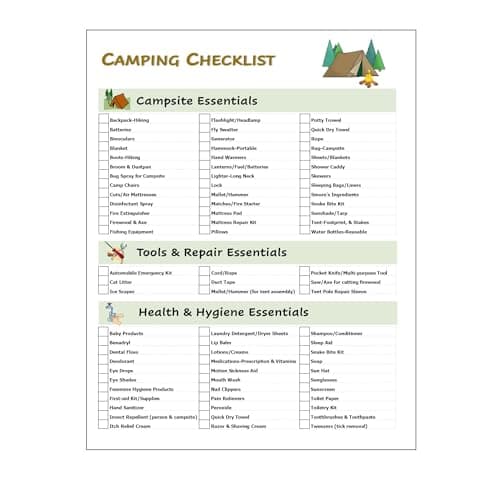
What is a Hiking Gear Essentials Checklist? A Complete 2026 Guide
A hiking gear essentials checklist is a simple planning tool that helps you pack the right items before you hit the trail. If you’ve ever forgotten a headlamp, water treatment, rain layer, or first-aid item, you already know how quickly a small packing mistake can ruin a hike. This guide explains wh