
How to Choose the Best Circular Saw in 2026: Complete Buying Guide
If you’re trying to figure out how to choose a circular saw, the biggest challenge is not finding one that cuts wood — it’s finding one that cuts your projects accurately, safely, and without frustration. The wrong saw can feel underpowered, be hard to control, or leave you fighting the cut line every time. In this guide, we’ll break down the features that matter most, the mistakes to avoid, and the best options to buy based on real-world use.
The most common mistake buyers make is choosing by price alone. A cheap saw may look like a bargain, but if it lacks power, visibility, or bevel capacity, you’ll spend more time correcting mistakes than making cuts.
Key Features to Look For
1. Motor power and RPM
Motor strength determines how easily a saw powers through framing lumber, plywood, and sheet goods. More amps generally mean more consistent cutting under load, while higher RPM can help the blade slice more cleanly and quickly. If you plan to cut dense material or work often, prioritize a stronger motor over the lowest price.
2. Blade size and cutting depth
Most full-size circular saws use a 7-1/4-inch blade, which is the standard for versatility and deeper cuts. Smaller compact saws are easier to handle but usually sacrifice depth. Choose based on the thickest material you expect to cut, because cut depth directly affects whether the saw can handle your projects in one pass.
3. Bevel capacity
A beveling shoe lets you make angled cuts for trim, framing, and joinery. A wider bevel range gives you more flexibility, while positive stops at common angles make setup faster and more accurate. If you want a saw that can do more than straight cuts, bevel capacity matters a lot.
4. Weight and handling
A lighter saw is easier to control, especially for overhead cuts or long sessions. That said, ultra-light saws can sometimes feel less stable on the cut line. The best balance is a saw that feels comfortable in your hands without sacrificing control or durability.
5. Visibility of the cut line
Dust blowers, laser guides, and good blade placement all help you see where the saw is going. Better visibility means fewer crooked cuts and less wasted material. For beginners especially, this feature can make the learning curve much easier.
6. Blade changes and maintenance
Look for a spindle lock and easy-access blade system if you expect to swap blades often. Faster blade changes save time and reduce hassle when switching between wood, soft metal, or specialty tasks. Simple maintenance is one of those features you’ll appreciate more after the first few projects.
7. Safety features
Safety lockouts, guarded triggers, and power indicators help reduce accidental starts and improve confidence during use. Circular saws are powerful tools, so built-in safety features are not optional extras — they’re part of choosing the right tool for your skill level.
What to Avoid
1. Buying a saw that’s too weak for your projects
Low-powered saws can bog down in thicker lumber or dense material, which leads to rough cuts and extra strain on the motor. If your projects include framing, decking, or repeated rip cuts, avoid undersized tools that are only suited for very light DIY work.
2. Ignoring cut visibility
A saw may have good specs on paper, but if you can’t see the blade path clearly, accuracy suffers. Poor visibility is one of the fastest ways to waste boards and become frustrated with the tool.
3. Choosing based only on blade size
Larger blades are useful, but blade size alone doesn’t tell the whole story. Motor strength, bevel range, and ergonomics matter just as much. A bigger saw that’s awkward to use may be worse than a smaller one that fits your workflow.
4. Overlooking weight and fatigue
If a saw feels heavy or unbalanced, you’ll notice it quickly during longer cuts. Fatigue leads to sloppy handling and less accurate results. Always think about how the saw will feel after 20 minutes of real use, not just when you first pick it up.
5. Skipping safety features
Some budget saws cut corners on guard design, trigger locks, or indicators. That may not sound serious until you’re handling the saw on a busy jobsite or in a crowded garage. Safety features are worth paying for.
Our Top Picks
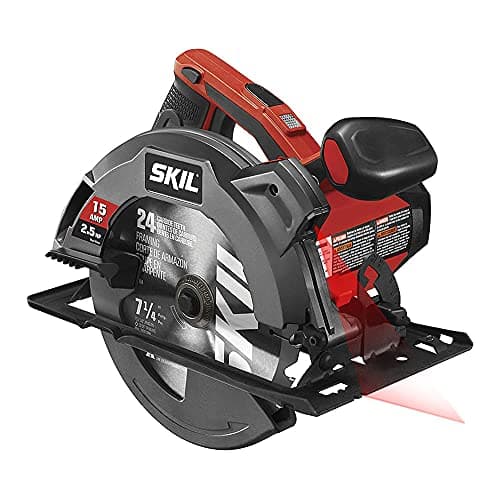
Best overall value for most buyers: SKIL 15 Amp 7-1/4 Inch Circular Saw with Single Beam Laser Guide - 5280-01 4.7★ (16% off) ✓ Prime
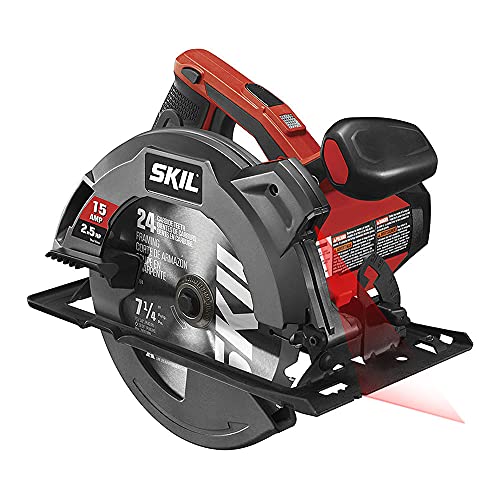


If you want a dependable full-size saw for home projects, framing, and general DIY use, this is the strongest all-around pick in the list. Its 15-amp motor, 7-1/4-inch blade, bevel capacity, and dust blower make it a practical choice for buyers who want performance without overspending.
Why it stands out: It combines power, visibility, and easy handling in a way that suits both beginners and more experienced users.
✓ Pros
- Powerful 15-amp motor delivers 5,300 RPM for faster cuts
- 7-1/4-inch carbide-tipped blade included
- 51° bevel capacity with a positive stop at 45°
- Dust blower improves visibility along the cut line
- Safety lock and guarded trigger add confidence
✗ Cons
- Full-size design may feel bulky for small hands
- Better suited to general-purpose work than ultra-fine precision tasks
Best budget full-size pick: Skil 5080-01 13-Amp 7-1/4" Circular Saw, Red 4.6★ (11% off) ✓ Prime
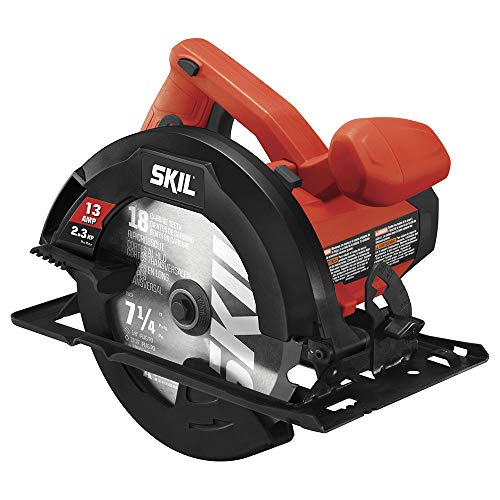


This is a smart pick if you want a traditional circular saw without paying for extra bells and whistles. It offers a 13-amp motor, a lighter build, and a 51-degree bevel range, making it a strong value for occasional DIY use and basic home improvement work.
Why it stands out: It gives you the core features most buyers need at a lower price point, while still staying capable for everyday cuts.
✓ Pros
- 13-amp motor provides solid power for common tasks
- 15% lighter than the SKIL 5380 for reduced fatigue
- 51-degree bevel with positive stops
- Spindle lock makes blade changes easier
- Improved dust blower helps keep the cut line visible
✗ Cons
- Less powerful than the 15-amp model above
- Best for light to moderate work, not heavy-duty use
Best for straight cuts and layout help: Milescraft 1403 Universal Saw Guide for Circular and Jig Saws Rip Guide Extends 14in Cuts Circles up to 24in 4.5★ ✓ Prime
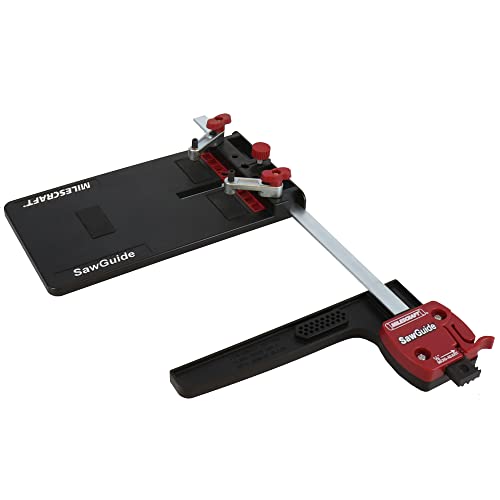


If your biggest problem is keeping cuts straight, this guide can improve results more than upgrading the saw itself. It helps eliminate repeated measuring and layout work, making it ideal for DIYers who want cleaner rip cuts and more consistent results.
Why it stands out: It’s a low-cost upgrade that can make almost any compatible circular saw easier to use accurately.
✓ Pros
- Eliminates much of the marking and measuring process
- Universal base plate works with almost any circular or jig saw
- Creates straight edge cuts from 1 inch up to 14 inches
- Can help with circles up to 24 inches with jig saws
- Reversible edge guide supports straight cuts through stock
✗ Cons
- Not a saw itself, so it won’t add cutting power
- Best for users who already own a compatible saw
Best compact option for light-duty work: Extbtfor Power Circular Saw,4.8A Mini Circular Saw with Laser Guide,4000RPM Corded Saw Equipped with 1 Pc 4-1/2" Blades 4.4★ (24% off) ✓ Prime
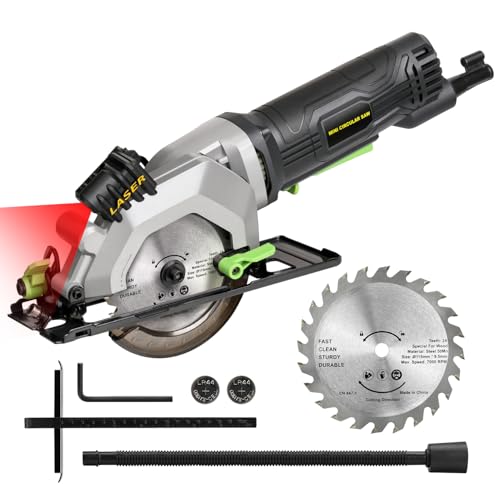

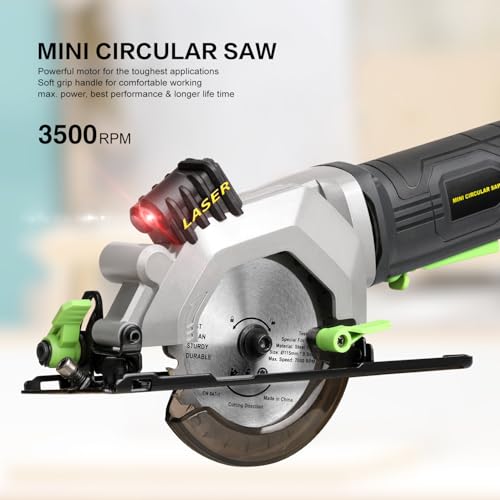
This mini circular saw is best for smaller projects, tight spaces, and users who want a lighter tool for quick cuts. It’s not a replacement for a full-size framing saw, but it can be very convenient for home decoration, light woodworking, and DIY tasks where portability matters more than maximum depth.
Why it stands out: It’s compact, lightweight, and comes with helpful accessories for small-scale cutting jobs.
✓ Pros
- 4.8A motor reaches up to 4000 RPM
- Lightweight at 4.7 pounds for easier one-handed handling
- Laser guide and guide ruler support alignment
- Includes blades for wood, soft metal, and plastic
- Useful for DIY and home decoration work
✗ Cons
- Shallower cutting depth than full-size circular saws
- Not ideal for heavy-duty framing or thick lumber
Budget Guide: What You Get at Each Price Point
Under $25
At this level, you’re usually not buying a full circular saw from this list — you’re more likely to find accessories like the Milescraft 1403 Universal Saw Guide. This is the best budget move if you already own a saw and want better accuracy without spending much.
$35 to $50
This is the entry point for basic circular saws and compact models. The Skil 5080-01 13-Amp 7-1/4" Circular Saw, Red gives you the most value in this range for standard DIY work, while the Extbtfor Power Circular Saw,4.8A Mini Circular Saw with Laser Guide,4000RPM Corded Saw Equipped with 1 Pc 4-1/2" Blades is better if portability and small cuts matter more than depth.
$50 to $70
This is the sweet spot for most buyers who want a reliable all-purpose tool. The SKIL 15 Amp 7-1/4 Inch Circular Saw with Single Beam Laser Guide - 5280-01 is the strongest value here because it offers more power, better cut speed, and a more complete feature set for general home improvement.
When to spend more
Spend more if you cut often, want smoother operation, or need better accuracy on repeat projects. In circular saws, extra budget usually buys you more power, better visibility, and better control — all of which matter more than cosmetic extras.
Frequently Asked Questions
What size circular saw is best for most people?
A 7-1/4-inch circular saw is the best all-around size for most buyers because it balances cut depth, versatility, and availability of blades. It’s the standard choice for general home improvement and woodworking.
How many amps should a circular saw have?
For light DIY use, 13 amps can be enough. For more frequent use or tougher materials, 15 amps is better because it delivers stronger performance and is less likely to slow down under load.
Do I need a laser guide on a circular saw?
Not necessarily, but it can help beginners and occasional users stay on the cut line more easily. A good dust blower and clear blade visibility are also very helpful, sometimes more than a laser alone.
Is a compact circular saw worth it?
Yes, if you work in tight spaces, make lighter cuts, or want something easier to carry. Compact saws are convenient, but they usually can’t replace a full-size saw for deeper or heavier-duty cuts.
What’s the most important feature when choosing a circular saw?
For most buyers, the most important feature is the balance between power and control. A saw should have enough motor strength for your materials, but also feel comfortable and easy to guide accurately.
Get the Full Tools & Home Improvement Buyer's Guide
Download our detailed comparison with specs, scores, and our honest verdict — delivered straight to your inbox.
Free. No spam. Unsubscribe anytime.
Was this review helpful?
Be the first to share your feedback on this review.
Sign in to vote and let us know what you think.
Discussion (0)
No comments yet. Be the first to start the discussion.
Related Reviews
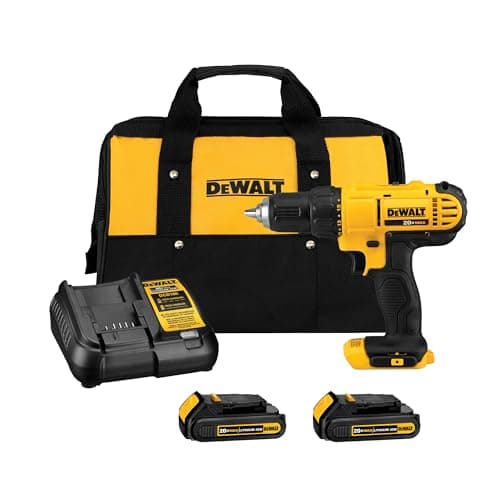
8 Best Cordless Drills for Contractors in 2026 — Top Picks for Power, Runtime, and Jobsite Reliability
If you need the best cordless drills for contractors, you probably care about one thing first: a drill that won’t slow you down in the middle of a job. The wrong pick can mean weak torque, short battery life, awkward handling, and wasted time swapping tools. This list focuses on contractor-friendly
Best Harbor Freight Tools Worth It for Every Budget in 2026: Ranked by Price & Performance
If you’re trying to figure out whether Harbor Freight tools worth it is a smart buy or just a cheap gamble, the real answer depends on what you’re buying and how often you’ll use it. Some low-cost tools are absolutely the right move for occasional DIY jobs, while others are better spent on a more du
What is Milwaukee vs DeWalt vs Makita? A Complete 2026 Guide
If you’re trying to choose between Milwaukee, DeWalt, and Makita, the real pain point is simple: all three brands are trusted, all three make pro-grade tools, and all three claim to be the best. The problem is that the “best” choice depends on how you work, what tools you already own, and whether yo