
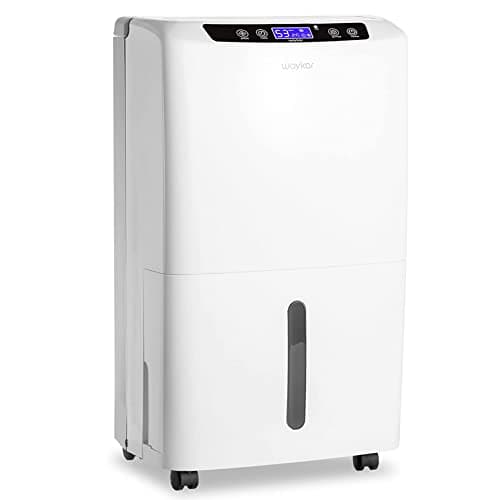
How to Choose the Best Dehumidifier in 2026: Complete Buying Guide
If you’re trying to figure out how to choose a dehumidifier, the hardest part is usually not the price—it’s matching the unit to the size and dampness of your space. Buy too small and it runs nonstop without fixing the problem; buy too large and you may waste money on features you don’t need. This guide breaks down exactly what matters so you can choose a dehumidifier that actually keeps your home dry, comfortable, and protected.
The most common mistake buyers make is focusing only on “pints per day” without checking the square footage rating, humidity level, and drainage setup. Those three factors determine whether the machine is a smart fit or a frustrating return. Let’s walk through the features, mistakes, and best picks so you can buy with confidence.
Key Features to Look For
1. Pint Capacity and Room Size
This is the first thing to check when learning how to choose a dehumidifier. Pint capacity tells you how much moisture the unit can remove in a day, while square footage tells you how much space it can cover. A 20-pint unit is usually better for smaller basements, bedrooms, or crawlspaces, while 34-pint and 75-pint models are better for larger or more humid areas.
Why it matters: if the capacity is too low for your room size, the dehumidifier may never catch up. If it’s too high, you may overpay for power and features you don’t need.
2. Humidity Control Range
Look for a model that lets you set your target humidity with enough flexibility. Some units only cover a narrow range, while others let you go lower for basements, storage areas, or post-flood drying. A wider range gives you more control over comfort and moisture protection.
Why it matters: the right humidity setting helps prevent mold, musty odors, and condensation without over-drying your space.
3. Drainage Options
One of the biggest quality-of-life features is how the unit handles water removal. A dehumidifier with a drain hose or pump can run continuously, which is ideal for basements or areas you don’t want to empty manually. Bucket-only models work fine for lighter use, but they require more attention.
Why it matters: if you want less maintenance, continuous drainage is a major advantage. It’s especially useful in damp spaces that need round-the-clock moisture control.
4. Energy Efficiency
ENERGY STAR certification is worth prioritizing if you plan to run the dehumidifier often. Efficient models remove moisture while using less electricity, which matters a lot in humid climates or during long basement seasons.
Why it matters: a dehumidifier can run for many hours a day. Better efficiency can lower your operating cost over time.
5. Noise Level
If the dehumidifier will sit near a bedroom, living room, or home office, noise becomes a real factor. Some models are designed for quieter operation, while others are better suited to utility spaces where sound is less important.
Why it matters: a quieter unit is easier to live with, especially if it runs frequently.
6. Smart Controls and Automation
Features like auto shut-off, auto restart, and app control make a dehumidifier easier to manage. Smart humidity sensing helps the machine turn on and off based on real conditions instead of running blindly.
Why it matters: automation saves effort, reduces wasted energy, and helps maintain more consistent humidity levels.
7. Build Quality and Maintenance
Check how easy it is to clean filters, empty buckets, and service the unit. Some models even have replaceable or cleanable pumps, which can improve long-term reliability.
Why it matters: dehumidifiers work best when they’re maintained properly. Easy upkeep means you’re more likely to keep the unit running efficiently for years.
What to Avoid
Ignoring Square Footage Ratings
Don’t buy based on pint capacity alone. A unit’s coverage area matters just as much as its daily moisture removal rate. A dehumidifier that’s too small for your basement will struggle, even if the pint number sounds respectable.
Choosing the Cheapest Unit for a Damp Basement
Budget models can be fine for light use, but very damp basements usually need stronger performance, better drainage, and more reliable humidity control. A bargain unit that can’t keep up often becomes the most expensive option in the long run.
Overlooking Drainage Needs
If you hate emptying buckets, don’t buy a model without continuous drain capability. This is a common regret for buyers who plan to use the dehumidifier every day.
Buying a Loud Model for a Living Space
Noise matters more than many shoppers expect. A louder machine may be acceptable in a garage or utility room, but it can become annoying in a bedroom or family room.
Skipping Energy Efficiency
Older or inefficient units may cost less upfront but more over time. If you expect regular use, efficiency should be part of the decision.
Forgetting About Maintenance
If the filter is hard to reach, the tank is awkward to remove, or the pump is sealed and difficult to service, the unit may become a hassle. Easy cleaning and serviceability are major value points.
Our Top Picks
Best Overall for Large, Damp Spaces: Waykar 34 Pints Energy Star Dehumidifier 4.7★ (0 reviews) ✓ Prime
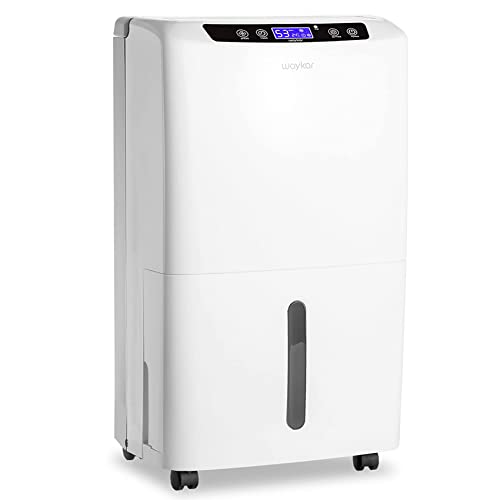


This is a strong fit if you need a dependable dehumidifier for a basement, garage, or larger room up to 2,000 sq. ft. The 34-pint capacity, ENERGY STAR certification, wide 30%–80% humidity control, and drain hose support make it a practical choice for people who want solid performance without going all the way up to a high-capacity pump model.
- ✓ Removes up to 34 pints of moisture per day for larger spaces
- ✓ 30%–80% smart humidity control for flexible drying
- ✓ ENERGY STAR certified for efficient operation
- ✓ Includes a drain hose for more convenient continuous use
- ✓ AI-smart protection helps with defrost and overload protection
- ✗ May be more dehumidifier than needed for small bedrooms
- ✗ Manual airflow swing is simpler than fully automated air direction
Best Smart Pick for Medium Spaces: Midea Cube 20 Pint Dehumidifier 4.7★ (0 reviews) ✓ Prime
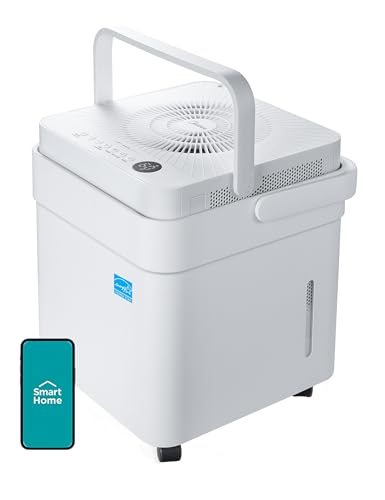


If you want a more compact option for a basement, bathroom, bedroom, or crawlspace, the Midea Cube stands out for its smart features and flexible design. It covers up to 1,500 sq. ft., offers app and voice control, and includes a large bucket plus continuous drain support.
- ✓ 20-pint daily capacity for smaller to mid-size spaces
- ✓ Wi-Fi smart control with Alexa and Google Assistant compatibility
- ✓ Large 3.2-gallon bucket for fewer emptying trips
- ✓ Continuous drain option for hands-off operation
- ✓ Extendable cube design for flexible storage and use
- ✗ Not the best choice for very large or extremely damp basements
- ✗ Smart features add convenience, but also add complexity for some buyers
Best Premium Pick for Heavy Moisture: Gasbye Energy Star 2026 Dehumidifier 4.7★ (0 reviews) ✓ Prime
![Gasbye Energy Star 2026 Dehumidifier with [Replaceable Pump] for Basement – [44dB Quiet, Easy to Clean & Clog-Free], Max 75 Pints/Day, 16.5ft Drain Hose, Auto Shut-Off, Auto Restart, White](https://pub-621496c7f62b43389c3fdd92f5da4ea8.r2.dev/blog/how-to-choose-a-dehumidifier-2026/product-2.jpg)
![Gasbye Energy Star 2026 Dehumidifier with [Replaceable Pump] for Basement – [44dB Quiet, Easy to Clean & Clog-Free], Max 75 Pints/Day, 16.5ft Drain Hose, Auto Shut-Off, Auto Restart, White](https://m.media-amazon.com/images/I/51qY033n2eL._SL500_.jpg)
![Gasbye Energy Star 2026 Dehumidifier with [Replaceable Pump] for Basement – [44dB Quiet, Easy to Clean & Clog-Free], Max 75 Pints/Day, 16.5ft Drain Hose, Auto Shut-Off, Auto Restart, White](https://m.media-amazon.com/images/I/41VBXRR7+-L._SL500_.jpg)
This is the best fit if you’re dealing with serious moisture and want a more advanced setup for a basement, garage, or large living area. The replaceable pump, 75-pint daily capacity, 44 dB quiet drainage, and long drain hose make it especially appealing for buyers who want strong performance with lower maintenance risk.
- ✓ High-capacity 75-pint/day moisture removal
- ✓ Replaceable, cleanable pump for easier long-term upkeep
- ✓ Quiet drainage at up to 44 dB
- ✓ Flexible draining with pump hose or bucket collection
- ✓ Smart humidity control with auto shut-off and restart
- ✗ Higher upfront cost than simpler models
- ✗ More features than a casual buyer may need
Budget Guide: What You Get at Each Price Point
Under $150
In this range, you’ll usually find smaller-capacity dehumidifiers with basic controls and simpler drainage setups. They can work well for lighter humidity in bedrooms, bathrooms, or small spaces, but they may not be the best answer for a damp basement.
$150 to $220
This is the sweet spot for many shoppers researching how to choose a dehumidifier. You can often get a better balance of capacity, efficiency, and convenience features like drain hoses, larger tanks, and smart humidity control. The Waykar 34 Pints Energy Star Dehumidifier and Midea Cube 20 Pint Dehumidifier both fit this zone depending on whether you need more coverage or more smart features.
$220 to $350
Here you start seeing more advanced units with stronger moisture removal, better drainage flexibility, quieter operation, and premium maintenance features. This is a good range for people with larger basements or persistent humidity problems. The Gasbye Energy Star 2026 Dehumidifier is the strongest premium-style option in this group.
Over $350
Above this range, you’re generally paying for heavy-duty performance, specialized pump systems, or commercial-style durability. For most homes, this level is only necessary if you have severe humidity, a very large area, or a space that needs constant moisture control.
Frequently Asked Questions
How many pints do I need for my basement?
It depends on the square footage and how damp the basement is. A small, lightly damp basement may only need 20 pints, while larger or more humid basements often do better with 34 pints or more. Very wet spaces may need a 75-pint model.
What size dehumidifier do I need for 1,500 sq. ft.?
For 1,500 sq. ft., a 20-pint to 34-pint dehumidifier is often a good starting point. If the space is especially damp, choose the higher end of that range.
Is ENERGY STAR worth it for a dehumidifier?
Yes, especially if you plan to run it often. ENERGY STAR models are designed to use less energy while still removing moisture effectively, which can save money over time.
Do I need a drain hose or pump?
If you want continuous operation and don’t want to empty a bucket regularly, yes. A drain hose is great for simple gravity drainage, while a pump is better if you need to move water farther or uphill.
What is the biggest mistake people make when buying a dehumidifier?
The biggest mistake is choosing a unit without checking both pint capacity and square footage coverage. A dehumidifier can look powerful on paper, but if it’s too small for the room, it won’t solve the humidity problem.
Get the Full Heating, Cooling & Air Quality Buyer's Guide
Download our detailed comparison with specs, scores, and our honest verdict — delivered straight to your inbox.
Free. No spam. Unsubscribe anytime.
Was this review helpful?
Be the first to share your feedback on this review.
Sign in to vote and let us know what you think.
Discussion (0)
No comments yet. Be the first to start the discussion.
Related Reviews
6 Best Air Purifiers for Pets in 2026 — Fast Odor and Dander Relief
If you live with cats or dogs, you already know the problem: pet hair floats everywhere, dander builds up fast, and odors can linger long after the room looks clean. The best air purifiers for pets do more than freshen the air — they trap fur, reduce smells, and help cut down on allergy triggers. We
Best Dehumidifiers Under $300 for Every Budget in 2026: Ranked by Price & Performance
If you’re shopping for the best dehumidifiers under $300 , the real challenge is finding the sweet spot between moisture removal, convenience, and long-term value. Go too cheap and you risk weak performance or constant emptying; spend wisely and you can get a unit that handles basements, bedrooms, a
What is Ideal Humidity for a Home? A Complete 2026 Guide
The ideal humidity for a home is the moisture level in your indoor air that feels comfortable, supports healthy breathing, and helps protect your house from damage. For most homes, the sweet spot is usually 30% to 50% relative humidity, with many experts aiming around 40% to 45% for everyday comfort