

What is AMD vs Intel CPU 2026? A Complete 2026 Guide
If you’re trying to choose between AMD and Intel in 2026, the real problem is not just “which is faster?” It’s figuring out which CPU platform gives you the best mix of gaming performance, productivity, upgrade path, and total build cost. This guide breaks down AMD vs Intel CPU 2026 in plain English so you can buy with confidence instead of guessing.
Related Reviews
AMD and Intel are the two biggest CPU brands for desktop and laptop computers, and both offer strong options depending on what you do most. In 2026, the best choice often comes down to platform features, power efficiency, motherboard compatibility, and how much performance you need per dollar. If you’re comparing them for a new PC build or upgrade, the smartest decision starts with understanding how these processors actually work.
How It Works
A CPU, or central processing unit, is the “brain” of your computer. It handles instructions for everything from opening apps and loading games to exporting videos and running spreadsheets. AMD and Intel both make CPUs that do the same core job, but they differ in architecture, socket compatibility, boost behavior, integrated graphics options, and platform features like memory support and PCIe lanes.
In simple terms, a modern CPU is built from multiple cores, and each core can process tasks independently. More cores can help with multitasking and creative workloads, while high clock speed helps with snappy everyday use and gaming. In 2026, both brands use advanced boost technologies that automatically raise performance when there’s thermal and power headroom, which is why cooling quality matters so much.
The platform around the CPU matters almost as much as the chip itself. That includes the motherboard socket, RAM generation, cooling support, and whether you can upgrade later without replacing everything. AMD often gets attention for long-term socket support, while Intel is frequently chosen for broad ecosystem compatibility and strong performance across a wide range of price points.
Key Benefits & Use Cases
Gaming
For gaming, buyers usually want high single-core speed, strong cache behavior, and stable frame times. AMD is often associated with excellent gaming efficiency, while Intel remains a strong choice for high-FPS builds and users who want a balanced gaming-plus-everyday-PC experience.
Content creation
If you edit video, work in 3D, or run heavy multitasking, core count and sustained performance matter more than raw gaming headlines. Both AMD and Intel offer capable CPUs, but the best pick depends on whether your software favors more cores, higher clock speeds, or specific platform features.
Everyday productivity
For office work, school, web browsing, and general use, either brand can be an excellent fit. In this category, value, power efficiency, and integrated graphics can matter more than top-end benchmark numbers.
Budget builds
If you’re trying to keep total system cost low, the CPU is only part of the equation. Motherboard pricing, cooler requirements, and RAM support can shift the overall value dramatically, which is why a “cheaper” CPU is not always the cheaper platform.
Upgrade planning
Many buyers compare AMD vs Intel CPU 2026 because they want a path to upgrade later. A platform with a stronger upgrade roadmap can reduce long-term costs, especially if you plan to keep the same motherboard for multiple CPU generations.
What to Look For When Buying
1. Performance for your main task
Don’t buy based on brand loyalty alone. Choose based on what you actually do most: gaming, editing, streaming, office work, or mixed use. A CPU that wins in one category may not be the best fit for another.
2. Total platform cost
Look beyond the processor price. Motherboard cost, cooler requirements, and RAM compatibility can change the real total by a lot. A CPU that needs a more expensive board or stronger cooling may not be the best value overall.
3. Socket and upgrade path
Check whether the socket supports future CPUs and whether the motherboard you want is likely to stay useful for a few years. This is especially important if you don’t want to rebuild the whole system later.
4. Cooling and power needs
Some CPUs are easier to cool than others, and cooler requirements affect both noise and cost. If you want quiet operation or a compact build, efficiency becomes a major buying factor.
5. Integrated graphics and features
If you won’t buy a separate GPU right away, integrated graphics can be a lifesaver. Also check support for DDR5, PCIe 5.0, and motherboard features that match your future plans.
Top Recommended Products
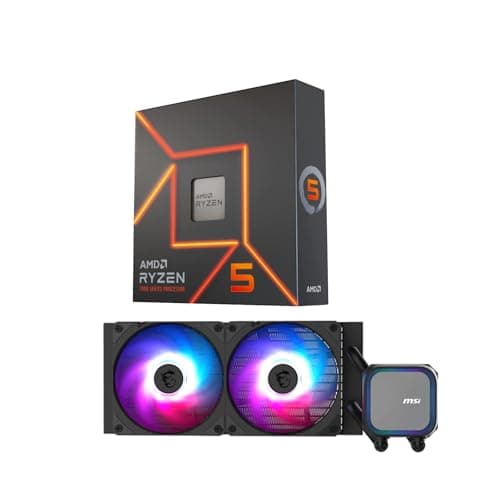
MICRO CENTER CPU AIO Combo - AMD Ryzen 5 7600X Desktop Processor with MSI MAG Coreliquid A13 240 AIO ARGB CPU Liquid Cooler 240mm Radiator LGA 1700/1851 / AM5/AM4 Compatible Black ✓ Prime $217.99
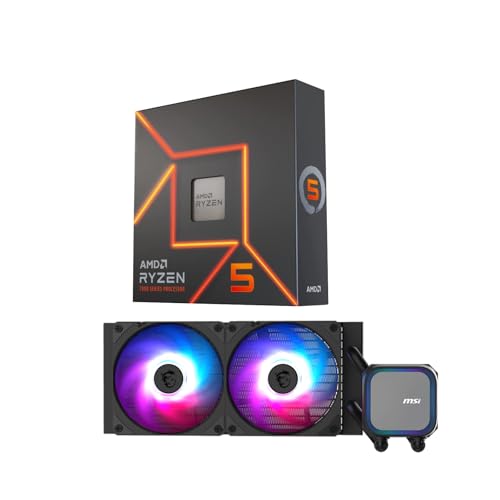


This combo is a practical pick for buyers who want a capable AMD CPU plus cooling in one purchase. The Ryzen 5 7600X brings 6 cores, 12 threads, up to 5.3 GHz boost, DDR5-5200 support, and unlocked overclocking, while the included MSI 240mm AIO adds a ready-to-go cooling solution that fits AM5, AM4, and also supports Intel LGA 1700/1851 on the cooler side.
The biggest appeal is simplicity: you get a strong gaming-focused processor and a compatible liquid cooler without having to piece together two separate purchases. Published specs also highlight PCIe 5.0 support on select 600-series motherboards, integrated Radeon graphics, and a cooler design with ARGB lighting and pre-installed fans.
✓ Pros
- Strong gaming-oriented Ryzen 5 7600X performance
- Includes a 240mm AIO cooler, reducing separate shopping
- AM5 platform support with DDR5 and PCIe 5.0 on select boards
- Cooler supports both AMD and Intel sockets for flexibility
- Prime eligible and positioned as a value-oriented combo
✗ Cons
- Not the best choice if you need maximum multicore performance
- Liquid cooling adds complexity versus a basic air cooler
- Requires compatible motherboard and RAM planning
Common Mistakes to Avoid
Buying the brand instead of the platform
One of the biggest mistakes is assuming AMD or Intel is automatically better in every situation. The right choice depends on the full system, not just the logo on the CPU box.
Ignoring motherboard cost
A cheap CPU paired with an expensive motherboard can erase the savings. Always compare the total build price, not just the processor price.
Underestimating cooling needs
Some CPUs need better cooling to maintain boost performance and lower noise. Skimping on cooling can reduce the real-world performance you expected to get.
Overbuying for your actual use
Not every user needs a high-core-count chip. If you mostly browse, stream, and play lighter games, a midrange CPU may be the smarter value.
Forgetting future upgrades
If you plan to upgrade later, socket lifespan and motherboard support matter. Choosing a platform with a better upgrade path can save money over time.
Frequently Asked Questions
Is AMD or Intel better in 2026?
Neither brand is universally better. AMD often appeals to buyers who want strong efficiency and upgrade path value, while Intel is frequently favored for broad performance balance and platform familiarity. The best choice depends on your budget and use case.
Which is better for gaming, AMD or Intel?
Both can be excellent for gaming in 2026. AMD is often a top pick for gaming efficiency and strong frame consistency, while Intel remains highly competitive for high-FPS builds and mixed-use systems.
Which CPU brand is better for video editing?
It depends on the software and the specific chip. For editing, look at core count, sustained performance, and platform cost rather than brand alone, because both AMD and Intel offer strong options.
Do AMD CPUs usually need better cooling?
Not always, but cooling still matters for both brands. Higher-performance CPUs can boost harder when temperatures are controlled, so a good cooler can improve noise and sustained performance.
What should I check before buying a CPU in 2026?
Check socket compatibility, motherboard price, RAM support, cooling needs, and whether the CPU fits your main workload. Those factors usually matter more than marketing claims.
Pros
- + Strong gaming-oriented Ryzen 5 7600X performance
- + Includes a 240mm AIO cooler
- + AM5 platform support with DDR5 and PCIe 5.0
- + Cooler supports both AMD and Intel sockets
- + Prime eligible value combo
Cons
- – Not ideal for maximum multicore workloads
- – Liquid cooling adds complexity
- – Requires compatible motherboard and RAM planning
Frequently asked questions
- Is AMD or Intel better in 2026?
- Neither brand is universally better. AMD often appeals to buyers who want strong efficiency and upgrade path value, while Intel is frequently favored for broad performance balance and platform familiarity. The best choice depends on your budget and use case.
- Which is better for gaming, AMD or Intel?
- Both can be excellent for gaming in 2026. AMD is often a top pick for gaming efficiency and strong frame consistency, while Intel remains highly competitive for high-FPS builds and mixed-use systems.
- Which CPU brand is better for video editing?
- It depends on the software and the specific chip. For editing, look at core count, sustained performance, and platform cost rather than brand alone, because both AMD and Intel offer strong options.
- Do AMD CPUs usually need better cooling?
- Not always, but cooling still matters for both brands. Higher-performance CPUs can boost harder when temperatures are controlled, so a good cooler can improve noise and sustained performance.
- What should I check before buying a CPU in 2026?
- Check socket compatibility, motherboard price, RAM support, cooling needs, and whether the CPU fits your main workload. Those factors usually matter more than marketing claims.
Score breakdown
- value
- 8.0
- usability
- 8.0
- durability
- 8.0
- performance
- 8.0
- buyerFeedback
- 8.0
Get the Full Tech Buyer's Guide
Join our free newsletter — we'll send our latest Tech picks, specs and verdicts straight to your inbox.
Free. No spam. Unsubscribe anytime.
Was this review helpful?
Be the first to share your feedback on this review.
Sign in to vote and let us know what you think.
Discussion (0)
No comments yet. Be the first to start the discussion.
Related Reviews
8 Best 32GB RAM Kits in 2026 — Faster Gaming, Smoother Multitasking, and Better Value
If you’re shopping for the best 32GB RAM kits 2026, the biggest challenge is sorting out which kits actually fit your PC, your motherboard, and your budget. Some buyers need a fast DDR5 2x16GB kit for gaming, while others just want a reliable DDR4 upgrade that won’t overcomplicate installation. This

8 Best DDR5 6000 RAM in 2026 — Fastest Stable Picks for Gaming, Workloads, and Easy XMP/EXPO Tuning
If you’re shopping for the best DDR5 6000 RAM, you’re probably trying to balance speed, stability, and compatibility without overpaying for specs you won’t feel. DDR5 6000MHz has become the sweet spot for many modern AMD and Intel builds, especially for gamers and creators who want strong performanc
8 Best RAM for Ryzen 9000 in 2026 — DDR5-6000 EXPO Picks for Stable, Fast Builds
If you’re building a Ryzen 9000 PC, the biggest RAM headache is choosing a kit that delivers strong gaming performance without causing stability issues. The best RAM for Ryzen 9000 usually means DDR5-6000 with EXPO support, sensible timings, and a matched kit that your CPU and motherboard can run re